


Building Blocks
This section contains fundamental products for the synthesis of organic and biological compounds. Building blocks are the essential starting materials used to construct complex molecules through various chemical reactions. They play a critical role in drug discovery, material science, and chemical research. At CymitQuimica, we offer a diverse range of high-quality building blocks to support your innovative research and industrial projects, ensuring you have the essential components for successful synthesis.
Subcategories of "Building Blocks"
- Boronic Acids & Boronic Acid Derivatives(5,778 products)
- Chiral Building Blocks(1,242 products)
- Hydrocarbon Building Blocks(6,098 products)
- Organic Building Blocks(61,059 products)
Found 199580 products of "Building Blocks"
Sort by
Purity (%)
0
100
|
0
|
50
|
90
|
95
|
100
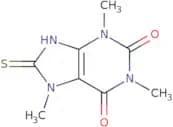
1,3,7-Trimethyl-8-sulfanylidene-9H-purine-2,6-dione
CAS:Controlled Product1,3,7-Trimethyl-8-sulfanylidene-9H-purine-2,6-dione is an odourless compound that can yield alkyl bromides with high efficiency. The advances in this field have been made possible by the use of thiourea as a new and efficient reagent for this transformation. The reaction parameters are very mild and allow for the preparation of bromides from a wide range of aromatic substrates.Formula:C8H10N4O2SPurity:Min. 95%Molecular weight:226.26 g/molN-[3-(Trifluoromethyl)phenyl]prop-2-enamide
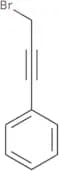
CAS:Versatile small molecule scaffoldFormula:C10H8F3NOPurity:Min. 95%Molecular weight:215.17 g/mol(3-Bromo-1-propyn-1-yl)-benzene
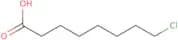
CAS:<p>3-Bromo-1-propyn-1-yl)-benzene (3BP) is an organic compound that belongs to the class of organometallic compounds. It can be synthesized via a radical mechanism, protonation, and reaction time. 3BP is found as two tautomers. The first is an amine and the second is a radical. 3BP has been shown to react with nitrogen nucleophiles such as amines in the presence of radiation to form the corresponding trimethylsilylacetylene derivatives. These derivatives are then hydrolyzed in order to form the desired product, dimethyl fumarate.</p>Formula:C9H7BrPurity:Min. 95%Molecular weight:195.06 g/mol8-Chlorooctanoic acid
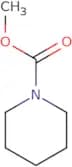
CAS:<p>8-Chlorooctanoic acid is a fatty acid that is naturally found in the human body. It is also called octanoic acid, or octanoate. 8-Chlorooctanoic acid has been shown to inhibit the activity of enzymes such as citrate lyase and alkylating agent. 8-Chlorooctanoic acid has been shown to be biodegradable and it was hypothesized that it may be a functional theory. This compound also has preservative properties and can be used as an additive in food products. It can also be used as a preservative in pharmaceutical products because of its antimicrobial effects.</p>Formula:C8H15ClO2Purity:Min. 95%Molecular weight:178.65 g/molMethyl piperidine-1-carboxylate
CAS:<p>Methyl piperidine-1-carboxylate is a synthetic chemical that is used as a stabilizer. It inhibits the hyperproliferation of cancer cells by blocking the activation of protein kinase C. Methyl piperidine-1-carboxylate also inhibits the growth of bacteria, such as Staphylococcus aureus, by interfering with their metabolic pathways. This chemical has been synthesized in an organic reaction and is an analog to ansamycin.</p>Formula:C7H13NO2Purity:Min. 95%Molecular weight:143.18 g/molN3-Methylpyridine-3,4-diamine
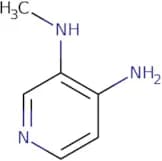
CAS:<p>N3-Methylpyridine-3,4-diamine is an organic compound that is synthesized by the rearrangement of 3-methylpyridine. This heterocyclic compound reacts with diazomethane to form a cyclization product. The reaction occurs in the presence of a base and a heating process. The result of this reaction is a 5-membered ring heterocycle that contains nitrogen and three methyl groups.</p>Formula:C6H9N3Purity:Min. 95%Molecular weight:123.16 g/mol2-(2-Acetamidophenoxy)acetic acid
CAS:<p>Versatile small molecule scaffold</p>Formula:C10H11NO4Purity:Min. 95%Molecular weight:209.2 g/mol3-(Pyridin-3-yl)propanal
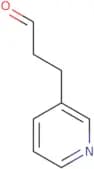
CAS:<p>3-(Pyridin-3-yl)propanal is a potential anticancer agent that has been shown to cause apoptosis in DU145 cells. 3-(Pyridin-3-yl)propanal inhibits the kinase activity of 3-kinase, leading to the phosphatidylinositol pathway and the activation of caspases. This compound also has potent anti-proliferative activities in cancer cells, and may be used as an anticancer agent. 3-(Pyridin-3-yl)propanal was found to inhibit the proliferation of U937 cells in vitro by inducing apoptosis and inhibiting cell cycle progression at G1 phase.</p>Formula:C8H9NOPurity:Min. 95%Molecular weight:135.16 g/mol4,5-Dimethylpyridine-2-carboxylic acid hydrochloride
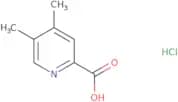
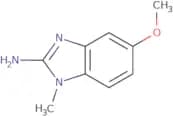
CAS:<p>Versatile small molecule scaffold</p>Formula:C8H10ClNO2Purity:Min. 95%Molecular weight:187.62 g/mol2-Amino-5-methoxy-1-methylbenzimidazole
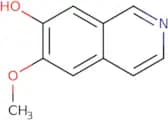
CAS:<p>Versatile small molecule scaffold</p>Formula:C9H11N3OPurity:Min. 95%Molecular weight:177.21 g/mol6-Methoxyisoquinolin-7-ol
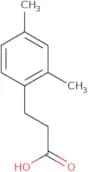
CAS:<p>Versatile small molecule scaffold</p>Formula:C10H9NO2Purity:Min. 95%Molecular weight:175.18 g/mol3-(2,4-Dimethylphenyl)propionic acid
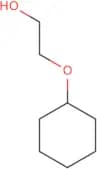
CAS:<p>3-(2,4-Dimethylphenyl)propionic acid is an organic compound that belongs to the class of propionic acid derivatives. It is a chiral compound with two stereoisomers. The crystal structure of the racemic mixture has been determined by x-ray crystallography and the absolute configuration was assigned as (S) based on its enantiomeric excess. 3-(2,4-Dimethylphenyl)propionic acid can be synthesized from benzyloxymethyl chloride and propionic acid. This reaction is mediated by a base, such as sodium methoxide or potassium t-butoxide.<br>3-(2,4-Dimethylphenyl)propionic acid is used in the synthesis of other compounds, such as phenylethyl propionate and 2-methylbenzaldehyde.</p>Formula:C11H14O2Purity:Min. 95%Molecular weight:178.23 g/mol2-(Cyclohexyloxy)ethanol
CAS:<p>2-(Cyclohexyloxy)ethanol is a synthetic, xylene-based glycol ether. It has been shown to have synergistic effects with boron trifluoride etherate, germanium trioxide, and alkyl substituents. 2-(Cyclohexyloxy)ethanol has an antibacterial activity against Gram-positive bacteria, including methicillin-resistant Staphylococcus aureus (MRSA). This compound also has a constant rate of degradation and can be used in peptide binding studies.</p>Formula:C8H16O2Purity:Min. 95%Molecular weight:144.21 g/mol4-Methoxy-1,3-dioxaindane
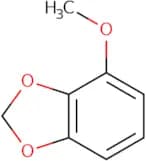
CAS:Controlled Product<p>4-Methoxy-1,3-dioxaindane is an electrophilic brominating agent that has been used as a catalyst for the production of medicines. It is also used in the synthesis of formylating agents and nitration reagents. 4-Methoxy-1,3-dioxaindane is able to react with various chemical compounds. This property makes it a good candidate for use in various industrial processes such as chlorination, iodination, and bromination.</p>Formula:C8H8O3Purity:Min. 95%Molecular weight:152.15 g/mol2-(cyclopentyloxy)ethanol
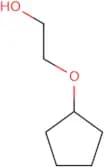
CAS:<p>Versatile small molecule scaffold</p>Formula:C7H14O2Purity:Min. 95%Molecular weight:130.19 g/mol2-Ethyl-N-methylaniline
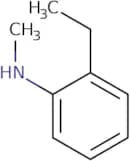
CAS:<p>2-Ethyl-N-methylaniline is a colorless liquid that has a pyrrole ring and an indole group. It is used in the production of potassium and indoles, as well as in the synthesis of other organic compounds. 2-Ethyl-N-methylaniline also has pyrrole properties, which are similar to those of pyrrole. This chemical was first created by the German chemist Emil Fischer in 1887.</p>Formula:C9H13NPurity:Min. 95%Molecular weight:135.21 g/mol(Pyridin-4-yl)methanethiol
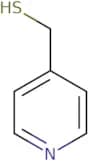
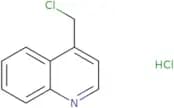
CAS:<p>Pyridin-4-ylmethanethiol is a molecule that belongs to the class of metalloporphyrins. It has been shown to be a reversible, systematically, and crystallographically covalent tethering ligand for metal ions. Pyridin-4-ylmethanethiol binds reversibly to metal ions such as Cu(II), Fe(III), or Tb(III) and has been shown to inhibit caspase activity in vitro.br>br>Pyridin-4-ylmethanethiol interacts with the supramolecular assembly of the NOD2 protein at the cell membrane, preventing the release of proteases from intracellular vesicles into the extracellular space.</p>Formula:C6H7NSPurity:Min. 95%Molecular weight:125.19 g/mol4-chloromethylquinoline hcl
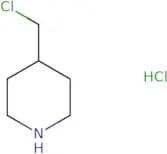
CAS:<p>Versatile small molecule scaffold</p>Formula:C10H9Cl2NPurity:Min. 95%Molecular weight:214.09 g/mol4-(Chloromethyl)piperidine hydrochloride
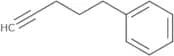
CAS:<p>Versatile small molecule scaffold</p>Formula:C6H12ClN·HClPurity:Min. 95%Molecular weight:170.08 g/mol5-Phenyl-1-pentyne
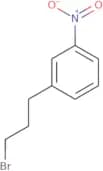
CAS:<p>5-Phenyl-1-pentyne is a reactive compound that inhibits the uptake of naphthalene in human liver cells. It has been shown to inhibit monooxygenase activity, which prevents the formation of reactive oxygen species and lipid peroxidation. The molecular modeling study suggests that 5-phenyl-1-pentyne binds to a hydroxyl group on the enzyme's active site. This binding prevents the enzyme from binding with its substrate, thereby inhibiting metabolism. In addition, this chemical inhibitor has an inhibitory effect on wild type mice and CD-1 mice. Low energy chemical inhibitors are also able to inhibit the metabolism of rat liver microsomes.</p>Formula:C11H12Purity:Min. 95%Molecular weight:144.21 g/mol1-(3-Bromopropyl)-3-nitro-benzene
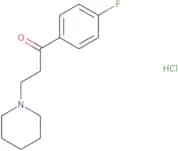
CAS:<p>Versatile small molecule scaffold</p>Formula:C9H10BrNO2Purity:Min. 95%Molecular weight:244.08 g/mol1-(4-Fluorophenyl)-3-(piperidin-1-yl)propan-1-one hydrochloride
CAS:<p>1-(4-Fluorophenyl)-3-(piperidin-1-yl)propan-1-one hydrochloride is a pyridinium compound that has been shown to have an antiarrhythmic effect. It inhibits the activity of the potassium channel and calcium ion channels, which are responsible for stabilizing the heart rate. 1-(4-Fluorophenyl)-3-(piperidin-1-yl)propan-1-one hydrochloride also modulates anion channels and can be used to treat hyperactivity. The diprotonated form of this drug is active against anions. The carbonyl group in this compound is capable of forming hydrogen bonds with other molecules. This structural feature is responsible for the drug's pharmacological effect and its ability to bind to proteins, including enzymes such as pyrrole reductase.</p>Formula:C14H19ClFNOPurity:Min. 95%Molecular weight:271.76 g/mol1-[(4-Methoxyphenyl)methyl]-1,2,3,6-tetrahydropyridazine-3,6-dione
CAS:<p>Versatile small molecule scaffold</p>Formula:C12H12N2O3Purity:Min. 95%Molecular weight:232.2 g/mol[(2-Bromophenyl)methyl]trimethylsilane
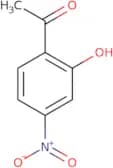
CAS:<p>Versatile small molecule scaffold</p>Formula:C10H15BrSiPurity:Min. 95%Molecular weight:243.21 g/mol1-(2-Hydroxy-4-nitrophenyl)ethan-1-one
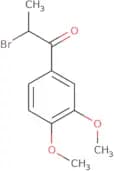
CAS:<p>1-(2-Hydroxy-4-nitrophenyl)ethan-1-one (KPNE) is a potassium salt of a diketone that has antitubercular activity. KPNE inhibits the growth of Mycobacterium tuberculosis and has been shown to be effective as an antitubercular agent in animals. KPNE also has antiviral properties, inhibiting the RNA polymerase in HIV, which may be due to its ability to inhibit the synthesis of DNA. The mechanism of action for KPNE is thought to be due to its hydrolysis into 4-aminosalicylic acid, which inhibits bacterial protein synthesis by inhibition of the enzyme dihydrofolate reductase.</p>Formula:C8H7NO4Purity:Min. 95%Molecular weight:181.15 g/mol2-Bromo-1-(3,4-dimethoxyphenyl)propan-1-one
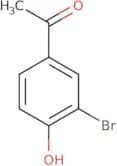
CAS:Versatile small molecule scaffoldFormula:C11H13BrO3Purity:Min. 95%Molecular weight:273.12 g/mol3'-Bromo-4'-hydroxyacetophenone
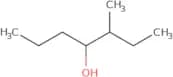
CAS:<p>3'-Bromo-4'-hydroxyacetophenone is an epoxy that is used in the synthesis of a variety of chemical products. The mechanisms for its aerobic oxidation are not well understood, but it has been shown that it undergoes transformation reactions to form methides and phenols. It also participates in the aerobic oxidation process, which is a chemical reaction that occurs with oxygen and hydrogen peroxide as catalysts. 3'-Bromo-4'-hydroxyacetophenone has been shown to be a competitive inhibitor of cytochrome P450 enzymes.</p>Formula:C8H7BrO2Purity:Min. 95%Molecular weight:215.05 g/mol3-Methyl-4-heptanol
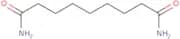
CAS:<p>Versatile small molecule scaffold</p>Formula:C8H18OPurity:Min. 95%Molecular weight:130.23 g/molNonanediamide
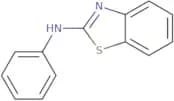
CAS:<p>Nonanediamide is a polyamide polymer with a hydroxyl group at each end. It is used in the manufacture of polymeric matrices for biomedical applications, such as sealants and adhesives. Nonanediamide has shown to be an effective sealant against water vapor, which may be due to its high resistance to hydrolysis. This chemical also facilitates the enzyme activities of thrombotic thrombocytopenic purpura (TTP) and hemolytic uremic syndrome (HUS). The amide bond that connects the monomer units together can be easily cleaved by enzymes, making it easier for blood cells to break down the polyamide polymer into smaller compounds.</p>Formula:C9H18N2O2Purity:Min. 95%Color and Shape:PowderMolecular weight:186.25 g/molN-Phenyl-1,3-benzothiazol-2-amine
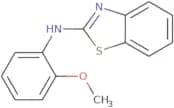
CAS:<p>N-Phenyl-1,3-benzothiazol-2-amine is a synthetic aromatic compound that has been used as an antiviral agent. It inhibits the replication of RNA by binding to the carbon disulphide group in the ribose moiety of nucleosides. This prevents formation of the helix structure and stops synthesis of viral DNA. N-Phenyl-1,3-benzothiazol-2-amine is also active against influenza A virus and some other viruses. The molecular descriptors for this compound are nitrogen atoms (N), stabilization (S), cb1 receptor (Cb1) and virus activity (V). This substance is an active ingredient in many pharmaceuticals, such as cough syrup, pain relief tablets, and eye drops. It can be synthesized from copper oxide and chloride or introduced into a drug formulation by impurities.</p>Formula:C13H10N2SPurity:Min. 95%Molecular weight:226.3 g/molN-(2-Methoxyphenyl)-1,3-benzothiazol-2-amine
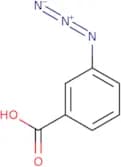
CAS:Versatile small molecule scaffoldFormula:C14H12N2OSPurity:Min. 95%Molecular weight:256.32 g/mol3-Azidobenzoic acid
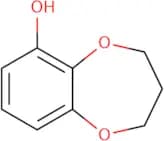
CAS:Versatile small molecule scaffoldFormula:C7H5N3O2Purity:Min. 95%Molecular weight:163.13 g/mol3,4-Dihydro-2H-1,5-benzodioxepin-6-ol
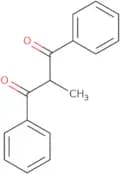
CAS:<p>Versatile small molecule scaffold</p>Formula:C9H10O3Purity:Min. 95%Molecular weight:166.17 g/mol2-Methyl-1,3-diphenylpropane-1,3-dione
CAS:<p>2-Methyl-1,3-diphenylpropane-1,3-dione is a divalent hydrocarbon that has been used as a coating for metals and plastics. It has also been used as a solid catalyst in organic reactions. This compound has shown the ability to inhibit the uptake of gemini surfactants by cells, thereby reducing the viscosity of cell culture media. 2-Methyl-1,3-diphenylpropane-1,3-dione is an inhibitor of cachexia (wasting syndrome) in mice and rats due to its regulatory effect on tumor necrosis factor (TNF). TNF is an inflammatory cytokine that regulates many other proinflammatory cytokines and chemokines. This compound has also been shown to increase the reaction time for benzyl groups with primary amino groups when exposed to light.</p>Formula:C16H14O2Purity:Min. 95%Molecular weight:238.28 g/mol3-(4-Amino-3-methylphenoxymethyl)benzonitrile hydrochloride
CAS:Versatile small molecule scaffoldFormula:C15H15ClN2OPurity:Min. 95%Molecular weight:274.74 g/molSodium 2-[4-(4-methanesulfonylphenyl)-1,3-thiazol-2-yl]acetate
CAS:<p>Versatile small molecule scaffold</p>Formula:C12H10NNaO4S2Purity:Min. 95%Molecular weight:319.3 g/mol1-[2-(4-Chlorophenyl)-4-methyl-1,3-thiazol-5-yl]ethan-1-one hydrochloride
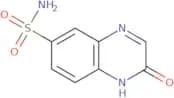
CAS:<p>Versatile small molecule scaffold</p>Formula:C12H11Cl2NOSPurity:Min. 95%Molecular weight:288.2 g/mol2-Oxo-1,2-dihydroquinoxaline-6-sulfonamide
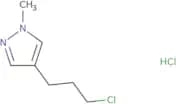
CAS:Versatile small molecule scaffoldFormula:C8H7N3O3SPurity:Min. 95%Molecular weight:225.23 g/mol4-(3-Chloropropyl)-1-methyl-1H-pyrazole hydrochloride
CAS:Versatile small molecule scaffoldFormula:C7H12Cl2N2Purity:Min. 95%Molecular weight:195.09 g/mol4-Bromo-N-{3-[(methylamino)methyl]phenyl}-1H-pyrrole-2-carboxamide hydrochloride
CAS:<p>Versatile small molecule scaffold</p>Formula:C13H15BrClN3OPurity:Min. 95%Molecular weight:344.63 g/mol2-[4-(3-Ethyl-1,2,4-oxadiazol-5-yl)phenyl]ethan-1-amine hydrochloride
CAS:<p>Versatile small molecule scaffold</p>Formula:C12H16ClN3OPurity:Min. 95%Molecular weight:253.73 g/mol2-Methyl-5H,6H,7H,8H-[1,2,4]triazolo[1,5-a]pyridin-6-amine
CAS:Versatile small molecule scaffoldFormula:C7H12N4Purity:Min. 95%Molecular weight:152.2 g/mol1-[(4-Aminophenyl)sulfanyl]-N,N-dimethylformamide hydrochloride
CAS:Versatile small molecule scaffoldFormula:C9H13ClN2OSPurity:Min. 95%Molecular weight:232.73 g/mol2-Chloro-N-methyl-N-[(1-methyl-1H-pyrazol-4-yl)methyl]acetamide hydrochloride
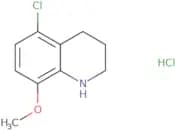
CAS:Versatile small molecule scaffoldFormula:C8H13Cl2N3OPurity:Min. 95%Molecular weight:238.11 g/mol5-Chloro-8-methoxy-1,2,3,4-tetrahydroquinoline hydrochloride
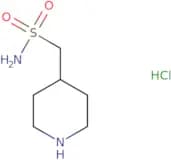
CAS:Versatile small molecule scaffoldFormula:C10H13Cl2NOPurity:Min. 95%Molecular weight:234.12 g/molPiperidin-4-ylmethanesulfonamide hydrochloride
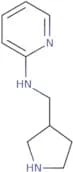
CAS:Versatile small molecule scaffoldFormula:C6H15ClN2O2SPurity:Min. 95%Molecular weight:214.71 g/molN-(Pyrrolidin-3-ylmethyl)pyridin-2-amine
CAS:<p>Versatile small molecule scaffold</p>Formula:C10H15N3Purity:Min. 95%Molecular weight:177.25 g/mol3-{[2-(4-Methanesulfonylphenyl)-2-oxoethyl]carbamoyl}propanoic acid
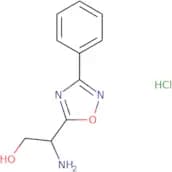
CAS:Versatile small molecule scaffoldFormula:C13H15NO6SPurity:Min. 95%Molecular weight:313.33 g/mol2-Amino-2-(3-phenyl-1,2,4-oxadiazol-5-yl)ethan-1-ol hydrochloride
CAS:Versatile small molecule scaffoldFormula:C10H12ClN3O2Purity:Min. 95%Molecular weight:241.67 g/mol3-Bromo-4-hydrazinyl-1-methyl-1H-pyrazolo[3,4-d]pyrimidine
CAS:Versatile small molecule scaffoldFormula:C6H7BrN6Purity:Min. 95%Molecular weight:243.06 g/mol

![N-[3-(Trifluoromethyl)phenyl]prop-2-enamide](/_next/image/?url=https%3A%2Fstatic.cymitquimica.com%2Fproducts%2F3D%2Fthumb-webp%2FBAA79420.webp&w=3840&q=75)
![1-[(4-Methoxyphenyl)methyl]-1,2,3,6-tetrahydropyridazine-3,6-dione](/_next/image/?url=https%3A%2Fstatic.cymitquimica.com%2Fproducts%2F3D%2Fthumb-webp%2FBAA82886.webp&w=3840&q=75)
![[(2-Bromophenyl)methyl]trimethylsilane](/_next/image/?url=https%3A%2Fstatic.cymitquimica.com%2Fproducts%2F3D%2Fthumb-webp%2FBAA83344.webp&w=3840&q=75)

![Sodium 2-[4-(4-methanesulfonylphenyl)-1,3-thiazol-2-yl]acetate](/_next/image/?url=https%3A%2Fstatic.cymitquimica.com%2Fproducts%2F3D%2Fthumb-webp%2FBAC92524.webp&w=3840&q=75)
![1-[2-(4-Chlorophenyl)-4-methyl-1,3-thiazol-5-yl]ethan-1-one hydrochloride](/_next/image/?url=https%3A%2Fstatic.cymitquimica.com%2Fproducts%2F3D%2Fthumb-webp%2FBAC92525.webp&w=3840&q=75)
![4-Bromo-N-{3-[(methylamino)methyl]phenyl}-1H-pyrrole-2-carboxamide hydrochloride](/_next/image/?url=https%3A%2Fstatic.cymitquimica.com%2Fproducts%2F3D%2Fthumb-webp%2FBAC92529.webp&w=3840&q=75)
![2-[4-(3-Ethyl-1,2,4-oxadiazol-5-yl)phenyl]ethan-1-amine hydrochloride](/_next/image/?url=https%3A%2Fstatic.cymitquimica.com%2Fproducts%2F3D%2Fthumb-webp%2FBAC92530.webp&w=3840&q=75)
![2-Methyl-5H,6H,7H,8H-[1,2,4]triazolo[1,5-a]pyridin-6-amine](/_next/image/?url=https%3A%2Fstatic.cymitquimica.com%2Fproducts%2F3D%2Fthumb-webp%2FBAC92531.webp&w=3840&q=75)
![1-[(4-Aminophenyl)sulfanyl]-N,N-dimethylformamide hydrochloride](/_next/image/?url=https%3A%2Fstatic.cymitquimica.com%2Fproducts%2F3D%2Fthumb-webp%2FBAC92533.webp&w=3840&q=75)
![2-Chloro-N-methyl-N-[(1-methyl-1H-pyrazol-4-yl)methyl]acetamide hydrochloride](/_next/image/?url=https%3A%2Fstatic.cymitquimica.com%2Fproducts%2F3D%2Fthumb-webp%2FBAC92534.webp&w=3840&q=75)
![3-{[2-(4-Methanesulfonylphenyl)-2-oxoethyl]carbamoyl}propanoic acid](/_next/image/?url=https%3A%2Fstatic.cymitquimica.com%2Fproducts%2F3D%2Fthumb-webp%2FBAC92544.webp&w=3840&q=75)
![3-Bromo-4-hydrazinyl-1-methyl-1H-pyrazolo[3,4-d]pyrimidine](/_next/image/?url=https%3A%2Fstatic.cymitquimica.com%2Fproducts%2F3D%2Fthumb-webp%2FBAC92546.webp&w=3840&q=75)