


Building Blocks
This section contains fundamental products for the synthesis of organic and biological compounds. Building blocks are the essential starting materials used to construct complex molecules through various chemical reactions. They play a critical role in drug discovery, material science, and chemical research. At CymitQuimica, we offer a diverse range of high-quality building blocks to support your innovative research and industrial projects, ensuring you have the essential components for successful synthesis.
Subcategories of "Building Blocks"
- Boronic Acids & Boronic Acid Derivatives(5,778 products)
- Chiral Building Blocks(1,242 products)
- Hydrocarbon Building Blocks(6,098 products)
- Organic Building Blocks(61,092 products)
Found 199296 products of "Building Blocks"
Sort by
Purity (%)
0
100
|
0
|
50
|
90
|
95
|
100
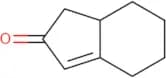
1,4,5,6,7,7a-Hexahydro-inden-2-one
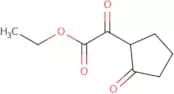
CAS:<p>1,4,5,6,7,7a-Hexahydro-inden-2-one is a cycloaddition product of two 1,4-dihydrobenzenes. It has been shown to undergo the pauson-khand reaction with diazomethane to produce a cyclopropane ring.</p>Formula:C9H12OPurity:Min. 95%Molecular weight:136.19 g/molEthyl 2-oxo-2-(2-oxocyclopentyl)acetate
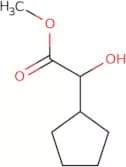
CAS:<p>Versatile small molecule scaffold</p>Formula:C9H12O4Purity:Min. 95%Molecular weight:184.19 g/molMethyl 2-cyclopentyl-2-hydroxyacetate
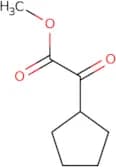
CAS:<p>Versatile small molecule scaffold</p>Formula:C8H14O3Purity:Min. 95%Molecular weight:158.19 g/molMethyl 2-cyclopentyl-2-oxoacetate
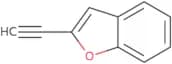
CAS:<p>Versatile small molecule scaffold</p>Formula:C8H12O3Purity:Min. 95%Molecular weight:156.18 g/mol2-Ethynyl-1-benzofuran
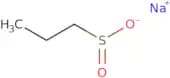
CAS:<p>2-Ethynyl-1-benzofuran is a ligand in organic chemistry that can react with an oxidant to form terminal alkynes. It has been shown to undergo hydrofunctionalization and stereocontrol, which are two of the most commonly studied reactions in organic chemistry. This compound is also used as a precursor for benzofurans, which are important organic compounds that have been studied extensively due to their structural diversity. 2-Ethynyl-1-benzofuran is synthesized from azides and aldehydes or triazoles, which can be obtained through advances in organic chemistry.</p>Formula:C10H6OPurity:Min. 95%Molecular weight:142.15 g/molSodium propane-1-sulfinate
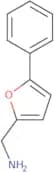
CAS:<p>Sodium propane-1-sulfinate is a carbonyl group that introduces an amyloid protein with a methyl ketone and hydroxyl group. The presence of the methyl ketone isomers can be explained by the cyclic structure, which consists of six carbons. This functional group has been shown to inhibit the activity of crth2, which is part of a heterocycle. Sodium propane-1-sulfinate also inhibits retinoic acid c1-6 alkylase, which is a functional group found in the human body. The introduction of this functional group may have an inhibitory effect on metabolism.</p>Formula:C3H7NaO2SPurity:Min. 95%Molecular weight:130.14 g/mol(5-Phenylfuran-2-yl)methanamine
CAS:<p>(5-Phenylfuran-2-yl)methanamine is a drug that has been shown to be effective in treating neurodegenerative diseases and cancer. It is a member of the sirtuin family, which are enzymes that regulate gene expression. The drug inhibits SIRT2 and other deacetylases, which may lead to the development of new treatment strategies for neurodegenerative diseases and cancer. (5-Phenylfuran-2-yl)methanamine has high water solubility, which allows it to penetrate through the blood brain barrier more effectively than hydrophobic drugs. This property also makes it possible to administer lower doses of the drug, thereby reducing side effects on healthy cells.</p>Formula:C11H11NOPurity:Min. 95%Molecular weight:173.21 g/molSodium 2-methylpropane-1-sulfinate
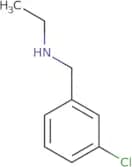
CAS:<p>Versatile small molecule scaffold</p>Formula:C4H9NaO2SPurity:Min. 95%Molecular weight:144.17 g/mol(3-Chloro-benzyl)-ethyl-amine
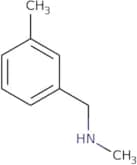
CAS:<p>Versatile small molecule scaffold</p>Formula:C9H12ClNPurity:Min. 95%Molecular weight:169.65 g/mol3-Methyl-N-methylbenzylamine
CAS:<p>3-Methyl-N-methylbenzylamine is a nitro compound that has been shown to have antimycobacterial activity. It belongs to the class of aliphatic hydrocarbons, which are functional groups consisting of a chain of carbon atoms with hydrogen atoms attached to some of the carbons. The molecular modeling found that 3-methyl-N-methylbenzylamine binds to the active site of mycobacterial enoyl reductase and inhibits its activity. This leads to a decrease in cellular energy metabolism, which can lead to cell death. 3-Methyl-N-methylbenzylamine also has an amine group, which is an organic acid that contains nitrogen and hydrogen. These molecules are important for piperazine synthesis and may be responsible for the antimycobacterial properties of 3-methyl-N-methylbenzylamine.</p>Formula:C9H13NPurity:Min. 95%Molecular weight:135.21 g/mol5-[(3-Chlorophenyl)methyl]-1,3,4-thiadiazol-2-amine
CAS:<p>Versatile small molecule scaffold</p>Formula:C9H8ClN3SPurity:Min. 95%Molecular weight:225.7 g/mol5-(2-Fluorobenzyl)[1,3,4]thiadiazol-2-ylamine
CAS:<p>Versatile small molecule scaffold</p>Formula:C9H8FN3SPurity:Min. 95%Molecular weight:209.25 g/mol5-[(3-Fluorophenyl)methyl]-1,3,4-thiadiazol-2-amine
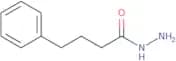
CAS:<p>Versatile small molecule scaffold</p>Formula:C9H8FN3SPurity:Min. 95%Molecular weight:209.25 g/mol4-Phenylbutanehydrazide
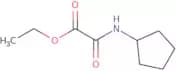
CAS:<p>4-Phenylbutanehydrazide is a nitro, carbonyl group and hydrogen bond donor. It has an interaction with the benzyl group of 4-phenylbutanoylhydrazide through hydrogen bonds. The conformation of 4-phenylbutanehydrazide is agonistic and its secondary structure is mainly determined by the carbonyl group. The carbonyl group interacts with the hydrazide nucleus through a hydrogen bond, while its acylhomoserine residue interacts with the carbonyl group through a thiocarbamate interaction. This compound may be classified as an agonist or antagonist depending on the receptor it binds to.</p>Formula:C10H14N2OPurity:Min. 95%Molecular weight:178.23 g/molethyl (cyclopentylcarbamoyl)formate
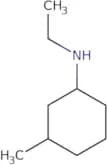
CAS:Versatile small molecule scaffoldFormula:C9H15NO3Purity:Min. 95%Molecular weight:185.22 g/molN-Ethyl-3-methylcyclohexan-1-amines
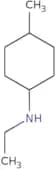
CAS:<p>Versatile small molecule scaffold</p>Formula:C9H19NPurity:Min. 95%Molecular weight:141.3 g/molN-Ethyl-4-methylcyclohexan-1-amines
CAS:<p>Versatile small molecule scaffold</p>Formula:C9H19NPurity:Min. 95%Molecular weight:141.3 g/molN-Cyclopentyl-N-propylamine
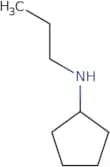
CAS:<p>N-Cyclopentyl-N-propylamine is a functional compound that belongs to the class of organic compounds. It is used as an intermediate in the synthesis of other drugs and pharmaceuticals. This compound has been shown to have a high reactivity, which makes it useful in polymerization and polymerization initiator applications. N-Cyclopentyl-N-propylamine has been shown to be reactive with polarizers, alkylthio groups, and trifluoromethyl groups.</p>Formula:C8H17NPurity:Min. 95%Molecular weight:127.23 g/molN-(4-Methylbenzyl)propan-1-amine
CAS:<p>Versatile small molecule scaffold</p>Formula:C11H17NPurity:Min. 95%Molecular weight:163.26 g/molBis(3-methoxyphenyl)methanone
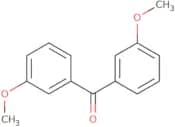
CAS:<p>Bis(3-methoxyphenyl)methanone is a palladium catalyst that selectively activates olefins. It has been shown to be useful in the synthesis of dihydrobenzofurans and oxonium derivatives, which are used as pharmaceuticals. This compound also catalyzes the transformation of various functional groups, such as diazo, alkenes, and intramolecular aldol condensation. Bis(3-methoxyphenyl)methanone is used as a catalyst for the production of dibenzofuran compounds with high selectivity. The diastereoselectivity of this compound is due to its ability to activate substrates with electron-donating groups at positions ortho to the phenyl group.</p>Formula:C15H14O3Purity:Min. 95%Molecular weight:242.27 g/mol3-Nitro-1H-pyrazole-4-carboxylic acid
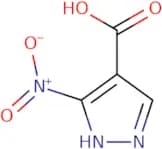
CAS:<p>Versatile small molecule scaffold</p>Formula:C4H3N3O4Purity:Min. 95%Molecular weight:157.09 g/mol3,3-Dimethyl-1-(methylsulfanyl)butan-2-one
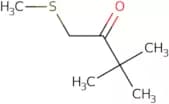
CAS:<p>3,3-Dimethyl-1-(methylsulfanyl)butan-2-one is an enolate that is used as a pesticide. It is typically applied to the soil or sprayed on plants. It can be modified to increase its insecticidal activity by adding other chemicals such as carbaryl, acetonitrile, or hydroxymethylphenyl. 3,3-Dimethyl-1-(methylsulfanyl)butan-2-one is metabolized by hydrolysis and methylcarbamates are formed. The sulfide group in the molecule reacts with oxygen to form sulfoxides and carbofuran, which are toxic to mammals and birds.</p>Formula:C7H14OSPurity:Min. 95%Molecular weight:146.25 g/mol1-(2-Chloroethyl)-3-methylbenzene
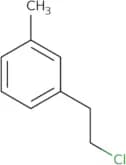
CAS:<p>Versatile small molecule scaffold</p>Formula:C9H11ClPurity:Min. 95%Molecular weight:154.64 g/mol1-(2-Chloroethyl)-2-methylbenzene
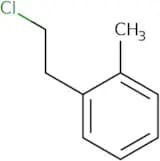
CAS:<p>Versatile small molecule scaffold</p>Formula:C9H11ClPurity:Min. 95%Molecular weight:154.63 g/mol1-Methyl-3-nitro-1H-pyrazole-4-carboxylic acid
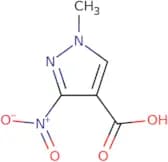
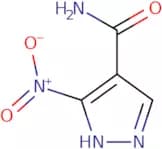
CAS:<p>Versatile small molecule scaffold</p>Formula:C5H5N3O4Purity:Min. 95%Molecular weight:171.11 g/mol3-Nitro-1H-pyrazole-4-carboxamide
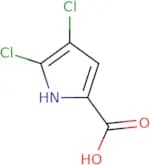
CAS:Versatile small molecule scaffoldFormula:C4H4N4O3Purity:Min. 95%Molecular weight:156.1 g/mol4,5-dichloro-1H-pyrrole-2-carboxylic acid
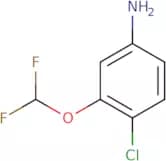
CAS:<p>Versatile small molecule scaffold</p>Formula:C5H3Cl2NO2Purity:Min. 95%Molecular weight:179.98 g/mol4-Chloro-3-(difluoromethoxy)aniline
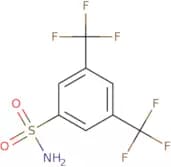
CAS:<p>Versatile small molecule scaffold</p>Formula:C7H6ClF2NOPurity:Min. 95%Molecular weight:193.58 g/mol3,5-Bis(trifluoromethyl)benzenesulfonamide
CAS:<p>Versatile small molecule scaffold</p>Formula:C8H5F6NO2SPurity:Min. 95%Molecular weight:293.19 g/mol1-Propyl-1,2,3,4-tetrahydroisoquinoline
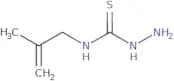
CAS:<p>Versatile small molecule scaffold</p>Formula:C12H17NPurity:Min. 95%Molecular weight:175.27 g/mol3-Amino-1-(2-methylprop-2-en-1-yl)thiourea
CAS:<p>Versatile small molecule scaffold</p>Formula:C5H11N3SPurity:Min. 95%Molecular weight:145.23 g/mol2-[(3-Methoxypropyl)amino]ethan-1-ol
CAS:Versatile small molecule scaffoldFormula:C6H15NO2Purity:Min. 95%Molecular weight:133.19 g/mol4-Ethylamino-1-butanol
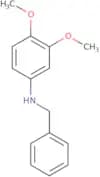
CAS:<p>4-Ethylamino-1-butanol is an alkanolamine that interacts with receptors in the body. It has a hydroxyl group and is a molecule that contains functionalities. It interacts with other molecules, such as corticotropin-releasing hormone (CRH). 4-Ethylamino-1-butanol binds to CRH and prevents it from binding to its receptor, which decreases the release of corticotropin. This compound has been used as a positron emission tomography (PET) radiotracer for imaging the insulin receptor in living tissue. The chemical can be systematically introduced into tissues and organs, including the brain, where it accumulates due to its hydrophilic nature. 4-Ethylamino-1-butanol also has oxygenated groups that are suitable for PET imaging using 18F radiolabeling.</p>Formula:C6H15NOPurity:Min. 95%Molecular weight:117.19 g/molN-Benzyl-3,4-dimethoxyaniline
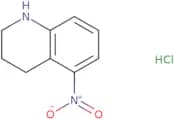
CAS:<p>Versatile small molecule scaffold</p>Formula:C15H17NO2Purity:Min. 95%Molecular weight:243.3 g/mol5-Nitro-1,2,3,4-tetrahydroquinoline
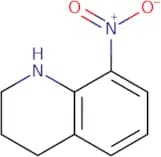
CAS:5-Nitro-1,2,3,4-tetrahydroquinoline is an amine that is used in the synthesis of other chemicals. It is selective for transfer reactions because it can transfer to sulfate. The reaction selectivity is determined by the module and the reaction solution. The efficiency of the carbenium ion can be increased by adjusting the pH to make it more acidic. 5-Nitro-1,2,3,4-tetrahydroquinoline has a high yield and can be synthesized with a high degree of purity by using ammonium sulfate as a transfer agent in a neutral solution.Formula:C9H10N2O2Purity:Min. 95%Molecular weight:178.19 g/mol8-Nitro-1,2,3,4-tetrahydroquinoline
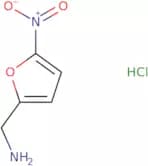
CAS:<p>Versatile small molecule scaffold</p>Formula:C9H10N2O2Purity:Min. 95%Molecular weight:178.19 g/mol(5-Nitrofuran-2-yl)methanamine hydrochloride
CAS:Versatile small molecule scaffoldFormula:C5H7ClN2O3Purity:Min. 95%Molecular weight:178.57 g/mol2-Methylprop-2-ene-1-sulfonamide
CAS:<p>Versatile small molecule scaffold</p>Formula:C4H9NO2SPurity:Min. 95%Molecular weight:135.19 g/mol5-Dichloro-2-nitrophenol
CAS:5-Dichloro-2-nitrophenol is a chemical that is used as an immunomodulator, pesticide, or herbicide. It is activated by the body to form a reactive intermediate that can bind to DNA and create mutations. 5-Dichloro-2-nitrophenol has been shown to cause oxidative damage in cell cultures and other tissues, such as proximal tubules of the kidney. It also produces malondialdehyde oxidation products which are known to be cytotoxic. In addition, preincubation with 5-Dichloro-2-nitrophenol increases the sensitivity of cells to other oxidative stressors such as peroxides and hydrogen peroxide.Formula:C6H3Cl2NO3Purity:Min. 95%Molecular weight:208 g/mol1,8,10,12-Tetraazatricyclo[7.3.0.0,3,7]dodeca-3(7),9,11-trien-2-one
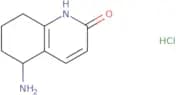
CAS:<p>Versatile small molecule scaffold</p>Formula:C8H8N4OPurity:Min. 95%Molecular weight:176.18 g/mol5-Amino-1,2,5,6,7,8-hexahydroquinolin-2-one hydrochloride
CAS:<p>Versatile small molecule scaffold</p>Formula:C9H13ClN2OPurity:Min. 95%Molecular weight:200.66 g/mol1-(2,3-Dichlorophenyl)ethan-1-amine
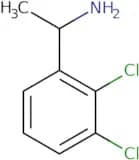
CAS:<p>Versatile small molecule scaffold</p>Formula:C8H9Cl2NPurity:Min. 95%Molecular weight:190.07 g/mol4-(2-Bromoethyl)-1,2-dichlorobenzene
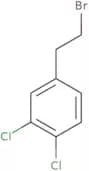
CAS:<p>Versatile small molecule scaffold</p>Formula:C8H7BrCl2Purity:Min. 95%Molecular weight:253.95 g/molN-[4-(2-Bromoethyl)phenyl]acetamide
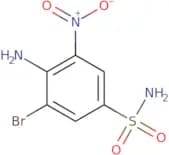
CAS:<p>Versatile small molecule scaffold</p>Formula:C10H12BrNOPurity:Min. 95%Molecular weight:242.11 g/mol4-Amino-3-bromo-5-nitro-benzenesulfonamide
CAS:<p>Versatile small molecule scaffold</p>Formula:C6H6BrN3O4SPurity:Min. 95%Molecular weight:296.1 g/mol1-N-Benzyl-4-chlorobenzene-1,2-diamine
CAS:<p>1-N-Benzyl-4-chlorobenzene-1,2-diamine is a chemical compound that is used as an anticancer drug. It is a potent inhibitor of protein kinase C and has been shown to induce cell cycle arrest in the G1 phase of the cell cycle. 1-N-Benzyl-4-chlorobenzene-1,2-diamine also induces apoptosis in cancer cells. The cytometric analysis of apoptotic processes was used to determine the pharmacokinetic properties of 1-N-Benzyl-4-chlorobenzene-1,2-diamine. This drug may be mediated by annexin A5 or other proteins. Radionuclide imaging studies were conducted in order to assess the pharmacokinetics of 1NBDBCD in humans.</p>Formula:C13H13ClN2Purity:Min. 95%Molecular weight:232.71 g/mol3-Chlorothieno[2,3-b]thiophene-2-carboxylic acid
CAS:<p>Versatile small molecule scaffold</p>Formula:C7H3ClO2S2Purity:Min. 95%Molecular weight:218.7 g/molEthyl N-(4-hydroxycyclohexyl)carbamate
CAS:<p>Versatile small molecule scaffold</p>Formula:C9H17NO3Purity:Min. 95%Molecular weight:187.24 g/molEthyl N-(4-oxocyclohexyl)carbamate
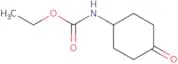
CAS:<p>Versatile small molecule scaffold</p>Formula:C9H15NO3Purity:Min. 95%Molecular weight:185.22 g/mol2-[4-(2-Oxoethyl)phenyl]acetaldehyde
CAS:Versatile small molecule scaffoldFormula:C10H10O2Purity:Min. 95%Molecular weight:162.18 g/mol


![5-[(3-Chlorophenyl)methyl]-1,3,4-thiadiazol-2-amine](/_next/image/?url=https%3A%2Fstatic.cymitquimica.com%2Fproducts%2F3D%2Fthumb-webp%2FPBA18149.webp&w=3840&q=75)
![5-(2-Fluorobenzyl)[1,3,4]thiadiazol-2-ylamine](/_next/image/?url=https%3A%2Fstatic.cymitquimica.com%2Fproducts%2F3D%2Fthumb-webp%2FPBA18153.webp&w=3840&q=75)
![5-[(3-Fluorophenyl)methyl]-1,3,4-thiadiazol-2-amine](/_next/image/?url=https%3A%2Fstatic.cymitquimica.com%2Fproducts%2F3D%2Fthumb-webp%2FPBA18154.webp&w=3840&q=75)


![2-[(3-Methoxypropyl)amino]ethan-1-ol](/_next/image/?url=https%3A%2Fstatic.cymitquimica.com%2Fproducts%2F3D%2Fthumb-webp%2FPBA21684.webp&w=3840&q=75)



![1,8,10,12-Tetraazatricyclo[7.3.0.0,3,7]dodeca-3(7),9,11-trien-2-one](/_next/image/?url=https%3A%2Fstatic.cymitquimica.com%2Fproducts%2F3D%2Fthumb-webp%2FPBA22560.webp&w=3840&q=75)
![N-[4-(2-Bromoethyl)phenyl]acetamide](/_next/image/?url=https%3A%2Fstatic.cymitquimica.com%2Fproducts%2F3D%2Fthumb-webp%2FPBA23206.webp&w=3840&q=75)

![3-Chlorothieno[2,3-b]thiophene-2-carboxylic acid](/_next/image/?url=https%3A%2Fstatic.cymitquimica.com%2Fproducts%2F3D%2Fthumb-webp%2FPBA24408.webp&w=3840&q=75)

![2-[4-(2-Oxoethyl)phenyl]acetaldehyde](/_next/image/?url=https%3A%2Fstatic.cymitquimica.com%2Fproducts%2F3D%2Fthumb-webp%2FPBA24600.webp&w=3840&q=75)