Building Blocks
This section contains fundamental products for the synthesis of organic and biological compounds. Building blocks are the essential starting materials used to construct complex molecules through various chemical reactions. They play a critical role in drug discovery, material science, and chemical research. At CymitQuimica, we offer a diverse range of high-quality building blocks to support your innovative research and industrial projects, ensuring you have the essential components for successful synthesis.
Subcategories of "Building Blocks"
- Boronic Acids & Boronic Acid Derivatives(5,756 products)
- Chiral Building Blocks(1,242 products)
- Hydrocarbon Building Blocks(6,095 products)
- Organic Building Blocks(61,038 products)
Found 196817 products of "Building Blocks"
Sort by
Purity (%)
0
100
|
0
|
50
|
90
|
95
|
100
N-[(1-Adamantylamino)carbonyl]glycine
CAS:<p>Versatile small molecule scaffold</p>Formula:C13H20N2O3Purity:Min. 95%Molecular weight:252.31 g/molN-[(1-Adamantylamino)carbonyl]-β-alanine
CAS:<p>Versatile small molecule scaffold</p>Formula:C14H22N2O3Purity:Min. 95%Molecular weight:266.34 g/mol1,3-Dimethyl-1H-pyrrole-2-carboxylic acid
CAS:<p>Versatile small molecule scaffold</p>Formula:C7H9NO2Purity:Min. 95%Molecular weight:139.15 g/mol4-(2-Methoxy-phenyl)-butyric acid
CAS:<p>Versatile small molecule scaffold</p>Formula:C11H14O3Purity:Min. 95%Molecular weight:194.23 g/mol1-Methyl-2,3-dihydro-1H-indene-1-carboxylic acid
CAS:<p>Versatile small molecule scaffold</p>Formula:C11H12O2Purity:Min. 95%Molecular weight:176.21 g/mol2-Methyl-1,2,3,4-tetrahydronaphthalen-2-ol
CAS:<p>Versatile small molecule scaffold</p>Formula:C11H14OPurity:Min. 95%Molecular weight:162.23 g/mol2-Ethoxy-2-phenylacetonitrile
CAS:<p>2-Ethoxy-2-phenylacetonitrile is a quinoline derivative that has been shown to inhibit the HIV virus. This drug binds to the CCR5 receptor on the surface of human T cells and prevents the virus from entering. 2-Ethoxy-2-phenylacetonitrile also shows antiviral activity against herpes simplex virus and cytomegalovirus (CMV). The drug also has chemokine activity, which may be important for its anti-inflammatory properties.</p>Formula:C10H11NOPurity:Min. 95%Molecular weight:161.2 g/mol2-Ethoxy-2-(4-methylphenyl)acetonitrile
CAS:<p>Versatile small molecule scaffold</p>Formula:C11H13NOPurity:Min. 95%Molecular weight:175.23 g/mol2-Ethoxy-2-phenylacetic acid
CAS:<p>Versatile small molecule scaffold</p>Formula:C10H12O3Purity:Min. 95%Molecular weight:180.2 g/mol1-(Carboxymethyl)cyclopropane-1-carboxylic acid
CAS:<p>Versatile small molecule scaffold</p>Formula:C6H8O4Purity:Min. 95%Molecular weight:144.12 g/mol3-Benzyl-1H-pyrrole
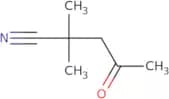
CAS:<p>3-Benzyl-1H-pyrrole is a chemical compound that belongs to the group of aldehydes. It can be produced by irradiation of trans-stilbene and has been shown to react with acetals, yielding acetal adducts. The reaction of 3-benzyl-1H-pyrrole with benzaldehyde in the presence of sodium ethoxide yields an acetal. The spectrum for 3-benzyl-1H-pyrrole shows two peaks at 2.2 and 2.6 ppm; the first peak corresponds to the methylene protons, while the second peak corresponds to the methyl protons in the aromatic ring. The fragmentation pattern for 3-benzyl-1H-pyrrole is characterized by a series of three peaks at m/e = 55, 62, and 69 corresponding to loss of hydrogen atoms on C2, C3, and C4 respectively. This compound has also been shown</p>Formula:C11H11NPurity:Min. 95%Molecular weight:157.21 g/mol2,2-Dimethyl-4-oxopentanenitrile
CAS:<p>Versatile small molecule scaffold</p>Formula:C7H11NOPurity:Min. 95%Molecular weight:125.17 g/mol4-Methoxy-1-methyl-1H-1,3-benzodiazol-2-amine
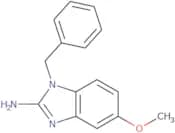
CAS:<p>Versatile small molecule scaffold</p>Formula:C9H11N3OPurity:Min. 95%Molecular weight:177.2 g/mol1-Benzyl-5-methoxy-1H-1,3-benzodiazol-2-amine
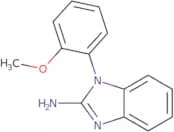
CAS:<p>Versatile small molecule scaffold</p>Formula:C15H15N3OPurity:Min. 95%Molecular weight:253.3 g/mol1-(2-Methoxyphenyl)-1H-1,3-benzodiazol-2-amine
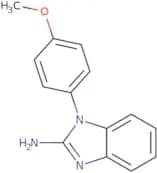
CAS:<p>Versatile small molecule scaffold</p>Formula:C14H13N3OPurity:Min. 95%Molecular weight:239.27 g/mol1-(4-Methoxyphenyl)-1H-1,3-benzodiazol-2-amine
CAS:<p>Versatile small molecule scaffold</p>Formula:C14H13N3OPurity:Min. 95%Molecular weight:239.27 g/molN-(2-Indanyl)aniline
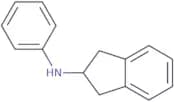
CAS:<p>N-(2-Indanyl)aniline is a quaternary ammonium salt that has antiarrhythmic properties. It is used for the treatment of arrhythmias, such as ventricular tachycardia or ventricular fibrillation, and can be administered intravenously or orally. N-(2-Indanyl)aniline is a type of quaternary ammonium salt with antiarrhythmic properties. It can be administered intravenously or orally. The chemical structure of this drug contains an amine group and a quaternary ammonium group, which are both positively charged. This drug is used to treat arrhythmias, such as ventricular tachycardia or ventricular fibrillation.</p>Formula:C15H15NPurity:Min. 95%Molecular weight:209.29 g/mol2-Amino-N-(but-3-yn-1-yl)benzamide
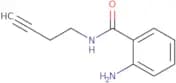
CAS:<p>Versatile small molecule scaffold</p>Formula:C11H12N2OPurity:Min. 95%Molecular weight:188.23 g/mol1-Benzyl-2-Azepanone
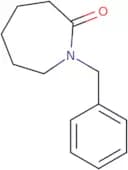
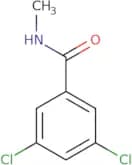
CAS:<p>Versatile small molecule scaffold</p>Formula:C13H17NOPurity:Min. 95%Molecular weight:203.28 g/mol3,5-Dichloro-N-methylbenzamide
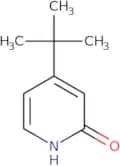
CAS:<p>Versatile small molecule scaffold</p>Formula:C8H7Cl2NOPurity:Min. 95%Molecular weight:204.05 g/mol4-(tert-Butyl)pyridin-2(1H)-one
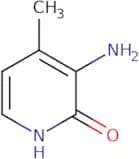
CAS:<p>Versatile small molecule scaffold</p>Formula:C9H13NOPurity:Min. 95%Molecular weight:151.21 g/mol3-amino-4-methylpyridin-2-ol
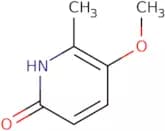
CAS:<p>Versatile small molecule scaffold</p>Formula:C6H8N2OPurity:Min. 95%Molecular weight:124.14 g/mol5-Methoxy-6-methylpyridin-2-ol
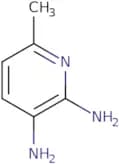
CAS:<p>Versatile small molecule scaffold</p>Formula:C7H9NO2Purity:Min. 95%Molecular weight:139.15 g/mol6-Methylpyridine-2,3-diamine
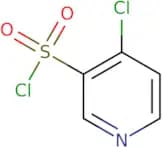
CAS:<p>Versatile small molecule scaffold</p>Formula:C6H9N3Purity:90%MinMolecular weight:123.16 g/mol4-chloropyridine-3-sulfonyl chloride
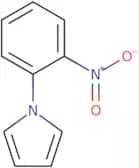
CAS:<p>4-Chloropyridine-3-sulfonyl chloride is a thrombin inhibitor that has been discovered through the use of in vitro screening methods. It is a small molecule with lipophilic properties and oral bioavailability. This compound inhibits thrombin by binding to the active site of the enzyme, which prevents the formation of an enzyme-thrombin complex. The discovery was made using a pharmacophore-based approach and further modifications were made to improve its potency and increase its lipophilicity. This compound also exhibits an acceptable level of bioavailability in vivo, which may be due to its high solubility in water.</p>Formula:C5H3Cl2NO2SPurity:Min. 95%Molecular weight:212.1 g/mol1-(2-Nitrophenyl)pyrrole
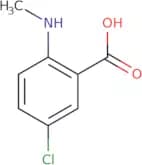
CAS:<p>1-(2-Nitrophenyl)pyrrole (1-NPyr) is an activated form of pyrrole that is synthesized by the Saccharomyces cerevisiae strain. It can be reduced with borohydride to produce 1-aminonitrobenzene. 1-NPyr has been shown to be used as a precursor for the synthesis of various drugs, including multidrugs and anilines. This compound is enantiopure and thermodynamically stable, making it an ideal candidate for asymmetric synthesis.</p>Formula:C10H8N2O2Purity:Min. 95%Molecular weight:188.18 g/mol5-Chloro-2-(methylamino)benzoic acid
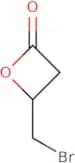
CAS:<p>Versatile small molecule scaffold</p>Formula:C8H8ClNO2Purity:Min. 95%Molecular weight:185.61 g/mol4-(Bromomethyl)oxetan-2-one
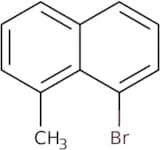
CAS:<p>Versatile small molecule scaffold</p>Formula:C4H5BrO2Purity:Min. 95%Molecular weight:164.99 g/mol1-Bromo-8-methylnaphthalene
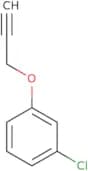
CAS:<p>1-Bromo-8-methylnaphthalene is a synthetic chemical that belongs to the group of butyric acid derivatives. It has been shown to react reversibly with alcohols and carbonyls, as well as iodides and cinnamic acids. 1-Bromo-8-methylnaphthalene can be synthesized from xylene using lithium diisopropylamide (LDA) in the presence of an amine base, yielding a mixture of products, including oxetane. This compound crystallizes in space group P2(1)/c with unit cell dimensions a = 12.7 Å, b = 14.4 Å, c = 18.5 Å, β = 98.1° and Z = 2.</p>Formula:C11H9BrPurity:Min. 95%Molecular weight:221.1 g/mol1-chloro-3-(prop-2-yn-1-yloxy)benzene
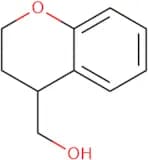
CAS:<p>1-Chloro-3-(prop-2-yn-1-yloxy)benzene is a ligand that can be used in supramolecular chemistry. This ligand interacts with anionic polymers and forms a coordination polymer. The interaction of the ligand and the polymer leads to self-assembly, which is the formation of large structures from small units or molecules. 1-Chloro-3-(prop-2-yn-1-yloxy)benzene has been shown to form silver clusters, which are aggregates of metal atoms held together by relatively weak forces.</p>Formula:C9H7ClOPurity:Min. 95%Molecular weight:166.6 g/mol3,4-Dihydro-2H-1-benzopyran-4-ylmethanol
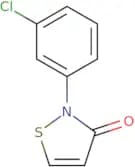
CAS:<p>Versatile small molecule scaffold</p>Formula:C10H12O2Purity:Min. 95%Molecular weight:164.2 g/mol2-(3-Chlorophenyl)-2,3-dihydro-1,2-thiazol-3-one
CAS:<p>Versatile small molecule scaffold</p>Formula:C9H6ClNOSPurity:Min. 95%Molecular weight:211.67 g/mol2-[3-(Aminomethyl)phenoxy]acetic acid hydrochloride
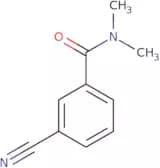
CAS:<p>Versatile small molecule scaffold</p>Formula:C9H12ClNO3Purity:Min. 95%Molecular weight:217.65 g/mol3-Cyano-N,N-dimethylbenzamide
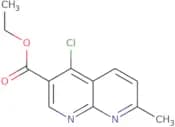
CAS:<p>Versatile small molecule scaffold</p>Formula:C10H10N2OPurity:Min. 95%Molecular weight:174.2 g/molEthyl 4-chloro-7-methyl-1,8-naphthyridine-3-carboxylate
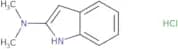
CAS:<p>Versatile small molecule scaffold</p>Formula:C12H11ClN2O2Purity:Min. 95%Molecular weight:250.68 g/molN,N-Dimethyl-1H-indol-2-amine hydrochloride
CAS:<p>Versatile small molecule scaffold</p>Formula:C10H13ClN2Purity:Min. 95%Molecular weight:196.67 g/mol2-(Morpholin-4-yl)-1H-indole hydrochloride
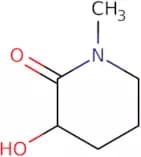
CAS:<p>Versatile small molecule scaffold</p>Formula:C12H15ClN2OPurity:Min. 95%Molecular weight:238.71 g/mol3-Hydroxy-1-methylpiperidin-2-one
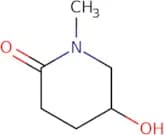
CAS:<p>3-Hydroxy-1-methylpiperidin-2-one is an organic compound that can be used as a chiral building block in the synthesis of enantiomerically pure compounds. It is a racemic mixture that is obtained by reacting 3-hydroxy-1,2-dimethylpiperidinium chloride with sodium methoxide. The lipase activity of Pseudomonas cepacia has been immobilized on a solid support in order to produce enantioselective synthesis. This immobilization prevents the enzyme from being washed out during the reaction process and provides a continuous supply of active enzyme. The enantioselective synthesis of 3-hydroxy-1,2-dimethylpiperidinium chloride has been achieved using chemoenzymatic methods.</p>Formula:C6H11NO2Purity:Min. 95%Molecular weight:129.16 g/mol5-Hydroxy-1-methylpiperidin-2-one
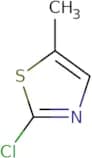
CAS:<p>5-Hydroxy-1-methylpiperidin-2-one is a muscle relaxant that is used as a medicine. This drug has been shown to have an inhibitory effect on bacterial growth and may be used for the treatment of infections caused by bacteria, such as tuberculosis. 5-Hydroxy-1-methylpiperidin-2-one binds to the histamine H1 receptor and inhibits the release of histamine, which may reduce pain and inflammation. This drug also has anticancer properties. 5HMP binds to DNA in the G protein coupled receptors and prevents them from binding to their corresponding ligands. It also inhibits cell proliferation by inhibiting protein synthesis, which leads to cell death by apoptosis or necrosis.</p>Formula:C6H11NO2Purity:Min. 95%Molecular weight:129.16 g/mol2-Chloro-5-methylthiazole
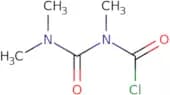
CAS:<p>2-Chloro-5-methylthiazole is a chlorinating agent that can be used to synthesize organic compounds. It is prepared by the reaction of triethylamine solution and acetonitrile in the presence of hydrochloric acid and hexane. The synthesis temperature should be kept below -10°C. The product is isolated by filtration, washed with diluent (e.g., isopropyl), and dried under vacuum. 2-Chloro-5-methylthiazole reacts with chloride to produce chlorine gas, which can then be purified using a solution of hydrochloric acid in hexane or methylthiazole in acetonitrile.<br>2-Chloro-5-methylthiazole can also react with sodium metal in an ethereal solution to produce methylene chloride, which is then reacted with ammonia to form methylamine.</p>Formula:C4H4ClNSPurity:Min. 95%Molecular weight:133.6 g/molN-(Dimethylcarbamoyl)-N-methylcarbamoyl chloride
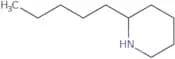
CAS:<p>Versatile small molecule scaffold</p>Formula:C5H9ClN2O2Purity:Min. 95%Molecular weight:164.59 g/mol2-Pentylpiperidine
CAS:<p>2-Pentylpiperidine is an acetylcholine receptor agonist and is also a toxic alkaloid. It is biosynthesized in animals by the hydroxylation of butyrolactone. 2-Pentylpiperidine has been shown to have antinociceptive effects in animals, which may be due to its ability to activate nicotinic acetylcholine receptors. 2-Pentylpiperidine has also been shown to inhibit the growth of cells in culture, and also inhibits the production of cyclohexanol from cyclohexanone. This drug has been shown to cause death in humans at high doses, with several possible causes being considered: inhibition of protein synthesis or cell division, or interference with RNA synthesis.</p>Formula:C10H21NPurity:Min. 95%Molecular weight:155.28 g/mol2-Methyl-1-[3-(trifluoromethyl)phenyl]propan-1-ol
CAS:<p>Versatile small molecule scaffold</p>Formula:C11H13F3OPurity:Min. 95%Molecular weight:218.21 g/mol7-Methyl-4-oxo-4h-pyrido[1,2-a]pyrimidine-3-carboxylic acid
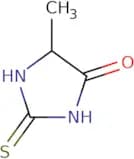
CAS:<p>Versatile small molecule scaffold</p>Formula:C10H8N2O3Purity:Min. 95%Molecular weight:204.18 g/mol5-Methyl-2-thioxoimidazolidin-4-one
CAS:<p>5-Methyl-2-thioxoimidazolidin-4-one (MTI) is an antibacterial agent that has been shown to have a strong inhibitory effect against Staphylococcus epidermidis. MTI has been shown to be an effective antidiabetic, pesticide, and antibacterial agent. It also has a tautomeric form that reversibly binds to the active site of bacterial DNA topoisomerase II, which prevents the rewinding of DNA and inhibits transcription. MTI is used in the treatment of mammalian cells for cancer treatment. In addition, it can alkylate DNA bases and disrupts the DNA replication process.</p>Formula:C4H6N2OSPurity:Min. 95%Molecular weight:130.17 g/mol5-Methyl-[1,2,4]triazolo[1,5-a]pyrimidin-7-amine
CAS:<p>Versatile small molecule scaffold</p>Formula:C6H7N5Purity:Min. 95%Molecular weight:149.15 g/mol[2-(Methylsulfanyl)phenyl]methanol
CAS:<p>2-(Methylsulfanyl)phenyl]methanol is an analogue of the ligand 2-methylsulfanylphenol. It reacts with carbenes, aldehydes, and alcohols to form oxalates. This compound can also be used as a transfer agent for alcohols and conium. The structural analysis of this compound has shown that it is a thioether with sulphone substituents.<br>2-(Methylsulfanyl)phenyl]methanol yields the same products as 2-methylsulfanylphenol by reacting with thiols, sulfides, and sulfoxides in the presence of base.</p>Formula:C8H10OSPurity:Min. 95%Molecular weight:154.23 g/mol2-[4-(Pyrimidin-2-yl)piperazin-1-yl]acetonitrile
CAS:<p>Versatile small molecule scaffold</p>Formula:C10H13N5Purity:Min. 95%Molecular weight:203.24 g/mol4-[4-(Pyrimidin-2-yl)piperazin-1-yl]butan-1-amine
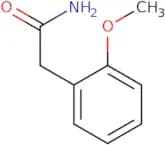
CAS:<p>Versatile small molecule scaffold</p>Formula:C12H21N5Purity:Min. 95%Molecular weight:235.33 g/mol2-(2-Methoxyphenyl)acetamide
CAS:<p>2-(2-Methoxyphenyl)acetamide is a chemical compound that is used in the industrial production of acrylonitrile. It is also used to study the biochemical and microbiological properties of escherichia coli, as well as the biotechnology and biochemistry of recombinant protein expression. 2-(2-Methoxyphenyl)acetamide has been shown to be an excellent affinity ligand for ionic liquid chromatography (ILC). This chemical can be used to identify wild-type proteins in a sample.</p>Formula:C9H11NO2Purity:Min. 95%Molecular weight:165.19 g/mol
![N-[(1-Adamantylamino)carbonyl]glycine](/_next/image/?url=https%3A%2Fstatic.cymitquimica.com%2Fproducts%2F3D%2Fthumb-webp%2FIBA20018.webp&w=3840&q=75)

![N-[(1-Adamantylamino)carbonyl]-β-alanine](/_next/image/?url=https%3A%2Fstatic.cymitquimica.com%2Fproducts%2F3D%2Fthumb-webp%2FIBA20570.webp&w=3840&q=75)



![2-[3-(Aminomethyl)phenoxy]acetic acid hydrochloride](/_next/image/?url=https%3A%2Fstatic.cymitquimica.com%2Fproducts%2F3D%2Fthumb-webp%2FIBA32139.webp&w=3840&q=75)

![2-Methyl-1-[3-(trifluoromethyl)phenyl]propan-1-ol](/_next/image/?url=https%3A%2Fstatic.cymitquimica.com%2Fproducts%2F3D%2Fthumb-webp%2FIBA35766.webp&w=3840&q=75)
![7-Methyl-4-oxo-4h-pyrido[1,2-a]pyrimidine-3-carboxylic acid](/_next/image/?url=https%3A%2Fstatic.cymitquimica.com%2Fproducts%2F3D%2Fthumb-webp%2FIBA35968.webp&w=3840&q=75)
![5-Methyl-[1,2,4]triazolo[1,5-a]pyrimidin-7-amine](/_next/image/?url=https%3A%2Fstatic.cymitquimica.com%2Fproducts%2F3D%2Fthumb-webp%2FIBA37696.webp&w=3840&q=75)
![[2-(Methylsulfanyl)phenyl]methanol](/_next/image/?url=https%3A%2Fstatic.cymitquimica.com%2Fproducts%2F3D%2Fthumb-webp%2FIBA38477.webp&w=3840&q=75)
![2-[4-(Pyrimidin-2-yl)piperazin-1-yl]acetonitrile](/_next/image/?url=https%3A%2Fstatic.cymitquimica.com%2Fproducts%2F3D%2Fthumb-webp%2FIBA38613.webp&w=3840&q=75)
![4-[4-(Pyrimidin-2-yl)piperazin-1-yl]butan-1-amine](/_next/image/?url=https%3A%2Fstatic.cymitquimica.com%2Fproducts%2F3D%2Fthumb-webp%2FIBA38620.webp&w=3840&q=75)