Building Blocks
This section contains fundamental products for the synthesis of organic and biological compounds. Building blocks are the essential starting materials used to construct complex molecules through various chemical reactions. They play a critical role in drug discovery, material science, and chemical research. At CymitQuimica, we offer a diverse range of high-quality building blocks to support your innovative research and industrial projects, ensuring you have the essential components for successful synthesis.
Subcategories of "Building Blocks"
- Boronic Acids & Boronic Acid Derivatives(5,756 products)
- Chiral Building Blocks(1,242 products)
- Hydrocarbon Building Blocks(6,095 products)
- Organic Building Blocks(61,038 products)
Found 196817 products of "Building Blocks"
Sort by
Purity (%)
0
100
|
0
|
50
|
90
|
95
|
100
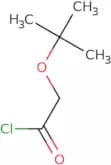
2-(tert-Butoxy)acetyl chloride
CAS:<p>Versatile small molecule scaffold</p>Formula:C6H11ClO2Purity:Min. 95%Molecular weight:150.6 g/mol4-(Benzylsulfanyl)benzaldehyde
CAS:<p>Benzylsulfanylbenzaldehyde is a benzyl derivative that has been studied for its optical properties and electronic structures. The sulfur atom in this molecule is replaced with an electron-donating group, which gives the molecule a positive charge. This change also makes the substituent more polar and thus increases its ability to interact with other molecules. Substituents are groups attached to benzene rings in order to modify their chemical or physical properties. Chromophores are groups of atoms that absorb light and can be used to identify substances by their color. Electron withdrawing groups cause the dipole moment of the molecule to increase, while electron donating groups have the opposite effect on the dipole moment.</p>Formula:C14H12OSPurity:Min. 95%Molecular weight:228.31 g/mol2-Chloro-6-(chloromethyl)pyridine
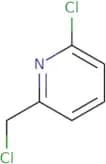
CAS:<p>2-Chloro-6-(chloromethyl)pyridine (2C6CP) is a chloride precursor that can be used for the synthesis of metal chlorides, such as copper chlorides. 2C6CP is synthesized by reacting thionyl chloride with the substituted pyridine under anhydrous conditions at -78°C. The resultant 2C6CP is then hydrolyzed to produce the desired chloride.<br>2C6CP has been shown to act as a ligand in coordination chemistry. It was first synthesized by reacting 3-chloropyridine with thionyl chloride and then hydrolyzing it to 2-chloropyridine. This method was later modified to use 4-chlorobenzoyl chloride instead of 3-chloropyridine, producing 2,4-dichloropyridine.</p>Formula:C6H5Cl2NPurity:Min. 95%Molecular weight:162.02 g/mol3-[5-(4-Chlorophenyl)-1,3,4-oxadiazol-2-yl]propanoic acid
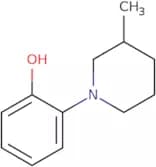
CAS:<p>Versatile small molecule scaffold</p>Formula:C11H9ClN2O3Purity:Min. 95%Molecular weight:252.65 g/mol2-(3-Methylpiperidin-1-yl)phenol
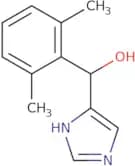
CAS:<p>Versatile small molecule scaffold</p>Formula:C12H17NOPurity:Min. 95%Molecular weight:191.27 g/mol(2,6-Dimethylphenyl)(1H-imidazol-4-yl)methanol
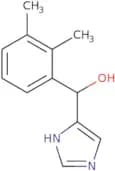
CAS:<p>Versatile small molecule scaffold</p>Formula:C12H14N2OPurity:Min. 95%Molecular weight:202.26 g/mol(2,3-dimethylphenyl)(1H-imidazol-5-yl)methanol
CAS:<p>Versatile small molecule scaffold</p>Formula:C12H14N2OPurity:Min. 95%Molecular weight:202.25 g/mol4-[(2,6-Dimethylphenyl)methyl]-1H-imidazole hydrochloride
CAS:<p>Versatile small molecule scaffold</p>Formula:C12H15ClN2Purity:Min. 95%Molecular weight:222.71 g/molMethyl 5-methyl-1H-imidazole-4-carboxylate hydrochloride
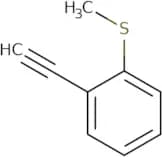
CAS:<p>Versatile small molecule scaffold</p>Formula:C6H9ClN2O2Purity:Min. 95%Molecular weight:176.6 g/mol1-Ethynyl-2-(methylsulfanyl)benzene
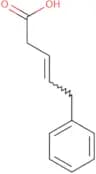
CAS:<p>1-Ethynyl-2-(methylsulfanyl)benzene is a potent antioxidant. It has been shown to have antimicrobial activity against both Gram-positive and Gram-negative bacteria, as well as antifungal activity against both mold and yeast. 1-Ethynyl-2-(methylsulfanyl)benzene has been shown to inhibit the growth of S. aureus and E. coli in vitro, having an IC50 of less than 0.1 μg/mL. This compound also inhibits the growth of Bacillus subtilis and B. cereus, with IC50 values of 0.5 and 0.06 μg/mL respectively, but is not active against Escherichia coli or Pseudomonas aeruginosa at concentrations up to 200 μg/mL.</p>Formula:C9H8SPurity:Min. 95%Molecular weight:148.23 g/mol(3E)-5-Phenylpent-3-enoic acid
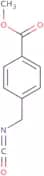
CAS:<p>Versatile small molecule scaffold</p>Formula:C11H12O2Purity:Min. 95%Molecular weight:176.21 g/molMethyl 4-(isocyanatomethyl)benzoate
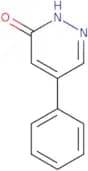
CAS:<p>Versatile small molecule scaffold</p>Formula:C10H9NO3Purity:Min. 95%Molecular weight:191.18 g/mol5-Phenyl-2,3-dihydropyridazin-3-one
CAS:<p>Versatile small molecule scaffold</p>Formula:C10H8N2OPurity:Min. 95%Molecular weight:172.18 g/mol1-[3-(Chloromethyl)-4-ethoxyphenyl]ethan-1-one
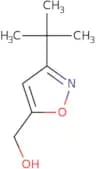
CAS:<p>Versatile small molecule scaffold</p>Formula:C11H13ClO2Purity:Min. 95%Molecular weight:212.67 g/mol(3-tert-Butyl-1,2-oxazol-5-yl)methanol
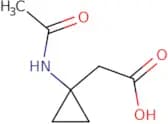
CAS:<p>Versatile small molecule scaffold</p>Formula:C8H13NO2Purity:Min. 95%Molecular weight:155.19 g/mol2-(1-Acetamidocyclopropyl)acetic acid
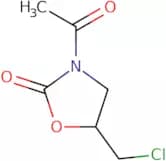
CAS:<p>Versatile small molecule scaffold</p>Formula:C7H11NO3Purity:Min. 95%Molecular weight:157.17 g/mol3-Acetyl-5-(chloromethyl)-1,3-oxazolidin-2-one
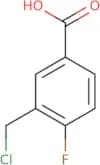
CAS:<p>Versatile small molecule scaffold</p>Formula:C6H8ClNO3Purity:Min. 95%Molecular weight:177.58 g/mol3-(Chloromethyl)-4-fluorobenzoic acid
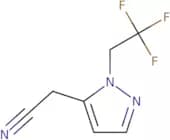
CAS:<p>Versatile small molecule scaffold</p>Formula:C8H6ClFO2Purity:Min. 95%Molecular weight:188.58 g/mol2-(1-(2,2,2-Trifluoroethyl)-1H-pyrazol-5-yl)acetonitrile
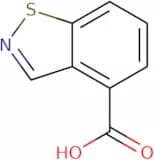
CAS:<p>Versatile small molecule scaffold</p>Formula:C7H6F3N3Purity:Min. 95%Molecular weight:189.14 g/mol1,2-Benzothiazole-4-carboxylic acid
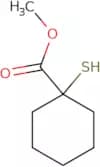
CAS:<p>Versatile small molecule scaffold</p>Formula:C8H5NO2SPurity:Min. 95%Molecular weight:179.2 g/molMethyl 1-sulfanylcyclohexane-1-carboxylate
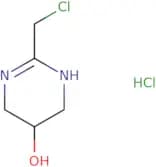
CAS:<p>Versatile small molecule scaffold</p>Formula:C8H14O2SPurity:Min. 95%Molecular weight:174.26 g/mol2-(Chloromethyl)-1,4,5,6-tetrahydropyrimidin-5-ol hydrochloride
CAS:<p>Versatile small molecule scaffold</p>Formula:C5H10Cl2N2OPurity:Min. 95%Molecular weight:185.05 g/mol6'-Fluorospiro[cyclopropane-1,3'-indolin]-2'-one
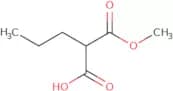
CAS:<p>Versatile small molecule scaffold</p>Formula:C10H8FNOPurity:Min. 95%Molecular weight:177.17 g/mol2-(Methoxycarbonyl)pentanoic acid
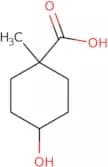
CAS:<p>Versatile small molecule scaffold</p>Formula:C7H12O4Purity:Min. 95%Molecular weight:160.17 g/mol4-Hydroxy-1-methylcyclohexanecarboxylic acid
CAS:<p>Versatile small molecule scaffold</p>Formula:C8H14O3Purity:Min. 95%Molecular weight:158.19 g/mol2-[(1-Methylcyclopentyl)oxy]acetic acid
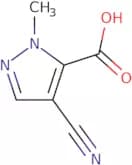
CAS:<p>Versatile small molecule scaffold</p>Formula:C8H14O3Purity:Min. 95%Molecular weight:158.19 g/mol4-Cyano-1-methyl-1H-pyrazole-5-carboxylic acid
CAS:<p>Versatile small molecule scaffold</p>Formula:C6H5N3O2Purity:Min. 95%Molecular weight:151.12 g/mol(2R,4R)-4-Azido-1-{[(9H-fluoren-9-yl)methoxy]carbonyl}pyrrolidine-2-carboxylic acid
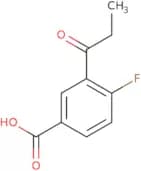
CAS:<p>Versatile small molecule scaffold</p>Formula:C20H18N4O4Purity:Min. 95%Molecular weight:378.4 g/mol4-Fluoro-3-propanoylbenzoic acid
CAS:<p>Versatile small molecule scaffold</p>Formula:C10H9FO3Purity:Min. 95%Molecular weight:196.17 g/mol2-[1-(1-Methyl-1H-imidazol-2-yl)ethoxy]acetic acid
CAS:<p>Versatile small molecule scaffold</p>Formula:C8H12N2O3Purity:Min. 95%Molecular weight:184.19 g/mol6-Chloro-4H,7H-[1,2,4]triazolo[1,5-a]pyrimidin-7-one
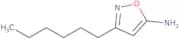
CAS:<p>Versatile small molecule scaffold</p>Formula:C5H3ClN4OPurity:Min. 95%Molecular weight:170.56 g/mol3-Hexyl-1,2-oxazol-5-amine
CAS:<p>Versatile small molecule scaffold</p>Formula:C9H16N2OPurity:Min. 95%Molecular weight:168.24 g/mol1-(6-Aminopyridin-3-yl)piperazin-2-one
CAS:<p>Versatile small molecule scaffold</p>Formula:C9H12N4OPurity:Min. 95%Molecular weight:192.22 g/mol2-[4-(Sulfanylmethyl)phenyl]acetic acid
CAS:<p>Versatile small molecule scaffold</p>Formula:C9H10O2SPurity:Min. 95%Molecular weight:182.24 g/mol2,2-Dimethyl-1-[2-(pyridin-4-yl)pyrrolidin-1-yl]propan-1-one
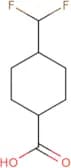
CAS:<p>Versatile small molecule scaffold</p>Formula:C14H20N2OPurity:Min. 95%Molecular weight:232.32 g/mol4-(Difluoromethyl)cyclohexane-1-carboxylic acid
CAS:<p>Versatile small molecule scaffold</p>Formula:C8H12F2O2Purity:Min. 95%Molecular weight:178.18 g/mol4-Cyclopropylcyclohexane-1-carboxylic acid
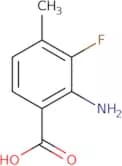
CAS:<p>Versatile small molecule scaffold</p>Formula:C10H16O2Purity:Min. 95%Molecular weight:168.23 g/mol2-Amino-3-fluoro-4-methylbenzoic acid
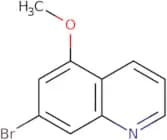
CAS:<p>Versatile small molecule scaffold</p>Formula:C8H8FNO2Purity:Min. 95%Molecular weight:169.15 g/mol7-Bromo-5-methoxyquinoline
CAS:<p>7-Bromo-5-methoxyquinoline is a methoxide that is used as a starting material in the synthesis of other organic compounds. The condensation reaction with glycerol to produce 7-bromo-5-methoxyquinoline has been investigated using microwave irradiation. The yield was low, but the reagents were inexpensive and readily available.</p>Formula:C10H8BrNOPurity:Min. 95%Molecular weight:238.08 g/mol1-(Amino(phenyl)methyl)cyclobutanol
CAS:<p>Versatile small molecule scaffold</p>Formula:C11H15NOPurity:Min. 95%Molecular weight:177.25 g/mol3-Bromo-5,6,7,8-tetrahydro-[1,2,4]triazolo[4,3-A]pyridine
CAS:<p>Versatile small molecule scaffold</p>Formula:C6H8BrN3Purity:Min. 95%Molecular weight:202.05 g/molMethyl 5-bromo-3-iodo-2-methylbenzoate
CAS:<p>Versatile small molecule scaffold</p>Formula:C9H8BrIO2Purity:Min. 95%Molecular weight:354.97 g/mol6-Bromo-[1,2,4]triazolo[4,3-a]pyridin-3-amine
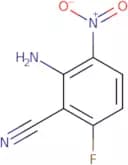
CAS:<p>Versatile small molecule scaffold</p>Formula:C6H5BrN4Purity:Min. 95%Molecular weight:213.03 g/mol2-Amino-6-fluoro-3-nitrobenzonitrile
CAS:<p>Versatile small molecule scaffold</p>Formula:C7H4FN3O2Purity:Min. 95%Molecular weight:181.12 g/moltert-butyl N-(2-aminocyclobutyl)carbamate, Mixture of diastereomers
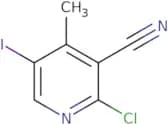
CAS:<p>Versatile small molecule scaffold</p>Formula:C9H18N2O2Purity:Min. 95%Molecular weight:186.3 g/mol2-Chloro-5-iodo-4-methylpyridine-3-carbonitrile
CAS:<p>Versatile small molecule scaffold</p>Formula:C7H4ClIN2Purity:Min. 95%Molecular weight:278.48 g/mol2-Chloro-6-methanesulfonylbenzaldehyde
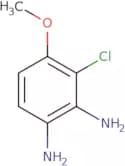
CAS:<p>Versatile small molecule scaffold</p>Formula:C8H7ClO3SPurity:Min. 95%Molecular weight:218.66 g/mol3-Chloro-4-methoxy-1,2-benzenediamine
CAS:<p>Versatile small molecule scaffold</p>Formula:C7H9ClN2OPurity:Min. 95%Molecular weight:172.61 g/mol4-Iodo-6-methylpyrimidine
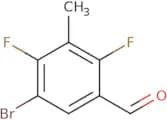
CAS:<p>4-Iodo-6-methylpyrimidine is a pyrimidine derivative that is used as a germicide. This compound has been shown to be catalytic and to have an expressed activity against halogenated compounds. 4-Iodo-6-methylpyrimidine can be used to produce ethers, chlorides, and aminopyrimidines by reacting with diethyl ether, chloride, or amine respectively.</p>Formula:C5H5IN2Purity:Min. 95%Molecular weight:220.01 g/mol5-Bromo-2,4-difluoro-3-methylbenzaldehyde
CAS:<p>Versatile small molecule scaffold</p>Formula:C8H5BrF2OPurity:Min. 95%Molecular weight:235.02 g/mol


![3-[5-(4-Chlorophenyl)-1,3,4-oxadiazol-2-yl]propanoic acid](/_next/image/?url=https%3A%2Fstatic.cymitquimica.com%2Fproducts%2F3D%2Fthumb-webp%2FDDA85861.webp&w=3840&q=75)
![4-[(2,6-Dimethylphenyl)methyl]-1H-imidazole hydrochloride](/_next/image/?url=https%3A%2Fstatic.cymitquimica.com%2Fproducts%2F3D%2Fthumb-webp%2FDDA89245.webp&w=3840&q=75)

![1-[3-(Chloromethyl)-4-ethoxyphenyl]ethan-1-one](/_next/image/?url=https%3A%2Fstatic.cymitquimica.com%2Fproducts%2F3D%2Fthumb-webp%2FDDA92773.webp&w=3840&q=75)
![6'-Fluorospiro[cyclopropane-1,3'-indolin]-2'-one](/_next/image/?url=https%3A%2Fstatic.cymitquimica.com%2Fproducts%2F3D%2Fthumb-webp%2FDFC83416.webp&w=3840&q=75)
![2-[(1-Methylcyclopentyl)oxy]acetic acid](/_next/image/?url=https%3A%2Fstatic.cymitquimica.com%2Fproducts%2F3D%2Fthumb-webp%2FDFC84419.webp&w=3840&q=75)
![(2R,4R)-4-Azido-1-{[(9H-fluoren-9-yl)methoxy]carbonyl}pyrrolidine-2-carboxylic acid](/_next/image/?url=https%3A%2Fstatic.cymitquimica.com%2Fproducts%2F3D%2Fthumb-webp%2FDFC84751.webp&w=3840&q=75)
![2-[1-(1-Methyl-1H-imidazol-2-yl)ethoxy]acetic acid](/_next/image/?url=https%3A%2Fstatic.cymitquimica.com%2Fproducts%2F3D%2Fthumb-webp%2FDFC84847.webp&w=3840&q=75)
![6-Chloro-4H,7H-[1,2,4]triazolo[1,5-a]pyrimidin-7-one](/_next/image/?url=https%3A%2Fstatic.cymitquimica.com%2Fproducts%2F3D%2Fthumb-webp%2FDFC84961.webp&w=3840&q=75)

![2-[4-(Sulfanylmethyl)phenyl]acetic acid](/_next/image/?url=https%3A%2Fstatic.cymitquimica.com%2Fproducts%2F3D%2Fthumb-webp%2FDFC85195.webp&w=3840&q=75)
![2,2-Dimethyl-1-[2-(pyridin-4-yl)pyrrolidin-1-yl]propan-1-one](/_next/image/?url=https%3A%2Fstatic.cymitquimica.com%2Fproducts%2F3D%2Fthumb-webp%2FDFC85238.webp&w=3840&q=75)


![3-Bromo-5,6,7,8-tetrahydro-[1,2,4]triazolo[4,3-A]pyridine](/_next/image/?url=https%3A%2Fstatic.cymitquimica.com%2Fproducts%2F3D%2Fthumb-webp%2FDFC86155.webp&w=3840&q=75)

![6-Bromo-[1,2,4]triazolo[4,3-a]pyridin-3-amine](/_next/image/?url=https%3A%2Fstatic.cymitquimica.com%2Fproducts%2F3D%2Fthumb-webp%2FDFC86201.webp&w=3840&q=75)