Building Blocks
This section contains fundamental products for the synthesis of organic and biological compounds. Building blocks are the essential starting materials used to construct complex molecules through various chemical reactions. They play a critical role in drug discovery, material science, and chemical research. At CymitQuimica, we offer a diverse range of high-quality building blocks to support your innovative research and industrial projects, ensuring you have the essential components for successful synthesis.
Subcategories of "Building Blocks"
- Boronic Acids & Boronic Acid Derivatives(5,778 products)
- Chiral Building Blocks(1,243 products)
- Hydrocarbon Building Blocks(6,098 products)
- Organic Building Blocks(61,057 products)
Found 200710 products of "Building Blocks"
Sort by
Purity (%)
0
100
|
0
|
50
|
90
|
95
|
100
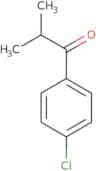
1-(4-Chlorophenyl)-2-methylpropan-1-one
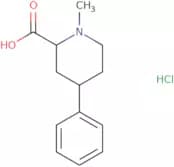
CAS:<p>1-(4-Chlorophenyl)-2-methylpropan-1-one is a phenyl ester that is used as an intermediate in the synthesis of other compounds. 1-(4-Chlorophenyl)-2-methylpropan-1-one can be synthesized by reacting potassium t-butoxide with diethyl succinate, followed by reaction with isopropyl alcohol. This process will result in the production of 1-(4-chlorophenyl)-2-methylpropan-1-one and potassium t-butoxide. The compound can also be synthesized by condensing naphthalene, diethyl ether, and isopropanol. This process will produce the same product but with a different reactant order.</p>Formula:C10H11OClPurity:Min. 95%Molecular weight:182.64 g/mol1-Methyl-4-phenylpiperidine-2-carboxylic acid hydrochloride
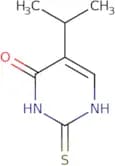
CAS:Versatile small molecule scaffoldFormula:C13H18ClNO2Purity:Min. 95%Molecular weight:255.74 g/mol5-(Propan-2-yl)-2-sulfanyl-3,4-dihydropyrimidin-4-one
CAS:<p>5-(Propan-2-yl)-2-sulfanyl-3,4-dihydropyrimidin-4-one is a synthetic compound that blocks the activity of viral reverse transcriptase and DNA polymerase. It is also an inhibitor of human immunodeficiency virus (HIV) and has been shown to be effective in mice with AIDS. This drug also has radical scavenging activities and can be used as a possible anti-inflammatory agent for the treatment of rheumatoid arthritis. 5-(Propan-2-yl)-2-sulfanyl-3,4-dihydropyrimidin-4-one belongs to the class of pyrimidine nucleosides and has been shown to inhibit nonnucleoside reverse transcriptase inhibitors, such as indole alkaloids. This drug has a molecular weight of 319.06 g/mol and contains an ethyl formate, isopropyl group, hydroxyl</p>Formula:C7H10N2OSPurity:Min. 95%Molecular weight:170.23 g/mol3-Phenylisoxazole-4-carboxylic acid
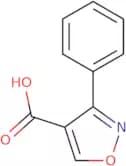
CAS:<p>3-Phenylisoxazole-4-carboxylic acid is a small molecule that has been shown to have high affinity for the metabotropic glutamate receptor subtype mGluR7. It also binds to the allosteric site on this receptor and is therefore a potent agonist. 3-Phenylisoxazole-4-carboxylic acid has been shown to be orally bioavailable and selective for mGluR7 in vivo. This molecule can be modified chemically to increase its physicochemical properties, such as solubility, permeability, and lipophilicity, which will allow it to cross the blood brain barrier more easily. 3-Phenylisoxazole-4-carboxylic acid may be used as a lead compound for the development of new drugs that target metabotropic glutamate receptors.</p>Formula:C10H7NO3Purity:Min. 95%Molecular weight:189.16 g/mol5-Bromopent-2-yne
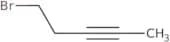
CAS:Versatile small molecule scaffoldFormula:C5H7BrPurity:Min. 95%Molecular weight:147.01 g/mol1,3-diethyl 2-(3-chloropropyl)propanedioate
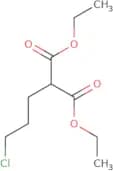
CAS:<p>1,3-Diethyl 2-(3-chloropropyl)propanedioate is an organic compound that can be extracted from the seeds of a tree in the genus Garcinia (family Clusiaceae). It has been isolated from the leaves of plants in the family Fabaceae. The compound is a colorless liquid with a slightly fruity odor and a boiling point of 203°C. <br>The chemical structure of 1,3-diethyl 2-(3-chloropropyl)propanedioate can be explained as two diethyl 3-chloropropanedioates linked by an ether bond. The molecule contains one alkoxycarbonyl group and one hydroxy group. The alkoxycarbonyl group is responsible for its basic properties and the hydroxy group allows it to form ester derivatives. The compound can be purified by using a variety of methods, including thermal treatment or acidification. Unpurified 1,3</p>Formula:C10H17ClO4Purity:Min. 95%Molecular weight:236.69 g/mol1-tert-Butyl 1-ethyl cyclopropane-1,1-dicarboxylate
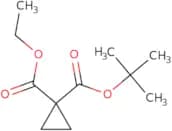
CAS:<p>Versatile small molecule scaffold</p>Formula:C11H18O4Purity:Min. 95%Molecular weight:214.26 g/molThiane-2-carboxamide
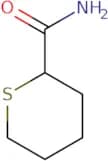
CAS:<p>Versatile small molecule scaffold</p>Formula:C6H11NOSPurity:Min. 95%Molecular weight:145.23 g/mol2-Cyclopropyl-1-phenylethan-1-ol
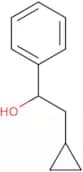
CAS:Versatile small molecule scaffoldFormula:C11H14OPurity:Min. 95%Molecular weight:162.23 g/mol1,1-Dicyclopropylpropan-1-ol
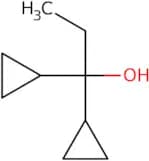
CAS:<p>Versatile small molecule scaffold</p>Formula:C9H16OPurity:Min. 95%Molecular weight:140.22 g/mol4-(1,3-Dioxo-2,3-dihydro-1H-isoindol-2-yl)butane-1-sulfonyl chloride
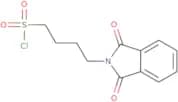
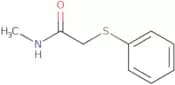
CAS:<p>Versatile small molecule scaffold</p>Formula:C12H12ClNO4SPurity:Min. 95%Molecular weight:301.75 g/molN-Methyl-2-(phenylsulfanyl)acetamide
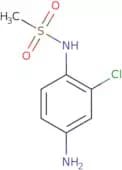
CAS:<p>Versatile small molecule scaffold</p>Formula:C9H11NOSPurity:Min. 95%Molecular weight:181.26 g/molN-(4-Amino-2-chlorophenyl)methanesulfonamide
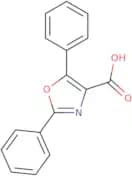
CAS:<p>Versatile small molecule scaffold</p>Formula:C7H9ClN2O2SPurity:Min. 95%Molecular weight:220.68 g/molDiphenyl-1,3-oxazole-4-carboxylic acid
CAS:<p>Versatile small molecule scaffold</p>Formula:C16H11NO3Purity:Min. 95%Molecular weight:265.26 g/mol4-[(4-Methoxyphenyl)sulfamoyl]benzoic acid
CAS:<p>Versatile small molecule scaffold</p>Formula:C14H13NO5SPurity:Min. 95%Molecular weight:307.32 g/mol1-Bromo-3-(pentafluoroethyl)benzene
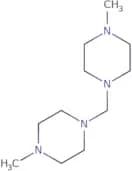
CAS:<p>Versatile small molecule scaffold</p>Formula:C8H4BrF5Purity:Min. 95%Molecular weight:275.01 g/molBis(4-methylpiperazin-1-yl)methane
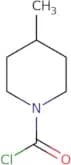
CAS:<p>Versatile small molecule scaffold</p>Formula:C11H24N4Purity:Min. 95%Molecular weight:212.34 g/mol4-Methylpiperidine-1-carbonyl chloride
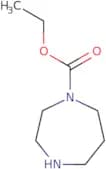
CAS:Versatile small molecule scaffoldFormula:C7H12ClNOPurity:Min. 95%Molecular weight:161.63 g/molEthyl 1,4-diazepane-1-carboxylate
CAS:<p>Versatile small molecule scaffold</p>Formula:C8H16N2O2Purity:Min. 95%Molecular weight:172.22 g/mol2-[(4-Bromophenyl)sulfanyl]propanoic acid
CAS:<p>2-[(4-Bromophenyl)sulfanyl]propanoic acid is a small molecule that belongs to the group of peptides. It can be used as a research tool for cell biology and cell-based assays. The receptor activator of nuclear factor kappa B (NF-κB) kinase (RANK), which is encoded by the RANKL gene, plays an important role in bone resorption. 2-[(4-Bromophenyl)sulfanyl]propanoic acid enhances bone resorption by binding to the RANK receptor and activating NF-κB pathway. This ligand has also been shown to inhibit ion channels, such as potassium channels, sodium channels, calcium channels, and chloride channels.</p>Formula:C9H9BrO2SPurity:Min. 95%Molecular weight:261.14 g/mol2-{Thieno[2,3-d]pyrimidin-4-ylsulfanyl}acetic acid
CAS:<p>Versatile small molecule scaffold</p>Formula:C8H6N2O2S2Purity:Min. 95%Molecular weight:226.3 g/mol(4-Oxo-4H-thieno[2,3-d]pyrimidin-3-yl)-acetic acid
CAS:Versatile small molecule scaffoldFormula:C8H6N2O3SPurity:Min. 95%Molecular weight:210.21 g/mol[(4-Nitrophenyl)methyl]urea
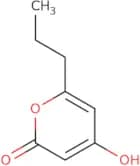
CAS:<p>Versatile small molecule scaffold</p>Formula:C8H9N3O3Purity:Min. 95%Molecular weight:195.18 g/mol4-Hydroxy-6-propyl-pyran-2-one
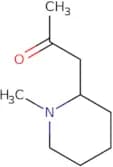
CAS:<p>Versatile small molecule scaffold</p>Formula:C8H10O3Purity:Min. 95%Molecular weight:154.16 g/mol1-(1-Methylpiperidin-2-yl)propan-2-one
CAS:<p>1-(1-Methylpiperidin-2-yl)propan-2-one is a chemical compound that is found in the leaves of Carthamus tinctorius. It can be used as a food additive, or as a medicine to treat hepatitis and high blood pressure. 1-(1-Methylpiperidin-2-yl)propan-2-one also has antihepatotoxic properties and has been shown to inhibit the synthesis of liver cells. 1-(1-Methylpiperidin-2-yl)propan-2-one is an inhibitor of synthase enzymes, which are involved in the production of cholesterol and fatty acids. This inhibition leads to decreased levels of LDL cholesterol, triglycerides, and phospholipids. The use of this drug may be helpful in cancer treatment because it inhibits the synthesis of proteins that promote tumor growth.END></p>Formula:C9H17NOPurity:Min. 95%Molecular weight:155.24 g/mol2-[Bis(ethylsulfanyl)methylidene]propanedinitrile
CAS:Versatile small molecule scaffoldFormula:C8H10N2S2Purity:Min. 95%Molecular weight:198.3 g/molBenzo[4,5]thieno[2,3-D]pyrimidin-4(3H)-one
CAS:<p>Versatile small molecule scaffold</p>Formula:C10H6N2OSPurity:Min. 95%Molecular weight:202.23 g/mol5-(Chloromethyl)-2,3-dihydro-1H-indene
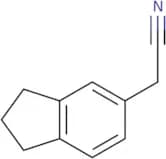
CAS:Versatile small molecule scaffoldFormula:C10H11ClPurity:Min. 95%Molecular weight:166.65 g/mol2-(2,3-Dihydro-1H-inden-5-yl)acetonitrile
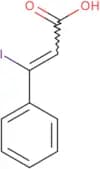
CAS:<p>Versatile small molecule scaffold</p>Formula:C11H11NPurity:Min. 95%Molecular weight:157.21 g/mol(2Z)-3-Iodo-3-phenylprop-2-enoic acid
CAS:<p>Versatile small molecule scaffold</p>Formula:C9H7IO2Purity:Min. 95%Molecular weight:274.1 g/mol2-Acetyl-3-methylbenzo[b]thiophene
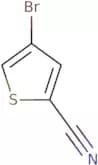
CAS:<p>2-Acetyl-3-methylbenzo[b]thiophene is a serotonin transporter (SERT) inhibitor. It binds to the serotonin transporter and prevents it from transporting serotonin back into the presynaptic cell, thereby increasing the level of free serotonin in the synapse. 2-Acetyl-3-methylbenzo[b]thiophene has been shown to have high affinity for 5HT1A receptor, as well as substituents that are capable of binding to this receptor. This drug also has an antidepressant effect by inhibiting the reuptake of serotonin.</p>Formula:C11H10OSPurity:Min. 95%Molecular weight:190.26 g/mol4-Bromothiophene-2-carbonitrile
CAS:<p>4-Bromothiophene-2-carbonitrile (4BTCC) is a chemical compound that yields monomers with a distal spacer. The 4BTCC monomer can be synthesized by reacting bromoacetaldehyde and 2-cyanopyridine, which have been shown to have the same electron density, in the presence of copper(II) chloride. The activation energy for this reaction was found to be 10.5 kJ/mol. The fluorine atom in 4BTCC has been shown to be crucial for its structural activity and bioactivity. The structure of 4BTCC is composed of a C–H bond and a C=N bond that are each bonded to two fluorine atoms.</p>Formula:C5H2BrNSPurity:Min. 95%Molecular weight:188.05 g/mol5-bromothiophene-3-carbonitrile
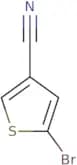
CAS:<p>5-Bromothiophene-3-carbonitrile is a thiophene that has been substituted with two cyano groups. The 5-bromothiophene-3-carbonitrile molecule has anisotropic properties, which are due to the linear orientation of the molecules. These properties lead to refractive indices and parameters that depend on the angle of incidence. 5-Bromothiophene-3-carbonitrile can be used as a polar solvent for phenylthiophenes, biphenyls, and other compounds with similar structures because it is optically active. The molecule also has an optical activity that depends on the orientation of the dipole moment in relation to the electric field.</p>Formula:C5H2BrNSPurity:Min. 95%Molecular weight:188.04 g/mol3-(Methylsulfanyl)pyridine
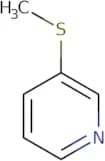
CAS:<p>3-(Methylsulfanyl)pyridine (3-Me-SPYR) is an organosulfur compound that is used in the synthesis of pharmaceuticals. 3-Me-SPYR is a versatile building block in organic synthesis and can be used to synthesize a variety of compounds, such as drugs. It has been shown to be a good nucleophile and can be used for nucleophilic substitution reactions. This compound can also undergo demethylation and hydroxylation reactions. 3-Me-SPYR is typically prepared by the palladium catalyzed cross coupling reaction of 2 equivalents of methyl iodide with 1 equivalent of sodium methansulfonate or sodium hydride in trifluoromethanesulfonic acid.</p>Formula:C6H7NSPurity:Min. 95%Molecular weight:125.19 g/mol2-(1,3-Dioxaindan-5-yl)butanoic acid
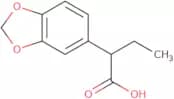
CAS:Controlled Product<p>Versatile small molecule scaffold</p>Formula:C11H12O4Purity:Min. 95%Molecular weight:208.21 g/mol5-Iodothiophene-3-carbonitrile
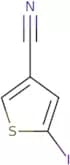
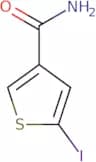
CAS:<p>Versatile small molecule scaffold</p>Formula:C5H2INSPurity:Min. 95%Molecular weight:235.05 g/mol5-Iodothiophene-3-carboxamide
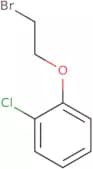
CAS:<p>Versatile small molecule scaffold</p>Formula:C5H4INOSPurity:Min. 95%Molecular weight:253.06 g/mol1-(2-bromoethoxy)-2-chlorobenzene
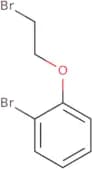
CAS:<p>Versatile small molecule scaffold</p>Formula:C8H8BrClOPurity:Min. 95%Molecular weight:235.51 g/mol1-Bromo-2-(2-bromoethoxy)benzene
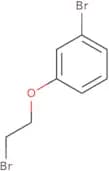
CAS:Versatile small molecule scaffoldFormula:C8H8Br2OPurity:Min. 95%Molecular weight:279.96 g/mol1-Bromo-3-(2-bromoethoxy)benzene
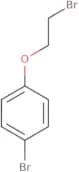
CAS:<p>Versatile small molecule scaffold</p>Formula:C8H8Br2OPurity:Min. 95%Molecular weight:279.96 g/mol1-Bromo-4-(2-bromoethoxy)benzene
CAS:<p>1-Bromo-4-(2-bromoethoxy)benzene is a benzoic acid derivative that is used as a building block for the synthesis of combinatorial libraries. It is soluble in water, alcohols and ethers, and it can be dissolved in chloroform. This compound was synthesized by the hydroxy group of an amino acid to provide a non-peptide molecule. 1-Bromo-4-(2-bromoethoxy)benzene has shown to inhibit the growth of methicillin resistant Staphylococcus aureus (MRSA), which may be due to its ability to inhibit protein synthesis.</p>Formula:C8H8Br2OPurity:Min. 95%Molecular weight:279.96 g/mol1-(2-Bromoethoxy)-3,5-dichlorobenzene
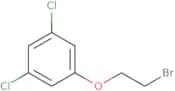
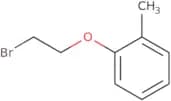
CAS:Versatile small molecule scaffoldFormula:C8H7BrCl2OPurity:Min. 95%Molecular weight:269.95 g/mol1-(2-Bromoethoxy)-2-methylbenzene
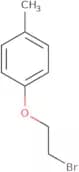
CAS:1-(2-Bromoethoxy)-2-methylbenzene is an aromatic compound with a conformation that can be described as a chair. The two bromine substituents are on the same side of the benzene ring, and the ethoxy group is attached to one of the carbons in the piperazine ring. This molecule has three dihedral angles, which could be described as 60 degrees, 120 degrees, and 180 degrees. One of these angles is formed by the bromine substituent and the ethoxy group, another by the methoxy substituent and the ethoxy group, and the third angle is formed by one carbon in the piperazine ring and one carbon in a methyl group.Formula:C9H11BrOPurity:Min. 95%Molecular weight:215.09 g/mol1-(2-Bromo-ethoxy)-4-methyl-benzene
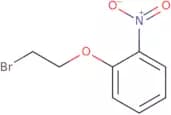
CAS:Versatile small molecule scaffoldFormula:C9H11BrOPurity:Min. 95%Molecular weight:215.1 g/mol1-(2-Bromoethoxy)-2-nitrobenzene
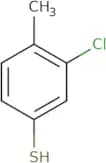
CAS:1-(2-Bromoethoxy)-2-nitrobenzene is a fluorescent ionophore that is used in the production of high-performance liquid chromatography (HPLC) columns. This chemical is synthesized by a stepwise reaction that starts with the formation of an acetonitrile adduct. The acetonitrile group is then removed and replaced with an ethoxy group to form the final product. The synthetic procedure for 1-(2-bromoethoxy)-2-nitrobenzene has been rationalized and it can be recycled using magnesium as a reducing agent. In addition, this chemical has been shown to bind to sensor proteins due to its high affinity for them.Formula:C8H8BrNO3Purity:Min. 95%Molecular weight:246.06 g/mol3-Chloro-4-methylbenzenethiol
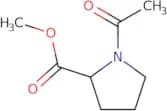
CAS:<p>Versatile small molecule scaffold</p>Formula:C7H7ClSPurity:Min. 95%Molecular weight:158.65 g/mol1-Acetyl-pyrrolidine-2-carboxylic acid methyl ester
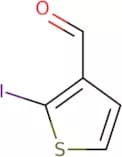
CAS:<p>Versatile small molecule scaffold</p>Formula:C8H13NO3Purity:Min. 95%Molecular weight:171.19 g/mol2-Iodothiophene-3-carbaldehyde
CAS:Versatile small molecule scaffoldFormula:C5H3IOSPurity:Min. 95%Molecular weight:238.05 g/mol2-[(4-Bromophenyl)formamido]acetic acid
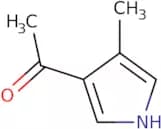
CAS:<p>Versatile small molecule scaffold</p>Formula:C9H8BrNO3Purity:Min. 95%Molecular weight:258.07 g/mol1-(4-Methyl-1H-pyrrol-3-yl)ethanone
CAS:<p>1-(4-Methyl-1H-pyrrol-3-yl)ethanone is a metabolite of eupenicillium, which is found in the bark of several species of conifer trees. This natural product has been shown to be biogenetically related to the biosynthesis of nitrogenous compounds and has been identified in various plant tissues as a secondary metabolite. 1-(4-Methyl-1H-pyrrol-3-yl)ethanone has also been shown to have antibiotic activity against gram positive bacteria such as Bacillus subtilis, Staphylococcus aureus, and Streptococcus pyogenes.</p>Formula:C7H9NOPurity:Min. 95%Molecular weight:123.15 g/mol

![4-[(4-Methoxyphenyl)sulfamoyl]benzoic acid](/_next/image/?url=https%3A%2Fstatic.cymitquimica.com%2Fproducts%2F3D%2Fthumb-webp%2FTAA73858.webp&w=3840&q=75)

![2-[(4-Bromophenyl)sulfanyl]propanoic acid](/_next/image/?url=https%3A%2Fstatic.cymitquimica.com%2Fproducts%2F3D%2Fthumb-webp%2FTAA73977.webp&w=3840&q=75)
![2-{Thieno[2,3-d]pyrimidin-4-ylsulfanyl}acetic acid](/_next/image/?url=https%3A%2Fstatic.cymitquimica.com%2Fproducts%2F3D%2Fthumb-webp%2FTAA74026.webp&w=3840&q=75)
![(4-Oxo-4H-thieno[2,3-d]pyrimidin-3-yl)-acetic acid](/_next/image/?url=https%3A%2Fstatic.cymitquimica.com%2Fproducts%2F3D%2Fthumb-webp%2FTAA74034.webp&w=3840&q=75)
![[(4-Nitrophenyl)methyl]urea](/_next/image/?url=https%3A%2Fstatic.cymitquimica.com%2Fproducts%2F3D%2Fthumb-webp%2FTAA74035.webp&w=3840&q=75)
![2-[Bis(ethylsulfanyl)methylidene]propanedinitrile](/_next/image/?url=https%3A%2Fstatic.cymitquimica.com%2Fproducts%2F3D%2Fthumb-webp%2FTAA77138.webp&w=3840&q=75)
![Benzo[4,5]thieno[2,3-D]pyrimidin-4(3H)-one](/_next/image/?url=https%3A%2Fstatic.cymitquimica.com%2Fproducts%2F3D%2Fthumb-webp%2FTAA77449.webp&w=3840&q=75)
![2-Acetyl-3-methylbenzo[b]thiophene](/_next/image/?url=https%3A%2Fstatic.cymitquimica.com%2Fproducts%2F3D%2Fthumb-webp%2FTAA78131.webp&w=3840&q=75)
![2-[(4-Bromophenyl)formamido]acetic acid](/_next/image/?url=https%3A%2Fstatic.cymitquimica.com%2Fproducts%2F3D%2Fthumb-webp%2FTAA81575.webp&w=3840&q=75)