Building Blocks
This section contains fundamental products for the synthesis of organic and biological compounds. Building blocks are the essential starting materials used to construct complex molecules through various chemical reactions. They play a critical role in drug discovery, material science, and chemical research. At CymitQuimica, we offer a diverse range of high-quality building blocks to support your innovative research and industrial projects, ensuring you have the essential components for successful synthesis.
Subcategories of "Building Blocks"
- Boronic Acids & Boronic Acid Derivatives(5,778 products)
- Chiral Building Blocks(1,243 products)
- Hydrocarbon Building Blocks(6,098 products)
- Organic Building Blocks(61,057 products)
Found 200710 products of "Building Blocks"
Sort by
Purity (%)
0
100
|
0
|
50
|
90
|
95
|
100
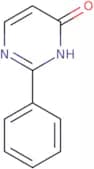
2-Phenyl-3,4-dihydropyrimidin-4-one
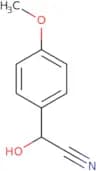
CAS:<p>Versatile small molecule scaffold</p>Formula:C10H8N2OPurity:Min. 95%Molecular weight:172.18 g/mol2-Hydroxy-2-(4-methoxyphenyl)acetonitrile
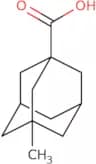
CAS:<p>Versatile small molecule scaffold</p>Formula:C9H9NO2Purity:Min. 95%Molecular weight:163.17 g/mol3-Methyladamantane-1-carboxylic acid
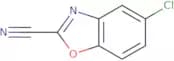
CAS:<p>3-Methyladamantane-1-carboxylic acid (3MACA) is a non-polar organic compound that is used in environmental monitoring. 3MACA is a potent inhibitor of the enzyme hydride transfer, which takes place in the presence of linoleyl alcohol and naphthenic acid. The toxicity of 3MACA has been studied, and it has been found to be toxic to aquatic animals, such as fish. It also causes eye irritation and skin irritation at high concentrations. 3MACA inhibits the production of prostaglandins by inhibiting cyclooxygenase enzymes responsible for arachidonic acid metabolism. This inhibition can lead to an increase in blood pressure and heart rate, as well as other toxicities such as respiratory distress and seizures.</p>Formula:C12H18O2Purity:Min. 95%Molecular weight:194.27 g/mol5-Chloro-1,3-benzoxazole-2-carbonitrile
CAS:<p>Versatile small molecule scaffold</p>Formula:C8H3ClN2OPurity:Min. 95%Molecular weight:178.57 g/mol5-Methylbenzo[D]oxazole-2-carbonitrile
CAS:<p>Versatile small molecule scaffold</p>Formula:C9H6N2OPurity:Min. 95%Molecular weight:158.16 g/mol4,6-Dichloro-5-ethyl-2-phenylpyrimidine
CAS:<p>4,6-Dichloro-5-ethyl-2-phenylpyrimidine (4,6-DCP) is a pyrimidine amide that has been shown to be an effective inhibitor of the enzyme RNA polymerase II. 4,6-DCP inhibits bacterial growth and can be used for the treatment of tuberculosis. This drug also has anti-inflammatory properties, which may be due to its inhibition of prostaglandin synthesis.</p>Formula:C12H10Cl2N2Purity:Min. 95%Molecular weight:253.12 g/mol2-Methylimidazo[1,2-a]pyrazine
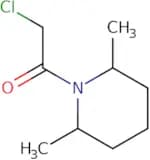
CAS:<p>Versatile small molecule scaffold</p>Formula:C7H7N3Purity:Min. 95%Molecular weight:133.15 g/mol2-Chloro-1-(2,6-dimethyl-piperidin-1-yl)-ethanone
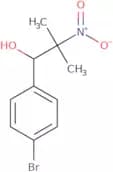
CAS:<p>Versatile small molecule scaffold</p>Formula:C9H16ClNOPurity:Min. 95%Molecular weight:189.68 g/mol1-(4-Bromophenyl)-2-methyl-2-nitropropan-1-ol
CAS:<p>Versatile small molecule scaffold</p>Formula:C10H12BrNO3Purity:Min. 95%Molecular weight:274.11 g/mol3-[(Quinazolin-4-yl)amino]benzoic acid
CAS:Versatile small molecule scaffoldFormula:C15H11N3O2Purity:Min. 95%Molecular weight:265.27 g/mol3-Bromo-1-methylpyrrolidin-2-one
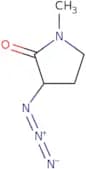
CAS:<p>3-Bromo-1-methylpyrrolidin-2-one is a chemical that belongs to the group of amines. It is a tertiary amine that can form a bond with carbonate and metal carbonates. 3-Bromo-1-methylpyrrolidin-2-one has been shown to be an enhancer for the transdermal delivery of methylamine, an alkaline drug. This compound has been found in animals and humans, but its effects on humans are not well understood.</p>Formula:C5H8BrNOPurity:Min. 95%Molecular weight:178.03 g/mol3-Azido-1-methylpyrrolidin-2-one
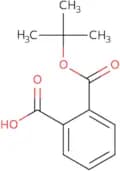
CAS:Versatile small molecule scaffoldFormula:C5H8N4OPurity:Min. 95%Molecular weight:140.14 g/moltert-Butyl hydrogen phthalate
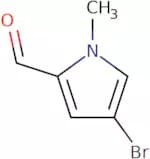
CAS:<p>Tert-butyl hydrogen phthalate is an organic chemical that is used in the production of polyvinyl chloride, butyral, and polypropylene. It is also used as a plasticizer for polyvinyl acetate and polystyrene. Tert-butyl hydrogen phthalate is an anti-aging agent for vinyl, which increases its resistance to oxidation. This chemical has been shown to be effective as a stabilizer for polyvinyl chloride against degradation by dichromate, stearic acid, and peroxide. Tert-butyl hydrogen phthalate reacts with succinic acid to form tert-butyl succinate and hydrogen chloride.</p>Formula:C12H14O4Purity:Min. 95%Molecular weight:222.24 g/mol4-bromo-1-methyl-1H-pyrrole-2-carbaldehyde
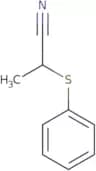
CAS:<p>Versatile small molecule scaffold</p>Formula:C6H6BrNOPurity:Min. 95%Molecular weight:188 g/mol2-(Phenylsulfanyl)propanenitrile
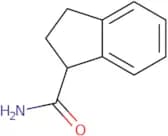
CAS:<p>Versatile small molecule scaffold</p>Formula:C9H9NSPurity:Min. 95%Molecular weight:163.24 g/mol2,3-Dihydro-1H-indene-1-carboxamide
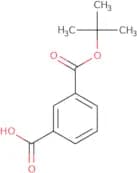
CAS:2,3-Dihydro-1H-indene-1-carboxamide is an insecticide that has been shown to have a synergistic effect with pesticides such as chlorpyrifos. The compound binds to the alkylthio group of acetylcholinesterase and prevents it from breaking down acetylcholine at synapses, leading to paralysis and death. It is insoluble in water but soluble in organic solvents, which makes it an ideal pesticide for use in wettable powders. 2,3-Dihydro-1H-indene-1-carboxamide has an alkylthio group that reacts with nitro groups on the surface of insects and causes them to explode. This chemical also contains a mercapto group that inhibits the cholinesterase enzyme by binding to the active site on its active site, preventing it from breaking down acetylcholine at synapses, leadingFormula:C10H11NOPurity:Min. 95%Molecular weight:161.2 g/mol3-(tert-Butoxycarbonyl)benzoic acid
CAS:<p>3-(tert-Butoxycarbonyl)benzoic acid is a pro-apoptotic agent that binds to the cytosolic domain of Bcl-xL and Bcl-2, causing the release of cytochrome c from mitochondria. This drug also inhibits the proliferation of tumor cells in culture with an IC50 value of about 2 μM. The crystal structure of 3-(tert-Butoxycarbonyl)benzoic acid has been determined by x-ray crystallography and shows that it has antiproliferative activity. It is an optimized analog for bcl-xl, which could be used as a potential cancer chemotherapeutic agent.</p>Formula:C12H14O4Purity:Min. 95%Molecular weight:222.24 g/molMethyl 3-[(pyridin-3-ylmethyl)amino]propanoate
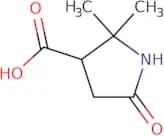
CAS:<p>Versatile small molecule scaffold</p>Formula:C10H14N2O2Purity:Min. 95%Molecular weight:194.23 g/mol2,2-Dimethyl-5-oxopyrrolidine-3-carboxylic acid
CAS:Versatile small molecule scaffoldFormula:C7H11NO3Purity:Min. 95%Molecular weight:157.2 g/molMethyl 1-oxaspiro[2.5]octane-2-carboxylate
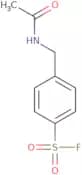
CAS:Versatile small molecule scaffoldFormula:C9H14O3Purity:Min. 95%Molecular weight:170.21 g/mol4-(Acetamidomethyl)benzene-1-sulfonyl fluoride
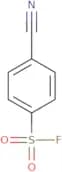
CAS:<p>Versatile small molecule scaffold</p>Formula:C9H10FNO3SPurity:Min. 95%Molecular weight:231.25 g/mol4-Cyanobenzene-1-sulfonyl fluoride
CAS:<p>Versatile small molecule scaffold</p>Formula:C7H4FNO2SPurity:Min. 95%Molecular weight:185.18 g/mol3-[1-(2,3-Dimethoxyphenyl)-2-nitroethyl]-1H-indole
CAS:Versatile small molecule scaffoldFormula:C18H18N2O4Purity:Min. 95%Molecular weight:326.3 g/mol3-[1-(4-Methoxyphenyl)-2-nitroethyl]-1H-indole
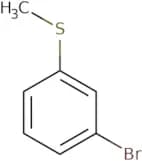
CAS:Versatile small molecule scaffoldFormula:C17H16N2O3Purity:Min. 95%Molecular weight:296.32 g/mol3-Bromothioanisole
CAS:<p>3-Bromothioanisole is an anthelmintic that inhibits the growth of haemonchus. It is a molecule that has been shown to be effective against haemonchus, an intestinal worm, and other parasites. 3-Bromothioanisole initiates the production of reactive oxygen species by generating epoxides. This chemical can cause high-sensitivity in some animals, including dogs, pigs and chickens. 3-Bromothioanisole is also used as a connecting group for evaluating the activity of other chemicals.</p>Formula:C7H7BrSPurity:Min. 95%Molecular weight:203.1 g/mol(1S,2R,5S)-6,6-Dimethylbicyclo[3.1.1]heptane-2-carboxylic acid
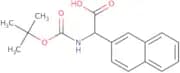
CAS:Versatile small molecule scaffoldFormula:C10H16O2Purity:Min. 95%Molecular weight:168.2 g/mol2-(Boc-amino)-2-(2-naphthyl)acetic acid
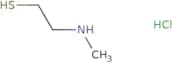
CAS:<p>Versatile small molecule scaffold</p>Formula:C17H19NO4Purity:Min. 95%Molecular weight:301.34 g/mol2-(Methylamino)ethane-1-thiol hydrochloride
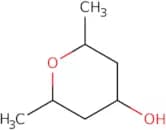
CAS:Versatile small molecule scaffoldFormula:C3H9NS•HClPurity:Min. 95%Molecular weight:127.64 g/mol2,6-Dimethyltetrahydro-2H-pyran-4-ol
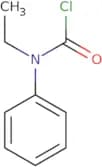
CAS:<p>Versatile small molecule scaffold</p>Formula:C7H14O2Purity:Min. 95%Molecular weight:130.18 g/molEthyl(phenyl)carbamoyl chloride
CAS:<p>Ethyl(phenyl)carbamoyl chloride is a non-polar solvent that is used in the hydrolysis of esters. It has been shown to be a reactive, impurity-free reagent for the synthesis of phosphites and hydroxyl groups. This compound also has an important role as a linker between aromatic hydrocarbons and aliphatic hydrocarbons.</p>Formula:C9H10ClNOPurity:Min. 95%Molecular weight:183.63 g/molN-[2-(1-Hydroxyethyl)phenyl]benzamide
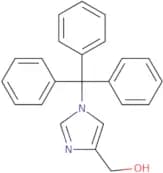
CAS:<p>Versatile small molecule scaffold</p>Formula:C15H15NO2Purity:Min. 95%Molecular weight:241.28 g/mol1-Trityl-1h-imidazole-4-methanol
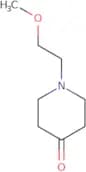
CAS:<p>1-Trityl-1H-imidazole-4-methanol is a compound that has been shown to have anti-cancer properties. It is a picolinic acid analogue and can be used for the treatment of cancer. This drug has been shown to inhibit the growth of cells in cultures from human breast carcinoma, leukemia, and lymphoma. 1-Trityl-1H-imidazole-4-methanol binds to the carboxylate moiety of proteins and inhibits protein synthesis by competitively inhibiting the binding of aminoacyl tRNA to ribosomes. The nitro group on this molecule may also contribute to its anticancer activity, as it can be reduced by cytochrome P450 enzymes in the liver into reactive species that react with DNA. This drug is water soluble and is therefore more easily excreted than other picolinic acid analogues. 1-Trityl-1H-imid</p>Formula:C23H20N2OPurity:Min. 95%Molecular weight:340.42 g/mol1-(2-Methoxyethyl)piperidin-4-one
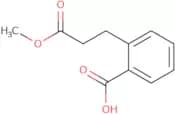
CAS:<p>Versatile small molecule scaffold</p>Formula:C8H15NO2Purity:Min. 95%Molecular weight:157.21 g/mol2-(3-Methoxy-3-oxopropyl)benzoic acid
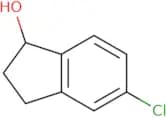
CAS:<p>Versatile small molecule scaffold</p>Formula:C11H12O4Purity:Min. 95%Molecular weight:208.21 g/mol5-Chloro-2,3-dihydro-1H-inden-1-ol
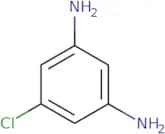
CAS:<p>Versatile small molecule scaffold</p>Formula:C9H9ClOPurity:Min. 95%Molecular weight:168.62 g/mol5-Chlorobenzene-1,3-diamine
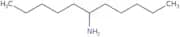
CAS:<p>5-Chlorobenzene-1,3-diamine is a semipermeable membrane component that is used as a crosslinker in the production of polyurethane. It reacts with glycerol to produce dihydrochloride and polycarboxylic acid. The reaction product is then reacted with diisocyanate to form azomethine. This reaction product is then reacted with alkylene to form the polymer, which can be made into various types of polyurethane. 5-Chlorobenzene-1,3-diamine has a yellow color and is a synthetic compound.</p>Formula:C6H7ClN2Purity:Min. 95%Molecular weight:142.59 g/mol6-Undecanamine
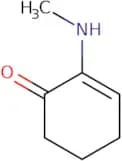
CAS:<p>6-Undecanamine is a chitinase inhibitor that can be used to control the growth of fungi. It is active against oxysporum f., a fungus that causes plant diseases, and has been shown to inhibit the growth of other fungi in the rhizosphere. 6-Undecanamine has also been shown to be effective against Fusarium oxysporum f., another type of fungus that causes plant diseases. This compound can be used as a pheromone for traps and headspace samples for monitoring fungal populations. 6-Undecanamine has also been shown to have photophysical properties such as fluorescence, phosphorescence, and chemiluminescence. This compound has also been shown to have anti-estrous activity in female rats and may be useful in controlling the estrous cycle of livestock. 6-Undecanamine is also an important molecule for biodiesel production because it can be converted into biodiesel with high efficiency due to</p>Formula:C11H25NPurity:Min. 95%Molecular weight:171.33 g/mol2-(Methylamino)cyclohex-2-en-1-one
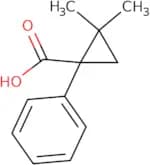
CAS:<p>Versatile small molecule scaffold</p>Formula:C7H11NOPurity:Min. 95%Molecular weight:125.17 g/mol2,2-Dimethyl-1-phenylcyclopropane-1-carboxylic acid
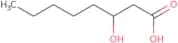
CAS:<p>Versatile small molecule scaffold</p>Formula:C12H14O2Purity:Min. 95%Molecular weight:190.24 g/mol(3S)-3-Hydroxyoctanoic acid
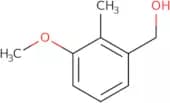
CAS:(3S)-3-Hydroxyoctanoic acid is a fatty acid that is part of the citric acid cycle. It is found in humans and other mammals as well as in bacteria, fungi, plants, and yeast. It has been found to have biodegradable properties and can be used as an antibiotic complex. The best way to administer this drug is by copolymerizing it with sodium citrate. This creates a polymer that has an acidic pH and can be activated by mixing it with water. (3S)-3-Hydroxyoctanoic acid inhibits fatty acid metabolism and mineralization by binding to the enzyme acyl coenzyme A dehydrogenase (ACAD). This binding prevents the oxidation of fatty acids into energy molecules such as ATP.Formula:C8H16O3Purity:Min. 95%Molecular weight:160.21 g/mol(3-Methoxy-2-methylphenyl)methanol
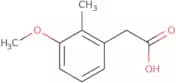
CAS:(3-Methoxy-2-methylphenyl)methanol is a chemical used in the synthesis of phenanthrenes. It is an activated form of phenanthrene and can be converted to this compound by reaction with magnesium chloride and potassium. The homolytic cleavage of (3-methoxy-2-methylphenyl)methanol yields two molecules of phenanthrene. This reaction is performed in tetrahydrofuran under conditions that are not acidic, which prevents the formation of polymers from the product.Formula:C9H12O2Purity:Min. 95%Molecular weight:152.19 g/mol2-(3-Methoxy-2-methylphenyl)acetic Acid
CAS:<p>Versatile small molecule scaffold</p>Formula:C10H12O3Purity:Min. 95%Molecular weight:180.2 g/mol2-{[(tert-Butoxy)carbonyl]amino}-3-(pyridin-4-yl)propanoic acid
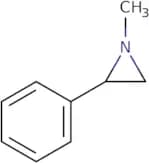
CAS:<p>Versatile small molecule scaffold</p>Formula:C13H18N2O4Purity:Min. 95%Molecular weight:266.29 g/mol(2S)-1-Methyl-2-phenylaziridine
CAS:<p>Versatile small molecule scaffold</p>Formula:C9H11NPurity:Min. 95%Molecular weight:133.19 g/mol1-[1-(4-Chlorophenyl)-5-methyl-1H-1,2,3-triazol-4-yl]ethan-1-one
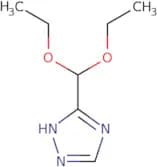
CAS:Versatile small molecule scaffoldFormula:C11H10ClN3OPurity:Min. 95%Molecular weight:235.67 g/mol3-(Diethoxymethyl)-4H-1,2,4-triazole
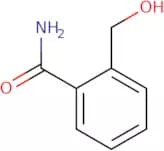
CAS:<p>Versatile small molecule scaffold</p>Formula:C7H13N3O2Purity:Min. 95%Molecular weight:171.2 g/mol2-(Hydroxymethyl)benzamide
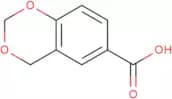
CAS:<p>2-(Hydroxymethyl)benzamide is an analog of 2,4-diaminotoluene that has been shown to have neuroprotective and anti-apoptotic properties. It has been shown to protect human liver cells against cytotoxic effects of acetaminophen, which may be due to its ability to activate the phosphatidylinositol 3-kinase/Akt pathway. In addition, 2-(Hydroxymethyl)benzamide inhibits the proliferation of Ba/F3 cells by inducing apoptosis. The compound has also been found in urine samples as a metabolite of benzoic acid. This product can be synthesized in an asymmetric manner by reacting 2,4-diaminotoluene with potassium tert-butoxide and formaldehyde.</p>Formula:C8H9NO2Purity:Min. 95%Molecular weight:151.16 g/mol2,4-Dihydro-1,3-benzodioxine-6-carboxylic acid
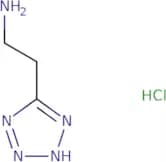
CAS:Versatile small molecule scaffoldFormula:C9H8O4Purity:Min. 95%Molecular weight:180.16 g/mol2-(5-Tetrazolyl)ethanamine Hydrochloride
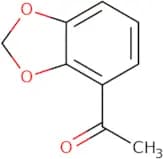
CAS:<p>Versatile small molecule scaffold</p>Formula:C3H8ClN5Purity:Min. 95%Molecular weight:149.58 g/mol1-(1,3-Dioxaindan-4-yl)ethan-1-one
CAS:<p>Versatile small molecule scaffold</p>Formula:C9H8O3Purity:Min. 95%Molecular weight:164.16 g/mol

![5-Methylbenzo[D]oxazole-2-carbonitrile](/_next/image/?url=https%3A%2Fstatic.cymitquimica.com%2Fproducts%2F3D%2Fthumb-webp%2FIBA65290.webp&w=3840&q=75)

![2-Methylimidazo[1,2-a]pyrazine](/_next/image/?url=https%3A%2Fstatic.cymitquimica.com%2Fproducts%2F3D%2Fthumb-webp%2FIBA66880.webp&w=3840&q=75)
![3-[(Quinazolin-4-yl)amino]benzoic acid](/_next/image/?url=https%3A%2Fstatic.cymitquimica.com%2Fproducts%2F3D%2Fthumb-webp%2FIBA68329.webp&w=3840&q=75)

![Methyl 3-[(pyridin-3-ylmethyl)amino]propanoate](/_next/image/?url=https%3A%2Fstatic.cymitquimica.com%2Fproducts%2F3D%2Fthumb-webp%2FIBA71020.webp&w=3840&q=75)
![Methyl 1-oxaspiro[2.5]octane-2-carboxylate](/_next/image/?url=https%3A%2Fstatic.cymitquimica.com%2Fproducts%2F3D%2Fthumb-webp%2FIBA71787.webp&w=3840&q=75)
![3-[1-(2,3-Dimethoxyphenyl)-2-nitroethyl]-1H-indole](/_next/image/?url=https%3A%2Fstatic.cymitquimica.com%2Fproducts%2F3D%2Fthumb-webp%2FIBA72332.webp&w=3840&q=75)
![3-[1-(4-Methoxyphenyl)-2-nitroethyl]-1H-indole](/_next/image/?url=https%3A%2Fstatic.cymitquimica.com%2Fproducts%2F3D%2Fthumb-webp%2FIBA72333.webp&w=3840&q=75)
![(1S,2R,5S)-6,6-Dimethylbicyclo[3.1.1]heptane-2-carboxylic acid](/_next/image/?url=https%3A%2Fstatic.cymitquimica.com%2Fproducts%2F3D%2Fthumb-webp%2FIBA74129.webp&w=3840&q=75)
![N-[2-(1-Hydroxyethyl)phenyl]benzamide](/_next/image/?url=https%3A%2Fstatic.cymitquimica.com%2Fproducts%2F3D%2Fthumb-webp%2FIBA76844.webp&w=3840&q=75)
![2-{[(tert-Butoxy)carbonyl]amino}-3-(pyridin-4-yl)propanoic acid](/_next/image/?url=https%3A%2Fstatic.cymitquimica.com%2Fproducts%2F3D%2Fthumb-webp%2FIBA81494.webp&w=3840&q=75)
![1-[1-(4-Chlorophenyl)-5-methyl-1H-1,2,3-triazol-4-yl]ethan-1-one](/_next/image/?url=https%3A%2Fstatic.cymitquimica.com%2Fproducts%2F3D%2Fthumb-webp%2FIBA82138.webp&w=3840&q=75)