Building Blocks
This section contains fundamental products for the synthesis of organic and biological compounds. Building blocks are the essential starting materials used to construct complex molecules through various chemical reactions. They play a critical role in drug discovery, material science, and chemical research. At CymitQuimica, we offer a diverse range of high-quality building blocks to support your innovative research and industrial projects, ensuring you have the essential components for successful synthesis.
Subcategories of "Building Blocks"
- Boronic Acids & Boronic Acid Derivatives(5,778 products)
- Chiral Building Blocks(1,242 products)
- Hydrocarbon Building Blocks(6,098 products)
- Organic Building Blocks(61,059 products)
Found 199580 products of "Building Blocks"
Sort by
Purity (%)
0
100
|
0
|
50
|
90
|
95
|
100
{Bicyclo[2.2.2]octan-2-yl}methanesulfonyl chloride
CAS:<p>Versatile small molecule scaffold</p>Formula:C9H15ClO2SPurity:Min. 95%Molecular weight:222.73 g/mol2-[4-(Furan-3-yl)-1H-pyrazol-1-yl]ethan-1-amine
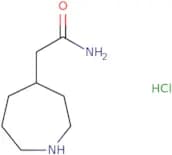
CAS:<p>Versatile small molecule scaffold</p>Formula:C9H11N3OPurity:Min. 95%Molecular weight:177.2 g/mol2-(Azepan-4-yl)acetamide hydrochloride
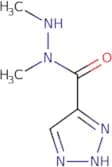
CAS:<p>Versatile small molecule scaffold</p>Formula:C8H17ClN2OPurity:Min. 95%Molecular weight:192.68 g/molDimethyl-1H-1,2,3-triazole-4-carbohydrazide
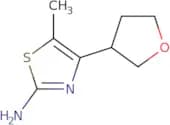
CAS:<p>Versatile small molecule scaffold</p>Formula:C5H9N5OPurity:Min. 95%Molecular weight:155.16 g/mol5-Methyl-4-(oxolan-3-yl)-1,3-thiazol-2-amine
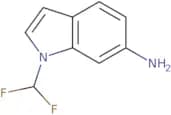
CAS:<p>Versatile small molecule scaffold</p>Formula:C8H12N2OSPurity:Min. 95%Molecular weight:184.26 g/mol1-(Difluoromethyl)-1H-indol-6-amine
CAS:<p>Versatile small molecule scaffold</p>Formula:C9H8F2N2Purity:Min. 95%Molecular weight:182.17 g/mol2-(Iodomethyl)-8-methyl-1-oxaspiro[4.5]decanes
CAS:Versatile small molecule scaffoldFormula:C11H19IOPurity:Min. 95%Molecular weight:294.2 g/mol2-(Iodomethyl)-1,7-dioxaspiro[4.5]decane
CAS:<p>Versatile small molecule scaffold</p>Formula:C9H15IO2Purity:Min. 95%Molecular weight:282.1 g/mol[2-(Propan-2-yloxy)pyrimidin-5-yl]methanol
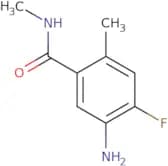
CAS:Versatile small molecule scaffoldFormula:C8H12N2O2Purity:Min. 95%Molecular weight:168.2 g/mol5-Amino-4-fluoro-N,2-dimethylbenzamide
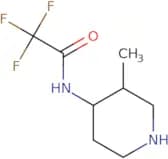
CAS:Versatile small molecule scaffoldFormula:C9H11FN2OPurity:Min. 95%Molecular weight:182.19 g/mol2,2,2-Trifluoro-N-(3-methylpiperidin-4-yl)acetamide
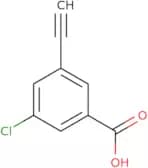
CAS:Versatile small molecule scaffoldFormula:C8H13F3N2OPurity:Min. 95%Molecular weight:210.2 g/mol3-Chloro-5-ethynylbenzoic acid
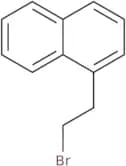
CAS:Versatile small molecule scaffoldFormula:C9H5ClO2Purity:Min. 95%Molecular weight:180.59 g/mol1-(2-Bromoethyl)naphthalene
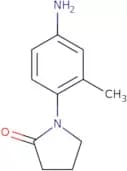
CAS:<p>1-(2-Bromoethyl)naphthalene is a heterocyclic compound with two bromine atoms attached to the same carbon atom. It has two stereoisomers, one of which can be synthesized from phenacyl and the other from diketone. It is used in organic synthesis as a reactive intermediate for the alkylation of various substrates. The rate of reactivity is dependent on the electron donating ability of the substrate, with electron-donating groups resulting in faster reaction rates. This product has been shown to undergo enthalpic transfer reactions at room temperature, and chemoselective alkylation reactions at elevated temperatures.</p>Formula:C12H11BrPurity:Min. 95%Molecular weight:235.12 g/mol1-(4-Amino-2-methylphenyl)-2-pyrrolidinone
CAS:Versatile small molecule scaffoldFormula:C11H14N2OPurity:Min. 95%Molecular weight:190.24 g/molN-[4-Chloro-3-(trifluoromethyl)phenyl]-2,2-dimethylpropanamide
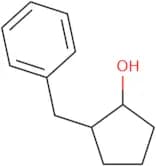
CAS:<p>N-[4-Chloro-3-(trifluoromethyl)phenyl]-2,2-dimethylpropanamide is a white crystalline solid that belongs to the class of chains. This compound has hydrogen bonds and pivaloyl groups. It is also torsion and has a benzene ring. N-[4-Chloro-3-(trifluoromethyl)phenyl]-2,2-dimethylpropanamide is used in the synthesis of pharmaceuticals.</p>Formula:C12H13ClF3NOPurity:Min. 95%Molecular weight:279.68 g/mol2-Benzylcyclopentan-1-ol
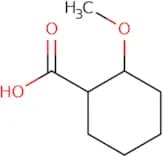
CAS:<p>2-Benzylcyclopentan-1-ol is a cyclopropane derivative that is obtained by the radical cyclization of toluene. It has been shown to undergo thermolysis and hydrogen transfer reactions with nitroxyl radicals. 2-Benzylcyclopentan-1-ol reacts reversibly with anions and is capable of rearrangements. It can be hydrolyzed to produce cyclopentane and hydrogen gas, which are both hydrocarbons.</p>Formula:C12H16OPurity:Min. 95%Molecular weight:176.25 g/mol2-Methoxycyclohexane-1-carboxylic acid
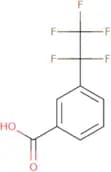
CAS:<p>Versatile small molecule scaffold</p>Formula:C8H14O3Purity:Min. 95%Molecular weight:158.19 g/mol3-(Pentafluoroethyl)benzoic acid
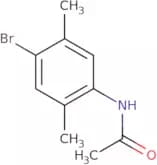
CAS:<p>Versatile small molecule scaffold</p>Formula:C9H5F5O2Purity:Min. 95%Molecular weight:240.13 g/molN-(4-Bromo-2,5-dimethylphenyl)acetamide
CAS:Versatile small molecule scaffoldFormula:C10H12BrNOPurity:Min. 95%Molecular weight:242.11 g/molN-(4-Bromo-2-chloronaphthalen-1-yl)acetamide
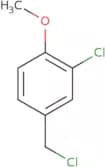
CAS:<p>Versatile small molecule scaffold</p>Formula:C12H9BrClNOPurity:Min. 95%Molecular weight:298.56 g/mol2-Chloro-4-(chloromethyl)-1-methoxybenzene
CAS:2-Chloro-4-(chloromethyl)-1-methoxybenzene is a fibrinolytic drug that has been shown to be effective in the treatment of deep vein thrombosis. It reversibly binds to albumin, which prevents the formation of clots by inhibiting fibrin polymerization and stabilizing existing clots. Fibrinolysis also results in the release of plasminogen activator, which converts plasminogen to plasmin. This conversion leads to the dissolution of blood clots. 2-Chloro-4-(chloromethyl)-1-methoxybenzene has also been shown to have a carboxylic acid group on its structure, which increases lipophilicity and decreases water solubility, making it more suitable for use as a fibrinolytic agent. The optimum substituents for this drug are an aromatic ring or substituted aromatic ring withFormula:C8H8Cl2OPurity:Min. 95%Molecular weight:191.05 g/mol2-Chloro-5-methoxybenzaldehyde
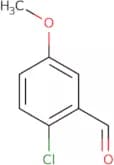
CAS:<p>2-Chloro-5-methoxybenzaldehyde is a chemical that belongs to the group of ether extracts. It can be extracted from urine samples and has been used as a reagent in the synthesis of dioxolanes. The hydroxylation reactions are catalyzed by the enzyme alcohol dehydrogenase, which is found in humans and other animals. 2-Chloro-5-methoxybenzaldehyde is also catalyzed by dioxolane synthase, which is an enzyme found in plants. 2-Chloro-5-methoxybenzaldehyde has been shown to react with acetaldehyde to form methylated products, such as methyl esters or hydroxylactones. This product has been studied using NMR spectroscopy and it was observed that this compound contains stereocentres.</p>Formula:C8H7ClO2Purity:Min. 95%Molecular weight:170.59 g/mol1-Amino-2-methylcyclohexane-1-carboxylic acid
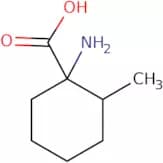
CAS:<p>Versatile small molecule scaffold</p>Formula:C8H15NO2Purity:Min. 95%Molecular weight:157.21 g/mol3-Amino-1-benzyl-piperidine-3-carboxylic acid
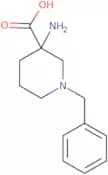
CAS:Versatile small molecule scaffoldFormula:C13H18N2O2Purity:Min. 95%Molecular weight:234.3 g/mol1-Chloro-4-(chloromethyl)-2-methoxybenzene
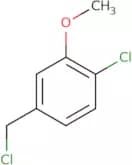
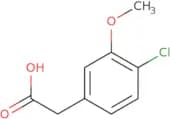
CAS:<p>Versatile small molecule scaffold</p>Formula:C8H8Cl2OPurity:Min. 95%Molecular weight:191.05 g/mol2-(4-Chloro-3-methoxyphenyl)acetic acid
CAS:Versatile small molecule scaffoldFormula:C9H9ClO3Purity:Min. 95%Molecular weight:200.62 g/mol7H-[1,2,4]Triazolo[4,3-b][1,2,4]triazol-3-amine
CAS:<p>Versatile small molecule scaffold</p>Formula:C3H4N6Purity:Min. 95%Molecular weight:124.1 g/mol7H-[1,2,4]Triazolo[4,3-b][1,2,4]triazole-3-thiol
CAS:Versatile small molecule scaffoldFormula:C3H3N5SPurity:Min. 95%Molecular weight:141.2 g/molTricyclo[6.2.1.0,2,7]undeca-2,4,6-triene-1-carboxylic acid
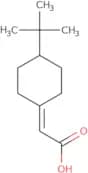
CAS:Versatile small molecule scaffoldFormula:C12H12O2Purity:Min. 95%Molecular weight:188.22 g/mol2-(4-tert-Butylcyclohexylidene)acetic acid
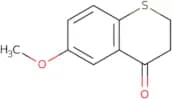
CAS:Versatile small molecule scaffoldFormula:C12H20O2Purity:Min. 95%Molecular weight:196.29 g/mol6-Methoxy-3,4-dihydro-2H-1-benzothiopyran-4-one
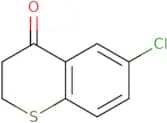
CAS:<p>Versatile small molecule scaffold</p>Formula:C10H10O2SPurity:Min. 95%Molecular weight:194.25 g/mol6-Chlorothiochroman-4-one
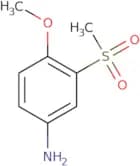
CAS:6-Chlorothiochroman-4-one is a heterocycle that has been synthesized and purified. It has shown to inhibit the growth of botrytis cinerea, a fungus that causes black rot on various plants. 6-Chlorothiochroman-4-one can be used as a starting material for the synthesis of other compounds with medicinal properties. The compound is also an excellent biomolecular probe for studying detoxification enzymes in natural products. The best yields were obtained by using acidic conditions, which led to the hydrolysis of the sulfide group to form the corresponding thiol. The optimal parameters for dehydrogenation are pH 2 and 40 ˚C. In vitro studies have shown that 6-chlorothiochroman-4-one inhibits angiogenesis in endothelial cells and is carcinogenic at high concentrations (>5 mM).Formula:C9H7ClOSPurity:Min. 95%Molecular weight:198.67 g/mol3-Methanesulfonyl-4-methoxyaniline
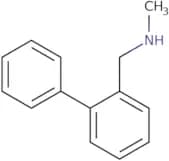
CAS:<p>Versatile small molecule scaffold</p>Formula:C8H11NO3SPurity:Min. 95%Molecular weight:201.25 g/mol1-(2-Biphenylyl)-N-methylmethanamine
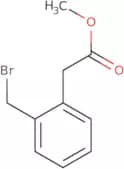
CAS:1-(2-Biphenylyl)-N-methylmethanamine is a monosaccharide that belongs to the group of neochamaejasmine. It has been shown to have insecticidal properties and can be used as a pesticide. 1-(2-Biphenylyl)-N-methylmethanamine has been shown to contain diterpenoids, which are found in plants and insects. This compound also contains diterpenes, which are derived from terpene alcohols and are found in plants such as neochamaejasmin. The ethanol extract of 1-(2-biphenyl) N-methylmethanamine was found to have antimicrobial activity against bacteria such as Pseudomonas aeruginosa, Staphylococcus aureus, and Escherichia coli.Formula:C14H15NPurity:Min. 95%Molecular weight:197.28 g/molBenzeneacetic acid, 2-(bromomethyl)-, methyl ester
CAS:<p>Benzeneacetic acid, 2-(bromomethyl)-, methyl ester is an intermediate in the synthesis of trifloxystrobin.</p>Formula:C10H11BrO2Purity:Min. 95%Molecular weight:243.1 g/mol3-[(4-Methoxyphenyl)sulfanyl]propanoic acid
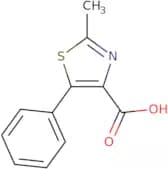
CAS:<p>Versatile small molecule scaffold</p>Formula:C10H12O3SPurity:Min. 95%Molecular weight:212.27 g/mol2-Methyl-5-phenyl-1,3-thiazole-4-carboxylic acid
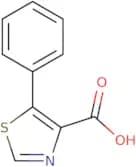
CAS:<p>Versatile small molecule scaffold</p>Formula:C11H9NO2SPurity:Min. 95%Molecular weight:219.26 g/mol5-Phenylthiazole-4-carboxylic acid
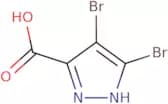
CAS:<p>5-Phenylthiazole-4-carboxylic acid is a heterocycle that is a muscarinic receptor antagonist. It blocks the action of acetylcholine on the muscarinic receptors, which are found in smooth muscles and glands. Muscarinic receptor antagonists are used to reduce salivation, treat peptic ulcers, and relieve bladder spasms. The onset of this drug is long-acting and it has a duration of up to 24 hours in humans. 5-Phenylthiazole-4-carboxylic acid has been shown to block the binding of acetylcholine at the muscarinic receptor with an IC50 value of 11 nM. This agent also has polycyclic properties and can form hydrogen bonds with acidic functional groups such as phosphoric acid. 5-Phenylthiazole-4-carboxylic acid may have pharmacological profiles similar to chlorpheniramine because they both bind to</p>Formula:C10H7NO2SPurity:Min. 95%Molecular weight:205.23 g/mol3,4-Dibromo-1H-pyrazole-5-carboxylic acid
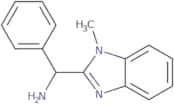
CAS:<p>Versatile small molecule scaffold</p>Formula:C4H2Br2N2O2Purity:Min. 95%Molecular weight:269.88 g/mol(1-Methyl-1H-1,3-benzodiazol-2-yl)(phenyl)methanamine
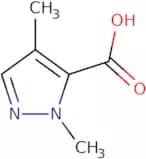
CAS:<p>Versatile small molecule scaffold</p>Formula:C15H15N3Purity:Min. 95%Molecular weight:237.31 g/mol1,4-dimethyl-1H-pyrazole-5-carboxylic acid
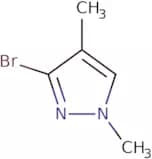
CAS:<p>Versatile small molecule scaffold</p>Formula:C6H8N2O2Purity:Min. 95%Molecular weight:140.13 g/mol3-Bromo-1,4-dimethyl-pyrazole
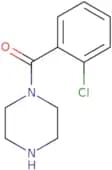
CAS:Versatile small molecule scaffoldFormula:C5H7BrN2Purity:Min. 95%Molecular weight:175.03 g/mol(2-Chlorophenyl)(piperazin-1-yl)methanone
CAS:<p>Versatile small molecule scaffold</p>Formula:C11H13ClN2OPurity:Min. 95%Molecular weight:224.69 g/mol(5-Bromo-benzo[b]thiophen-2-yl)-methanol
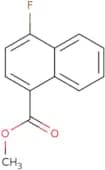
CAS:Versatile small molecule scaffoldFormula:C9H7BrOSPurity:Min. 95%Molecular weight:243.12 g/molMethyl 4-fluoronaphthalene-1-carboxylate
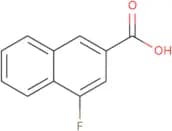
CAS:Versatile small molecule scaffoldFormula:C12H9FO2Purity:Min. 95%Molecular weight:204.2 g/mol4-Fluoronaphthalene-2-carboxylic acid
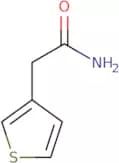
CAS:4-Fluoronaphthalene-2-carboxylic acid is a synthetic compound that belongs to the class of nitro compounds. This compound has been shown to have constant connectivity with quinoline and naphthoic acid. 4-Fluoronaphthalene-2-carboxylic acid has also been found to be ionizable and ionic, showing correlations with water solubility. It is an organic carboxylic acid that can be used in the synthesis of other chemicals, such as quinoline derivatives or naphthoic acids.Formula:C11H7FO2Purity:Min. 95%Molecular weight:190.17 g/mol2-(Thiophen-3-yl)acetamide
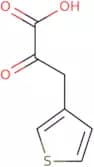
CAS:<p>2-(Thiophen-3-yl)acetamide is a drug that binds to the chemokine receptor CXCR4. It has been shown to have antinociceptive effects in a tail-flick test and reversed phase high performance liquid chromatography (RP-HPLC) study. This drug also has a low affinity for opioid receptors. The pharmacokinetic characteristics of 2-(Thiophen-3-yl)acetamide have not been studied in detail yet, but it may be stored in muscle tissue.</p>Formula:C6H7NOSPurity:Min. 95%Molecular weight:141.19 g/mol2-Oxo-3-(thiophen-3-yl)propanoic acid
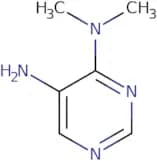
CAS:Versatile small molecule scaffoldFormula:C7H6O3SPurity:Min. 95%Molecular weight:170.19 g/mol4-N,4-N-Dimethylpyrimidine-4,5-diamine
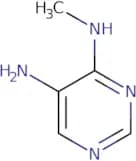
CAS:<p>Versatile small molecule scaffold</p>Formula:C6H10N4Purity:Min. 95%Molecular weight:138.17 g/molN4-Methylpyrimidine-4,5-diamine
CAS:<p>N4-Methylpyrimidine-4,5-diamine is an inhibitor of glycogen synthase kinase-3 (GSK3). It binds to the ATP binding site on GSK3 and inhibits its activity, which leads to a decrease in the phosphorylation of glycogen synthase. This inhibition results in a decrease in glycogen synthesis. N4-Methylpyrimidine-4,5-diamine has been shown to inhibit the catalytic activity of GSK3 with magnesium as a cofactor. It also has been shown to have antiinflammatory effects due to its ability to inhibit nitric oxide production. The compound is formed by reducing purines with sodium borohydride and then reacting it with triazole.</p>Formula:C5H8N4Purity:Min. 95%Molecular weight:124.14 g/mol
![{Bicyclo[2.2.2]octan-2-yl}methanesulfonyl chloride](/_next/image/?url=https%3A%2Fstatic.cymitquimica.com%2Fproducts%2F3D%2Fthumb-webp%2FMZC86681.webp&w=3840&q=75)

![2-[4-(Furan-3-yl)-1H-pyrazol-1-yl]ethan-1-amine](/_next/image/?url=https%3A%2Fstatic.cymitquimica.com%2Fproducts%2F3D%2Fthumb-webp%2FMZC87705.webp&w=3840&q=75)
![2-(Iodomethyl)-8-methyl-1-oxaspiro[4.5]decanes](/_next/image/?url=https%3A%2Fstatic.cymitquimica.com%2Fproducts%2F3D%2Fthumb-webp%2FMZC92465.webp&w=3840&q=75)
![2-(Iodomethyl)-1,7-dioxaspiro[4.5]decane](/_next/image/?url=https%3A%2Fstatic.cymitquimica.com%2Fproducts%2F3D%2Fthumb-webp%2FMZC93493.webp&w=3840&q=75)
![[2-(Propan-2-yloxy)pyrimidin-5-yl]methanol](/_next/image/?url=https%3A%2Fstatic.cymitquimica.com%2Fproducts%2F3D%2Fthumb-webp%2FMZC94208.webp&w=3840&q=75)
![N-[4-Chloro-3-(trifluoromethyl)phenyl]-2,2-dimethylpropanamide](/_next/image/?url=https%3A%2Fstatic.cymitquimica.com%2Fproducts%2F3D%2Fthumb-webp%2FNAA69192.webp&w=3840&q=75)

![7H-[1,2,4]Triazolo[4,3-b][1,2,4]triazol-3-amine](/_next/image/?url=https%3A%2Fstatic.cymitquimica.com%2Fproducts%2F3D%2Fthumb-webp%2FNAA72821.webp&w=3840&q=75)
![7H-[1,2,4]Triazolo[4,3-b][1,2,4]triazole-3-thiol](/_next/image/?url=https%3A%2Fstatic.cymitquimica.com%2Fproducts%2F3D%2Fthumb-webp%2FNAA72826.webp&w=3840&q=75)
![Tricyclo[6.2.1.0,2,7]undeca-2,4,6-triene-1-carboxylic acid](/_next/image/?url=https%3A%2Fstatic.cymitquimica.com%2Fproducts%2F3D%2Fthumb-webp%2FNAA73346.webp&w=3840&q=75)
![3-[(4-Methoxyphenyl)sulfanyl]propanoic acid](/_next/image/?url=https%3A%2Fstatic.cymitquimica.com%2Fproducts%2F3D%2Fthumb-webp%2FNAA73936.webp&w=3840&q=75)
![(5-Bromo-benzo[b]thiophen-2-yl)-methanol](/_next/image/?url=https%3A%2Fstatic.cymitquimica.com%2Fproducts%2F3D%2Fthumb-webp%2FNAA77172.webp&w=3840&q=75)