Building Blocks
Subcategories of "Building Blocks"
- Boronic Acids & Boronic Acid Derivatives(5,780 products)
- Chiral Building Blocks(1,241 products)
- Hydrocarbon Building Blocks(6,100 products)
- Organic Building Blocks(61,029 products)
Found 205306 products of "Building Blocks"
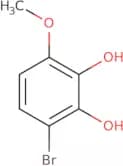
3-Bromo-6-methoxy-1,2-benzenediol
CAS:Versatile small molecule scaffold
Formula:C7H7BrO3Purity:Min. 95%Molecular weight:219.03 g/mol2-(3-Methylphenyl)-2-oxoacetic acid
CAS:Versatile small molecule scaffold
Formula:C9H8O3Purity:Min. 95%Molecular weight:164.16 g/mol7,8-Dichloro-1,2,3,4-tetrahydroisoquinoline
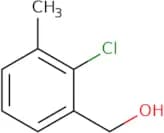
CAS:7,8-Dichloro-1,2,3,4-tetrahydroisoquinoline (7,8-DCT) is a natural compound that can be found in the leaves of the plant "Erythroxylum coca". It has been studied for its potential use as an anticancer drug. 7,8-DCT inhibits the growth of prostate cancer cells and has shown inhibitory properties on α2-adrenergic receptors. This compound also inhibits bacterial growth by disrupting fatty acid biosynthesis and reducing its uptake by mitochondria. 7,8-DCT has also been shown to have antimicrobial resistance. 7,8-DCT is a structural analog of cocaine and acts as a competitive inhibitor to inhibit the enzyme fatty acid amide hydrolase (FAAH). The inhibition of FAAH leads to increased levels of anandamide which is known to modulate pain perception. !-- -->Formula:C9H9Cl2NPurity:Min. 95%Molecular weight:202.08 g/mol2-Chloro-3-methylbenzyl alcohol
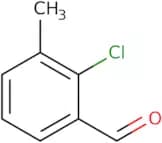
CAS:Versatile small molecule scaffoldFormula:C8H9ClOPurity:Min. 95%Molecular weight:156.61 g/mol2-Chloro-3-methylbenzaldehyde
CAS:2-Chloro-3-methylbenzaldehyde is a reagent that is used in organic synthesis. It is an isomeric form of 2-chlorobenzaldehyde. 2-Chloro-3-methylbenzaldehyde can be prepared by the reaction of benzaldehyde with magnesium, which produces chloral and methyl alcohol. The chloride ion then reacts with the methyl alcohol to produce 2-chloro-3-methylbenzaldehyde. It has been shown that it can be used as a grignard reagent to make substituted ketones or esters. This compound also exhibits dihedral symmetry and has two planar forms, one of which is more stable than the other in solution.
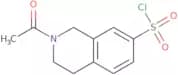
Formula:C8H7ClOPurity:Min. 95%Molecular weight:154.6 g/mol2-acetyl-1,2,3,4-tetrahydroisoquinoline-7-sulfonyl chloride
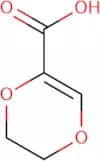
CAS:Versatile small molecule scaffoldFormula:C11H12ClNO3SPurity:Min. 95%Molecular weight:273.73 g/mol5,6-Dihydro-1,4-dioxine-2-carboxylic acid
CAS:Versatile small molecule scaffold
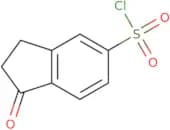
Formula:C5H6O4Purity:Min. 95%Molecular weight:130.1 g/mol1-Oxo-2,3-dihydro-1H-indene-5-sulfonyl chloride
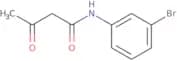
CAS:Versatile small molecule scaffoldFormula:C9H7ClO3SPurity:Min. 95%Molecular weight:230.67 g/molN-(3-Bromophenyl)-3-oxobutanamide
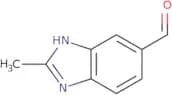
CAS:Versatile small molecule scaffoldFormula:C10H10BrNO2Purity:Min. 95%Molecular weight:256.1 g/mol2-Methyl-1H-1,3-benzodiazole-5-carbaldehyde
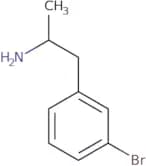
CAS:Versatile small molecule scaffoldFormula:C9H8N2OPurity:Min. 95%Molecular weight:160.17 g/mol1-(3-bromophenyl)propan-2-amine
CAS:Controlled Product1-(3-Bromophenyl)propan-2-amine is an inorganic compound that has been analysed with a variety of techniques, including energy-dispersive x-ray spectroscopy, diffraction, and microscopy. It exhibits ferroelectric properties and has been used to produce nanofibers and magnetic materials. 1-(3-Bromophenyl)propan-2-amine is manufactured by electrospinning, which involves the use of an electric field to draw a polymer solution through a small nozzle to produce fibers. Impurities are often found in this compound due to the manufacturing process.
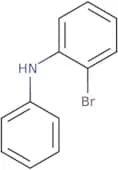
Formula:C9H12BrNPurity:Min. 95%Molecular weight:214.1 g/mol2-Bromo-N-phenylaniline
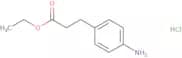
CAS:2-Bromo-N-phenylaniline is a carbonylative synthetic that yields acridone and triarylamines. The abundances of electron ionization reactions for this compound are in the range of 1.5 to 3.0%. Dehalogenation reactions have been observed with arylation and amination reactions, but not with carbolines or diarylamines. 2-Bromo-N-phenylaniline has been shown to act as a ligand for metal ions and catalyze amination reactions involving diarylamines.Formula:C12H10BrNPurity:Min. 95%Molecular weight:248.12 g/molEthyl 3-(4-aminophenyl)propanoate hydrochloride
CAS:Versatile small molecule scaffold
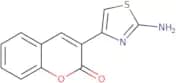
Formula:C11H16ClNO2Purity:Min. 95%Molecular weight:229.7 g/mol3-(2-Amino-thiazol-4-yl)-chromen-2-one
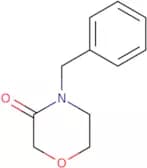
CAS:3-(2-Amino-thiazol-4-yl)-chromen-2-one is a synthetic compound that exhibits cytotoxic activity in vitro. It has been shown to have antibacterial, antiviral, and antifungal activities. 3-(2-Amino-thiazol-4-yl)-chromen-2-one inhibits the growth of bacteria by binding to DNA. The mechanism of action of this compound is similar to cisplatin, a widely used anticancer drug. 3-(2-Amino-thiazol-4-yl)-chromen-2-one binds to the minor groove of DNA, forming an interstrand crosslink between two adjacent base pairs that prevents DNA replication and transcription. This compound also has potential as a cancer therapeutic due to its ability to inhibit the growth of tumour cells without affecting noncancerous cells.Formula:C12H8N2O2SPurity:Min. 95%Molecular weight:244.27 g/molN-Benzyl-morpholin-3-one
CAS:N-Benzylmorpholin-3-one is a chiral, exocyclic amine oxidation agent that is used in organic synthesis. The compound has been shown to be effective in the chemoselective oxidation of imines and lactams, which are important reaction intermediates. It has been shown to be effective in controlling the regioselectivity of the reaction, with a high degree of chemoselectivity. N-Benzylmorpholin-3-one is also capable of oxidising cations such as quaternary ammonium salts and tertiary amines.
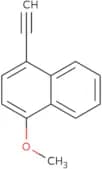
Formula:C11H13NO2Purity:Min. 95%Molecular weight:191.23 g/mol1-Ethynyl-4-methoxynaphthalene
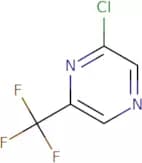
CAS:1-Ethynyl-4-methoxynaphthalene is a synthetic estrogen that can be used as an analogue of estrone. It is also a formylation product of anisole, which is synthesized from formaldehyde and phenol. This compound has been shown to act as an agonist for the estrogen receptor, in addition to having the ability to induce bromination. The Corey-Fuchs reaction yields 1-ethynyl-4-methoxynaphthalene by reacting 4-methoxybenzaldehyde with ethyne.Formula:C13H10OPurity:Min. 95%Molecular weight:182.22 g/mol2-Chloro-6-(trifluoromethyl)pyrazine
CAS:Versatile small molecule scaffold
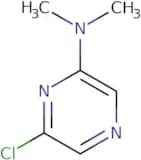
Formula:C5H2ClF3N2Purity:Min. 95%Molecular weight:182.53 g/mol6-Chloro-N,N-dimethylpyrazin-2-amine
CAS:Versatile small molecule scaffold
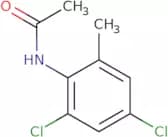
Formula:C6H8ClN3Purity:Min. 95%Molecular weight:157.6 g/mol2,4-Dichloro-6-methylacetanilide
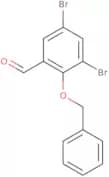
CAS:Versatile small molecule scaffoldFormula:C9H9Cl2NOPurity:Min. 95%Molecular weight:218.08 g/mol2-(benzyloxy)-3,5-dibromobenzaldehyde
CAS:2-(Benzyloxy)-3,5-dibromobenzaldehyde (2BDBA) is a carbonyl group with synthons. It is also known as a potential drug candidate for the treatment of cancer and other diseases. The interaction between 2BDBA and the carbonyl group has been investigated with advances in nature, analyses, energies, crystallographic, supramolecular and isomorphous studies. The fingerprint of the compound was found to be different from those of the other similar compounds. The interactions between 2BDBA and other molecules have been studied with advanced analytical techniques such as FTIR spectroscopy, which has given an insight into how these interactions take place.
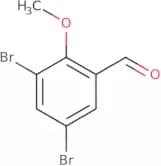
Formula:C14H10Br2O2Purity:Min. 95%Molecular weight:370.04 g/mol3,5-Dibromo-2-methoxybenzaldehyde
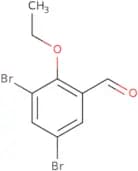
CAS:3,5-Dibromo-2-methoxybenzaldehyde (3,5-DMB) is a x-ray crystal structure of a molecule. It is an organic compound that has the chemical formula of C10H8O4Br. 3,5-DMB is an intermediate in the synthesis of 6-methoxy-2-naphthol and has been crystallized from ethanolic solutions. 3,5-DMB can be efficiently synthesized by reacting malononitrile with piperidine in microwave irradiation. A reaction mechanism for this synthesis was proposed which involves the formation of a nitrile oxide intermediate followed by a one electron oxidation to form 3,5-DMB. This method can be used to generate high yields of 3,5-DMB in minutes and hours with good purity.Formula:C8H6Br2O2Purity:Min. 95%Molecular weight:293.94 g/mol3,5-Dibromo-2-ethoxybenzaldehyde
CAS:Versatile small molecule scaffold
Formula:C9H8Br2O2Purity:Min. 95%Molecular weight:307.97 g/mol6-(Benzylamino)pyrimidin-4-ol
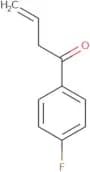
CAS:Versatile small molecule scaffoldFormula:C11H11N3OPurity:Min. 95%Molecular weight:201.22 g/mol1-(4-Fluorophenyl)but-3-en-1-one
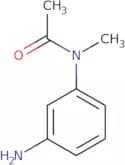
CAS:Versatile small molecule scaffoldFormula:C10H9FOPurity:Min. 95%Molecular weight:164.18 g/molN-(3-Aminophenyl)-N-methylacetamide
CAS:Versatile small molecule scaffold
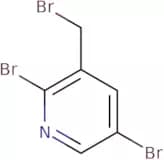
Formula:C9H12N2OPurity:Min. 95%Molecular weight:164.21 g/mol2,5-Dibromo-3-(bromomethyl)pyridine
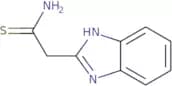
CAS:Versatile small molecule scaffoldFormula:C6H4Br3NPurity:Min. 95%Molecular weight:329.81 g/mol2-(1H-1,3-Benzodiazol-2-yl)ethanethioamide
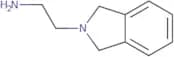
CAS:Versatile small molecule scaffoldFormula:C9H9N3SPurity:Min. 95%Molecular weight:191.26 g/mol2-(2,3-Dihydro-1H-isoindol-2-yl)ethan-1-amine
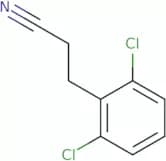
CAS:Versatile small molecule scaffoldFormula:C10H14N2Purity:Min. 95%Molecular weight:162.23 g/mol3-(2,6-Dichlorophenyl)propanenitrile
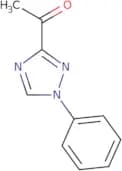
CAS:Versatile small molecule scaffoldFormula:C9H7Cl2NPurity:Min. 95%Molecular weight:200.06 g/mol1-(1-Phenyl-1H-1,2,4-triazol-3-yl)ethan-1-one
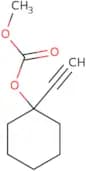
CAS:Versatile small molecule scaffoldFormula:C10H9N3OPurity:Min. 95%Molecular weight:187.2 g/mol1-Ethynylcyclohexyl methyl carbonate
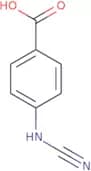
CAS:Versatile small molecule scaffoldFormula:C10H14O3Purity:Min. 95%Molecular weight:182.22 g/mol4-(Cyanoamino)benzoic acid
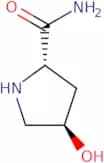
CAS:Versatile small molecule scaffoldFormula:C8H6N2O2Purity:Min. 95%Molecular weight:162.15 g/mol(2S,4R)-4-hydroxypyrrolidine-2-carboxamide
CAS:Versatile small molecule scaffoldFormula:C5H10N2O2Purity:Min. 95%Molecular weight:130.15 g/mol1-Benzyl-1H,2H,3H-imidazo[4,5-c]pyridin-2-one
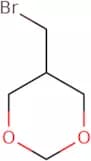
CAS:Versatile small molecule scaffoldFormula:C13H11N3OPurity:Min. 95%Molecular weight:225.25 g/mol5-(Bromomethyl)-1,3-dioxane
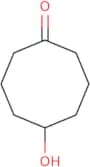
CAS:Versatile small molecule scaffoldFormula:C5H9BrO2Purity:Min. 95%Molecular weight:181.03 g/mol5-Hydroxycyclooctan-1-one
CAS:5-Hydroxycyclooctan-1-one is a reactive, inorganic compound that can be used to induce conformational and/or shift changes in proteins. It has been shown to react with thiol groups of cysteine residues on proteins and undergo hydride transfer reactions with metal carbene complexes. 5-Hydroxycyclooctan-1-one is a potential biomolecular probe for the study of protein dynamics and conformational changes, as well as being an excellent reactive intermediate in organic synthesis. The activation energy for this reaction isFormula:C8H14O2Purity:Min. 95%Color and Shape:PowderMolecular weight:142.2 g/mol4H,6H,7H-Thiopyrano[4,3-d][1,3]thiazol-2-amine
CAS:Versatile small molecule scaffold
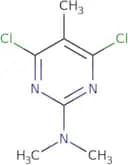
Formula:C6H8N2S2Purity:Min. 95%Molecular weight:172.3 g/mol4,6-Dichloro-N,N,5-trimethylpyrimidin-2-amine
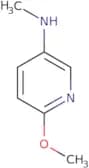
CAS:Versatile small molecule scaffoldFormula:C7H9Cl2N3Purity:Min. 95%Molecular weight:206.07 g/mol(6-Methoxy-pyridin-3-yl)-methyl-amine
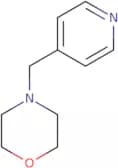
CAS:Versatile small molecule scaffoldFormula:C7H10N2OPurity:Min. 95%Molecular weight:138.17 g/mol4-(Pyridin-4-ylmethyl)morpholine
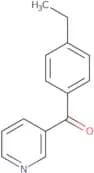
CAS:Versatile small molecule scaffoldFormula:C10H14N2OPurity:Min. 95%Molecular weight:178.23 g/mol3-(4-Ethylbenzoyl)pyridine
CAS:Versatile small molecule scaffoldFormula:C14H13NOPurity:Min. 95%Molecular weight:211.26 g/mol3-[4-(Propan-2-yl)benzoyl]pyridine
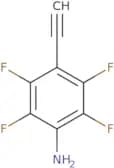
CAS:Versatile small molecule scaffoldFormula:C15H15NOPurity:Min. 95%Molecular weight:225.28 g/mol4-Ethynyl-2,3,5,6-tetrafluoroaniline
CAS:Versatile small molecule scaffold
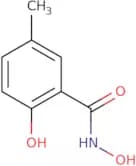
Formula:C8H3F4NPurity:Min. 95%Molecular weight:189.11 g/molN,2-Dihydroxy-5-methylbenzamide
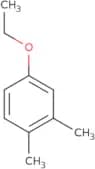
CAS:Versatile small molecule scaffoldFormula:C8H9NO3Purity:Min. 95%Molecular weight:167.16 g/mol4-Ethoxy-1,2-dimethylbenzene
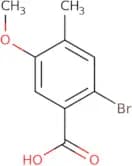
CAS:Versatile small molecule scaffoldFormula:C10H14OPurity:Min. 95%Molecular weight:150.22 g/mol2-Bromo-5-methoxy-4-methylbenzoic acid
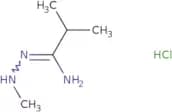
CAS:Versatile small molecule scaffoldFormula:C9H9BrO3Purity:Min. 95%Molecular weight:245.07 g/mol2-Methyl-N-(methylamino)propanimidamide hydrochloride
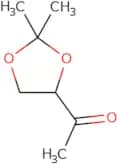
CAS:Versatile small molecule scaffoldFormula:C5H14ClN3Purity:Min. 95%Molecular weight:151.64 g/mol(R)-1-(2,2-Dimethyl-1,3-dioxolan-4-yl)ethanone
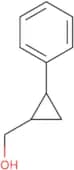
CAS:Versatile small molecule scaffoldFormula:C7H12O3Purity:Min. 95%Molecular weight:144.17 g/mol(2-Phenylcyclopropyl)methanol
CAS:(2-Phenylcyclopropyl)methanol is an optically pure, chiral reagent that can be used to synthesize cinnamyl alcohols and other enantiomers. (2-Phenylcyclopropyl)methanol has been shown to react with monomers in a cross-linking reaction to produce polymers of various lengths and molecular weights. This compound is also reactive, which means it can be used as a reagent in experiments. It can also be used as an intermediate for the synthesis of other compounds. (2-Phenylcyclopropyl)methanol is sensitive to light, so should be stored in the dark or under inert atmosphere conditions.
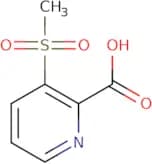
Formula:C10H12OPurity:Min. 95%Molecular weight:148.2 g/mol3-Methanesulfonylpyridine-2-carboxylic acid
CAS:Versatile small molecule scaffoldFormula:C7H7NO4SPurity:Min. 95%Molecular weight:201.2 g/mol



![1-Benzyl-1H,2H,3H-imidazo[4,5-c]pyridin-2-one](/_next/image/?url=https%3A%2Fstatic.cymitquimica.com%2Fproducts%2F3D%2Fthumb-webp%2FLCA71958.webp&w=3840&q=75)
![4H,6H,7H-Thiopyrano[4,3-d][1,3]thiazol-2-amine](/_next/image/?url=https%3A%2Fstatic.cymitquimica.com%2Fproducts%2F3D%2Fthumb-webp%2FLCA76433.webp&w=3840&q=75)
![3-[4-(Propan-2-yl)benzoyl]pyridine](/_next/image/?url=https%3A%2Fstatic.cymitquimica.com%2Fproducts%2F3D%2Fthumb-webp%2FLCA78008.webp&w=3840&q=75)