Building Blocks
This section contains fundamental products for the synthesis of organic and biological compounds. Building blocks are the essential starting materials used to construct complex molecules through various chemical reactions. They play a critical role in drug discovery, material science, and chemical research. At CymitQuimica, we offer a diverse range of high-quality building blocks to support your innovative research and industrial projects, ensuring you have the essential components for successful synthesis.
Subcategories of "Building Blocks"
- Boronic Acids & Boronic Acid Derivatives(5,778 products)
- Chiral Building Blocks(1,242 products)
- Hydrocarbon Building Blocks(6,098 products)
- Organic Building Blocks(61,063 products)
Found 197855 products of "Building Blocks"
Sort by
Purity (%)
0
100
|
0
|
50
|
90
|
95
|
100
5-[(4-Nitrophenyl)methyl]-1H-1,2,3,4-tetrazole
CAS:<p>5-[(4-Nitrophenyl)methyl]-1H-1,2,3,4-tetrazole is a transition metal complex that has been shown to be catalytic. The crystal x-ray diffraction pattern of the compound shows that it has a crystallographic space group of P2/c, with unit cell dimensions of a = 17.94 Å and c = 9.66 Å. The molecular geometry is trigonal planar with dihedral angles of 18.6° between the nitro group and the methylene group on one side and 16.5° between the methylene group on the other side. The crystal structure consists of two benzene molecules bridged by 2 nitro groups and 1 methylene group in an octahedral geometry.</p>Formula:C8H7N5O2Purity:Min. 95%Molecular weight:205.17 g/mol2-Amino-4-fluorobenzene-1-thiol
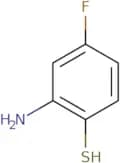
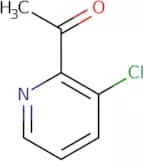
CAS:<p>Versatile small molecule scaffold</p>Formula:C6H6FNSPurity:Min. 95%Molecular weight:143.18 g/mol1-(3-Chloropyridin-2-yl)ethanone
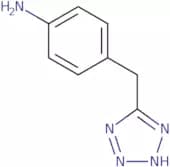
CAS:<p>1-(3-Chloropyridin-2-yl)ethanone is an antibacterial agent that belongs to the group of organochlorine compounds. It has a bactericidal and bacteriostatic effect on a number of microorganisms, including bacteria, fungi, protozoa, and viruses. 1-(3-Chloropyridin-2-yl)ethanone is used in preparations for the treatment of wounds and skin infections as well as for disinfecting the environment. The active substances in 1-(3-Chloropyridin-2-yl)ethanone are bactericidal and bacteriostatic against a broad spectrum of microorganisms. These substances are also effective against some strains that develop resistance to antibiotics.</p>Formula:C7H6ClNOPurity:Min. 95%Molecular weight:155.58 g/mol4-(1H-Tetrazol-5-ylmethyl)aniline
CAS:<p>Versatile small molecule scaffold</p>Formula:C8H9N5Purity:Min. 95%Molecular weight:175.19 g/molBenzyl N-[(oxiran-2-yl)methyl]carbamate
CAS:Versatile small molecule scaffoldFormula:C11H13NO3Purity:Min. 95%Molecular weight:207.23 g/mol2-{[5-(Phenoxymethyl)-4-phenyl-4H-1,2,4-triazol-3-yl]sulfanyl}acetic acid
CAS:Versatile small molecule scaffoldFormula:C17H15N3O3SPurity:Min. 95%Molecular weight:341.4 g/mol2-Chloro-N-[1-(naphthalen-1-yl)ethyl]acetamide
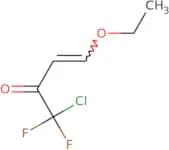
CAS:<p>Versatile small molecule scaffold</p>Formula:C14H14ClNOPurity:Min. 95%Molecular weight:247.72 g/mol(Z)-1-Chloro-4-ethoxy-1,1-difluoro-3-buten-2-one
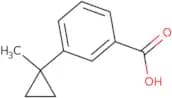
CAS:Versatile small molecule scaffoldFormula:C6H7ClF2O2Purity:Min. 95%Molecular weight:184.57 g/mol3-(1-Methylcyclopropyl)benzoic acid
CAS:<p>Versatile small molecule scaffold</p>Formula:C11H12O2Purity:Min. 95%Molecular weight:176.21 g/mol4-(1-Methylcyclopropyl)benzoic acid
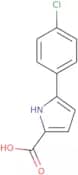
CAS:<p>Versatile small molecule scaffold</p>Formula:C11H12O2Purity:Min. 95%Molecular weight:176.21 g/mol5-(4-Chlorophenyl)-1H-pyrrole-2-carboxylic acid
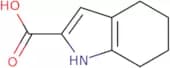
CAS:Versatile small molecule scaffoldFormula:C11H8ClNO2Purity:Min. 95%Molecular weight:221.64 g/mol4,5,6,7-Tetrahydro-1H-indole-2-carboxylic acid
CAS:<p>Versatile small molecule scaffold</p>Formula:C9H11NO2Purity:Min. 95%Molecular weight:165.19 g/mol2-({[(9H-Fluoren-9-yl)methoxy]carbonyl}amino)-4-methylpent-4-enoic acid
CAS:Versatile small molecule scaffoldFormula:C21H21NO4Purity:Min. 95%Molecular weight:351.4 g/mol2-Chloro-N-[4-(2,4-dimethoxyphenyl)-1,3-thiazol-2-yl]acetamide
CAS:Versatile small molecule scaffoldFormula:C13H13ClN2O3SPurity:Min. 95%Molecular weight:312.77 g/mol4-Chloro-3-methylbenzyl alcohol
CAS:<p>Versatile small molecule scaffold</p>Formula:C8H9ClOPurity:Min. 95%Molecular weight:156.61 g/molrac-(1R,2S,4S)-N-Methylbicyclo[2.2.1]heptan-2-amine hydrochloride
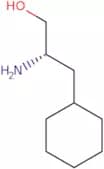
CAS:Versatile small molecule scaffoldFormula:C8H16ClNPurity:Min. 95%Molecular weight:161.7 g/mol(S)-b-Amino-cyclohexanepropanol
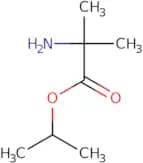
CAS:Versatile small molecule scaffoldFormula:C9H19NOPurity:Min. 95%Molecular weight:157.25 g/molPropan-2-yl 2-amino-2-methylpropanoate
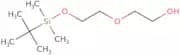
CAS:<p>Versatile small molecule scaffold</p>Formula:C7H15NO2Purity:Min. 95%Molecular weight:145.2 g/mol2-(2-((tert-butyldimethylsilyl)oxy)ethoxy)ethanol
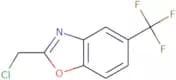
CAS:<p>Versatile small molecule scaffold</p>Formula:C10H24O3SiPurity:Min. 95%Molecular weight:220.38 g/mol2-(Chloromethyl)-5-(trifluoromethyl)-1,3-benzoxazole
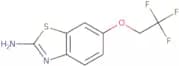
CAS:Versatile small molecule scaffoldFormula:C9H5ClF3NOPurity:Min. 95%Molecular weight:235.59 g/mol6-(2,2,2-Trifluoroethoxy)-1,3-benzothiazol-2-amine
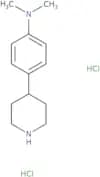
CAS:<p>Versatile small molecule scaffold</p>Formula:C9H7F3N2OSPurity:Min. 95%Molecular weight:248.23 g/molN,N-Dimethyl-4-(4-piperidinyl)anilinedihydrochloride
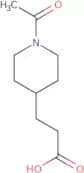
CAS:<p>Versatile small molecule scaffold</p>Formula:C13H22Cl2N2Purity:Min. 95%Molecular weight:277.23 g/mol3-(1-acetyl-piperidin-4-yl)-propionic acid
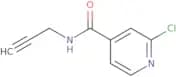
CAS:<p>Versatile small molecule scaffold</p>Formula:C10H17NO3Purity:Min. 95%Molecular weight:199.25 g/mol2-Chloro-N-(prop-2-yn-1-yl)pyridine-4-carboxamide
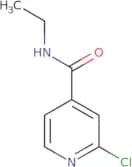
CAS:<p>Versatile small molecule scaffold</p>Formula:C9H7ClN2OPurity:Min. 95%Molecular weight:194.62 g/mol2-Chloro-N-ethylpyridine-4-carboxamide
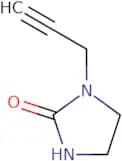
CAS:<p>Versatile small molecule scaffold</p>Formula:C8H9ClN2OPurity:Min. 95%Molecular weight:184.62 g/mol1-(Prop-2-yn-1-yl)imidazolidin-2-one
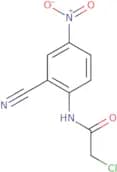
CAS:<p>Versatile small molecule scaffold</p>Formula:C6H8N2OPurity:Min. 95%Molecular weight:124.14 g/mol2-Chloro-N-(2-cyano-4-nitrophenyl)acetamide
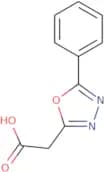
CAS:<p>Versatile small molecule scaffold</p>Formula:C9H6ClN3O3Purity:Min. 95%Molecular weight:239.61 g/mol2-(5-Phenyl-1,3,4-oxadiazol-2-yl)acetic acid
CAS:<p>Versatile small molecule scaffold</p>Formula:C10H8N2O3Purity:Min. 95%Molecular weight:204.18 g/mol3-Cyclopropyl-2,2-dimethylpropanoic acid
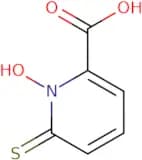
CAS:Versatile small molecule scaffoldFormula:C8H14O2Purity:Min. 95%Molecular weight:142.2 g/mol1-Hydroxy-6-Thioxo-1,6-Dihydropyridine-2-Carboxylic Acid
CAS:<p>1-Hydroxy-6-Thioxo-1,6-Dihydropyridine-2-Carboxylic Acid is a cellular modulator that acts as a regulator of gene expression. It is an inhibitor of the myotonica chloride channel and inhibits the activity of target enzymes by binding to their active site and blocking them from performing their function. 1-Hydroxy-6-Thioxo-1,6-Dihydropyridine-2-Carboxylic Acid has been shown to be effective in controlling cardiac hypertrophy and preventing heart failure. The molecule also targets ribosomes, which are involved in protein synthesis. This drug has low expression levels in cells and is not very cell culture labile. 1HTCA binds to the ribosome and prevents protein synthesis by inhibiting peptidyl transferase activity.</p>Formula:C6H5NO3SPurity:Min. 95%Molecular weight:171.18 g/mol2-{bicyclo[1.1.1]pentan-1-yl}acetic acid
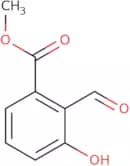
CAS:Versatile small molecule scaffoldFormula:C7H10O2Purity:Min. 95%Molecular weight:126.2 g/molMethyl 2-formyl-3-hydroxybenzoate
CAS:<p>Methyl 2-formyl-3-hydroxybenzoate is a formylating agent that reacts with the hydroxyl group of benzene to form a methyl ester. It has been used in the production of polyphosphoric acid, and is also used in the synthesis of salicylic acid and other organic compounds. Methyl 2-formyl-3-hydroxybenzoate reacts with hexamethylenetetramine to produce hexamethylenetricarboxylic acid, which can be reacted with an alcohol to produce an ester. This reagent has been shown to have antifungal activity against Rhizoglyphus sp.</p>Formula:C9H8O4Purity:Min. 95%Molecular weight:180.16 g/mol2-(2,3-Dihydro-1-benzofuran-3-yl)acetonitrile
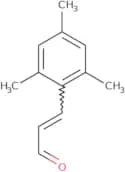
CAS:<p>Versatile small molecule scaffold</p>Formula:C10H9NOPurity:Min. 95%Molecular weight:159.18 g/mol(2E)-3-(2,4,6-Trimethylphenyl)prop-2-enal
CAS:<p>Versatile small molecule scaffold</p>Formula:C12H14OPurity:Min. 95%Molecular weight:174.24 g/mol3-(Piperazin-1-yl)-1,2-benzothiazole-1,1-dione
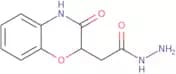
CAS:<p>Versatile small molecule scaffold</p>Formula:C11H13N3O2SPurity:Min. 95%Molecular weight:251.31 g/mol2-(3-Oxo-3,4-dihydro-2H-1,4-benzoxazin-2-yl)acetohydrazide
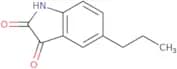
CAS:Versatile small molecule scaffoldFormula:C10H11N3O3Purity:Min. 95%Molecular weight:221.21 g/mol5-Propyl-2,3-dihydro-1H-indole-2,3-dione
CAS:<p>Versatile small molecule scaffold</p>Formula:C11H11NO2Purity:Min. 95%Molecular weight:189.21 g/molMethyl 2-[(4-chloro-3-nitrophenyl)formamido]acetate
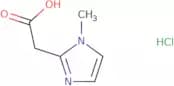
CAS:Versatile small molecule scaffoldFormula:C10H9ClN2O5Purity:Min. 95%Molecular weight:272.64 g/mol2-(1-Methyl-1H-imidazol-2-yl)acetic acid hydrochloride
CAS:Versatile small molecule scaffoldFormula:C6H9ClN2O2Purity:Min. 95%Molecular weight:176.6 g/mol2-(2-Bromoethyl)bicyclo[2.2.1]heptane
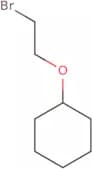
CAS:<p>Versatile small molecule scaffold</p>Formula:C9H15BrPurity:Min. 95%Molecular weight:203.12 g/mol(2-bromoethoxy)cyclohexane
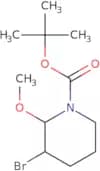
CAS:<p>Versatile small molecule scaffold</p>Formula:C8H15BrOPurity:Min. 95%Molecular weight:207.11 g/moltert-Butyl 3-bromo-2-methoxypiperidine-1-carboxylate
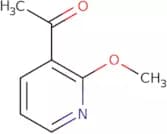
CAS:Versatile small molecule scaffoldFormula:C11H20BrNO3Purity:Min. 95%Molecular weight:294.19 g/mol1-(2-Methoxypyridin-3-yl)ethanone
CAS:<p>1-(2-Methoxypyridin-3-yl)ethanone is a structural analog of 2-chloropyridine. It has the same stereochemistry as 2-chloropyridine and can be synthesized from it by metallation, oxidation, or acridone synthesis. 1-(2-Methoxypyridin-3-yl)ethanone can be used as an intermediate in the synthesis of coumarins and acridones. It is also used to produce enantiomerically pure (S)-1-(2-methoxypyridin-3-yl)propanol. The optical activity of this compound was determined using a polarimeter.</p>Formula:C8H9NO2Purity:Min. 95%Molecular weight:151.16 g/mol6-Bromo-1-nitronaphthalen-2-amine
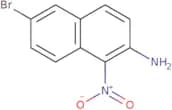
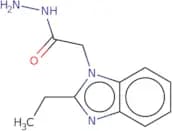
CAS:<p>Versatile small molecule scaffold</p>Formula:C10H7BrN2O2Purity:Min. 95%Molecular weight:267.08 g/mol2-(2-Ethyl-1H-1,3-benzodiazol-1-yl)acetohydrazide
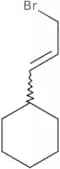
CAS:Controlled Product<p>Versatile small molecule scaffold</p>Formula:C11H14N4OPurity:Min. 95%Molecular weight:218.3 g/mol(3-Bromoprop-1-en-1-yl)cyclohexane
CAS:<p>Versatile small molecule scaffold</p>Formula:C9H15BrPurity:Min. 95%Molecular weight:203.12 g/mol2-(2-Bromoethyl)-2H-naphtho[1,8-cd]isothiazole 1,1-dioxide
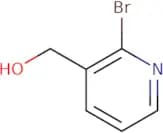
CAS:Versatile small molecule scaffoldFormula:C12H10BrNO2SPurity:Min. 95%Molecular weight:312.18 g/mol2-Bromo-3-pyridinemethanol
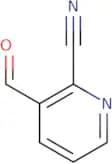
CAS:2-Bromo-3-pyridinemethanol is a heteroaryl compound that contains a pyridine ring. It is synthesized by the lithiation of 2-bromopyridine followed by intramolecular bromination with 3-bromopyridinemethanol. The methodologies for this synthesis are similar to those used in the synthesis of quinolines and pyridines. Lithiation of 2-bromopyridine at low temperature (0°C) led to the formation of 2,6-dibromopyridine, which was then reacted with 3-bromopyridinemethanol in a sequence similar to that described for the synthesis of quinoline and pyridine. This reaction yielded 2,6-dibromo-3-(2'-pyridinyl)-N,N'-dimethylethanamine. The desired product was obtained after cyclization with potassium tertFormula:C6H6BrNOPurity:Min. 95%Molecular weight:188.02 g/mol3-Formylpicolinonitrile
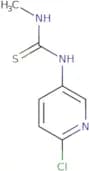
CAS:<p>Versatile small molecule scaffold</p>Formula:C7H4N2OPurity:Min. 95%Molecular weight:132.12 g/mol1-(6-Chloropyridin-3-yl)-3-methylthiourea
CAS:<p>Versatile small molecule scaffold</p>Formula:C7H8ClN3SPurity:Min. 95%Molecular weight:201.68 g/mol
![5-[(4-Nitrophenyl)methyl]-1H-1,2,3,4-tetrazole](/_next/image/?url=https%3A%2Fstatic.cymitquimica.com%2Fproducts%2F3D%2Fthumb-webp%2FGFA09044.webp&w=3840&q=75)

![Benzyl N-[(oxiran-2-yl)methyl]carbamate](/_next/image/?url=https%3A%2Fstatic.cymitquimica.com%2Fproducts%2F3D%2Fthumb-webp%2FGFA11890.webp&w=3840&q=75)
![2-{[5-(Phenoxymethyl)-4-phenyl-4H-1,2,4-triazol-3-yl]sulfanyl}acetic acid](/_next/image/?url=https%3A%2Fstatic.cymitquimica.com%2Fproducts%2F3D%2Fthumb-webp%2FGFA14209.webp&w=3840&q=75)
![2-Chloro-N-[1-(naphthalen-1-yl)ethyl]acetamide](/_next/image/?url=https%3A%2Fstatic.cymitquimica.com%2Fproducts%2F3D%2Fthumb-webp%2FGFA14967.webp&w=3840&q=75)

![2-({[(9H-Fluoren-9-yl)methoxy]carbonyl}amino)-4-methylpent-4-enoic acid](/_next/image/?url=https%3A%2Fstatic.cymitquimica.com%2Fproducts%2F3D%2Fthumb-webp%2FGFA17758.webp&w=3840&q=75)
![2-Chloro-N-[4-(2,4-dimethoxyphenyl)-1,3-thiazol-2-yl]acetamide](/_next/image/?url=https%3A%2Fstatic.cymitquimica.com%2Fproducts%2F3D%2Fthumb-webp%2FGFA21348.webp&w=3840&q=75)

![rac-(1R,2S,4S)-N-Methylbicyclo[2.2.1]heptan-2-amine hydrochloride](/_next/image/?url=https%3A%2Fstatic.cymitquimica.com%2Fproducts%2F3D%2Fthumb-webp%2FGFA27498.webp&w=3840&q=75)

![2-{bicyclo[1.1.1]pentan-1-yl}acetic acid](/_next/image/?url=https%3A%2Fstatic.cymitquimica.com%2Fproducts%2F3D%2Fthumb-webp%2FGFA51531.webp&w=3840&q=75)


![Methyl 2-[(4-chloro-3-nitrophenyl)formamido]acetate](/_next/image/?url=https%3A%2Fstatic.cymitquimica.com%2Fproducts%2F3D%2Fthumb-webp%2FGFA64853.webp&w=3840&q=75)
![2-(2-Bromoethyl)bicyclo[2.2.1]heptane](/_next/image/?url=https%3A%2Fstatic.cymitquimica.com%2Fproducts%2F3D%2Fthumb-webp%2FGFA66574.webp&w=3840&q=75)
![2-(2-Bromoethyl)-2H-naphtho[1,8-cd]isothiazole 1,1-dioxide](/_next/image/?url=https%3A%2Fstatic.cymitquimica.com%2Fproducts%2F3D%2Fthumb-webp%2FGFA72917.webp&w=3840&q=75)