


Building Blocks
This section contains fundamental products for the synthesis of organic and biological compounds. Building blocks are the essential starting materials used to construct complex molecules through various chemical reactions. They play a critical role in drug discovery, material science, and chemical research. At CymitQuimica, we offer a diverse range of high-quality building blocks to support your innovative research and industrial projects, ensuring you have the essential components for successful synthesis.
Subcategories of "Building Blocks"
- Boronic Acids & Boronic Acid Derivatives(5,778 products)
- Chiral Building Blocks(1,243 products)
- Hydrocarbon Building Blocks(6,098 products)
- Organic Building Blocks(61,057 products)
Found 200716 products of "Building Blocks"
Sort by
Purity (%)
0
100
|
0
|
50
|
90
|
95
|
100
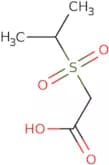
(Propane-2-sulfonyl)-acetic acid
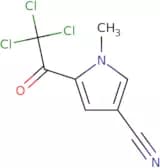
CAS:<p>Versatile small molecule scaffold</p>Formula:C5H10O4SPurity:Min. 95%Molecular weight:166.19 g/mol1-Methyl-5-(trichloroacetyl)-1H-pyrrole-3-carbonitrile
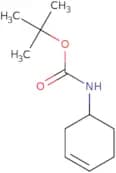
CAS:<p>Versatile small molecule scaffold</p>Formula:C8H5Cl3N2OPurity:Min. 95%Molecular weight:251.5 g/mol4-(Boc-amino)cyclohexene
CAS:<p>Versatile small molecule scaffold</p>Formula:C11H19NO2Purity:Min. 95%Molecular weight:197.28 g/mol1,3-Dimethyl-2-[(2-oxopropyl)sulfanyl]-1H-imidazol-3-ium chloride
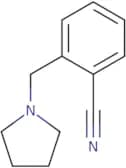
CAS:1,3-Dimethyl-2-[(2-oxopropyl)sulfanyl]-1H-imidazol-3-ium chloride is a cationic salt that inhibits the enzyme acetylcholinesterase.Formula:C8H13ClN2OSPurity:Min. 95%Molecular weight:220.72 g/mol2-(Pyrrolidin-1-ylmethyl)benzonitrile
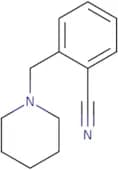
CAS:<p>Versatile small molecule scaffold</p>Formula:C12H14N2Purity:Min. 95%Molecular weight:186.25 g/mol2-(Piperidin-1-ylmethyl)benzonitrile
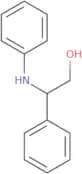
CAS:<p>Versatile small molecule scaffold</p>Formula:C13H16N2Purity:Min. 95%Molecular weight:200.28 g/mol(2S)-2-Phenyl-2-(phenylamino)ethan-1-ol
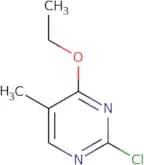
CAS:<p>Versatile small molecule scaffold</p>Formula:C14H15NOPurity:Min. 95%Molecular weight:213.27 g/mol2-Chloro-4-ethoxy-5-methylpyrimidine
CAS:Versatile small molecule scaffoldFormula:C7H9ClN2OPurity:Min. 95%Molecular weight:172.61 g/mol3-[(Benzenesulfonyl)methyl]aniline
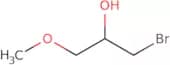
CAS:<p>Versatile small molecule scaffold</p>Formula:C13H13NO2SPurity:Min. 95%Molecular weight:247.31 g/mol1-Bromo-3-methoxypropan-2-ol
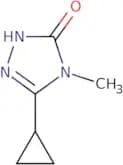
CAS:Versatile small molecule scaffoldFormula:C4H9BrO2Purity:Min. 95%Molecular weight:169.02 g/mol3-Cyclopropyl-4-methyl-4,5-dihydro-1H-1,2,4-triazol-5-one
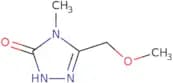
CAS:Versatile small molecule scaffoldFormula:C6H9N3OPurity:Min. 95%Molecular weight:139.16 g/mol3-(Methoxymethyl)-4-methyl-4,5-dihydro-1H-1,2,4-triazol-5-one
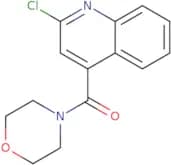
CAS:Versatile small molecule scaffoldFormula:C5H9N3O2Purity:Min. 95%Molecular weight:143.14 g/mol2-Chloro-4-(morpholine-4-carbonyl)quinoline
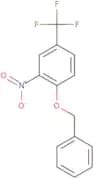
CAS:Versatile small molecule scaffoldFormula:C14H13ClN2O2Purity:Min. 95%Molecular weight:276.72 g/mol1-(Benzyloxy)-2-nitro-4-(trifluoromethyl)benzene
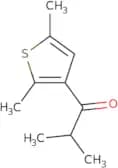
CAS:Versatile small molecule scaffoldFormula:C14H10F3NO3Purity:Min. 95%Molecular weight:297.23 g/mol1-(2,5-Dimethylthiophen-3-yl)-2-methylpropan-1-one
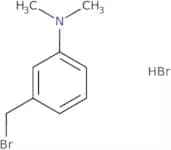
CAS:Versatile small molecule scaffoldFormula:C10H14OSPurity:Min. 95%Molecular weight:182.28 g/mol3-(Bromomethyl)-N,N-dimethylaniline hydrobromide
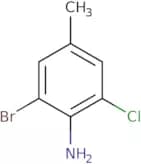
CAS:Versatile small molecule scaffoldFormula:C9H13Br2NPurity:Min. 95%Molecular weight:295.01 g/mol2-Bromo-6-chloro-4-methylaniline
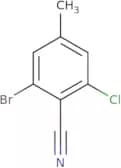
CAS:<p>Versatile small molecule scaffold</p>Formula:C7H7BrClNPurity:Min. 95%Molecular weight:220.49 g/mol2-Bromo-6-chloro-4-methylbenzonitrile
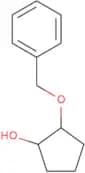
CAS:Versatile small molecule scaffoldFormula:C8H5BrClNPurity:Min. 95%Molecular weight:230.49 g/mol(1S,2S)-2-(Benzyloxy)cyclopentan-1-ol
CAS:<p>Versatile small molecule scaffold</p>Formula:C12H16O2Purity:Min. 95%Molecular weight:192.25 g/mol6-Benzyl-2,6-diazaspiro[3.4]octane
CAS:<p>6-Benzyl-2,6-diazaspiro[3.4]octane is a viscous liquid with a molecular weight of 594. It is an oil-in-water emulsifier that is used in cosmetics as a viscosity agent, thickener, and emulsifier. It has been shown to be effective as a surfactant and yield high levels of polymers in the range of 1000 to 5000 microns. 6-Benzyl-2,6-diazaspiro[3.4]octane is also effective as an anionic or cationic polymer that can be used for micronization.br>br><br>This product is not intended for use in pharmaceuticals.</p>Formula:C13H18N2Purity:Min. 95%Molecular weight:202.3 g/mol2-Methyl-2,6-diazaspiro[3.4]octane oxalate
CAS:Versatile small molecule scaffoldFormula:C9H16N2O4Purity:Min. 95%Molecular weight:216.23 g/mol2-Methyl-2,7-diazaspiro[4.4]nonane
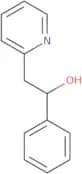
CAS:<p>2-Methyl-2,7-diazaspiro[4.4]nonane is a substance that has been found to inhibit the production of proteins that are involved in neurodegenerative diseases. It also has shown the ability to prevent protein misfolding and can be used as a pharmaceutical agent for Tourette syndrome, Alzheimer's disease, Parkinson's disease, and Huntington's disease. 2-Methyl-2,7-diazaspiro[4.4]nonane is an enantiomer that has been shown to have antidepressant properties in animal models.</p>Formula:C8H16N2Purity:Min. 95%Molecular weight:140.23 g/mol(1S)-1-Phenyl-2-(pyridin-2-yl)ethan-1-ol
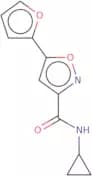
CAS:<p>Versatile small molecule scaffold</p>Formula:C13H13NOPurity:Min. 95%Molecular weight:199.25 g/molN-Cyclopropyl-5-(furan-2-yl)-1,2-oxazole-3-carboxamide
CAS:<p>Versatile small molecule scaffold</p>Formula:C11H10N2O3Purity:Min. 95%Molecular weight:218.2 g/molN-[(6-Chloropyridin-3-yl)methyl]-N-methylethanimidamide hydrochloride
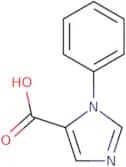
CAS:Versatile small molecule scaffoldFormula:C9H13Cl2N3Purity:Min. 95%Molecular weight:234.12 g/mol1-Phenyl-1H-imidazole-5-carboxylic acid
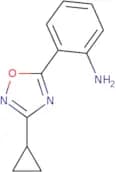
CAS:Versatile small molecule scaffoldFormula:C10H8N2O2Purity:Min. 95%Molecular weight:188.19 g/mol2-(3-Cyclopropyl-1,2,4-oxadiazol-5-yl)aniline
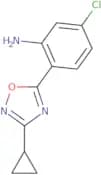
CAS:Versatile small molecule scaffoldFormula:C11H11N3OPurity:Min. 95%Molecular weight:201.22 g/mol5-Chloro-2-(3-cyclopropyl-1,2,4-oxadiazol-5-yl)aniline
CAS:Versatile small molecule scaffoldFormula:C11H10ClN3OPurity:Min. 95%Molecular weight:235.67 g/mol6-Benzyl-5,6,7,8-tetrahydropyrido[4,3-d]pyrimidine-2,4(1H,3H)-dione
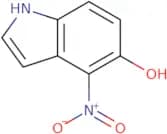
CAS:Versatile small molecule scaffoldFormula:C14H15N3O2Purity:Min. 95%Molecular weight:257.29 g/mol4-Nitro-1H-indol-5-ol
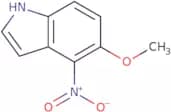
CAS:4-Nitro-1H-indol-5-ol is an oxidized form of 4-nitroindole. It is used as a medicine for the treatment of stomach ulcers and gastritis. This drug can be synthesized from nitric acid, copper, and formaldehyde. The oxidation of this molecule with m-chloroperbenzoic acid yields a carboxyl group, which is then reduced to a hydroxyl group by sodium borohydride. The formation of an anhydride with 4-aminoindole yields the final product.Formula:C8H6N2O3Purity:Min. 95%Molecular weight:178.14 g/mol5-Methoxy-4-nitro-1H-indole
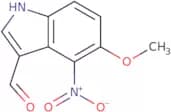
CAS:<p>Versatile small molecule scaffold</p>Formula:C9H8N2O3Purity:Min. 95%Molecular weight:192.17 g/mol5-Methoxy-4-nitro-1H-indole-3-carbaldehyde
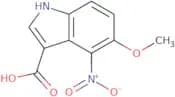
CAS:<p>Versatile small molecule scaffold</p>Formula:C10H8N2O4Purity:Min. 95%Molecular weight:220.18 g/mol5-Methoxy-4-nitro-1H-indole-3-carboxylic acid
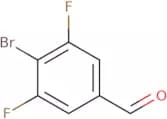
CAS:<p>Versatile small molecule scaffold</p>Formula:C10H8N2O5Purity:Min. 95%Molecular weight:236.18 g/mol4-Bromo-3,5-difluorobenzaldehyde
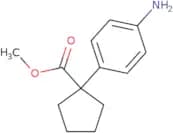
CAS:<p>Versatile small molecule scaffold</p>Formula:C7H3BrF2OPurity:Min. 95%Molecular weight:221 g/molMethyl 1-(4-aminophenyl)cyclopentane-1-carboxylate
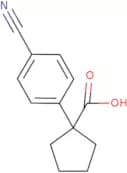
CAS:Versatile small molecule scaffoldFormula:C13H17NO2Purity:Min. 95%Molecular weight:219.28 g/mol1-(4-Cyanophenyl)cyclopentane-1-carboxylic acid
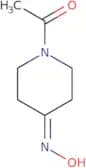
CAS:Versatile small molecule scaffoldFormula:C13H13NO2Purity:Min. 95%Molecular weight:215.25 g/mol-1(-4(Hydroxyimino)Piperidin-1-Yl)Ethanone
CAS:Versatile small molecule scaffoldFormula:C7H12N2O2Purity:Min. 95%Molecular weight:156.18 g/molN-Butylhydroxylamine hydrochloride
CAS:<p>N-Butylhydroxylamine hydrochloride is an oxime derivative that has been used as a diagnostic agent for the detection of glutamate. The compound is also known to have anti-inflammatory properties and to be useful in the treatment of cancer. N-Butylhydroxylamine hydrochloride is a stereoselective compound, with its enantiomer being more biologically active than its diastereomer. It has been shown to inhibit the production of matrix metalloproteinase, which may be responsible for some of its therapeutic effects. The compound has also been shown to be effective against cardiovascular diseases and other inflammatory diseases.br><br>N-Butylhydroxylamine hydrochloride is soluble in organic solvents such as benzene or chloroform.</p>Formula:C4H12ClNOPurity:Min. 95%Molecular weight:125.6 g/molProp-2-yn-1-yl 2-aminoacetate hydrochloride
CAS:Versatile small molecule scaffoldFormula:C5H8ClNO2Purity:Min. 95%Molecular weight:149.6 g/molrac(1R,6S,7R)-Bicyclo[4.1.0]heptan-7-amine hydrochloride
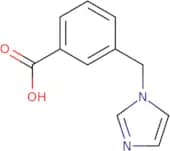
CAS:Versatile small molecule scaffoldFormula:C7H14ClNPurity:Min. 95%Molecular weight:147.64 g/mol3-(1H-Imidazol-1-ylmethyl)benzoic acid
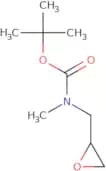
CAS:<p>Versatile small molecule scaffold</p>Formula:C11H10N2O2Purity:Min. 95%Molecular weight:202.21 g/moltert-Butyl N-methyl-N-(oxiran-2-ylmethyl)carbamate
CAS:<p>Versatile small molecule scaffold</p>Formula:C9H17NO3Purity:Min. 95%Molecular weight:187.24 g/mol(5-Fluoro-2,3-dihydro-1-benzofuran-2-yl)methanol
CAS:<p>Versatile small molecule scaffold</p>Formula:C9H9FO2Purity:Min. 95%Molecular weight:168.16 g/mol2-Chlorobicyclo[4.2.0]octa-1(6),2,4-triene-7-carboxylic acid
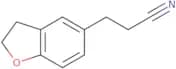
CAS:Versatile small molecule scaffoldFormula:C9H7ClO2Purity:Min. 95%Molecular weight:182.6 g/mol3-(2,3-Dihydro-1-benzofuran-5-yl)propanenitrile
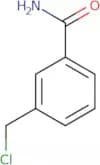
CAS:<p>Versatile small molecule scaffold</p>Formula:C11H11NOPurity:Min. 95%Molecular weight:173.21 g/mol3-Chloromethylbenzamide
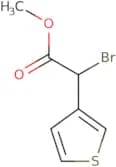
CAS:<p>3-Chloromethylbenzamide is a potent inhibitor of cyclic nucleotide phosphodiesterases. It is synthesised from dimethylformamide and propenoic acid, and has been shown to be effective in the treatment of cancer. 3-Chloromethylbenzamide inhibits the activity of cyclic nucleotide phosphodiesterases, which are enzymes that break down cyclic AMP and cAMP. This inhibition leads to an increase in intracellular levels of these nucleotides, which can result in cancer cell death by apoptosis. 3-Chloromethylbenzamide has also been shown to be a potent inhibitor of hydroxymethylglutaryl coenzyme A reductase (HMGCR), which is the enzyme that catalyzes the conversion of HMG-CoA to mevalonic acid. The inhibition of this enzyme leads to decreased production of cholesterol and other steroids, as well as increased levels of meval</p>Formula:C8H8ClNOPurity:Min. 95%Molecular weight:169.61 g/molMethyl 2-bromo-2-(thiophen-3-yl)acetate
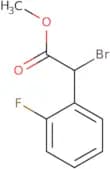
CAS:<p>Versatile small molecule scaffold</p>Formula:C7H7BrO2SPurity:Min. 95%Molecular weight:235.1 g/molMethyl 2-bromo-2-(2-fluorophenyl)acetate
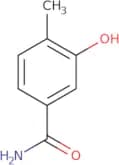
CAS:Versatile small molecule scaffoldFormula:C9H8BrFO2Purity:Min. 95%Molecular weight:247.06 g/mol3-Hydroxy-4-methylbenzamide
CAS:3-Hydroxy-4-methylbenzamide (3HMB) is a phenyl amine that has been used in medicinal chemistry. It is an inhibitor of cyclopentyl, phenolic, and n-substituted aromatic amines. 3HMB has also been shown to be a potent antitumor agent. 3HMB inhibits the metabolic stability of these compounds, which leads to their degradation by enzymes. The selectivity for these compounds over other substrates may be due to the presence of a benzene ring in 3HMB.br>Formula:C8H9NO2Purity:Min. 95%Molecular weight:151.16 g/mol4'-Formyl-[1,1'-biphenyl]-2-carbonitrile
CAS:4'-Formyl-[1,1'-biphenyl]-2-carbonitrile is an aldehyde that can be used to synthesize medicines and other organic compounds. It has a high yield and is a crystalline solid with a melting point of about 163 degrees Celsius. 4'-Formyl-[1,1'-biphenyl]-2-carbonitrile can be manufactured from tetrahydrofuran in a high-purity form. This compound is also used as an intermediate for the synthesis of other medicines.Formula:C14H9NOPurity:Min. 95%Molecular weight:207.23 g/mol

![1,3-Dimethyl-2-[(2-oxopropyl)sulfanyl]-1H-imidazol-3-ium chloride](/_next/image/?url=https%3A%2Fstatic.cymitquimica.com%2Fproducts%2F3D%2Fthumb-webp%2FKFA27374.webp&w=3840&q=75)
![3-[(Benzenesulfonyl)methyl]aniline](/_next/image/?url=https%3A%2Fstatic.cymitquimica.com%2Fproducts%2F3D%2Fthumb-webp%2FKFA29461.webp&w=3840&q=75)
![6-Benzyl-2,6-diazaspiro[3.4]octane](/_next/image/?url=https%3A%2Fstatic.cymitquimica.com%2Fproducts%2F3D%2Fthumb-webp%2FKFA38028.webp&w=3840&q=75)
![2-Methyl-2,6-diazaspiro[3.4]octane oxalate](/_next/image/?url=https%3A%2Fstatic.cymitquimica.com%2Fproducts%2F3D%2Fthumb-webp%2FKFA38030.webp&w=3840&q=75)
![2-Methyl-2,7-diazaspiro[4.4]nonane](/_next/image/?url=https%3A%2Fstatic.cymitquimica.com%2Fproducts%2F3D%2Fthumb-webp%2FKFA38053.webp&w=3840&q=75)
![N-[(6-Chloropyridin-3-yl)methyl]-N-methylethanimidamide hydrochloride](/_next/image/?url=https%3A%2Fstatic.cymitquimica.com%2Fproducts%2F3D%2Fthumb-webp%2FKFA41004.webp&w=3840&q=75)
![6-Benzyl-5,6,7,8-tetrahydropyrido[4,3-d]pyrimidine-2,4(1H,3H)-dione](/_next/image/?url=https%3A%2Fstatic.cymitquimica.com%2Fproducts%2F3D%2Fthumb-webp%2FKFA48157.webp&w=3840&q=75)


![rac(1R,6S,7R)-Bicyclo[4.1.0]heptan-7-amine hydrochloride](/_next/image/?url=https%3A%2Fstatic.cymitquimica.com%2Fproducts%2F3D%2Fthumb-webp%2FKFA61097.webp&w=3840&q=75)

![2-Chlorobicyclo[4.2.0]octa-1(6),2,4-triene-7-carboxylic acid](/_next/image/?url=https%3A%2Fstatic.cymitquimica.com%2Fproducts%2F3D%2Fthumb-webp%2FKFA63440.webp&w=3840&q=75)
![4'-Formyl-[1,1'-biphenyl]-2-carbonitrile](/_next/image/?url=https%3A%2Fstatic.cymitquimica.com%2Fproducts%2F3D%2Fthumb-webp%2FKFA68993.webp&w=3840&q=75)