


Building Blocks
Subcategories of "Building Blocks"
- Boronic Acids & Boronic Acid Derivatives(5,780 products)
- Chiral Building Blocks(1,241 products)
- Hydrocarbon Building Blocks(6,100 products)
- Organic Building Blocks(61,029 products)
Found 205306 products of "Building Blocks"
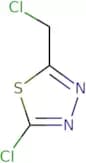
2-Chloro-5-(chloromethyl)-1,3,4-thiadiazole
CAS:Versatile small molecule scaffold
Formula:C3H2Cl2N2SPurity:Min. 95%Molecular weight:169.03 g/molRef: 3D-QCA64754
Discontinued productAcBut
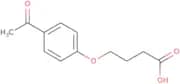
CAS:Controlled ProductCommonly abbreviated as AcBut, it is an aromatic acyl linker that can be cleaved under chemical conditions. It is used for the controlled release of payloads.
Formula:C12H14O4Purity:Min. 95%Molecular weight:222.24 g/molRef: 3D-QCA62382
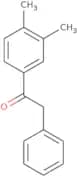
Discontinued product1-(3,4-Dimethylphenyl)-2-phenylethan-1-one
CAS:Versatile small molecule scaffold
Formula:C16H16OPurity:Min. 95%Molecular weight:224.3 g/molRef: 3D-QCA61475
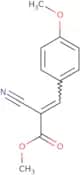
Discontinued productMethyl 2-cyano-3-(4-methoxyphenyl)acrylate
CAS:Versatile small molecule scaffold
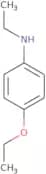
Formula:C12H11NO3Purity:Min. 95%Molecular weight:217.22 g/mol4-Ethoxy-N-ethylaniline
CAS:Versatile small molecule scaffold
Formula:C10H15NOPurity:Min. 95%Molecular weight:165.23 g/molRef: 3D-QCA57013
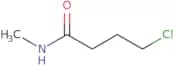
Discontinued product4-Chloro-N-methylbutanamide
CAS:Versatile small molecule scaffold
Formula:C5H10ClNOPurity:Min. 95%Molecular weight:135.59 g/mol[3-(1,3-Benzoxazol-2-yl)phenyl]methanol
CAS:Versatile small molecule scaffold
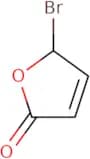
Formula:C14H11NO2Purity:Min. 95%Molecular weight:225.24 g/mol5-bromo-2,5-dihydrofuran-2-one
CAS:Versatile small molecule scaffold
Formula:C4H3BrO2Purity:Min. 95%Molecular weight:162.97 g/molRef: 3D-QBA12553
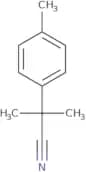
Discontinued product2-Methyl-2-(p-tolyl)propanenitrile
CAS:Versatile small molecule scaffold
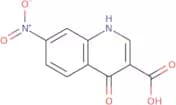
Formula:C11H13NPurity:Min. 95%Molecular weight:159.23 g/mol4-Hydroxy-7-nitroquinoline-3-carboxylic acid
CAS:Versatile small molecule scaffold
Formula:C10H6N2O5Purity:Min. 95%Molecular weight:234.16 g/molRef: 3D-QBA10711
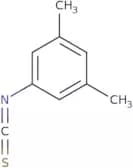
Discontinued product3,5-Dimethylphenyl Isothiocyanate
CAS:3,5-Dimethylphenyl Isothiocyanate is a sulfur analogue that has the same molecular weight and chemical properties as 3,5-dimethylthiophenol. It is used to derivatize organic compounds with thiol groups via reactions with aliphatic, aromatic, and heterocyclic systems. The enantiomer of this compound is called S-(+)-3,5-dimethylphenyl isothiocyanate.
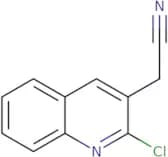
Formula:C9H9NSPurity:Min. 95%Molecular weight:163.24 g/mol2-(2-Chloroquinolin-3-yl)acetonitrile
CAS:Versatile small molecule scaffold
Formula:C11H7ClN2Purity:Min. 95%Molecular weight:202.64 g/molRef: 3D-QBA04179
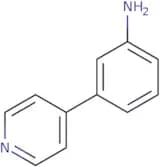
Discontinued product3-Pyridin-4-ylaniline
CAS:3-Pyridin-4-ylaniline is a chemotherapeutic that can be used to treat cancer. It has been shown to inhibit the growth of tumors in mice with leukemia, and it inhibits the replication of human cancer cells in vitro. The chemical structure of 3-Pyridin-4-ylaniline includes a nitrogen atom connected to an aromatic ring. The nitrogen atom is also bonded to two ligands, which are pyridazine and carbonyl groups. 3-Pyridin-4-ylaniline binds to purines, a type of molecule that are found in DNA and RNA. This binding prevents the incorporation of purines into DNA and inhibits cancer cell proliferation by blocking DNA synthesis.
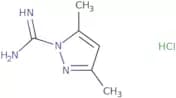
Formula:C11H10N2Purity:Min. 95%Molecular weight:170.21 g/mol3,5-Dimethylpyrazole-1-carboximidamide hydrochloride
CAS:3,5-Dimethylpyrazole-1-carboximidamide hydrochloride is a test compound that can be used in enzyme preparations. It inhibits glyoxalase, which is an enzyme that catalyzes the reaction of glyoxal and lysine residues, preventing the formation of advanced glycation end products. 3,5-Dimethylpyrazole-1-carboximidamide hydrochloride has been shown to be a potent inhibitor of vesicular stomatitis virus (VSV) replication with high specificity for the aminoguanidine (AGA) site on VSV RNA polymerase. The mechanism for this inhibition is not fully understood; however, it is thought to involve the primary amines on 3,5-dimethylpyrazole-1-carboximidamide hydrochloride reacting with lysine residues on VSV RNA polymerase. This binding prevents amino acid activation and subsequent incorporation into the growing viral
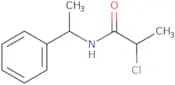
Formula:C6H11ClN4Purity:Min. 95%Molecular weight:174.63 g/mol2-Chloro-N-(1-phenylethyl)propanamide
CAS:Versatile small molecule scaffold
Formula:C11H14ClNOPurity:Min. 95%Molecular weight:211.69 g/mol2-Chloro-N-[(3-methoxyphenyl)methyl]propanamide
CAS:Versatile small molecule scaffold
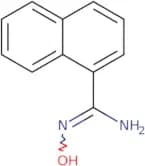
Formula:C11H14ClNO2Purity:Min. 95%Molecular weight:227.69 g/molN'-Hydroxynaphthalene-1-carboximidamide
CAS:Versatile small molecule scaffold
Formula:C11H10N2OPurity:Min. 95%Molecular weight:186.21 g/molRef: 3D-QBA01943
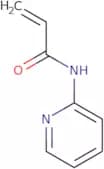
Discontinued productN-(Pyridin-2-yl)prop-2-enamide
CAS:N-(Pyridin-2-yl)prop-2-enamide is a synthetic compound that reacts with ethylene to form a fluorescent copolymer. It is activated by radiation and has a high quantum yield of fluorescence, which makes it useful for the detection of ethylene in the environment. N-(Pyridin-2-yl)prop-2-enamide has also been shown to have hydrophobic properties and can bind to biotin. This compound is an excellent monomer for supramolecular polymerization and can be used for the synthesis of polymers with interesting optical properties.
Formula:C8H8N2OPurity:Min. 95%Molecular weight:148.16 g/molRef: 3D-QBA00069
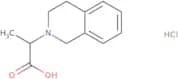
Discontinued product2-(1,2,3,4-Tetrahydroisoquinolin-2-yl)propanoic acid hydrochloride
CAS:Versatile small molecule scaffoldFormula:C12H16ClNO2Purity:Min. 95%Molecular weight:241.71 g/mol3-(2-Aminoethyl)-1H-indol-7-ol hydrochloride
CAS:Controlled ProductVersatile small molecule scaffoldFormula:C10H13ClN2OPurity:Min. 95%Molecular weight:212.7 g/molRef: 3D-QAB28146
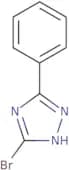
Discontinued product3-Bromo-5-phenyl-1H-1,2,4-triazole
CAS:Versatile small molecule scaffold
Formula:C8H6BrN3Purity:Min. 95%Molecular weight:224.1 g/molRef: 3D-QAA77759
Discontinued product2-Chloro-N-(5-isopropyl-[1,3,4]thiadiazol-2-yl)-acetamide
CAS:Versatile small molecule scaffold
Formula:C7H10ClN3OSPurity:Min. 95%Molecular weight:219.69 g/molRef: 3D-QAA77741
Discontinued product3-Methyl-1-[2-(morpholin-4-yl)ethyl]thiourea
CAS:Versatile small molecule scaffold
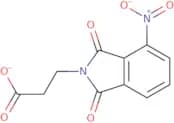
Formula:C8H17N3OSPurity:Min. 95%Molecular weight:203.31 g/mol3-(4-Nitro-1,3-dioxo-2,3-dihydro-1H-isoindol-2-yl)propanoic acid
CAS:Versatile small molecule scaffold
Formula:C11H7N2O6Purity:Min. 95%Molecular weight:263.18 g/molRef: 3D-QAA72805
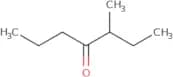
Discontinued product3-Methyl-4-heptanone
CAS:3-Methyl-4-heptanone is an antibacterial agent that has been shown to have a broad spectrum of activity against bacteria. It is a reactive molecule and can form various products during the reaction with other molecules. 3-Methyl-4-heptanone has been found to be effective against Staphylococcus, Songaricum, and other genera of bacteria. 3-Methyl-4-heptanone is a fatty acid that possesses a primary alcohol group and one or more oxygenated functional groups such as hydroxyl (-OH) or alkoxy (-OCH3). 3-Methyl-4-heptanone also possesses 16 carbon atoms, which are arranged in three rings.
Formula:C8H16OPurity:Min. 95%Molecular weight:128.22 g/mol2-(1-Phenylethyl)oxirane
CAS:Versatile small molecule scaffold
Formula:C10H12OPurity:Min. 95%Molecular weight:148.2 g/molRef: 3D-QAA70182
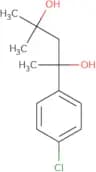
Discontinued product2-(4-Chlorophenyl)-4-methylpentane-2,4-diol
CAS:Controlled Product2-(4-Chlorophenyl)-4-methylpentane-2,4-diol is an analog of 2-(4-chlorophenyl)-4-methylpentane that has been shown to be a CB2 receptor agonist, which may be useful in the treatment of inflammatory bowel disease. The structure of this compound is similar to that of the natural ligand for the CB2 receptor, 2-(6′-hydroxyhexahydrocannabinol). This compound has also been shown to act as an agonist for toll-like receptor 4 (TLR4) and as a sodium citrate synthase inhibitor. This molecule can be synthesized from two molecules of acetone with a chiral catalyst by using asymmetric synthesis.
Formula:C12H17ClO2Purity:Min. 95%Molecular weight:228.71 g/molRef: 3D-QAA68718
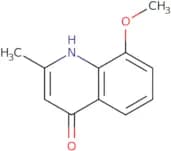
Discontinued product8-Methoxy-2-methylquinolin-4(1H)-one
CAS:Versatile small molecule scaffold
Formula:C11H11NO2Purity:Min. 95%Molecular weight:189.21 g/molRef: 3D-QAA64489
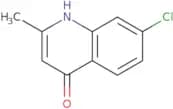
Discontinued product7-Chloro-4-hydroxy-2-methylquinoline
CAS:Versatile small molecule scaffoldFormula:C10H8ClNOPurity:Min. 95%Molecular weight:193.63 g/mol6-Chloro-4-hydroxy-2-methylquinoline
CAS:6-Chloro-4-hydroxy-2-methylquinoline is a vasorelaxant that blocks potassium channels in the cell membrane. 6CHMQ has been shown to inhibit calcium and potassium channels, which are involved in the transmission of nerve impulses. It also inhibits glibenclamide binding to pancreatic beta cells, which is an action that contributes to the anti-diabetic effects of this drug. 6CHMQ has been shown to block voltage gated potassium channels and may have a role in regulating blood pressure by inhibiting the release of norepinephrine.
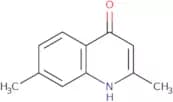
Formula:C10H8ClNOPurity:Min. 95%Molecular weight:193.63 g/mol2,7-Dimethylquinolin-4-ol
CAS:Versatile small molecule scaffold
Formula:C11H11NOPurity:Min. 95%Molecular weight:173.21 g/molRef: 3D-QAA64484
Discontinued product{7-Oxabicyclo[2.2.1]heptan-1-yl}methanol
CAS:Versatile small molecule scaffold
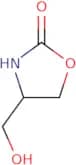
Formula:C7H12O2Purity:Min. 95%Molecular weight:128.2 g/mol4-(Hydroxymethyl)oxazolidin-2-one
CAS:4-(Hydroxymethyl)oxazolidin-2-one is an activated form of oxazolidinones that can react with potassium ions to form a stable, water soluble salt. This reaction is catalyzed by lanthanum ion and the reaction mechanism involves the formation of fatty acid esters. It has been found to be effective in the synthesis of methyl palmitate, which is a fatty acid that can be used as a raw material for biodiesel production. The reaction intermediates are dehydrating and constant, and the metal ion is lanthanum. 4-(Hydroxymethyl)oxazolidin-2-one has impurities such as adiponitrile, acidic impurities, and stereoselective impurities.
Formula:C4H7NO3Purity:Min. 95%Molecular weight:117.1 g/mol5H,6H,7H-Cyclopenta[C]pyridine-4-carbonitrile
CAS:Versatile small molecule scaffoldFormula:C9H8N2Purity:Min. 95%Molecular weight:144.17 g/molRef: 3D-QAA52447
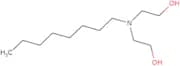
Discontinued product2,2'-(Octylazanediyl)diethanol
CAS:2,2'-(Octylazanediyl)diethanol is a boron-containing chemical that is used to extract uranium from its ores. It is an effective complexing agent for the extraction of uranium from its ores. This chemical has been shown to be able to extract uranium from ores with a concentration of up to 0.15%. The extraction process takes place in acidic containers and is optimized by varying the reaction time and diethanolamine concentration. 2,2'-(Octylazanediyl)diethanol also inhibits ATPase activity in bacteria, which may be due to its ability to inhibit the transport function in these organisms.
Formula:C12H27NO2Purity:Min. 95%Molecular weight:217.35 g/molRef: 3D-QAA52005
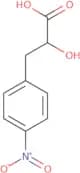
Discontinued product2-Hydroxy-3-(4-nitrophenyl)propanoic acid
CAS:Versatile small molecule scaffold
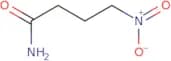
Formula:C9H9NO5Purity:Min. 95%Molecular weight:211.17 g/mol4-Nitrobutanamide
CAS:4-Nitrobutanamide is an aliphatic aldehyde that is used as a reagent in the synthesis of quinoxaline derivatives. 4-Nitrobutanamide can be synthesized by the reaction of ammonium carbonate with aliphatic aldehydes and quinoxaline. The mechanism for this reaction has been elucidated through electrospray ionization mass spectrometry. This compound is also used in the synthesis of activated ammonium amides.
Formula:C4H8N2O3Purity:Min. 95%Molecular weight:132.12 g/molRef: 3D-QAA47327
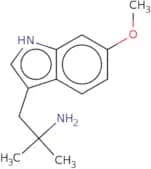
Discontinued product1-(6-Methoxy-1H-indol-3-yl)-2-methylpropan-2-amine
CAS:Controlled ProductVersatile small molecule scaffoldFormula:C13H18N2OPurity:Min. 95%Molecular weight:218.3 g/molRef: 3D-QAA46729
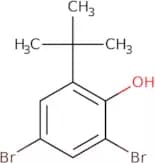
Discontinued product2,4-Dibromo-6-tert-butylphenol
CAS:Versatile small molecule scaffold
Formula:C10H12Br2OPurity:Min. 95%Molecular weight:308.01 g/molRef: 3D-QAA46012
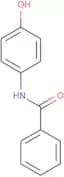
Discontinued productN-(4-Hydroxyphenyl)benzamide
CAS:4-Hydroxyphenylbenzamide is a metabolite of biphenyl and an estrogen receptor modulator. It has been shown to inhibit the proliferation of human breast cancer cells in vitro. 4-Hydroxyphenylbenzamide binds to the estrogen receptors and inhibits the negative feedback on the hypothalamus, which leads to increased levels of luteinizing hormone and follicle stimulating hormone. This results in vasomotor symptoms such as hot flashes, night sweats, and mood swings. The drug also has effects on bone metabolism by increasing bone resorption and decreasing bone formation. 4-Hydroxyphenylbenzamide is metabolized in the liver by glucuronidation conjugates, which are excreted in feces or eliminated through urine.
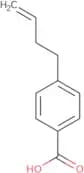
Formula:C13H11NO2Purity:Min. 95%Molecular weight:213.23 g/mol4-(But-3-en-1-yl)benzoic acid
CAS:Versatile small molecule scaffold
Formula:C11H12O2Purity:Min. 95%Molecular weight:176.21 g/molRef: 3D-QAA45135
Discontinued product4-(methoxycarbonyl)bicyclo[2.2.1]heptane-1-carboxylic acid
CAS:4-(Methoxycarbonyl)bicyclo[2.2.1]heptane-1-carboxylic acid is a dicarboxylic acid that can be prepared by the reaction of malonic ester and allyl alcohol in the presence of base. It is a precursor to 4-hydroxybutyric acid, which is an intermediate in the conversion of lysine to methionine. 4-(Methoxycarbonyl)bicyclo[2.2.1]heptane-1-carboxylic acid is used as a monoester and diester in the preparation of detergents and emulsifiers, as well as being used in the synthesis of pharmaceuticals and other organic compounds. The monoester form has been shown to have high yields for use with Burkholderia cepacia lipases (BCL) immobilized on silica gel, while the diesters are
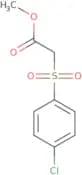
Formula:C10H14O4Purity:Min. 95%Molecular weight:198.2 g/molMethyl 2-(4-chlorobenzenesulfonyl)acetate
CAS:Versatile small molecule scaffold
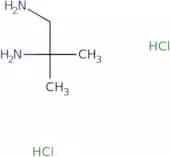
Formula:C9H9ClO4SPurity:Min. 95%Molecular weight:248.68 g/mol2-Methylpropane-1,2-diamine dihydrochloride
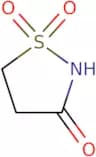
CAS:Versatile small molecule scaffoldFormula:C4H14Cl2N2Purity:Min. 95%Molecular weight:161.07 g/mol1,1-dioxo-1,2-thiazolidin-3-one
CAS:1,1-Dioxo-1,2-thiazolidin-3-one is a protease inhibitor that inhibits the activity of serine proteases. It is used to treat inflammatory diseases and cancer. 1,1-Dioxo-1,2-thiazolidin-3-one prevents the spread of cancer cells by inhibiting their ability to break down proteins that are important for cell growth and division. This drug also possesses anti-inflammatory properties. These effects may be due to its inhibition of serine proteases such as matrix metalloproteinases (MMPs) and cathepsins.
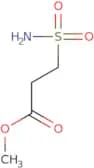
Formula:C3H5NO3SPurity:Min. 95%Molecular weight:135.14 g/molMethyl 3-sulfamoylpropanoate
CAS:Versatile small molecule scaffold
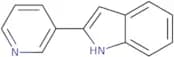
Formula:C4H9NO4SPurity:Min. 95%Molecular weight:167.19 g/mol2-(Pyridin-3-yl)-1H-indole
CAS:Versatile small molecule scaffold
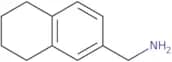
Formula:C13H10N2Purity:Min. 95%Molecular weight:194.23 g/mol(5,6,7,8-tetrahydronaphthalen-2-yl)methanamine
CAS:Versatile small molecule scaffold
Formula:C11H15NPurity:Min. 95%Molecular weight:161.24 g/mol4-[(3-Chlorophenyl)amino]-4-oxobutanoic acid
CAS:4-Amino-4-oxobutanoic acid is a weak organic acid that is found in the form of a white, crystalline powder. It has a molecular weight of 123.17 and a melting point of 163°C. 4-Amino-4-oxobutanoic acid is soluble in water, but not in alcohols or ethers. This compound can be classified as an amide, due to the presence of hydrogen bonds between the carbonyl group and the amino group. 4-Amino-4-oxobutanoic acid is also known as 4-[(3-chlorophenyl)amino]-4-oxobutanoic acid (CLAB).
Formula:C10H10ClNO3Purity:Min. 95%Molecular weight:227.64 g/mol3-(Trifluoromethyl)-[1,1'-biphenyl]-4-carboxylic acid
CAS:Versatile small molecule scaffold
Formula:C14H9F3O2Purity:Min. 95%Molecular weight:266.21 g/mol

![[3-(1,3-Benzoxazol-2-yl)phenyl]methanol](/_next/image/?url=https%3A%2Fstatic.cymitquimica.com%2Fproducts%2F3D%2Fthumb-webp%2FQCA54083.webp&w=3840&q=75)
![2-Chloro-N-[(3-methoxyphenyl)methyl]propanamide](/_next/image/?url=https%3A%2Fstatic.cymitquimica.com%2Fproducts%2F3D%2Fthumb-webp%2FQBA02339.webp&w=3840&q=75)
![2-Chloro-N-(5-isopropyl-[1,3,4]thiadiazol-2-yl)-acetamide](/_next/image/?url=https%3A%2Fstatic.cymitquimica.com%2Fproducts%2F3D%2Fthumb-webp%2FQAA77741.webp&w=3840&q=75)
![3-Methyl-1-[2-(morpholin-4-yl)ethyl]thiourea](/_next/image/?url=https%3A%2Fstatic.cymitquimica.com%2Fproducts%2F3D%2Fthumb-webp%2FQAA77599.webp&w=3840&q=75)


![{7-Oxabicyclo[2.2.1]heptan-1-yl}methanol](/_next/image/?url=https%3A%2Fstatic.cymitquimica.com%2Fproducts%2F3D%2Fthumb-webp%2FQAA57403.webp&w=3840&q=75)
![5H,6H,7H-Cyclopenta[C]pyridine-4-carbonitrile](/_next/image/?url=https%3A%2Fstatic.cymitquimica.com%2Fproducts%2F3D%2Fthumb-webp%2FQAA52447.webp&w=3840&q=75)
![4-(methoxycarbonyl)bicyclo[2.2.1]heptane-1-carboxylic acid](/_next/image/?url=https%3A%2Fstatic.cymitquimica.com%2Fproducts%2F3D%2Fthumb-webp%2FQAA44877.webp&w=3840&q=75)
![4-[(3-Chlorophenyl)amino]-4-oxobutanoic acid](/_next/image/?url=https%3A%2Fstatic.cymitquimica.com%2Fproducts%2F3D%2Fthumb-webp%2FQAA38696.webp&w=3840&q=75)
![3-(Trifluoromethyl)-[1,1'-biphenyl]-4-carboxylic acid](/_next/image/?url=https%3A%2Fstatic.cymitquimica.com%2Fproducts%2F3D%2Fthumb-webp%2FPYB37072.webp&w=3840&q=75)