Building Blocks
Subcategories of "Building Blocks"
- Boronic Acids & Boronic Acid Derivatives(5,783 products)
- Chiral Building Blocks(1,242 products)
- Hydrocarbon Building Blocks(6,105 products)
- Organic Building Blocks(61,055 products)
Found 205383 products of "Building Blocks"
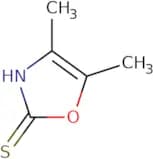
Dimethyl-1,3-oxazole-2-thiol
CAS:Versatile small molecule scaffold
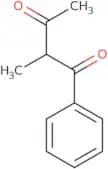
Formula:C5H7NOSPurity:Min. 95%Molecular weight:129.18 g/mol2-Methyl-1-phenylbutane-1,3-dione
CAS:2-Methyl-1-phenylbutane-1,3-dione is a chemical intermediate that belongs to the group of alkyl bromides. It is used as an herbicide and a pesticide, and can be reduced to 2-methyl-2-(4'-bromophenyl)pentanal by reductive cleavage with chlorine. The reduction of 2-methyl-1-phenylbutane-1,3-dione by hydrogen gas leads to the diastereoisomers 2-(4'-bromophenyl)-2-(2'-methylpropionyl)pentanal and 3-(4'-bromophenyl)-2-(2'-methylpropionyl)pentanal. The former is a chiral molecule that can be used as a medicine for high blood pressure, while the latter has been shown to be effective against microbial strains such as Escherichia coli and Candida albicans.
Formula:C11H12O2Purity:Min. 95%Molecular weight:176.21 g/mol4-Iodo-1,5-dimethyl-1H-pyrazole-3-carboxylic acid
CAS:Versatile small molecule scaffoldFormula:C6H7IN2O2Purity:Min. 95%Molecular weight:266.04 g/molRef: 3D-GAA64795
Discontinued productmethyl 2-(4-amino-1H-pyrazol-1-yl)acetate hydrochloride
CAS:Versatile small molecule scaffoldFormula:C6H10ClN3O2Purity:Min. 95%Molecular weight:191.6 g/molRef: 3D-GAA64789
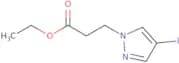
Discontinued productEthyl 3-(4-iodopyrazol-1-yl)propanoate
CAS:Versatile small molecule scaffold
Formula:C8H11IN2O2Purity:Min. 95%Molecular weight:294.09 g/mol(6-Bromobenzo[d][1,3]dioxol-5-yl)methanol
CAS:Versatile small molecule scaffold
Formula:C8H7BrO3Purity:Min. 95%Molecular weight:231.04 g/molRef: 3D-GAA64234
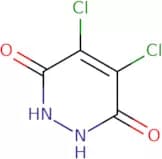
Discontinued product4,5-Dichloropyridazine-3,6-diol
CAS:Dichloropyridazine-3,6-diol is a furan derivative that has been shown to act as an inhibitor of the oxidative deamination of pyridine. It is also a nucleophilic reagent with a chlorine atom and two hydroxylamine groups in its structure. The carbonyl oxygen atom and the cyclic carbonyl group are both susceptible to oxidation and can be used to form chlorides. Dichloropyridazine-3,6-diol is resistant to acid chlorides such as thionyl chloride or phosphoric acid. This compound undergoes dehydration reactions with carboxylic acids and chlorides, yielding the corresponding carboxylate or chloride.
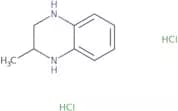
Formula:C4H2Cl2N2O2Purity:Min. 95%Molecular weight:180.97 g/mol2-Methyl-1,2,3,4-tetrahydroquinoxaline
CAS:2-Methyl-1,2,3,4-tetrahydroquinoxaline is an enantioselective antioxidant that has been shown to have a chiral conformation. It has also been found to be a catalyst in the reductive elimination of hydrochloric acid. This compound can be hydrogenated by catalytic hydrogenation and this reaction produces tetralin as a by-product. 2-Methyl-1,2,3,4-tetrahydroquinoxaline is used in research because it contains a methyl group and amines that are important for biological functions.
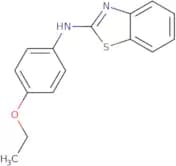
Formula:C9H12N2Purity:Min. 95%Molecular weight:148.2 g/molBenzothiazol-2-yl-(4-ethoxy-phenyl)-amine
CAS:Benzothiazol-2-yl-(4-ethoxy-phenyl)-amine is a compound that has been shown to be active against solid tumours and metastases. It has been shown to inhibit phosphatase activity in the presence of monoclonal antibodies, which is an indicator for cancerous cells. Benzothiazol-2-yl-(4-ethoxy-phenyl)-amine may be used as a diagnostic marker for determining the presence of cancer cells in patients with infectious diseases, such as HIV/AIDS. This compound has also been shown to inhibit phosphatase activity in the presence of monoclonal antibodies, which is an indicator for cancerous cells. Benzothiazol-2-yl-(4-ethoxy-phenyl)-amine may be used as a diagnostic marker for determining the presence of cancer cells in patients with infectious diseases, such as HIV/AIDS.Formula:C15H14N2OSPurity:Min. 95%Molecular weight:270.4 g/molRef: 3D-GAA63487
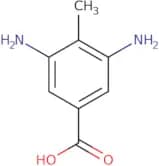
Discontinued product3,5-Diamino-4-methylbenzoic acid
CAS:3,5-Diamino-4-methylbenzoic acid is a chemical compound with the formula C6H3N3O2. It is an organic nitrite that reacts readily with nucleophiles such as alcohols, phenols, and amines to form the corresponding N-substituted benzoic acid. The reaction proceeds via a two step process in which 3,5-diamino-4-methylbenzoic acid first reacts with sodium nitrite to produce 3,5-diamino-4-nitrobenzoic acid followed by hydrolysis of this intermediate to form the desired product. Nitrite salts are used in the food industry as preservatives and antimicrobials. They can be applied as a gas or dissolved in water. Nitrite salts are also used for wastewater treatment and for environmental remediation.
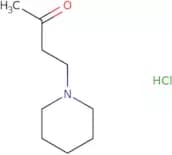
Formula:C8H10N2O2Purity:Min. 95%Molecular weight:166.18 g/mol4-(Piperidin-1-yl)butan-2-one hydrochloride
CAS:Versatile small molecule scaffold
Formula:C9H18ClNOPurity:Min. 95%Molecular weight:191.7 g/molRef: 3D-GAA63171
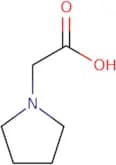
Discontinued productPyrrolidin-1-yl-acetic acid hydrochloride
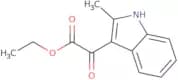
CAS:Pyrrolidin-1-yl-acetic acid hydrochloride is a drug that inhibits the enzyme protease, which is involved in the replication of HIV. It also inhibits the enzyme piperazine, an essential cofactor for retroviral replication. Pyrrolidin-1-yl-acetic acid hydrochloride has been shown to inhibit insulin resistance and increase glucose uptake in animal models. This drug may be a potential treatment for diabetes mellitus type 2. The structural formula of this drug is shown below:Formula:C6H12ClNO2Purity:Min. 95%Molecular weight:165.62 g/molEthyl 2-(2-methyl-1H-indol-3-yl)-2-oxoacetate
CAS:Versatile small molecule scaffold
Formula:C13H13NO3Purity:Min. 95%Molecular weight:231.25 g/molRef: 3D-GAA62834
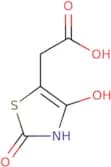
Discontinued product2-(Dihydroxy-1,3-thiazol-5-yl)acetic acid
CAS:Versatile small molecule scaffold
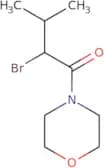
Formula:C5H5NO4SPurity:Min. 95%Molecular weight:175.16 g/mol2-Bromo-3-methyl-1-(morpholin-4-yl)butan-1-one
CAS:Versatile small molecule scaffold
Formula:C9H16BrNO2Purity:Min. 95%Molecular weight:250.13 g/molRef: 3D-GAA62799
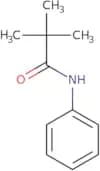
Discontinued productN-Phenylpivalamide
CAS:N-Phenylpivalamide is an asymmetric synthesis that is a reaction yield of activated secondary amine and alkylsulfonyl chloride. The effective dose of n-phenylpivalamide is 0.01 mg/kg and the chloride ion, nitrogen atoms, and amines are all reactive functional groups. The nmr spectra show that this compound has stereoisomers.
Formula:C11H15NOPurity:Min. 95%Molecular weight:177.24 g/molPropanebis(imidamide) dihydrochloride
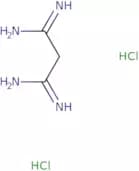
CAS:Propanebis(imidamide) dihydrochloride is a drug that inhibits the enzyme guanylate cyclase. It is used to treat cardiovascular disorders, such as angina pectoris and hypertension. Propanebis(imidamide) dihydrochloride has been shown to inhibit the kinase, cyclase, and phosphodiesterase enzymes. This inhibition leads to an increase in the levels of cyclic guanosine monophosphate (cGMP). As a result, blood vessels are dilated, which reduces blood pressure and heart rate. The drug also increases the levels of intracellular cGMP by inhibiting protein kinase G. Propanebis(imidamide) dihydrochloride can be administered orally or intravenously.
Formula:C3H10Cl2N4Purity:Min. 95%Molecular weight:173.04 g/molRef: 3D-GAA62384
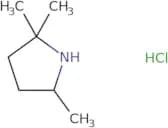
Discontinued product2,2,5-Trimethylpyrrolidine hydrochloride
CAS:Versatile small molecule scaffoldFormula:C7H16ClNPurity:Min. 95%Molecular weight:149.66 g/mol4-Methylcyclohexaneacetic acid, mixture of cis and trans
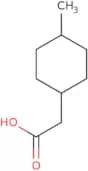
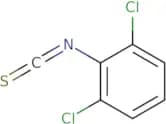
CAS:4-Methylcyclohexaneacetic acid, mixture of cis and trans is a white crystalline solid with a melting point of about 125°C. It is soluble in organic solvents, including diethanolamine, ethanolamine, and amines. 4-Methylcyclohexaneacetic acid is commercially available as the mixture of cis and trans isomers. This compound has been used to synthesize ferroelectric materials because it can be readily polymerized with ethylene glycol or diethylether. 4-Methylcyclohexaneacetic acid has also been used as an intermediate for the manufacture of pharmaceuticals.Formula:C9H16O2Purity:Min. 95%Molecular weight:156.22 g/mol2,6-Dichlorophenylisothiocyanate
CAS:2,6-Dichlorophenylisothiocyanate is a chloride that is used to treat tuberculosis. It is a prodrug that is hydrolyzed in the body to form 2-amino-3-chloropyrazine and imidazoles which are active against Mycobacterium tuberculosis and Mycobacterium avium complex. 2,6-Dichlorophenylisothiocyanate can be administered orally as well as intravenously. It has been shown to have tuberculostatic activity in animal models of experimental tuberculosis. The mechanism of action for this drug is not fully understood, but it may be due to its ability to inhibit protein synthesis by binding to bacterial ribosomes.
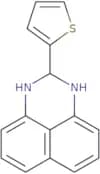
Formula:Cl2C6H3NCSPurity:Min. 95%Molecular weight:204.08 g/mol2-(Thiophen-2-yl)-2,3-dihydro-1H-perimidine
CAS:The compound 2-(thiophen-2-yl)-2,3-dihydro-1H-perimidine has been found to exhibit potent acetylcholinesterase (AChE) inhibitory activity. AChE is the target of organophosphate and carbamate insecticides and nerve agents. The inhibition study revealed that 2-(thiophen-2-yl)-2,3-dihydro-1H-perimidine binds to the active site of AChE with a strong binding affinity. The crystal structures of this molecule have been determined by x-ray crystallography, which revealed that it has a dipole moment. This molecule was also found to have an absorbance at frequencies in the fingerprint region, which can be used for identification purposes. The theory behind its structure was determined by vibrational spectroscopy techniques as well as analyses of its crystal structures.
Formula:C15H12N2SPurity:Min. 95%Molecular weight:252.3 g/molRef: 3D-GAA58440
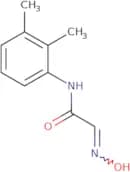
Discontinued productN-(2,3-Dimethylphenyl)-2-(N-hydroxyimino)acetamide
CAS:Versatile small molecule scaffold
Formula:C10H12N2O2Purity:Min. 95%Molecular weight:192.21 g/molN,N,4-Trimethyl-1,3-thiazol-2-amine
CAS:Versatile small molecule scaffold
Formula:C6H10N2SPurity:Min. 95%Molecular weight:142.22 g/molRef: 3D-GAA14218
Discontinued productEthyl 3-methyl-5-oxo-[1,3]thiazolo[3,2-a]pyrimidine-6-carboxylate
CAS:Versatile small molecule scaffoldFormula:C10H10N2O3SPurity:Min. 95%Molecular weight:238.27 g/molMethyl 2-nitropropanoate
CAS:Methyl 2-nitropropanoate is a reactive compound that is used as an epigenetic marker. It reacts with lysine residues in proteins and histones, resulting in the methylation of these proteins. Methyl 2-nitropropanoate has been shown to inhibit the replication of DNA and induce cellular apoptosis in mammalian cells. The effector proteins H3K9me2 and H4K5me1 are involved in epigenetic changes that include gene silencing and histone demethylation. Methyl 2-nitropropanoate can also cause clastogenic effects by forming adducts on dna replication enzymes, such as amide and demethylation. Histone lysines are methylated by methyl 2-nitropropanoate, which causes histones to condense into tight bundles of DNA that contribute to the formation of actin filaments.
Formula:C4H7NO4Purity:Min. 95%Molecular weight:133.1 g/molRef: 3D-GAA11850
Discontinued product2,3-Dimethyl-1H-indole-5-carboxamide
CAS:Versatile small molecule scaffold
Formula:C11H12N2OPurity:Min. 95%Molecular weight:188.23 g/molRef: 3D-GAA11647
Discontinued product4-(4-Nitrophenyl)-1H-1,2,3-triazole
CAS:4-(4-Nitrophenyl)-1H-1,2,3-triazole (NPT) is a bioactive molecule that inhibits the growth of promyelocytic leukemia cells by interfering with the activity of certain enzymes. NPT has been shown to inhibit the influenza virus and human cervical carcinoma cells in vitro. In addition, it has been shown to inhibit the proliferation of leukemia HL60 cells. NPT is an unsymmetrical molecule that forms an imine during the enzymatic process. The molecular modeling studies show that this compound binds to the active site of enzyme histidine kinase in a manner similar to ATP. This binding prevents ATP from forming a stable complex with histidine kinase and phosphorylating its target protein, which disrupts cellular homeostasis and leads to cell death.
Formula:C8H6N4O2Purity:Min. 95%Molecular weight:190.16 g/molRef: 3D-GAA11197
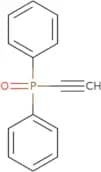
Discontinued productEthynyl(diphenyl)phosphine oxide
CAS:Ethynyl(diphenyl)phosphine oxide is an amide that has been shown to be useful in coordination, catalysis, and organic chemistry. It is a conformational analog of the amide group. Ethynyl(diphenyl)phosphine oxide has been used as a hydrogen-bond donor in esterification reactions. This compound can be synthesized by reacting the corresponding boronic acid with ethynyl alcohol. The yields of this reaction are dependent on the temperature and have been found to range from 60% to 70%. The nmr spectra of this compound show two signals at δ 2.95 and δ 4.85 ppm, corresponding to two different conformers of ethynyl(diphenyl)phosphine oxide.
Formula:C14H11OPPurity:Min. 95%Molecular weight:226.21 g/mol2,4,6-Trimethylphenyl Isothiocyanate
CAS:2,4,6-Trimethylphenyl Isothiocyanate is a reactive compound that can inactivate enzymes. It is used as a catalyst and an intermediate in the production of dyes and pharmaceuticals. 2,4,6-Trimethylphenyl Isothiocyanate reacts with dimethyldioxirane to form diphenylphosphine acid. This acid reacts with choline to produce sulfines. The sulfines react with hydrogen to yield the desired product or prodrug. 2,4,6-Trimethylphenyl Isothiocyanate also catalyzes the reaction between sulfur and hydrogen gas at high temperatures to form hydrogen sulfide gas.br>br>
br>br>
Yield: 100%Formula:C10H11NSPurity:Min. 95%Molecular weight:177.27 g/mol2-Hydroxy-3-iodo-5-methylbenzoic acid
CAS:Versatile small molecule scaffoldFormula:C8H7IO3Purity:Min. 95%Molecular weight:278.04 g/mol(Isothiocyanatomethyl)cyclopropane
CAS:(Isothiocyanatomethyl)cyclopropane is a cyclopropane derivative that has been used to study the conformational properties of molecules in solution. It has been shown that the vibrational frequencies of (isothiocyanatomethyl)cyclopropane are strongly dependent on the solvent, temperature, and concentration. FT-IR spectra show that the molecule has a strong dipole moment and symmetrical vibrations. The theory behind this work is based on the functional theory of quantum mechanics, which predicts that the frequency of vibration should depend on the functions, intensities, and parameters of a molecule. This work also shows how conformational studies can be used to investigate different types of molecules.
Formula:C5H7NSPurity:Min. 95%Molecular weight:113.18 g/mol2-Hydroxyhexanoic acid
CAS:2-Hydroxyhexanoic acid is a fatty acid that is used in the treatment of diabetic patients. It is an intermediate product of the metabolism of glucose, which can be obtained by hydrolysis of glycerol with hydrochloric acid and supercritical carbon dioxide. The molecule has two hydroxyl groups, which are important for its function as a substrate in chemical reactions. 2-Hydroxyhexanoic acid also reacts with lysine residues at neutral pH, forming an ester linkage. This reaction can be demonstrated by adding phosphotungstic acid to a solution containing 2-hydroxyhexanoic acid or lysine residues.
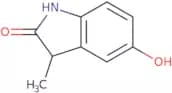
Formula:C6H12O3Purity:Min. 95%Molecular weight:132.16 g/mol5-Hydroxy-3-methyl-2,3-dihydro-1H-indol-2-one
CAS:Versatile small molecule scaffoldFormula:C9H9NO2Purity:Min. 95%Molecular weight:163.17 g/molRef: 3D-GAA06225
Discontinued product7-Methyl-2H,3H,4H-pyrido[1,2-a]pyrimidin-3-ol hydrochloride
CAS:Versatile small molecule scaffoldFormula:C9H13ClN2OPurity:Min. 95%Molecular weight:200.66 g/molRef: 3D-GAA05642
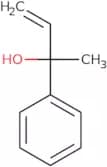
Discontinued product2-Phenylbut-3-en-2-ol
CAS:2-Phenylbut-3-en-2-ol is a synthetic molecule that has been shown to be an efficient ligand for the treatment of halides. It also has been used in allylation reactions with proton catalysis and as an epoxide functional group. This compound can be synthesized from the reaction of acetone, propylene oxide, and butadiene. 2-Phenylbut-3-en-2-ol is a byproduct of the synthesis of obtustyrene. This compound has been used in cross coupling reactions as well as carbonic acid transfer reactions.
Formula:C10H12OPurity:Min. 95%Molecular weight:148.2 g/molRef: 3D-GAA05152
Discontinued product2H,3H-Naphtho[1,2-b]furan-2-one
CAS:2H,3H-Naphtho[1,2-b]furan-2-one is a potent antagonist of the plasminogen activator inhibitor type 1 (PAI-1) and the urokinase-type plasminogen activator (uPA). It has been shown to be a potential therapeutic agent for the treatment of cancer and rheumatoid arthritis. The inhibition of PAI-1 and uPA by 2H,3H-Naphtho[1,2-b]furan-2-one leads to an increase in fibrinolysis or dissolution of blood clots, as well as angiogenesis. This may account for its antitumor activity. 2H,3H-Naphtho[1,2-b]furan-2-one has also been synthesized using intramolecular cyclization reactions with high yields and purity.
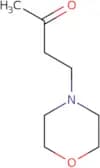
Formula:C12H8O2Purity:Min. 95%Molecular weight:184.19 g/mol4-Morpholin-4-ylbutan-2-one
CAS:Versatile small molecule scaffold
Formula:C8H15NO2Purity:Min. 95%Molecular weight:157.21 g/molRef: 3D-GAA05058
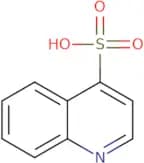
Discontinued productQuinoline-4-sulfonic acid
CAS:Quinoline-4-sulfonic acid is a chemical compound that belongs to the class of quinoline derivatives. It has a linear range of activity and inhibits enzymes such as glutamicum, organisms, additives, metal ion, alkali metal, heterocycle, methyl groups and oxygenated. The optimum pH for this compound is 7. Quinoline-4-sulfonic acid is not very soluble in water but is soluble in an organic solvent such as acetone or ethanol. This molecule has been shown to be active against strains of Escherichia coli.
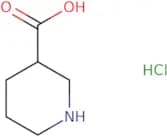
Formula:C9H7NO3SPurity:Min. 95%Molecular weight:209.22 g/molPiperidine-3-carboxylic acid hydrochloride
CAS:Versatile small molecule scaffoldFormula:C6H12ClNO2Purity:Min. 95%Molecular weight:165.62 g/molRef: 3D-GAA03480
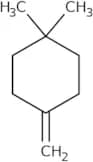
Discontinued product1,1-dimethyl-4-methylidenecyclohexane
CAS:Mesityl oxide is a colorless liquid with a sweet odor that is used as a flavor and fragrance agent. It can be found in the volatile fraction of many essential oils such as lavender, rosemary, and sage. Mesityl oxide has been identified by gas chromatography-mass spectrometry (GC-MS) to be present in the volatile fraction of these oils. It is also found in many foods such as red wine, coffee, and beer. Mesityl oxide has been shown to have differentiating properties in initially similar samples. This compound can be detected by GC-MS using an oxidized pentane extraction procedure.
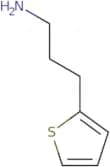
Mesityl oxide is not considered to be toxic at low doses but may cause irritation at high doses.Formula:C9H16Purity:Min. 95%Molecular weight:124.23 g/mol3-(Thiophen-2-yl)propan-1-amine
CAS:3-(Thiophen-2-yl)propan-1-amine is an organic solvent that is used as a reactant in the production of polyphosphoric acid. It is also used in the synthesis of pharmaceuticals. This compound can be produced by reacting chloroformate with propylamine and aluminium chloride in a solution of hydrochloric acid, producing 3-(thiophen-2-yl)propan-1-amine and hydrogen chloride gas. The reaction can also be carried out using phosphoryl chloride and propylamine to produce 3-(thiophen-2-yl)propan-1-amine and phosphorus pentoxide.
Formula:C7H11NSPurity:Min. 95%Molecular weight:141.24 g/molRef: 3D-GAA00790
Discontinued product4H,5H,6H-Thieno[3,4-c]pyrrole-4,6-dione
CAS:4H,5H,6H-Thieno[3,4-c]pyrrole-4,6-dione is a potent antitumor agent that inhibits the activity of protein kinases. It has been shown to have the ability to inhibit tumor growth in animal models and has been shown to be effective against resistant microorganisms such as Staphylococcus aureus and Mycobacterium tuberculosis. 4H,5H,6H-Thieno[3,4-c]pyrrole-4,6-dione has also been shown to improve hematopoiesis by stimulating colony stimulating factor production. This compound is metabolized through a number of metabolic transformations including oxidative deamination by monoamine oxidase or pyridoxal phosphate dependent aminotransferases. The biological properties of 4H,5H,6H-Thieno[3,4-c]pyrrole-4
Formula:C6H3NO2SPurity:Min. 95%Molecular weight:153.16 g/molRef: 3D-GAA00782
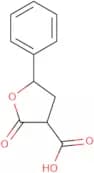
Discontinued product2-Oxo-5-phenyloxolane-3-carboxylic acid
CAS:Versatile small molecule scaffold
Formula:C11H10O4Purity:Min. 95%Molecular weight:206.19 g/molRef: 3D-GAA00595
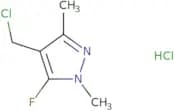
Discontinued product4-(Chloromethyl)-5-fluoro-1,3-dimethyl-1H-pyrazole hydrochloride
CAS:Versatile small molecule scaffold
Formula:C6H9Cl2FN2Purity:Min. 95%Molecular weight:199.05 g/molRef: 3D-FZC90744
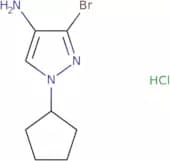
Discontinued product3-Bromo-1-cyclopentyl-1H-pyrazol-4-amine hydrochloride
CAS:Versatile small molecule scaffoldFormula:C8H13BrClN3Purity:Min. 95%Molecular weight:266.56 g/molRef: 3D-FZC90732
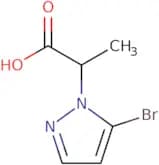
Discontinued product2-(5-Bromo-1H-pyrazol-1-yl)propanoic acid
CAS:Versatile small molecule scaffold
Formula:C6H7BrN2O2Purity:Min. 95%Molecular weight:219.04 g/molRef: 3D-FZC90726
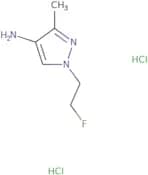
Discontinued product1-(2-Fluoroethyl)-3-methyl-1H-pyrazol-4-amine dihydrochloride
CAS:Versatile small molecule scaffoldFormula:C6H12Cl2FN3Purity:Min. 95%Molecular weight:216.08 g/molRef: 3D-FZC90713
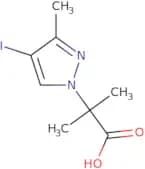
Discontinued product2-(4-Iodo-3-methyl-1H-pyrazol-1-yl)-2-methylpropanoic acid
CAS:Versatile small molecule scaffoldFormula:C8H11IN2O2Purity:Min. 95%Molecular weight:294.09 g/molRef: 3D-FZC90002
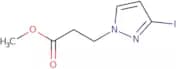
Discontinued product3-(3-Iodo-pyrazol-1-yl)-propionic acid methyl ester
CAS:Versatile small molecule scaffold
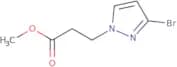
Formula:C7H9IN2O2Purity:Min. 95%Molecular weight:280.06 g/molMethyl 3-(3-bromo-1H-pyrazol-1-yl)propanoate
CAS:Versatile small molecule scaffold
Formula:C7H9BrN2O2Purity:Min. 95%Molecular weight:233.06 g/mol



![(6-Bromobenzo[d][1,3]dioxol-5-yl)methanol](/_next/image/?url=https%3A%2Fstatic.cymitquimica.com%2Fproducts%2F3D%2Fthumb-webp%2FGAA64234.webp&w=3840&q=75)

![Ethyl 3-methyl-5-oxo-[1,3]thiazolo[3,2-a]pyrimidine-6-carboxylate](/_next/image/?url=https%3A%2Fstatic.cymitquimica.com%2Fproducts%2F3D%2Fthumb-webp%2FGAA12413.webp&w=3840&q=75)




![7-Methyl-2H,3H,4H-pyrido[1,2-a]pyrimidin-3-ol hydrochloride](/_next/image/?url=https%3A%2Fstatic.cymitquimica.com%2Fproducts%2F3D%2Fthumb-webp%2FGAA05642.webp&w=3840&q=75)
![2H,3H-Naphtho[1,2-b]furan-2-one](/_next/image/?url=https%3A%2Fstatic.cymitquimica.com%2Fproducts%2F3D%2Fthumb-webp%2FGAA05080.webp&w=3840&q=75)
![4H,5H,6H-Thieno[3,4-c]pyrrole-4,6-dione](/_next/image/?url=https%3A%2Fstatic.cymitquimica.com%2Fproducts%2F3D%2Fthumb-webp%2FGAA00782.webp&w=3840&q=75)