Building Blocks
This section contains fundamental products for the synthesis of organic and biological compounds. Building blocks are the essential starting materials used to construct complex molecules through various chemical reactions. They play a critical role in drug discovery, material science, and chemical research. At CymitQuimica, we offer a diverse range of high-quality building blocks to support your innovative research and industrial projects, ensuring you have the essential components for successful synthesis.
Subcategories of "Building Blocks"
- Boronic Acids & Boronic Acid Derivatives(5,756 products)
- Chiral Building Blocks(1,242 products)
- Hydrocarbon Building Blocks(6,095 products)
- Organic Building Blocks(61,038 products)
Found 196817 products of "Building Blocks"
Sort by
Purity (%)
0
100
|
0
|
50
|
90
|
95
|
100
4-[(5-Bromothiophen-2-yl)methoxy]-3-methoxybenzoic acid
CAS:<p>Versatile small molecule scaffold</p>Formula:C13H11BrO4SPurity:Min. 95%Molecular weight:343.19 g/mol3-[(5-Aminopyridin-2-yl)oxy]benzonitrile
CAS:<p>Versatile small molecule scaffold</p>Formula:C12H9N3OPurity:Min. 95%Molecular weight:211.22 g/mol4-[(2-Methoxyethoxy)methyl]aniline
CAS:<p>Versatile small molecule scaffold</p>Formula:C10H15NO2Purity:Min. 95%Molecular weight:181.23 g/mol5,6-Dimethyl-1-[(oxiran-2-yl)methyl]-1H-1,3-benzodiazole
CAS:<p>Versatile small molecule scaffold</p>Formula:C12H14N2OPurity:Min. 95%Molecular weight:202.25 g/mol5-(Cyclopentylmethyl)-1,3,4-oxadiazol-2-amine
CAS:<p>Versatile small molecule scaffold</p>Formula:C8H13N3OPurity:Min. 95%Molecular weight:167.21 g/molN-Butyl-6-methylpiperidine-3-carboxamide
CAS:<p>Versatile small molecule scaffold</p>Formula:C11H22N2OPurity:Min. 95%Molecular weight:198.31 g/mol5-(5-Methylthiophen-2-yl)-1,3,4-oxadiazol-2-amine
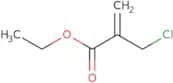
CAS:<p>Versatile small molecule scaffold</p>Formula:C7H7N3OSPurity:Min. 95%Molecular weight:181.22 g/molEthyl 2-(Chloromethyl)acrylate (stabilized with HQ)
CAS:<p>Ethyl 2-(chloromethyl)acrylate is a monomer that belongs to the group of fluoroalkyl. It has been shown to be capable of copolymerization with other monomers, such as methacrylic acid. Copolymers are often used in polymer films and coatings because they have excellent water repellent properties. Copolymers can also be made using azobisisobutyronitrile (AIBN), which is an initiator that produces radicals that react with the double bond in the acrylate monomer. The size-exclusion chromatography technique can be used to measure the molecular weight of polymers. Polymerization reactions are often performed in the presence of cyanamide, which is a source of nitrogen for use as a reducing agent in these reactions. The benzoate anion or salt can be used as a stabilizer for this type of reaction, producing an ethyl ester from the benzoic acid</p>Formula:C6H9ClO2Purity:Min. 95%Molecular weight:148.59 g/molMethyl 2-[2-(hydroxyimino)cyclohexyl]acetate
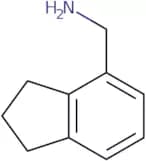
CAS:<p>Versatile small molecule scaffold</p>Formula:C9H15NO3Purity:Min. 95%Molecular weight:185.22 g/mol(2,3-Dihydro-1H-inden-4-yl)methanamine
CAS:<p>Versatile small molecule scaffold</p>Formula:C10H13NPurity:Min. 95%Molecular weight:147.22 g/mol(1-Benzofuran-6-yl)methanamine
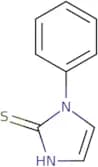
CAS:<p>Versatile small molecule scaffold</p>Formula:C9H9NOPurity:Min. 95%Molecular weight:147.17 g/mol1-Phenyl-1H-imidazole-2(3H)-thione
CAS:<p>1-Phenyl-1H-imidazole-2(3H)-thione is a ligand that binds to metal ions. It can be synthesized by reacting an olefinic compound with acetylacetonates in the presence of zirconium, forming a cyclopentadienyl complex. The chloride ion acts as a counterion and is removed when the reaction is complete. This product has a particle size of less than 10 micrometers and can be used for the synthesis of organic compounds with metal carbonate ligands.</p>Formula:C9H8N2SPurity:Min. 95%Molecular weight:176.24 g/mol1-(4-Chlorophenyl)-1H-imidazole-2(3H)-thione
CAS:<p>1-(4-Chlorophenyl)-1H-imidazole-2(3H)-thione is a crystalline solid that belongs to the class of imidazoles. It has been synthesized by reacting 1,2-dibromoethane with sodium methoxide in methanol. The compound was found to have a melting point of about 183°C and a molecular weight of 212.06 g/mol. This compound has been shown to interact with methanol, methoxide, and ethoxy groups. Crystallization occurs when the substance is heated to about 183°C in vacuum and then cooled slowly.</p>Formula:C9H7ClN2SPurity:Min. 95%Molecular weight:210.68 g/mol1-(4-Methoxyphenyl)-1H-imidazole-2(3H)-thione
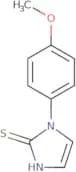
CAS:<p>Versatile small molecule scaffold</p>Formula:C10H10N2OSPurity:Min. 95%Molecular weight:206.26 g/mol1-(2,6-Dimethylphenyl)-2,3-dihydro-1H-imidazole-2-thione
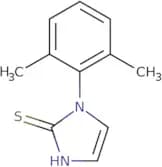
CAS:<p>Versatile small molecule scaffold</p>Formula:C11H12N2SPurity:Min. 95%Molecular weight:204.29 g/mol1-(4-Bromophenyl)imidazoline-2-thione
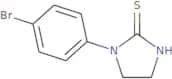
CAS:<p>Versatile small molecule scaffold</p>Formula:C9H7BrN2SPurity:Min. 95%Molecular weight:255.14 g/mol2-Amino-3-methoxypropanamide hydrochloride
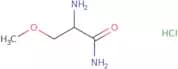
CAS:<p>Versatile small molecule scaffold</p>Formula:C4H11ClN2O2Purity:Min. 95%Molecular weight:154.59 g/mol7-Chloro-3-phenyl-3H-[1,2,3]triazolo[4,5-d]pyrimidine
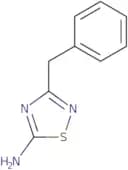
CAS:<p>Versatile small molecule scaffold</p>Formula:C10H6ClN5Purity:Min. 95%Molecular weight:231.64 g/mol3-Benzyl-1,2,4-thiadiazol-5-amine
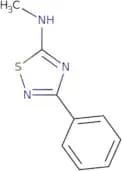
CAS:<p>Versatile small molecule scaffold</p>Formula:C9H9N3SPurity:Min. 95%Molecular weight:191.26 g/molN-Methyl-3-phenyl-1,2,4-thiadiazol-5-amine
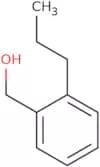
CAS:<p>Versatile small molecule scaffold</p>Formula:C9H9N3SPurity:Min. 95%Molecular weight:191.26 g/mol(2-Propylphenyl)methanol
CAS:<p>2-Propylphenyl methy alcohol is a carboxylic acid that is used in the synthesis of esterification products. It reacts with an alcohol to form an ester. This reaction can be done by heating the carboxylic acid and the alcohol together, or by using a catalyst such as sulfuric acid. 2-Propylphenyl methy alcohol can also react with a reactive halogenated molecule to form an ether. This process is called hydrolysis, which is the breaking down of a compound through water molecules. 2-Propylphenyl methy alcohol will react with a chlorine atom to form a chloroalkoxide, which can then be used in another reaction.</p>Formula:C10H14OPurity:Min. 95%Molecular weight:150.22 g/molTranylcypromine Related Compound B
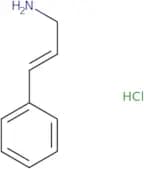
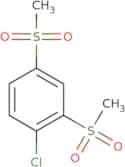
CAS:<p>Tranylcypromine Related Compound B (TCRB) is a fluorescent substrate for monoamine oxidase. It is used to measure the activity of this enzyme in biological samples, including plasma, urine, and cerebrospinal fluid. TCRB has been shown to be irreversibly fluorescent. TCRB is reversibly fluorescent when the pH of the sample is decreased by adding hydrochloric acid or sodium hydroxide. The fluorescence intensity decreases as pH increases from 2-6 and then increases as pH increases from 7-10 due to the accumulation of nonfluorescent products. Tranylcypromine also inhibits pepsin activity at low concentrations and can be used for measuring pepsin activity in vitro. This compound has been shown to have an operational half-life of about 18 hours in rats and about 27 hours in humans.</p>Formula:C9H11N·HClPurity:Min. 95%Molecular weight:169.65 g/mol1-Chloro-2,4-dimethanesulfonylbenzene
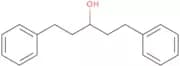
CAS:<p>Versatile small molecule scaffold</p>Formula:C8H9ClO4S2Purity:Min. 95%Molecular weight:268.7 g/mol1,5-Diphenylpentan-3-ol
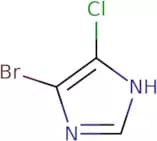
CAS:<p>Flindersia laevicarpa is a small tree native to Australia. The leaves of the tree are used for medicinal purposes and contain 1,5-diphenylpentan-3-ol. Flindersia laevicarpa has been shown to have anti-inflammatory and antioxidant properties, as well as an ability to inhibit platelet aggregation.</p>Formula:C17H20OPurity:Min. 95%Molecular weight:240.34 g/mol4-Bromo-5-chloro-1H-imidazole
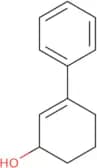
CAS:<p>Versatile small molecule scaffold</p>Formula:C3H2BrClN2Purity:Min. 95%Molecular weight:181.42 g/mol3-Phenylcyclohex-2-en-1-ol
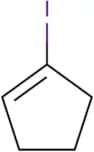
CAS:<p>Versatile small molecule scaffold</p>Formula:C12H14OPurity:Min. 95%Molecular weight:174.24 g/mol1-Iodocyclopent-1-ene
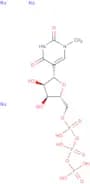
CAS:<p>Versatile small molecule scaffold</p>Formula:C5H7IPurity:Min. 95%Molecular weight:194.01 g/molN1-Methyl-pseudouridine-5'-triphosphate trisodium, 100mM aqueous solution
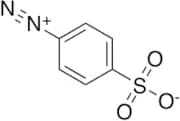
CAS:<p>Methyl-pseudouridine-5'-triphosphate trisodium is the triphosphate of 1-Methylpseudouridine is a substitute for uridine in modified mRNA. This substitution has shown to increase transfection by reducing immuogenicity. UV max wavelength = 272nm</p>Formula:C10H17N2O15P3•Na3Purity:Min. 95%Color and Shape:Clear LiquidMolecular weight:567.17 g/mol4-Diazobenzenesulfonic Acid
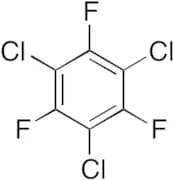
CAS:<p>Applications 4-Diazobenzenesulfonic acid (cas# 305-80-6) is a useful research chemical.<br></p>Formula:C6H4N2O3SMolecular weight:184.171,3,5-Trifluorotrichlorobenzene
CAS:<p>Applications 1,3,5-Trifluorotrichlorobenzene is a useful reagent.<br></p>Formula:C6Cl3F3Molecular weight:235.424-Fluoro-2-methoxy-5-nitroaniline
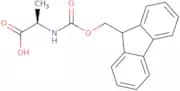
CAS:<p>Intermediate in the synthesis of osimertinib (AZD9291)</p>Formula:C7H7FN2O3Purity:Min. 95%Molecular weight:186.14 g/molFmoc-D-Ala-OH
CAS:<p>Fmoc-D-Ala-OH is a synthetic cyclic peptide that has been shown to have anticancer properties. This compound was synthesized by solid-phase chemistry and exhibits an inhibitory effect on cancer cells. Fmoc-D-Ala-OH blocks the synthesis of proteins in cancer cells, leading to cell death. It also inhibits the activity of serine proteases such as degarelix acetate, which are important for cancer cell growth and metastasis.</p>Formula:C18H17NO4Purity:Min. 95%Color and Shape:PowderMolecular weight:311.33 g/mol4-Formylbenzoic acid
CAS:<p>4-Formylbenzoic acid is an organic compound with the molecular formula CH2=C(O)CH=CHCO2H. It is a white solid that is soluble in water and has a strong, unpleasant odor. 4-Formylbenzoic acid has been shown to have affinity for binding to odorous molecules such as sulfur compounds, amines, and mercaptans. The binding of these molecules to the 4-formylbenzoic acid leads to a decrease in their odor concentration. This process can be done using electrochemical impedance spectroscopy or optical sensors. The oxidation of 4-formylbenzoic acid by trifluoroacetic acid produces 2-formylphenol and formaldehyde, which are themselves volatile compounds with an unpleasant odor. These reactions may be used as wastewater treatment methods. Langmuir adsorption isotherm may be used as an analytical method for measuring the concentration of 4-formylbenzoic acid</p>Formula:C8H6O3Purity:Min. 98 Area-%Color and Shape:White Yellow PowderMolecular weight:150.13 g/mol5-Boc-4H,5H,6H,7H,8H-pyrazolo[1,5-a][1,4]diazepine-2-carboxylic acid
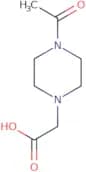
CAS:<p>Versatile small molecule scaffold</p>Formula:C13H19N3O4Purity:Min. 95%Molecular weight:281.31 g/mol(4-Acetylpiperazin-1-yl)acetic acid
CAS:<p>Versatile small molecule scaffold</p>Formula:C8H14N2O3Purity:Min. 95%Molecular weight:186.21 g/mol[Ru(bpz)3][PF6]2
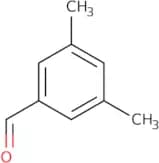
CAS:<p>Ru(bpz)3[PF6]2 is a catalytic reagent that was developed for the synthesis of indoles. It is composed of a ruthenium complex with two ligands, bpy and pfpz. Ru(bpz)3[PF6]2 can be used to synthesize indoles from simple organic compounds containing benzene rings. Ru(bpz)3[PF6]2 has been used by researchers to synthesize indoles in the laboratory. The catalytic activity of this compound depends on the reaction conditions, including temperature and solvent type. This catalyst has also been shown to be able to generate new types of molecules that are not found in nature.</p>Formula:C24H18F12N12P2RuPurity:Min. 95%Molecular weight:865.48 g/mol3,5-Dimethylbenzaldehyde
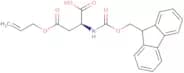
CAS:<p>3,5-Dimethylbenzaldehyde is an organic compound that is a colorless liquid. It has a chemical formula of C9H12O2 and is classified as an aldehyde. 3,5-Dimethylbenzaldehyde can be synthesized by the reaction of isopropyl palmitate with xylene in the presence of carbon as a source. The reaction time required for this synthesis is approximately one day. The major products of this reaction are 3,5-dimethylbenzaldehyde and 2-methylbutanal. This reaction mechanism can also be used to determine the concentration of urinary metabolites in human urine samples. Analysis of these samples requires an organic solvent such as hexane or dichloromethane. Kinetic data was collected from the rate at which zinc powder reacts with 3,5-dimethylbenzaldehyde over time at different concentrations. A kinetic experiment was conducted using c–h bond activation to produce 3,5-dimethoxy</p>Formula:C9H10OPurity:Min. 95%Color and Shape:Colorless Clear LiquidMolecular weight:134.18 g/molFmoc-L-aspartic acid β-allyl ester
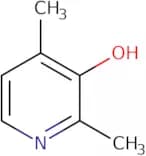
CAS:<p>Fmoc-L-aspartic acid beta-allyl ester is a specific interaction between an amide and an enzyme target. It has been shown to have anti-inflammatory properties by inhibiting the activity of COX-2, which inhibits the production of prostaglandins. Fmoc-L-aspartic acid beta-allyl ester is a cyclic peptide with a lactam ring system that has been synthesized in a stepwise manner on a solid phase. This molecule interacts with cell line A549 and blocks the proliferation of cancer cells. Fmoc-L-aspartic acid beta-allyl ester also contains a disulfide bond that stabilizes its structure.</p>Formula:C22H21NO6Purity:Min. 95%Molecular weight:395.41 g/mol2,4-Dimethyl-3-hydroxypyridine
CAS:<p>2,4-Dimethyl-3-hydroxypyridine is a hydroxypyridine compound with epoxide. It inhibits cytochrome P450 enzymes and is used as an organic solvent. 2,4-Dimethyl-3-hydroxypyridine is also used in research to study the structure of the pyridine ring and the hydroxyl group.</p>Formula:C7H9NOPurity:Min. 95%Color and Shape:PowderMolecular weight:123.15 g/mol2,4-Dibromopyridine
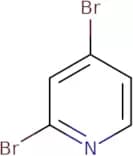
CAS:<p>2,4-Dibromopyridine is a brominated derivative of pyridine. It is synthesized through the substitution of two bromine atoms for two hydrogens on the pyridine ring. This synthesis can be achieved by disubstitution or cross-coupling reactions. The reaction products are nucleophilic and react with electrophiles to produce substitution products. The reaction mechanism is thought to involve a six-membered transition state, which has been observed using X-ray absorption spectroscopy.</p>Formula:C5H3Br2NPurity:Min. 95%Color and Shape:White To Off-White SolidMolecular weight:236.89 g/mol7-Fluoroisoquinolin-1-amine
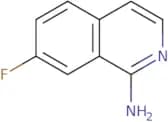
CAS:<p>Versatile small molecule scaffold</p>Formula:C9H7FN2Purity:Min. 95%Molecular weight:162.16 g/mol4-Amino-3-isothiazolidinone 1,1-dioxide hydrochloride
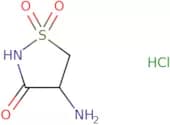
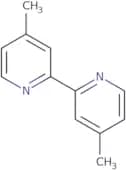
CAS:Versatile small molecule scaffoldFormula:C3H7ClN2O3SPurity:Min. 95%Molecular weight:186.62 g/mol4,4'-Dimethyl-2,2'-bipyridine
CAS:<p>4,4'-Dimethyl-2,2'-bipyridine is a molecule that belongs to the group of p2 metal complexes. It has been shown to have synergistic effects with ruthenium complexes in analytical chemistry and electrochemical studies. Theoretical calculations have been performed for 4,4'-dimethyl-2,2'-bipyridine and its derivatives. These calculations show that the molecule is planar and that it can be considered as a diazonium salt. The photochemical properties of 4,4'-dimethyl-2,2'-bipyridine have also been studied in detail. This substance emits light when excited by ultraviolet light or visible light, which makes it an excellent candidate for use as a luminescent material in optical displays.</p>Formula:C12H12N2Purity:Min. 98%Color and Shape:Slightly Yellow PowderMolecular weight:184.24 g/mol3,5-Dimethyl-4H-1,2,4-triazol-4-amine
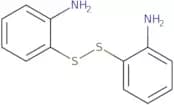
CAS:<p>3,5-Dimethyl-4H-1,2,4-triazol-4-amine is a crystalline compound with antiproliferative and anti-inflammatory properties. It has been shown to inhibit the growth of cancer cells in vitro and in vivo. The mechanism of action is not fully understood but may be due to inhibition of DNA synthesis or by inhibiting the activity of topoisomerase II. 3,5-Dimethyl-4H-1,2,4-triazol-4-amine can also act as an antioxidant by scavenging reactive oxygen species (ROS). 3,5-Dimethyl-4H-1,2,4-triazol-4-amine has been shown to have a low toxicity in animals and humans.</p>Formula:C4H8N4Purity:Min. 95%Molecular weight:112.13 g/mol2,2'-Dithiodianiline
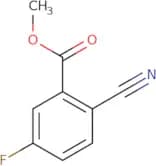
CAS:<p>2,2'-Dithiodianiline is a redox-active molecule with a redox potential of -0.08 V. It has been shown to inhibit the polymerase chain reaction by binding to DNA and inhibiting the enzyme DNA polymerase. 2,2'-Dithiodianiline is a potent inhibitor of bacterial growth in vitro, and has been shown to be cytotoxic in vivo. 2,2'-Dithiodianiline inhibits the growth of resistant mutants that are resistant to other antibiotics such as penicillin and ampicillin. This compound binds to molybdenum at an optimum concentration of 0.5 mM and coordinates through electrostatic interactions with the molybdenum atom. Structural analysis reveals that 2,2'-dithiodianiline forms hydrogen bonds with adenine residues in DNA and interacts with guanine residues in RNA through π-π stacking interactions. This interaction prevents transcription by blocking the binding</p>Formula:C12H12N2S2Purity:Min. 98 Area-%Color and Shape:PowderMolecular weight:248.37 g/molMethyl 2-cyano-5-fluorobenzoate
CAS:<p>Versatile small molecule scaffold</p>Formula:C9H6FNO2Purity:Min. 95%Molecular weight:179.15 g/moltert-Butyl 4-[(piperazin-1-yl)methyl]piperidine-1-carboxylate
CAS:<p>Versatile small molecule scaffold</p>Formula:C15H29N3O2Purity:Min. 95%Molecular weight:283.41 g/mol1,1-Dibromo-2,2-bis(chloromethyl)cyclopropane
CAS:<p>1,1-Dibromo-2,2-bis(chloromethyl)cyclopropane is a synthetic chemical that can be used to synthesize lactams. It is a member of the class of enolates and has two isomers: sulfoxide and sulfone. The synthesis process begins with an amination reaction between 1,1-dibromo-2,2-bis(chloromethyl)cyclopropane and an amine in the presence of magnesium chloride. This reaction produces a sulfide intermediate that reacts with an aldehyde or ketone to form the desired lactam. The reaction time varies depending on the reactivity of the reactants, but it typically takes less than one hour at room temperature. Magnesium metal is needed as a catalyst for this reaction because it will not take place without it. 1,1-Dibromo-2,2-bis(chloromethyl)cyclopropane also reacts easily</p>Formula:C5H6Br2Cl2Purity:Min. 95%Molecular weight:296.81 g/moltrans-1,2-Dichloroethylene
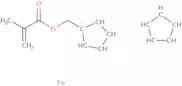
CAS:<p>Trans-1,2-Dichloroethylene is a chlorinated hydrocarbon that is used in the production of polyvinyl chloride plastics. When ingested at dietary concentrations, trans-1,2-Dichloroethylene may cause liver damage and death in CD-1 mice. Trans-1,2-Dichloroethylene has been shown to react with nucleophilic substitutions and produce toxic reaction products. This chemical also causes polymerase chain reactions that can lead to cell death. The effective dose for this chemical is unknown because it has not been tested in clinical trials.</p>Formula:C2H2Cl2Purity:Min. 95%Molecular weight:96.94 g/molFerrocenylmethyl methacrylate
CAS:<p>Ferrocenylmethyl methacrylate is a reactive, irreversible oxidation agent. It is used in the synthesis of hydroxylated polymers and redox-active biological sensors. Ferrocenylmethyl methacrylate has been used as a component in polymerization reactions to produce polymers with recording potential. It has also been used for the detection of cancer cells and for the diagnosis of prostate cancer.</p>Formula:C15H16FeO2Purity:Min. 95%Molecular weight:284.13 g/mol
![4-[(5-Bromothiophen-2-yl)methoxy]-3-methoxybenzoic acid](/_next/image/?url=https%3A%2Fstatic.cymitquimica.com%2Fproducts%2F3D%2Fthumb-webp%2FRQB70548.webp&w=3840&q=75)

![3-[(5-Aminopyridin-2-yl)oxy]benzonitrile](/_next/image/?url=https%3A%2Fstatic.cymitquimica.com%2Fproducts%2F3D%2Fthumb-webp%2FRQB70578.webp&w=3840&q=75)
![4-[(2-Methoxyethoxy)methyl]aniline](/_next/image/?url=https%3A%2Fstatic.cymitquimica.com%2Fproducts%2F3D%2Fthumb-webp%2FRQB70642.webp&w=3840&q=75)
![5,6-Dimethyl-1-[(oxiran-2-yl)methyl]-1H-1,3-benzodiazole](/_next/image/?url=https%3A%2Fstatic.cymitquimica.com%2Fproducts%2F3D%2Fthumb-webp%2FRQB70685.webp&w=3840&q=75)


![Methyl 2-[2-(hydroxyimino)cyclohexyl]acetate](/_next/image/?url=https%3A%2Fstatic.cymitquimica.com%2Fproducts%2F3D%2Fthumb-webp%2FSAA44849.webp&w=3840&q=75)


![7-Chloro-3-phenyl-3H-[1,2,3]triazolo[4,5-d]pyrimidine](/_next/image/?url=https%3A%2Fstatic.cymitquimica.com%2Fproducts%2F3D%2Fthumb-webp%2FSAA46600.webp&w=3840&q=75)



![5-Boc-4H,5H,6H,7H,8H-pyrazolo[1,5-a][1,4]diazepine-2-carboxylic acid](/_next/image/?url=https%3A%2Fstatic.cymitquimica.com%2Fproducts%2F3D%2Fthumb-webp%2FFEC17097.webp&w=3840&q=75)
![[Ru(bpz)3][PF6]2](/_next/image/?url=https%3A%2Fstatic.cymitquimica.com%2Fproducts%2F3D%2Fthumb-webp%2FFDA90756.webp&w=3840&q=75)

![tert-Butyl 4-[(piperazin-1-yl)methyl]piperidine-1-carboxylate](/_next/image/?url=https%3A%2Fstatic.cymitquimica.com%2Fproducts%2F3D%2Fthumb-webp%2FGQA72248.webp&w=3840&q=75)