Building Blocks
This section contains fundamental products for the synthesis of organic and biological compounds. Building blocks are the essential starting materials used to construct complex molecules through various chemical reactions. They play a critical role in drug discovery, material science, and chemical research. At CymitQuimica, we offer a diverse range of high-quality building blocks to support your innovative research and industrial projects, ensuring you have the essential components for successful synthesis.
Subcategories of "Building Blocks"
- Boronic Acids & Boronic Acid Derivatives(5,756 products)
- Chiral Building Blocks(1,242 products)
- Hydrocarbon Building Blocks(6,095 products)
- Organic Building Blocks(61,038 products)
Found 196817 products of "Building Blocks"
Sort by
Purity (%)
0
100
|
0
|
50
|
90
|
95
|
100
7-Oxa-2-azaspiro[3.5]nonane hydrochloride
CAS:<p>Versatile small molecule scaffold</p>Formula:C7H14ClNOPurity:Min. 95%Molecular weight:163.6 g/mol2-(Morpholin-4-yl)acetyl chloride hydrochloride
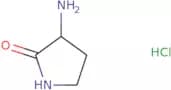
CAS:<p>2-(Morpholin-4-yl)acetyl chloride hydrochloride is a fine chemical that is used as a building block for the synthesis of other compounds. It can be used in research and development, or as a reagent. 2-(Morpholin-4-yl)acetyl chloride hydrochloride has high purity and is easily soluble in water. This compound can be used as an intermediate to synthesize other compounds, or it can be used as a scaffold for the formation of complex structures.</p>Formula:C6H11Cl2NO2Purity:Min. 95%Color and Shape:PowderMolecular weight:200.06 g/mol3-aminopyrrolidin-2-one hcl
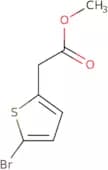
CAS:<p>3-Aminopyrrolidin-2-one hcl is an antibiotic that is used to treat tuberculosis. It inhibits the enzyme transacylase, which catalyses the conversion of L-lysine into L-pipecolic acid in bacteria. This antibiotic has been shown to be effective against Mycobacterium tuberculosis and Mycobacterium avium complex. 3-Aminopyrrolidin-2-one hcl has a broad spectrum of activity against gram positive and gram negative bacteria, but it is not active against acid-fast bacteria.</p>Formula:C4H9ClN2OPurity:Min. 95%Molecular weight:136.58 g/molMethyl 2-(5-bromothiophen-2-yl)acetate
CAS:<p>Versatile small molecule scaffold</p>Formula:C7H7BrO2SPurity:Min. 95%Molecular weight:235.1 g/mol(Chloromethyl)cyclohexane
CAS:<p>(Chloromethyl)cyclohexane is a synthase gene that is responsible for synthesizing the enzyme chloromethyl cyclohexane, which is used as a solid catalyst. The synthesis of (chloromethyl)cyclohexane from phenyl groups and liquid crystal composition has been demonstrated using expression plasmids and active oxygen. The compound inhibits inflammatory diseases by preventing the production of arachidonic acid, which is an inflammatory agent. This compound also inhibits the production of prostaglandins, which are involved in the release of histamine from mast cells. Pharmaceutical preparations that contain this compound are primarily used to treat rheumatoid arthritis and other inflammatory diseases.</p>Formula:C7H13ClPurity:Min. 95%Molecular weight:132.63 g/mol4-Bromo-2,5-dimethylpyridine
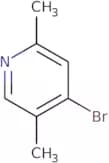
CAS:<p>4-Bromo-2,5-dimethylpyridine is an organic compound that belongs to the group of amino compounds. It is a potential intermediate in the synthesis of other compounds. 4-Bromo-2,5-dimethylpyridine can react with potassium to form 4-bromopyridine and 3-bromo-4-methylpyridine. It may also be used as a reactant in aminations and as an intermediate in the preparation of n-oxides.</p>Formula:C7H8BrNPurity:Min. 95%Molecular weight:186.05 g/moltert-butyl 6,6-difluoro-1,4-diazepane-1-carboxylate
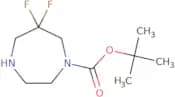
CAS:<p>Versatile small molecule scaffold</p>Formula:C10H18F2N2O2Purity:Min. 95%Molecular weight:236.3 g/mol1-Bromo-4-isobutylbenzene
CAS:<p>1-Bromo-4-isobutylbenzene is a ketone that can be synthesized by the reaction of benzene with acetonitrile in the presence of a catalytic amount of oxone. The synthesis is an example of an arylation, which is the addition of an aromatic group to another molecule. It has been shown experimentally that 1-bromo-4-isobutylbenzene undergoes a transition from the x-ray structure analysis to the crystal x-ray structure when dissolved in acetonitrile and heated to 100°C. The final product is then purified by recrystallization with ethylene as a solvent.</p>Formula:C10H13BrPurity:Min. 95%Molecular weight:213.11 g/molEthyl 2-(pyrimidin-4-yl)acetate
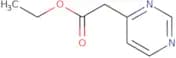
CAS:<p>Versatile small molecule scaffold</p>Formula:C8H10N2O2Purity:Min. 95%Molecular weight:166.18 g/mol2-Bromo-5-fluoro-4-nitroaniline
CAS:<p>2-Bromo-5-fluoro-4-nitroaniline can be synthesized in a reaction system of ammonium chloride, hydrochloric acid, and water vapor. The reaction is carried out at a temperature of 190°C under reflux. The efficiency of this synthesis is high, and the chemical yield is about 90%.</p>Formula:C6H4BrFN2O2Purity:Min. 95%Molecular weight:235.01 g/mol2-[(6-Chloro-3,4-dihydro-3-methyl-2,4-dioxo-1(2H)-pyrimidinyl)methyl]-benzonitrile
CAS:<p>2-[(6-Chloro-3,4-dihydro-3-methyl-2,4-dioxo-1(2H)-pyrimidinyl)methyl]-benzonitrile is an antibacterial agent that belongs to the group of nitro compounds. It inhibits bacterial growth by blocking the synthesis of proteins and DNA. 2-[(6-Chloro-3,4-dihydro-3-methyl-2,4-dioxo-1(2H)-pyrimidinyl)methyl]-benzonitrile has been shown to be active against a wide range of bacteria including Gram positive and Gram negative organisms. This compound also exhibits metal ion chelating properties and can be used for the removal of heavy metals from water. The square planar geometry of 2-[(6-Chloro-3,4-(dihydro)-3-(methyl)-2,4-(dioxo)-1</p>Formula:C13H10ClN3O2Purity:Min. 95%Molecular weight:275.69 g/mol3-(4-Hydroxyphenyl)hex-4-ynoic acid
CAS:<p>Versatile small molecule scaffold</p>Formula:C12H12O3Purity:Min. 95%Molecular weight:204.22 g/molPotassium tert-butyl N-[3-(trifluoroboranuidyl)propyl]carbamate
CAS:<p>Versatile small molecule scaffold</p>Formula:C8H16BF3KNO2Purity:Min. 95%Molecular weight:265.13 g/mol5-Bromopyridine-3-thiol
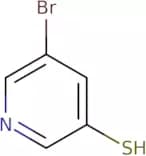
CAS:<p>Versatile small molecule scaffold</p>Formula:C5H4BrNSPurity:Min. 95%Molecular weight:190.06 g/mol4-Bromo-2,3-difluoropyridine
CAS:<p>Versatile small molecule scaffold</p>Formula:C5H2BrF2NPurity:Min. 95%Molecular weight:193.98 g/mol1,9-Nonanediol
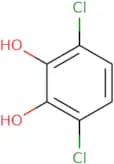
CAS:<p>1,9-Nonanediol is a chemical substance that has been synthesized with the use of a constant pressure process. It is an asymmetric synthesis with light exposure. The molecule has been characterized by chromatographic methods and has the molecular formula CH3(CH2)9O. 1,9-Nonanediol is a dodecanedioic acid and an aliphatic hydrocarbon. It exists in two forms: one hydroxyl group and one hydrogen bond, which are both involved in the dehydration process. This substance does not have any chloride or magnetic resonance spectroscopy properties because it does not contain any chlorine atoms or hydrogen atoms.</p>Formula:C9H20O2Purity:Min. 95%Molecular weight:160.25 g/mol3,6-Dichlorobenzene-1,2-diol
CAS:<p>3,6-Dichlorobenzene-1,2-diol is a conjugate acid of benzene. It has two dimensions in the plane of the molecule and three dimensions in space. The molecule is composed of six carbon atoms, six hydrogen atoms, and one chlorine atom. 3,6-Dichlorobenzene-1,2-diol has a centroid at the center of the molecule that is surrounded by a ring of four hydrogen atoms. The hydrogen-bonded molecules stack on top of each other to form a hexagonal shape. 3,6-Dichlorobenzene-1,2-diol forms hydrogen bonds with other molecules through its lone pairs of electrons on both oxygen atoms as well as through its pi electron system.</p>Formula:C6H4Cl2O2Purity:Min. 95%Molecular weight:179 g/mol6-Amino-2-propylhexanoic acid hydrochloride
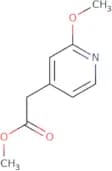
CAS:<p>Versatile small molecule scaffold</p>Formula:C9H19NO2•HClPurity:Min. 95%Molecular weight:209.71 g/molMethyl 2-(2-methoxypyridin-4-yl)acetate
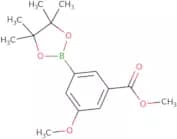
CAS:<p>Versatile small molecule scaffold</p>Formula:C9H11NO3Purity:Min. 95%Molecular weight:181.19 g/mol3-Methoxy-5-(methoxycarbonyl)phenylboronic acid pinacol ester
CAS:<p>Versatile small molecule scaffold</p>Formula:C15H21BO5Purity:Min. 95%Molecular weight:292.14 g/mol4-(2,6-Difluorophenyl)piperidin-4-ol hydrochloride
CAS:<p>Versatile small molecule scaffold</p>Formula:C11H14ClF2NOPurity:Min. 95%Molecular weight:249.68 g/mol2-(4-Methoxyphenyl)ethyl bromide
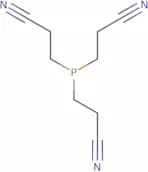
CAS:<p>2-(4-Methoxyphenyl)ethyl bromide is an adenosine receptor antagonist that can be used in cancer treatment. It has been shown to inhibit the growth of cancer cells by blocking the binding of adenosine to its receptors and inhibiting phosphodiesterase, which is an enzyme that breaks down the key cellular messenger, cyclic AMP (cAMP). 2-(4-Methoxyphenyl)ethyl bromide also inhibits the production of aphanorphine, a morphine analogue that has been shown to stimulate endoplasmic reticulum stress and apoptosis in cancer cells. This compound has been synthesised and tested on animal models with promising results.</p>Formula:C9H11BrOPurity:Min. 95%Molecular weight:215.09 g/molTris(2-cyanoethyl)phosphine
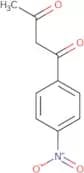
CAS:<p>Tris(2-cyanoethyl)phosphine (TCEP) is a metal carbonyl compound that has been used as a reagent in organic chemistry. TCEP is an amphoteric molecule that can react with both acids and bases, and is stable in the pH range of 5 to 9. It has been shown to have anti-inflammatory properties by inhibiting neutrophil migration. TCEP also has biological properties, such as its ability to inhibit the growth of Cryptococcus neoformans. TCEP binds to the mitochondrial membrane potential, which prevents proton leakage through the membrane and inhibits oxidative phosphorylation. TCEP binds strongly to minerals such as sodium salts, which can be used to isolate this molecule from reaction solutions. TCEP can be obtained by laser ablation or X-ray crystallography techniques.</p>Formula:C9H12N3PPurity:Min. 95 Area-%Molecular weight:193.19 g/mol1-(4-Nitrophenyl)butane-1,3-dione
CAS:<p>1-(4-Nitrophenyl)butane-1,3-dione is a tautomer of 1,4-naphthoquinone. This compound has been reported to have an optical rotation of [alpha]D=+14.2° (C=1 in methanol). The triflate and carbonyl groups are involved in hydrogen bonding with each other. The hydrogen bond is a weak interaction that only occurs between polar molecules. This compound also has an x-ray crystal structure, which can be determined by diffraction studies. It is possible to synthesize this molecule from 1,4-naphthoquinone and butane-1,3-dione or by photolysis of 1-(4-nitrophenyl)-2,5-dioxopentanoic acid. In addition to its optical properties, the intramolecular hydrogen bonds give this molecule interesting optical properties.</p>Formula:C10H9NO4Purity:Min. 95%Molecular weight:207.18 g/mol1,5,6,7-Tetrahydro-2H-cyclopenta[b]pyridin-2-one
CAS:<p>Versatile small molecule scaffold</p>Formula:C8H9NOPurity:Min. 95%Molecular weight:135.17 g/mol1-(4-Chloro-3-fluorophenyl)ethan-1-amine HCl
CAS:<p>Versatile small molecule scaffold</p>Formula:C8H10Cl2FNPurity:Min. 95%Molecular weight:210.08 g/mol2,5-Diethoxyterephthalohydrazide
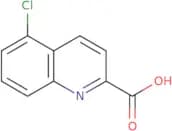
CAS:<p>2,5-Diethoxyterephthalohydrazide is an organic compound that has been used for the synthesis of linkers with various functional groups. It is a reactive intermediate in the synthesis of amines and compounds containing amine functional groups. 2,5-Diethoxyterephthalohydrazide has been shown to be stable under environmental conditions and can be used as a linker in organic solvents such as amines, alcohols or esters. This compound has also been shown to exhibit photocatalytic activity when irradiated by UV light. Techniques such as analytical chemistry and techniques can be used to characterize this compound's reactivity and stability.</p>Formula:C12H18N4O4Purity:Min. 95%Molecular weight:282.3 g/mol5-Chloroquinoline-2-carboxylic acid
CAS:<p>Versatile small molecule scaffold</p>Formula:C10H6ClNO2Purity:Min. 95%Molecular weight:207.61 g/mol3,4,5-Trimethoxybenzoyl chloride
CAS:<p>3,4,5-Trimethoxybenzoyl Chloride is a reactive, active chemical that is used in the synthesis of cytotoxic amides. It is prepared by reacting 3,4,5-trimethoxybenzoic acid with an amine or ammonia in the presence of a base. The reaction yields an amide substituted at the 3- and 4-positions with trimethoxyphenyl groups.</p>Formula:C10H11ClO4Purity:Min. 95%Molecular weight:230.64 g/mol1-Boc-pyrrolidine-3-ethanol
CAS:<p>Versatile small molecule scaffold</p>Formula:C11H21NO3Purity:Min. 95%Molecular weight:215.29 g/mol1-Bromo-3,3-difluorocyclobutane
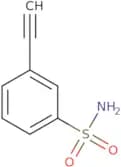
CAS:<p>Versatile small molecule scaffold</p>Formula:C4H5BrF2Purity:Min. 95%Molecular weight:170.98 g/mol3-Ethynylbenzenesulfonamide
CAS:<p>3-Ethynylbenzenesulfonamide is a synthetic, hydrophobic, antimicrobial compound that disrupts the cell membrane. It has been shown to be effective against both mammalian and microbial cells. The antimicrobial use of this compound is still under study, but it may provide an alternative to the current antibiotics. 3-Ethynylbenzenesulfonamide is amphipathic in nature and has an extremely large expansion ratio. This molecule is also hydrophobic, which may help with its ability to penetrate the cell membrane. Antimicrobial compounds are designed to inhibit or kill microorganisms such as bacteria or fungi by disrupting their cellular membranes. They work by interacting with specific targets on the surface of the target organism and producing a lethal effect on its function. 3-Ethynylbenzenesulfonamide interacts with proteins found on bacterial membranes called porins, resulting in a loss of osmotic stability and then permeability through the bilayer. This leads</p>Formula:C8H7NO2SPurity:Min. 95%Molecular weight:181.21 g/mol4-Benzyloxy-1-butanol
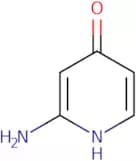
CAS:Controlled Product<p>Versatile small molecule scaffold</p>Formula:C11H16O2Purity:Min. 95%Molecular weight:180.24 g/mol2-Amino-4-hydroxypyridine
CAS:<p>2-Amino-4-hydroxypyridine (2AH) is a synthetic, isomeric compound that has been synthesized in two different forms: 3-bromo-5-hydroxypyridine and hydroxy group. 2AH has been shown to be chemically stable at room temperature and pH levels of less than 7. It also withstands the loss of membrane fluidity induced by amides, such as 3-amino-2-bromopyridine. 2AH can be used to synthesize oxindole derivatives, which are found in natural gas, and piperidines. This chemical can also be used for aminations with pyrrole or 2 amino 4 hydroxypyridine.</p>Formula:C5H6N2OPurity:Min. 95%Color and Shape:PowderMolecular weight:110.11 g/moltert-Butyl N-[3-(tetramethyl-1,3,2-dioxaborolan-2-yl)propyl]carbamate
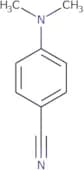
CAS:<p>Versatile small molecule scaffold</p>Formula:C14H28BNO4Purity:Min. 95%Molecular weight:285.19 g/mol1-Cyano-4-(dimethylamino)benzene
CAS:<p>1-Cyano-4-(dimethylamino)benzene is a molecule that has been shown to inhibit the growth of hamster v79 cells. It also inhibits the synthesis of DNA and RNA. The binding constants for this molecule have been determined to be 1.0 x 10^9 M^-1, with an n-octanol/water partition coefficient (log P) of 5.5. This molecule is soluble in nonpolar solvents and may be used as a model system for hydrogen bonding interactions or reaction mechanisms in organic chemistry. This compound contains a deuterium isotope and can be used to study the effects of hydrogen bonding on reactions in organic chemistry at high temperatures, with the use of preparative hplc.</p>Formula:C9H10N2Purity:Min. 95%Color and Shape:Beige PowderMolecular weight:146.19 g/mol6-Chloro-pyridazine hydrochloride
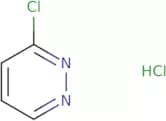
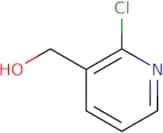
CAS:<p>Please enquire for more information about 6-Chloro-pyridazine hydrochloride including the price, delivery time and more detailed product information at the technical inquiry form on this page</p>Formula:C4H3ClN2·HClPurity:Min. 95%Molecular weight:150.99 g/mol2-Chloro-3-(hydroxymethyl)pyridine
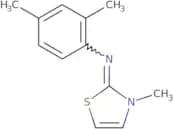
CAS:<p>2-Chloro-3-(hydroxymethyl)pyridine is an organic compound that is used as a building block for the synthesis of other heterocycles. This compound can be synthesized from 2-chloronicotinic acid, which is obtained by oxidation of nicotine with sodium hypochlorite in the presence of potassium ion. The reaction proceeds via a cleavage of the C-Cl bond and formation of a pyridine ring. The catalytic process can be performed at room temperature and at atmospheric pressure in a variety of solvents, including water.<br>2-Chloro-3-(hydroxymethyl)pyridine has been shown to have high yields for the preparation of compounds such as 2,4-dichloropyridine and 4,5-dichloropyrimidine. It also has been used in the preparation of pharmaceuticals such as atrial natriuretic factor (ANF).</p>Formula:C6H6ClNOPurity:Min. 98 Area-%Color and Shape:PowderMolecular weight:143.57 g/molCymiazole
CAS:<p>Veterinary drug, ectoparasiticide</p>Formula:C12H14N2SPurity:Min. 95%Color and Shape:Brown Clear LiquidMolecular weight:218.32 g/mol4-Chloro-8-quinolinol
CAS:<p>4-Chloro-8-quinolinol is a quinoline derivative that has been shown to have pharmacological effects. It is used in the synthesis of other compounds, such as 5-chloro-8-hydroxyquinoline, which is used in the treatment of cancer. 4-Chloro-8-quinolinol can also be prepared by oxidizing 5,6,7,8 tetrachloroquinoline with chlorine and ammonia. The photophysical properties of this compound are analogous to those of benzothiazole derivatives. The fluorescence emission spectrum ranges from 360 nm to 450 nm with a maximum at 390 nm and emission intensity at 350 nm. This compound exhibits fungitoxicity against Penicillium notatum and Aspergillus fumigatus.</p>Formula:C9H6ClNOPurity:Min. 95%Molecular weight:179.6 g/molCyclobutanesulfonyl chloride
CAS:<p>Cyclobutanesulfonyl chloride is a reagent that is used for the synthesis of 1-6-alkylcyclobutanes. It can be used to synthesize heterocyclic compounds, including those with high optical purity. Cyclobutanesulfonyl chloride has been shown to have antiviral and antiproliferative properties. It has also been shown to exhibit anticancer activity in vitro and in vivo. The mechanism of action for this compound is unclear, but it may inhibit protein synthesis by attacking the amino acid methionine in proteins or by inhibiting DNA replication.</p>Formula:C4H7ClO2SPurity:Min. 95%Color and Shape:Clear LiquidMolecular weight:154.62 g/mol3-Methoxy-1-methyl-1H-pyrazole-4-carbaldehyde
CAS:<p>Versatile small molecule scaffold</p>Formula:C6H8N2O2Purity:Min. 95%Color and Shape:PowderMolecular weight:140.14 g/mol(S)-2-(N-Boc-aminomethyl)morpholine
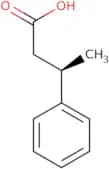
CAS:<p>Versatile small molecule scaffold</p>Formula:C10H20N2O3Purity:Min. 95%Molecular weight:216.27 g/mol(R)-3-Phenylbutyric Acid
CAS:<p>Versatile small molecule scaffold</p>Formula:C10H12O2Purity:Min. 95%Molecular weight:164.2 g/molN-Carbethoxy-4-hydroxypiperidine
CAS:<p>N-Carbethoxy-4-hydroxypiperidine is a drug substance that is a h1 receptor antagonist. It is used as an antihistamine to treat the symptoms of hay fever and other allergic reactions. N-Carbethoxy-4-hydroxypiperidine is available in two enantiomers, or mirror images, which are labelled S and R. The R enantiomer is more potent than the S enantiomer for inhibiting histamine h1 receptors. This drug has been shown to inhibit the growth of tuberculosis bacteria in cell culture and animal models, but not against Mycobacterium avium complex. N-Carbethoxy-4-hydroxypiperidine has also been shown to have significant antibacterial activity against Clostridium perfringens with minimal toxicity in mice.</p>Formula:C8H15NO3Purity:Min. 95%Molecular weight:173.21 g/molTimonacic
CAS:<p>Timonacic is an analog of nicotinamide that has been shown to be an effective inhibitor of energy metabolism in the mitochondria. It has antioxidative properties and can protect against the development of heart disease by inhibiting the production of reactive oxygen species. Timonacic's anti-inflammatory properties may be due to its ability to inhibit prostaglandin synthesis. It also has a high affinity for fatty acids, which may contribute to its inhibitory effects on lipid peroxidation. This drug has a carboxy terminal and is used as a sodium salt, which may play a role in its enzyme inhibition activity. Timonacic inhibits the activities of enzymes such as carnitine acetyltransferase and pyruvate dehydrogenase kinase, which are involved in the biosynthesis of fatty acids. The intramolecular hydrogen bonds formed with timonacic may contribute to its inhibitory effect on these enzymes.</p>Formula:C4H7NO2SPurity:Min. 95%Molecular weight:133.17 g/molMethyl 4-chlorobenzenesulfonate
CAS:<p>Versatile small molecule scaffold</p>Formula:C7H7ClO3SPurity:Min. 95%Molecular weight:206.65 g/mol(1R)-2-Chloro-1-(2,4-dichlorophenyl)ethan-1-ol
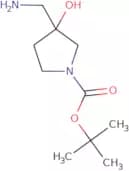
CAS:<p>(1R)-2-Chloro-1-(2,4-dichlorophenyl)ethan-1-ol is a substrate for acetylation that is used in the synthesis of enantiopure alcohols. It has been shown to be an inhibitor of alcohol dehydrogenases and hydrophobic alcohols. (1R)-2-Chloro-1-(2,4-dichlorophenyl)ethan-1-ol has also been found to be active against fungi such as Penicillium chrysogenum and Cryptococcus neoformans. This compound is stereoselective when used as an antifungal agent, which means it will only inhibit one enantiomer of a molecule.</p>Formula:C8H7OCl3Purity:Min. 95%Molecular weight:225.49 g/moltert-butyl 3-(aminomethyl)-3-hydroxypyrrolidine-1-carboxylate
CAS:<p>Versatile small molecule scaffold</p>Formula:C10H20N2O3Purity:Min. 95%Molecular weight:216.3 g/mol1-(But-3-yn-1-yl)piperidine
CAS:<p>1-(But-3-yn-1-yl)piperidine is a chiral compound that inhibits the reuptake of serotonin. It has been shown to be an effective inhibitor of the serotonin transporter and to cause an increase in extracellular serotonin levels. 1-(But-3-yn-1-yl)piperidine also has affinity for the dopamine transporter, which may account for its antidepressant effects.</p>Formula:C9H15NPurity:Min. 95%Molecular weight:137.22 g/mol
![7-Oxa-2-azaspiro[3.5]nonane hydrochloride](/_next/image/?url=https%3A%2Fstatic.cymitquimica.com%2Fproducts%2F3D%2Fthumb-webp%2FSGC63309.webp&w=3840&q=75)





![2-[(6-Chloro-3,4-dihydro-3-methyl-2,4-dioxo-1(2H)-pyrimidinyl)methyl]-benzonitrile](/_next/image/?url=https%3A%2Fstatic.cymitquimica.com%2Fproducts%2F3D%2Fthumb-webp%2FQJB75896.webp&w=3840&q=75)

![Potassium tert-butyl N-[3-(trifluoroboranuidyl)propyl]carbamate](/_next/image/?url=https%3A%2Fstatic.cymitquimica.com%2Fproducts%2F3D%2Fthumb-webp%2FCNC28926.webp&w=3840&q=75)





![1,5,6,7-Tetrahydro-2H-cyclopenta[b]pyridin-2-one](/_next/image/?url=https%3A%2Fstatic.cymitquimica.com%2Fproducts%2F3D%2Fthumb-webp%2FNDA49985.webp&w=3840&q=75)





![tert-Butyl N-[3-(tetramethyl-1,3,2-dioxaborolan-2-yl)propyl]carbamate](/_next/image/?url=https%3A%2Fstatic.cymitquimica.com%2Fproducts%2F3D%2Fthumb-webp%2FAZC30580.webp&w=3840&q=75)