Building Blocks
This section contains fundamental products for the synthesis of organic and biological compounds. Building blocks are the essential starting materials used to construct complex molecules through various chemical reactions. They play a critical role in drug discovery, material science, and chemical research. At CymitQuimica, we offer a diverse range of high-quality building blocks to support your innovative research and industrial projects, ensuring you have the essential components for successful synthesis.
Subcategories of "Building Blocks"
- Boronic Acids & Boronic Acid Derivatives(5,756 products)
- Chiral Building Blocks(1,242 products)
- Hydrocarbon Building Blocks(6,095 products)
- Organic Building Blocks(61,037 products)
Found 196200 products of "Building Blocks"
Sort by
Purity (%)
0
100
|
0
|
50
|
90
|
95
|
100
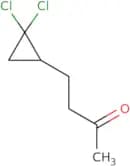
4-(2,2-Dichlorocyclopropyl)butan-2-one
CAS:<p>Versatile small molecule scaffold</p>Formula:C7H10Cl2OPurity:Min. 95%Molecular weight:181.06 g/molRef: 3D-CDA23713
Discontinued product4-Methylcyclohexane-1-carbaldehyde
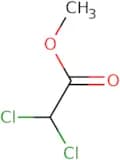
CAS:<p>Versatile small molecule scaffold</p>Formula:C8H14OPurity:Min. 95%Molecular weight:126.2 g/molDichloroacetic Acid Methyl Ester
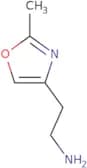
CAS:<p>Dichloroacetic acid methyl ester (DCA) is a metabolic disorder agent that belongs to the group of detergent compositions. It is an important intermediate in the synthesis of sodium salts and hiv infection inhibitors, such as hydrochloric acid and covalent linkages. DCA reacts with water molecules to form hydroxyl groups and then reacts with metal carbonyls to produce anhydrous sodium. This product also reacts with fatty acids to produce alcohol residue and can be used in the reaction solution. The product has a pyrazole ring with a hydroxyl group at one end and an alcohol residue at the other end.</p>Formula:C3H4Cl2O2Purity:Min. 95%Molecular weight:142.97 g/mol2-(2-Methyl-1,3-oxazol-4-yl)ethan-1-amine
CAS:<p>Versatile small molecule scaffold</p>Formula:C6H10N2OPurity:Min. 95%Molecular weight:126.2 g/molRef: 3D-SAC48361
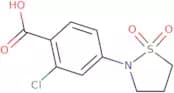
Discontinued product2-Chloro-4-(1,1-dioxo-1,2-thiazolidin-2-yl)benzoic acid
CAS:<p>Versatile small molecule scaffold</p>Formula:C10H10ClNO4SPurity:Min. 95%Molecular weight:275.71 g/molRef: 3D-SBC62071
Discontinued producttert-Butyl N-(3-amino-2-methylbutan-2-yl)carbamate
CAS:<p>Versatile small molecule scaffold</p>Formula:C10H22N2O2Purity:Min. 95%Molecular weight:202.3 g/molRef: 3D-SLC84728
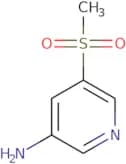
Discontinued product5-(methylsulfonyl)pyridin-3-amine
CAS:<p>Versatile small molecule scaffold</p>Formula:C6H8N2O2SPurity:Min. 95%Molecular weight:172.21 g/mol1-Ethyl-6-oxo-1,6-dihydropyridine-3-boronic Acid Pinacol Ester
CAS:<p>Versatile small molecule scaffold</p>Formula:C13H20BNO3Purity:Min. 95%Molecular weight:249.11 g/molRef: 3D-ZDC73400
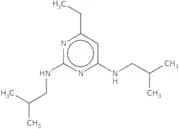
Discontinued product6-Ethyl-2-N,4-N-bis(2-methylpropyl)pyrimidine-2,4-diamine
CAS:<p>Versatile small molecule scaffold</p>Formula:C14H26N4Purity:Min. 95%Molecular weight:250.4 g/molRef: 3D-SSB67952
Discontinued product5-Methoxyfuro[3,2-b]pyridine-2-carboxylic acid
CAS:<p>Versatile small molecule scaffold</p>Formula:C9H7NO4Purity:Min. 95%Molecular weight:193.16 g/molRef: 3D-TEC06992
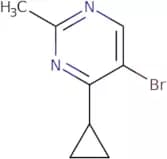
Discontinued product5-Bromo-4-cyclopropyl-2-methylpyrimidine
CAS:<p>Versatile small molecule scaffold</p>Formula:C8H9BrN2Purity:Min. 95%Molecular weight:213.07 g/molRef: 3D-TEC13682
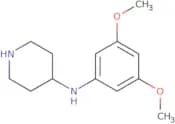
Discontinued productN-(3,5-Dimethoxyphenyl)piperidin-4-amine
CAS:<p>Versatile small molecule scaffold</p>Formula:C13H20N2O2Purity:Min. 95%Molecular weight:236.31 g/molRef: 3D-TKB76327
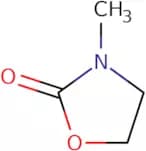
Discontinued product3-Methyl-2-oxazolidone
CAS:<p>3-Methyl-2-oxazolidone is an organic compound that is soluble in water and has a molecular weight of 114.3 g/mol. It can be produced by the reaction of methanol with oxalic acid, acetic acid, or malonic acid. 3-Methyl-2-oxazolidone is used as a solvent to dissolve other compounds and is used in the manufacture of sulfa drugs, hydrogen chloride, glycol ethers, and tetraphenylborates. 3-Methyl-2-oxazolidone has been shown to have electrochemical properties including proton conductivity and hydroxyl group oxidation. It also exhibits magnetic resonance properties due to its solute nature.</p>Formula:C4H7NO2Purity:Min. 95%(3S,3aS,6aR)-3-Methoxy-hexahydro-2H-1λ⁶-thieno[2,3-c]pyrrole-1,1-dione
CAS:<p>Versatile small molecule scaffold</p>Formula:C7H13NO3SPurity:Min. 95%Molecular weight:191.25 g/molRef: 3D-UDD28844
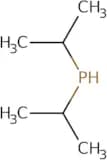
Discontinued productDiisopropylphosphine, 10wt.% in hexane
CAS:<p>Please enquire for more information about Diisopropylphosphine, 10wt.% in hexane including the price, delivery time and more detailed product information at the technical inquiry form on this page</p>Formula:C6H15PPurity:Min. 95%Molecular weight:118.16 g/molRef: 3D-VAA49153
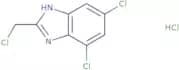
Discontinued product4,6-Dichloro-2-(chloromethyl)-1H-1,3-benzodiazole hydrochloride
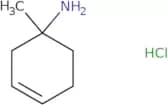
CAS:<p>Versatile small molecule scaffold</p>Formula:C8H6Cl4N2Purity:Min. 95%Molecular weight:272 g/mol1-Methylcyclohex-3-en-1-amine hydrochloride
CAS:<p>Versatile small molecule scaffold</p>Formula:C7H14ClNPurity:Min. 95%Molecular weight:147.64 g/molRef: 3D-XAA18976
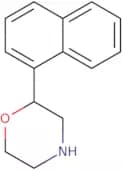
Discontinued product2-(Naphthalen-1-yl)morpholine
CAS:<p>Versatile small molecule scaffold</p>Formula:C14H15NOPurity:Min. 95%Molecular weight:213.27 g/molRef: 3D-XTB79703
Discontinued product5-Azaspiro[2.5]octan-6-one
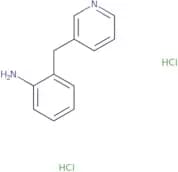
CAS:<p>Versatile small molecule scaffold</p>Formula:C7H11NOPurity:Min. 95%Molecular weight:125.17 g/mol2-(Pyridin-3-ylmethyl)aniline dihydrochloride
CAS:<p>Versatile small molecule scaffold</p>Formula:C12H14Cl2N2Purity:Min. 95%Molecular weight:257.16 g/molRef: 3D-DXC61085
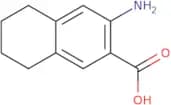
Discontinued product3-Amino-5,6,7,8-tetrahydronaphthalene-2-carboxylic acid
CAS:<p>Versatile small molecule scaffold</p>Formula:C11H13NO2Purity:Min. 95%Molecular weight:191.23 g/molRef: 3D-EEA87713
Discontinued productMethyl 2-chloro-5-(chlorosulfonyl)-4-fluorobenzoate
CAS:<p>Versatile small molecule scaffold</p>Formula:C8H5Cl2FO4SPurity:Min. 95%Molecular weight:287.09 g/mol3-Azabicyclo[3.2.1]octane-2,4-dione
CAS:<p>Versatile small molecule scaffold</p>Formula:C7H9NO2Purity:Min. 95%Molecular weight:139.15 g/molRef: 3D-FAA76345
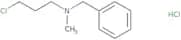
Discontinued productBenzyl(3-chloropropyl)methylamine hydrochloride
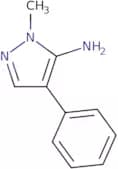
CAS:<p>Versatile small molecule scaffold</p>Formula:C11H17Cl2NPurity:Min. 95%Molecular weight:234.16 g/mol1H-Pyrazol-5-amine, 1-methyl-4-phenyl-
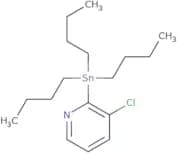
CAS:<p>Versatile small molecule scaffold</p>Formula:C10H11N3Purity:Min. 95%Molecular weight:173.21 g/mol2-(Tributylstannyl)-3-chloropyridine
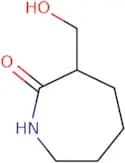
CAS:Controlled Product<p>Versatile small molecule scaffold</p>Formula:C17H30ClNSnPurity:Min. 95%Molecular weight:402.59 g/mol3-(Hydroxymethyl)azepan-2-one
CAS:<p>3-(Hydroxymethyl)azepan-2-one is a monomer that belongs to the class of organic solvents. It is used as an additive in agrochemical formulations, where it functions as a viscosity regulator and stabilizer. 3-(Hydroxymethyl)azepan-2-one has also been shown to be a bioactive substance with antimicrobial properties, which is due to its ability to interfere with protein synthesis by inhibiting the synthesis of RNA. 3-(Hydroxymethyl)azepan-2-one has also been shown to have anti-inflammatory effects, which may be due to its ability to inhibit prostaglandin synthesis.</p>Formula:C7H13NO2Purity:Min. 95%Molecular weight:143.18 g/molRef: 3D-GWC90059
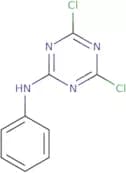
Discontinued product4,6-Dichloro-N-phenyl-1,3,5-triazin-2-amine
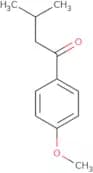
CAS:<p>4,6-Dichloro-N-phenyl-1,3,5-triazin-2-amine is a reactive and labile compound that has been shown to inhibit the nuclear factor kappa B (NF-κB). It is an analog of 2,4,6,-trichlorophenyl-1,3,5-triazine. 4,6-Dichloro-N-phenylsulfonyl triazin-2 amine is a chlorinated derivative of 4,6 dichloro triazin 2 amine. The chlorine atom in the molecule may be replaced with a cyanuric or chloride group. This chemical compound is used in dyestuffs and as a precursor for other chemicals. The effect varies depending on the dose administered.</p>Formula:C9H6Cl2N4Purity:Min. 95%Molecular weight:241.08 g/mol1-(4-Methoxyphenyl)-3-methylbutan-1-one
CAS:<p>Versatile small molecule scaffold</p>Formula:C12H16O2Purity:Min. 95%Molecular weight:192.25 g/mol(3,4-Difluorophenyl)[3-(methylsulfanyl)phenyl]methanone
CAS:<p>Versatile small molecule scaffold</p>Formula:C14H10F2OSPurity:Min. 95%Molecular weight:264.29 g/molRef: 3D-HDC35513
Discontinued product1-Methoxy-4,4-dimethylcycloheptane-1-carboxylic acid
CAS:<p>Versatile small molecule scaffold</p>Formula:C11H20O3Purity:Min. 95%Molecular weight:200.3 g/molRef: 3D-BPC90017
Discontinued product3-Bromo-4H-furo[3,2-b]pyrrole-5-carboxylic acid
CAS:<p>Versatile small molecule scaffold</p>Formula:C7H4BrNO3Purity:Min. 95%Molecular weight:230.02 g/molRef: 3D-HNA09952
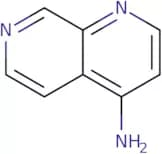
Discontinued product1,7-Naphthyridin-4-amine
CAS:<p>Versatile small molecule scaffold</p>Formula:C8H7N3Purity:Min. 95%Molecular weight:145.16 g/molRef: 3D-ICA68041
Discontinued product8-Chloro-5-methoxy-1,2,3,4-tetrahydronaphthalen-1-one
CAS:<p>Versatile small molecule scaffold</p>Formula:C11H11ClO2Purity:Min. 95%Molecular weight:210.65 g/molRef: 3D-JBA91081
Discontinued productN-Methyl-N-phenylpiperidin-4-amine hydrochloride
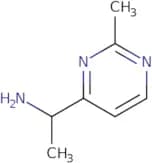
CAS:<p>Versatile small molecule scaffold</p>Formula:C12H19ClN2Purity:Min. 95%Molecular weight:226.74 g/mol1-(2-Methylpyrimidin-4-yl)ethan-1-amine
CAS:<p>Versatile small molecule scaffold</p>Formula:C7H11N3Purity:Min. 95%Molecular weight:137.18 g/molRef: 3D-JJC20141
Discontinued product3-Methyl-5-(methylsulfonyl)pyridin-2-amine
CAS:<p>Versatile small molecule scaffold</p>Formula:C7H10N2O2SPurity:Min. 95%Molecular weight:186.23 g/molRef: 3D-LEC47888
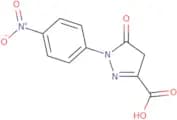
Discontinued product1-(4-Nitrophenyl)-5-oxo-4,5-dihydro-1H-pyrazole-3-carboxylic acid
CAS:<p>Versatile small molecule scaffold</p>Formula:C10H7N3O5Purity:Min. 95%Molecular weight:249.18 g/molRef: 3D-MCA08402
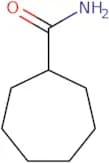
Discontinued productCycloheptanecarboxamide
CAS:<p>Cycloheptanecarboxamide is a cellular amide that is used in the study of β-amino acids. Cycloheptanecarboxamide is a prodrug that is converted to cycloheptylamine, which has been shown to be an inhibitor of proliferation and a potent inhibitor of inflammatory diseases. Cycloheptylamine also inhibits the production of aliphatic hydrocarbons and mineralocorticoids, as well as the activation of mineralocorticoid receptors. It has been shown to be an organic solution that can be used to generate tartrate-resistant acid potassium ions (TRAP).</p>Formula:C8H15NOPurity:Min. 95%Molecular weight:141.21 g/molRef: 3D-BAA45939
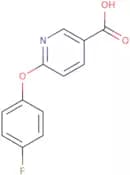
Discontinued product6-(4-Fluorophenoxy)pyridine-3-carboxylic acid
CAS:<p>Versatile small molecule scaffold</p>Formula:C12H8FNO3Purity:Min. 95%Molecular weight:233.19 g/molRef: 3D-MJB08871
Discontinued product3-[(2-Chlorophenyl)sulfamoyl]benzoic acid
CAS:<p>Versatile small molecule scaffold</p>Formula:C13H10ClNO4SPurity:Min. 95%Molecular weight:311.74 g/molRef: 3D-ANA73221
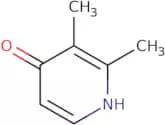
Discontinued product2,3-Dimethyl-1,4-dihydropyridin-4-one
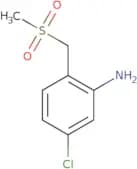
CAS:<p>Versatile small molecule scaffold</p>Formula:C7H9NOPurity:Min. 95%Molecular weight:123.15 g/mol5-Chloro-2-(methanesulfonylmethyl)aniline
CAS:<p>Versatile small molecule scaffold</p>Formula:C8H10ClNO2SPurity:Min. 95%Molecular weight:219.69 g/molRef: 3D-AAC98811
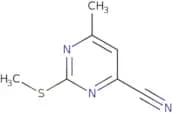
Discontinued product6-Methyl-2-(methylsulfanyl)pyrimidine-4-carbonitrile
CAS:<p>Versatile small molecule scaffold</p>Formula:C7H7N3SPurity:Min. 95%Molecular weight:165.22 g/molRef: 3D-QCA73562
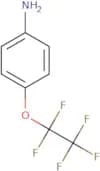
Discontinued product4-(Perfluoroethoxy)aniline
CAS:<p>Versatile small molecule scaffold</p>Formula:C8H6F5NOPurity:Min. 95%Molecular weight:227.13 g/molRef: 3D-AAA71785
Discontinued product2-[(Cyclopropylmethyl)[(9H-fluoren-9-ylmethoxy)carbonyl]amino]acetic acid
CAS:<p>Versatile small molecule scaffold</p>Formula:C21H21NO4Purity:Min. 95%Molecular weight:351.4 g/mol2-Oxa-spiro[3.3]heptan-6-ol
CAS:<p>Versatile small molecule scaffold</p>Formula:C6H10O2Purity:Min. 95%Molecular weight:114.14 g/mol2-Bromo-3,3,3-trifluoro-1-propene
CAS:Controlled Product<p>2-Bromo-3,3,3-trifluoro-1-propene is a chemical compound that has been synthesized in an asymmetric reaction. The reactant is bromopropane and the product is 2,2,2-trifluoropropene. The methylene group on the propene molecule is activated by the nucleophilic attack of a fluoride ion from hydrogen fluoride to form a cavity with a highly strained bond. The kinetic study of this reaction revealed that the activation energy for the reaction is 42 kJ/mol. Palladium-catalyzed coupling reactions are catalyzed by palladium and require nonpolar solvents such as toluene or dichloromethane. This type of reaction has been shown to be exothermic with an isolated yield of 1%.</p>Formula:C3H2BrF3Purity:Min. 95%Color and Shape:Colorless PowderMolecular weight:174.95 g/mol2-Cyano-5-fluorophenol
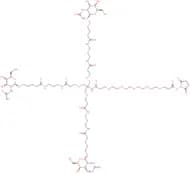
CAS:<p>2-Cyano-5-fluorophenol is an organic compound that is used as a precursor to medicines and other chemicals. It reacts with calcium hydroxide in water to form 2-cyano-5-hydroxyfluorobenzene, which can be hydrolyzed to form 2-cyano-5-chlorofluorobenzene. This compound can also react with sodium hydroxide to produce sodium cyanate, which can be hydrolyzed to form sodium chloride and hydrogen cyanide gas. The alkali metal ions are needed for this reaction, which is why the product should not be exposed to water or moisture. 2-Cyano-5-fluorophenol has been shown to have liquid crystal properties and is used in the production of certain types of polymers. 2Cyano-5Fluorophenol crystals are also used in some medicines such as acetaminophen (paracetamol).</p>Formula:C7H4FNOPurity:Min. 95%Molecular weight:137.11 g/molTri-b-GalNAc-PEG5-NHS ester
CAS:<p>Tri-GalNAc-NHS ester is a multivalent molecule composed of three GalNAc cluster arms. It is a protein degrader and a ligand of the asialoglycoprotein receptor (ASGPR) used for the development of targeted therapies for liver diseases. The GalNAc arms enable high-affinity binding to the ASGPR on hepatocyte surfaces. The crucial functional group, N-hydroxysuccinimide (NHS) ester, is known for its ease of conjugation with various biomolecules possessing amine (NH2) groups. This biocompatible reaction strategy allows the design and development of targeted conjugates such as drug-GalNAc conjugates, siRNA delivery vehicles, or probes for ASGPR imaging in the liver.</p>Formula:C79H137N11O37Purity:Min. 95%Color and Shape:PowderMolecular weight:1,832.99 g/molRef: 3D-FT183733
Discontinued product


![5-Methoxyfuro[3,2-b]pyridine-2-carboxylic acid](/_next/image/?url=https%3A%2Fstatic.cymitquimica.com%2Fproducts%2F3D%2Fthumb-webp%2FTEC06992.webp&w=3840&q=75)
![(3S,3aS,6aR)-3-Methoxy-hexahydro-2H-1λ⁶-thieno[2,3-c]pyrrole-1,1-dione](/_next/image/?url=https%3A%2Fstatic.cymitquimica.com%2Fproducts%2F3D%2Fthumb-webp%2FUDD28844.webp&w=3840&q=75)
![5-Azaspiro[2.5]octan-6-one](/_next/image/?url=https%3A%2Fstatic.cymitquimica.com%2Fproducts%2F3D%2Fthumb-webp%2FDFC59996.webp&w=3840&q=75)

![3-Azabicyclo[3.2.1]octane-2,4-dione](/_next/image/?url=https%3A%2Fstatic.cymitquimica.com%2Fproducts%2F3D%2Fthumb-webp%2FFAA76345.webp&w=3840&q=75)
![(3,4-Difluorophenyl)[3-(methylsulfanyl)phenyl]methanone](/_next/image/?url=https%3A%2Fstatic.cymitquimica.com%2Fproducts%2F3D%2Fthumb-webp%2FHDC35513.webp&w=3840&q=75)

![3-Bromo-4H-furo[3,2-b]pyrrole-5-carboxylic acid](/_next/image/?url=https%3A%2Fstatic.cymitquimica.com%2Fproducts%2F3D%2Fthumb-webp%2FHNA09952.webp&w=3840&q=75)



![3-[(2-Chlorophenyl)sulfamoyl]benzoic acid](/_next/image/?url=https%3A%2Fstatic.cymitquimica.com%2Fproducts%2F3D%2Fthumb-webp%2FANA73221.webp&w=3840&q=75)
![2-[(Cyclopropylmethyl)[(9H-fluoren-9-ylmethoxy)carbonyl]amino]acetic acid](/_next/image/?url=https%3A%2Fstatic.cymitquimica.com%2Fproducts%2F3D%2Fthumb-webp%2FRDC30632.webp&w=3840&q=75)
![2-Oxa-spiro[3.3]heptan-6-ol](/_next/image/?url=https%3A%2Fstatic.cymitquimica.com%2Fproducts%2F3D%2Fthumb-webp%2FNEC38108.webp&w=3840&q=75)