Building Blocks
This section contains fundamental products for the synthesis of organic and biological compounds. Building blocks are the essential starting materials used to construct complex molecules through various chemical reactions. They play a critical role in drug discovery, material science, and chemical research. At CymitQuimica, we offer a diverse range of high-quality building blocks to support your innovative research and industrial projects, ensuring you have the essential components for successful synthesis.
Subcategories of "Building Blocks"
- Boronic Acids & Boronic Acid Derivatives(5,756 products)
- Chiral Building Blocks(1,242 products)
- Hydrocarbon Building Blocks(6,095 products)
- Organic Building Blocks(61,055 products)
Found 199650 products of "Building Blocks"
Sort by
Purity (%)
0
100
|
0
|
50
|
90
|
95
|
100
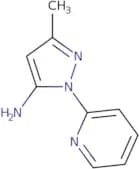
5-Methyl-2-pyridin-2-yl-2H-pyrazol-3-ylamine
CAS:<p>Versatile small molecule scaffold</p>Formula:C9H10N4Purity:Min. 95%Molecular weight:174.2 g/mol6-Methyl-7H,8H-[1,2,4]triazolo[4,3-b][1,2,4]triazin-7-one
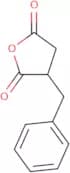
CAS:<p>Versatile small molecule scaffold</p>Formula:C5H5N5OPurity:Min. 95%Molecular weight:151.13 g/mol3-Benzyloxolane-2,5-dione
CAS:3-Benzyloxolane-2,5-dione is a biodegradable compound that has been used as a radiation sensitizer in cancer therapy. It is a prodrug that is converted to 3-benzyloxyacrylic acid (3BA) by enzymatic oxidation. 3BA undergoes an intramolecular nucleophilic substitution reaction to form the benzylideneketal, which can then react with an electron donor such as chloride or maleate. This produces an aromatic hydrocarbon and an alcohol, which can be metabolized by various enzymes. The benzylidene ketal reacts with DNA bases covalently and forms crosslinks between DNA strands, resulting in cell death. It has also been shown to have antifungal properties against Candida albicans.Formula:C11H10O3Purity:Min. 95%Molecular weight:190.19 g/mol4,6-Dimethylheptan-2-one
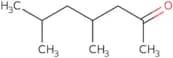
CAS:<p>4,6-Dimethylheptan-2-one is an organic compound that belongs to the ketones group. It is a reaction product of heptanone and isobutyl. This substance has been shown to react with photoirradiation, producing reactive species that are harmful to humans. 4,6-Dimethylheptan-2-one can be found in a range of solvents such as dichloromethane and 1,4-dioxane.</p>Formula:C9H18OPurity:Min. 95%Molecular weight:142.24 g/mol4,4-Dimethylhexan-3-one
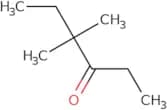
CAS:<p>Versatile small molecule scaffold</p>Formula:C8H16OPurity:Min. 95%Molecular weight:128.21 g/mol6,7-Dimethyl-1-tetralone
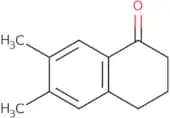
CAS:<p>Diels-Alder reactions are a type of reaction in organic chemistry that is used to form carbon-carbon bonds. The Diels-Alder reaction can be used to synthesize 6,7-dimethyl-1-tetralone. This compound is an example of a dienophile and can be used in the Diels-Alder reaction with a dienophile such as cyclopentadiene or norbornadiene. The equivalency of the diene and the dienophile is dependent on the relative stability of their corresponding enolate anion and cation.</p>Formula:C12H14OPurity:Min. 95%Molecular weight:174.24 g/mol1-(1,2,4-Thiadiazol-5-yl)piperazine dihydrochloride
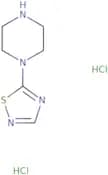
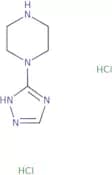
CAS:<p>Versatile small molecule scaffold</p>Formula:C6H12Cl2N4SPurity:Min. 95%Molecular weight:243.16 g/mol1-(1H-1,2,4-Triazol-3-yl)piperazine dihydrochloride
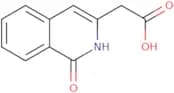
CAS:<p>Versatile small molecule scaffold</p>Formula:C6H13Cl2N5Purity:Min. 95%Molecular weight:226.1 g/mol2-(1-Oxo-1,2-dihydroisoquinolin-3-yl)acetic acid
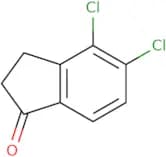
CAS:<p>Versatile small molecule scaffold</p>Formula:C11H9NO3Purity:Min. 95%Molecular weight:203.19 g/mol4,5-Dichloro-2,3-dihydro-1H-inden-1-one
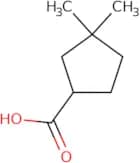
CAS:<p>Versatile small molecule scaffold</p>Formula:C8H6Cl2N2Purity:Min. 95%Molecular weight:201.05 g/mol3,3-Dimethylcyclopentane-1-carboxylic acid
CAS:Versatile small molecule scaffoldFormula:C8H14O2Purity:Min. 95%Molecular weight:142.2 g/mol2H-1,3-benzodioxol-4-ol
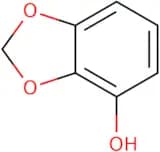
CAS:<p>2H-1,3-benzodioxol-4-ol is a colorless liquid that has a density of 0.938 g/mL at 20°C. It is an acid with a pH of 3 and a lipophilicity of 1.2. The compound is reactive with chlorine, which can lead to the formation of diazonium salts in the presence of an acid catalyst. 2H-1,3-benzodioxol-4-ol's viscosity increases as its temperature decreases.</p>Formula:C7H6O3Purity:Min. 95%Molecular weight:138.12 g/mol2-(2'-Chloroethoxy)ethylphosphonic acid
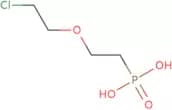
CAS:<p>Versatile small molecule scaffold</p>Formula:C4H10ClO4PPurity:Min. 95%Molecular weight:188.55 g/mol1-Chloro-2-(chloromethyl)-4-nitrobenzene
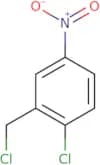
CAS:<p>1-Chloro-2-(chloromethyl)-4-nitrobenzene is a chemical that is used as a reagent to measure creatinine in human urine. Creatinine is a natural product of muscle metabolism, and its concentration in the blood is usually used to estimate the rate of muscle breakdown. The creatinine content of urine can be determined by measuring the concentration of 1-chloro-2-(chloromethyl)-4-nitrobenzene. This compound has been shown to be metabolized to oxime, which can be quantified using gas chromatography with mass spectrometry (GC/MS) or liquid chromatography with mass spectrometry (LC/MS). The validation of this method for creatinine quantification in human urine has been done by analyzing different dilutions of urine samples and comparing them with their corresponding values from the standard curve. Emulsions are also used in this process as they can help increase accuracy</p>Formula:C7H5Cl2NO2Purity:Min. 95%Molecular weight:206.02 g/mol3,3-Dimethylbutyl methanesulfonate
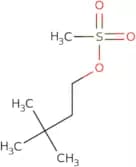
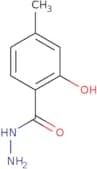
CAS:<p>Versatile small molecule scaffold</p>Formula:C7H16O3SPurity:Min. 95%Molecular weight:180.27 g/mol2-Hydroxy-4-methylbenzohydrazide
CAS:<p>2-Hydroxy-4-methylbenzohydrazide (2HMBA) is a supramolecular ligand that can bind to the active site of PI3K and AKT, which are two signaling molecules. 2HMBA has been shown to suppress immunosuppressive activities in an assay that measures the suppression of T cell proliferation by human peripheral blood mononuclear cells. The ligand binds to the active site of the enzyme and prevents its interaction with ATP, thereby inhibiting PI3K/AKT signaling. It also has magnetic properties. 2HMBA is a macrocyclic compound with a chiral center at C-2, which is responsible for its activity.</p>Formula:C8H10N2O2Purity:Min. 95%Molecular weight:166.18 g/molMethyl 1-oxo-1,2-dihydroisoquinoline-3-carboxylate
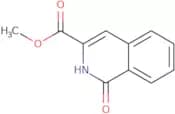
CAS:<p>Methyl 1-oxo-1,2-dihydroisoquinoline-3-carboxylate is a ligand that binds to the benzodiazepine receptor. It is a potential antitumor agent that inhibits the growth of cells in culture. The methyl ester form of Methyl 1-oxo-1,2-dihydroisoquinoline-3-carboxylate has been shown to have apoptosis inducing activity in human leukemia cells. This compound also has antiplasmodial and antiinflammatory properties.</p>Formula:C11H9NO3Purity:Min. 95%Molecular weight:203.19 g/mol3-(Pyrrolidine-1-carbonyl)-1,2-dihydroisoquinolin-1-one
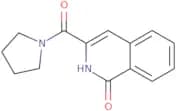
CAS:<p>Versatile small molecule scaffold</p>Formula:C14H14N2O2Purity:Min. 95%Molecular weight:242.27 g/mol4-Benzyloxy-3-bromobenzaldehyde
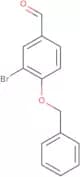
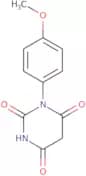
CAS:<p>4-Benzyloxy-3-bromobenzaldehyde (4BBA) is a natural product that has been found to have high affinity for the histone deacetylase (HDAC) enzyme. 4BBA shows low cytotoxicity in fibroblast cells, which are cells that synthesize collagen, and it may be used as a fluorescent probe for HDACs in marine sponges. 4BBA binds to the cytoplasmic side of the cell's nucleus and exhibits fluorescence when excited with light at 350 nm. This fluorogenic activity is due to the phenyl ring and should allow for visualization of HDACs on the surface of cells using microscopy techniques.</p>Formula:C14H11BrO2Purity:Min. 95%Molecular weight:291.14 g/mol1-(4-Methoxyphenyl)pyrimidine-2,4,6(1H,3H,5H)-trione
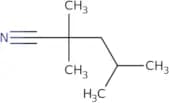
CAS:<p>Versatile small molecule scaffold</p>Formula:C11H10N2O4Purity:Min. 95%Molecular weight:234.21 g/mol2,2,4-Trimethylpentanenitrile
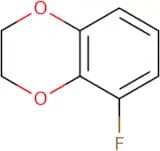
CAS:<p>Flecainide is an anti-arrhythmic drug that belongs to the class of drugs called Class IA or Class IC antiarrhythmics. It is used to treat arrhythmias in adults and children who are at least 6 months old. Flecainide is a long-acting medication, which means it remains active for a long time. This drug has been shown to have a low risk of causing neutropenia in women who take it during pregnancy. Flecainide has also been shown to cause an increase in serum levels of amide and trichloroethanol (TCE). The amide metabolite is responsible for most of the pharmacological effects of flecainide. The conformation and antipyrine metabolites are active against some bacteria and fungi, but not against other microorganisms such as Mycobacterium tuberculosis.</p>Formula:C8H15NPurity:Min. 95%Molecular weight:125.21 g/mol5-Fluoro-2,3-dihydro-1,4-benzodioxine
CAS:<p>Versatile small molecule scaffold</p>Formula:C8H7FO2Purity:Min. 95%Molecular weight:154.14 g/mol1,4-Diazabicyclo[2.2.2]octane-2-carboxylic acid dihydrochloride
CAS:Versatile small molecule scaffoldFormula:C7H14Cl2N2O2Purity:Min. 95%Molecular weight:229.1 g/mol4-(Pyrimidin-2-yl)aniline
CAS:<p>Versatile small molecule scaffold</p>Formula:C10H9N3Purity:Min. 95%Molecular weight:171.2 g/mol4-(Pyrimidin-5-yl)aniline
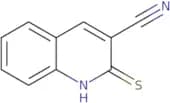
CAS:<p>Versatile small molecule scaffold</p>Formula:C10H9N3Purity:Min. 95%Molecular weight:171.2 g/mol2-Sulfanylquinoline-3-carbonitrile
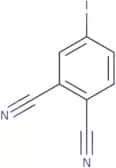
CAS:<p>2-Sulfanylquinoline-3-carbonitrile is a quinoline derivative that has been synthesized from chloroacetamide and chloroacetonitrile. It has antibacterial activity, and is effective against Gram-positive bacteria such as Methicillin-resistant Staphylococcus aureus (MRSA). Quinoline derivatives have been used in the synthesis of alkynylated quinolones, which are potent inhibitors of bacterial topoisomerase IV. These compounds have also been shown to be effective against Gram-negative bacteria. 2-Sulfanylquinoline-3-carbonitrile has also been shown to inhibit the production of proteins vital for cell division by binding to bacterial 16S ribosomal RNA.</p>Formula:C10H6N2SPurity:Min. 95%Molecular weight:186.24 g/mol4-Iodophthalonitrile
CAS:<p>4-Iodophthalonitrile is an unsymmetrical molecule with a low detection limit. This compound is soluble in organic solvents and has optical properties that are sensitive to the polarity of the solvent. 4-Iodophthalonitrile can be used as a precursor to other compounds, such as phenylacetic acid derivatives, which have potential applications in cancer treatment.</p>Formula:C8H3IN2Purity:Min. 95%Molecular weight:254.03 g/mol3-Formyl-4-methylbenzoic acid
CAS:<p>Versatile small molecule scaffold</p>Formula:C9H8O3Purity:Min. 95%Molecular weight:164.16 g/molEthyl 2-aminofuro[3,2-b]pyridine-3-carboxylate
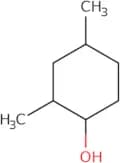
CAS:<p>Versatile small molecule scaffold</p>Formula:C10H10N2O3Purity:Min. 95%Molecular weight:206.2 g/mol2,4-Dimethylcyclohexan-1-ol
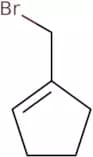
CAS:<p>Versatile small molecule scaffold</p>Formula:C8H16OPurity:Min. 95%Molecular weight:128.21 g/mol1-(bromomethyl)cyclopentene
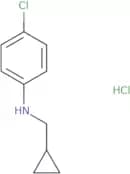
CAS:<p>1-(bromomethyl)cyclopentene is an organocatalyst that can be used in tandem with a metal salt to form a zirconocene. It reacts with alkynes to form conjugated dienes, which are useful for the production of polymers. 1-(bromomethyl)cyclopentene is also commonly used as a monomer in the synthesis of polymers containing nonconjugated vinyl groups.</p>Formula:C6H9BrPurity:Min. 95%Molecular weight:161.04 g/mol4-Chloro-N-(cyclopropylmethyl)aniline
CAS:<p>Versatile small molecule scaffold</p>Formula:C10H12ClNPurity:Min. 95%Molecular weight:181.67 g/mol3,5-Diethyl-4-hydroxybenzaldehyde
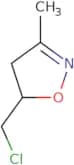
CAS:<p>Versatile small molecule scaffold</p>Formula:C11H14O2Purity:Min. 95%Molecular weight:178.23 g/mol5-(Chloromethyl)-3-methyl-4,5-dihydro-1,2-oxazole
CAS:<p>Versatile small molecule scaffold</p>Formula:C5H8ClNOPurity:Min. 95%Molecular weight:133.57 g/mol2-Oxo-2,3-dihydro-1H-imidazole-4,5-dicarboxylic acid
CAS:<p>Versatile small molecule scaffold</p>Formula:C5H4N2O5Purity:Min. 95%Molecular weight:172.1 g/mol2H,3H,5H-Indeno[1,2-c]pyridazin-3-one
CAS:<p>Versatile small molecule scaffold</p>Formula:C11H8N2OPurity:Min. 95%Molecular weight:184.19 g/mol3-Chloro-5H-indeno[1,2-c]pyridazine
CAS:<p>Versatile small molecule scaffold</p>Formula:C11H7ClN2Purity:Min. 95%Molecular weight:202.64 g/molTricyclo[7.1.1.0,2,7]undeca-2,4,6-trien-8-one
CAS:<p>Versatile small molecule scaffold</p>Formula:C11H10OPurity:Min. 95%Molecular weight:158.2 g/mol2-Pentyl-1,3-thiazolidine-4-carboxylic acid
CAS:<p>Versatile small molecule scaffold</p>Formula:C9H17NO2SPurity:Min. 95%Molecular weight:203.3 g/mol6-Chloro-N-phenyl-4-pyrimidinamine
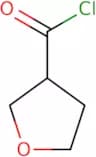
CAS:<p>Versatile small molecule scaffold</p>Formula:C10H8ClN3Purity:Min. 95%Molecular weight:205.65 g/molTetrahydrofuran-3-carbonyl chloride
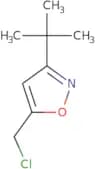
CAS:<p>Tetrahydrofuran-3-carbonyl chloride is a chiral, stereoselective, and sustainable chemical. It is used in the synthesis of various chiral compounds with high stereospecificity. Tetrahydrofuran-3-carbonyl chloride is an imine that reacts with an amine to produce an unsymmetrical ketone. The reaction mechanism involves the formation of a mixed anhydride as the first step by reacting the amine with chlorine or bromine. In this step, the carbonyl group of the reactant becomes attached to one carbon atom of the double bond in the mixed anhydride. This reaction can be used to synthesize staudinger and stereoselectively substituted tetrahydrofurans with high selectivity.</p>Formula:C5H7ClO2Purity:Min. 95%Molecular weight:134.56 g/mol3-tert-Butyl-5-(chloromethyl)-1,2-oxazole
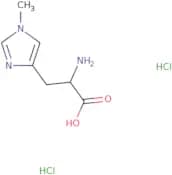
CAS:<p>Versatile small molecule scaffold</p>Formula:C8H12ClNOPurity:Min. 95%Molecular weight:173.64 g/mol1-Methyl-L-histidine dihydrochloride
CAS:<p>Versatile small molecule scaffold</p>Formula:C7H13Cl2N3O2Purity:Min. 95%Molecular weight:242.1 g/mol5-Amino-3-hydroxypentanoic acid hydrochloride
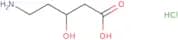
CAS:<p>Versatile small molecule scaffold</p>Formula:C5H12ClNO3Purity:Min. 95%Molecular weight:169.61 g/molEthyl 5-{[(tert-butoxy)carbonyl]amino}-3-oxopentanoate
CAS:<p>Versatile small molecule scaffold</p>Formula:C12H21NO5Purity:Min. 95%Molecular weight:259.3 g/mol2-Iodo-1-benzofuran
CAS:<p>2-Iodo-1-benzofuran is a polymerase chain inhibitor that can bind to the d2 dopamine receptor. This drug has been shown to have potential use in the treatment of diseases such as autoimmune diseases, Parkinson’s disease, and cancer. 2-Iodo-1-benzofuran is a potent inhibitor of HIV replication in vitro and has been shown to be active against other retroviruses. 2-Iodo-1-benzofuran also binds with high affinity and specificity to rat striatal D2 dopamine receptors. The binding of this drug to the receptor leads to a decrease in the levels of dopamine in the brain and an increase in blood pressure.</p>Formula:C8H5IOPurity:Min. 95%Molecular weight:244.03 g/mol3-Cyclopropylimidazolidine-2,4-dione
CAS:<p>Versatile small molecule scaffold</p>Formula:C6H8N2O2Purity:Min. 95%Molecular weight:140.14 g/molPhenyl morpholine-4-carboxylate
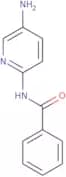
CAS:<p>Versatile small molecule scaffold</p>Formula:C11H13NO3Purity:Min. 95%Molecular weight:207.23 g/molN-(5-Aminopyridin-2-yl)benzamide
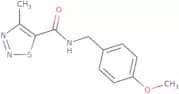
CAS:<p>Versatile small molecule scaffold</p>Formula:C12H11N3OPurity:Min. 95%Molecular weight:213.23 g/molN-(4-Methoxybenzyl)-4-methyl-1,2,3-thiadiazole-5-carboxamide
CAS:Versatile small molecule scaffoldFormula:C12H13N3O2SPurity:Min. 95%Molecular weight:263.32 g/mol

![6-Methyl-7H,8H-[1,2,4]triazolo[4,3-b][1,2,4]triazin-7-one](/_next/image/?url=https%3A%2Fstatic.cymitquimica.com%2Fproducts%2F3D%2Fthumb-webp%2FUAA54210.webp&w=3840&q=75)
![1,4-Diazabicyclo[2.2.2]octane-2-carboxylic acid dihydrochloride](/_next/image/?url=https%3A%2Fstatic.cymitquimica.com%2Fproducts%2F3D%2Fthumb-webp%2FUCA49142.webp&w=3840&q=75)



![Ethyl 2-aminofuro[3,2-b]pyridine-3-carboxylate](/_next/image/?url=https%3A%2Fstatic.cymitquimica.com%2Fproducts%2F3D%2Fthumb-webp%2FUCA53964.webp&w=3840&q=75)


![2H,3H,5H-Indeno[1,2-c]pyridazin-3-one](/_next/image/?url=https%3A%2Fstatic.cymitquimica.com%2Fproducts%2F3D%2Fthumb-webp%2FUCA58116.webp&w=3840&q=75)
![3-Chloro-5H-indeno[1,2-c]pyridazine](/_next/image/?url=https%3A%2Fstatic.cymitquimica.com%2Fproducts%2F3D%2Fthumb-webp%2FUCA58117.webp&w=3840&q=75)
![Tricyclo[7.1.1.0,2,7]undeca-2,4,6-trien-8-one](/_next/image/?url=https%3A%2Fstatic.cymitquimica.com%2Fproducts%2F3D%2Fthumb-webp%2FUCA58447.webp&w=3840&q=75)


![Ethyl 5-{[(tert-butoxy)carbonyl]amino}-3-oxopentanoate](/_next/image/?url=https%3A%2Fstatic.cymitquimica.com%2Fproducts%2F3D%2Fthumb-webp%2FUCA61921.webp&w=3840&q=75)