Building Blocks
This section contains fundamental products for the synthesis of organic and biological compounds. Building blocks are the essential starting materials used to construct complex molecules through various chemical reactions. They play a critical role in drug discovery, material science, and chemical research. At CymitQuimica, we offer a diverse range of high-quality building blocks to support your innovative research and industrial projects, ensuring you have the essential components for successful synthesis.
Subcategories of "Building Blocks"
- Boronic Acids & Boronic Acid Derivatives(5,756 products)
- Chiral Building Blocks(1,242 products)
- Hydrocarbon Building Blocks(6,095 products)
- Organic Building Blocks(61,051 products)
Found 199813 products of "Building Blocks"
Sort by
Purity (%)
0
100
|
0
|
50
|
90
|
95
|
100
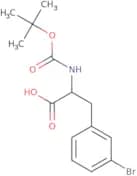
N-Boc-3-bromo-DL-phenylalanine
CAS:<p>Versatile small molecule scaffold</p>Formula:C14H18BrNO4Purity:Min. 95%Molecular weight:344.2 g/mol2-{[(tert-Butoxy)carbonyl]amino}-3-(3-methoxyphenyl)propanoic acid
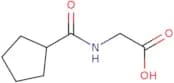
CAS:Versatile small molecule scaffoldFormula:C15H21NO5Purity:Min. 95%Molecular weight:295.33 g/mol2-(Cyclopentylformamido)acetic acid
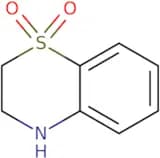
CAS:<p>Versatile small molecule scaffold</p>Formula:C8H13NO3Purity:Min. 95%Molecular weight:171.19 g/mol3,4-Dihydro-2H-1,4-benzothiazine-1,1-dione
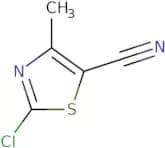
CAS:<p>Versatile small molecule scaffold</p>Formula:C8H9NO2SPurity:Min. 95%Molecular weight:183.23 g/mol2-Chloro-4-methyl-1,3-thiazole-5-carbonitrile
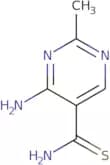
CAS:<p>Versatile small molecule scaffold</p>Formula:C5H3ClN2SPurity:Min. 95%Molecular weight:158.61 g/mol4-Amino-2-methylpyrimidine-5-carbothioamide
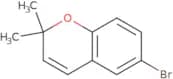
CAS:<p>Versatile small molecule scaffold</p>Formula:C6H8N4SPurity:Min. 95%Molecular weight:168.22 g/mol6-Bromo-2,2-dimethyl-2H-chromene
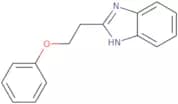
CAS:<p>Versatile small molecule scaffold</p>Formula:C11H11BrOPurity:Min. 95%Molecular weight:239.11 g/mol2-(2-Phenoxyethyl)-1H-1,3-benzodiazole
CAS:<p>Versatile small molecule scaffold</p>Formula:C15H14N2OPurity:Min. 95%Molecular weight:238.28 g/mol5-Benzoyl-1H-1,3-benzodiazole
CAS:<p>Benzodiazole is a heterocyclic organic compound. Benzodiazoles are widely used in industry, and as pharmaceuticals, biologicals, and pesticides. They are also important for their use as chemical intermediates. Benzodiazole derivatives have been prepared from hydrogen chloride and benzoyl chloride.</p>Formula:C14H10N2OPurity:Min. 95%Molecular weight:222.25 g/mol2-[(1,3-Dimethyl-2,6-dioxo-2,3,6,9-tetrahydro-1H-purin-8-yl)sulfanyl]acetic acid
CAS:<p>Versatile small molecule scaffold</p>Formula:C9H10N4O4SPurity:Min. 95%Molecular weight:270.27 g/mol2-[(1,3-Dimethyl-2,6-dioxo-2,3,6,7-tetrahydro-1H-purin-8-yl)sulfanyl]propanoic acid
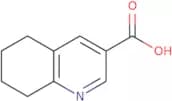
CAS:<p>Versatile small molecule scaffold</p>Formula:C10H12N4O4SPurity:Min. 95%Molecular weight:284.29 g/mol5,6,7,8-Tetrahydroquinoline-3-carboxylic acid
CAS:<p>5,6,7,8-Tetrahydroquinoline-3-carboxylic acid is a quinoline derivative that has been shown to have bacteriostatic activity against Staphylococcus aureus. It binds to the hydroxyl groups of the bacterial cell membrane and inhibits the production of enzymes necessary for protein synthesis. The interaction between the 5,6,7,8-tetrahydroquinoline-3-carboxylic acid and the hydroxyl group is reversible. 5,6,7,8-Tetrahydroquinoline-3-carboxylic acid also has bacteriostatic activity against other bacteria such as Mycobacterium tuberculosis and Mycobacterium avium complex.</p>Formula:C10H11NO2Purity:Min. 95%Molecular weight:177.2 g/mol1-(3-Methylpyridin-4-yl)ethan-1-one
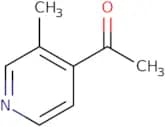
CAS:<p>Versatile small molecule scaffold</p>Formula:C8H9NOPurity:Min. 95%Molecular weight:135.16 g/moltert-butyl N-[(2R)-1-oxopropan-2-yl]carbamate
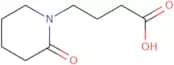
CAS:<p>Versatile small molecule scaffold</p>Formula:C8H15NO3Purity:Min. 95%Molecular weight:173.2 g/mol4-(2-Oxopiperidin-1-yl)butanoic acid
CAS:<p>Versatile small molecule scaffold</p>Formula:C9H15NO3Purity:Min. 95%Molecular weight:185.22 g/mol1-[(3-Methylphenyl)methyl]piperidin-4-amine
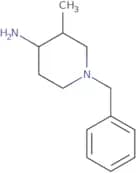
CAS:<p>Versatile small molecule scaffold</p>Formula:C13H20N2Purity:Min. 95%Molecular weight:204.31 g/mol1-Benzyl-3-methylpiperidin-4-amine
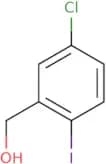
CAS:<p>Versatile small molecule scaffold</p>Formula:C13H20N2Purity:Min. 95%Molecular weight:204.32 g/mol(5-Chloro-2-iodophenyl)methanol
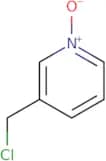
CAS:<p>Versatile small molecule scaffold</p>Formula:C7H6ClIOPurity:Min. 95%Molecular weight:268.48 g/mol3-(Chloromethyl)pyridin-1-ium-1-olate
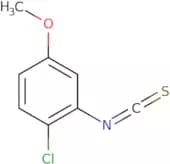
CAS:<p>Versatile small molecule scaffold</p>Formula:C6H6ClNOPurity:Min. 95%Molecular weight:143.57 g/mol1-Chloro-2-isothiocyanato-4-methoxybenzene
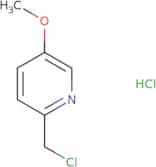
CAS:<p>Versatile small molecule scaffold</p>Formula:C8H6ClNOSPurity:Min. 95%Molecular weight:199.66 g/mol2-(Chloromethyl)-5-methoxypyridine hydrochloride
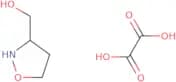
CAS:<p>Versatile small molecule scaffold</p>Formula:C7H9Cl2NOPurity:Min. 95%Molecular weight:194.06 g/mol(1,2-Oxazolidin-3-yl)methanol, oxalic acid
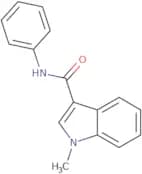
CAS:<p>Versatile small molecule scaffold</p>Formula:C6H11NO6Purity:Min. 95%Molecular weight:193.15 g/mol1-Methyl-N-phenyl-1H-indole-3-carboxamide
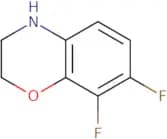
CAS:Controlled Product<p>The compound 1-Methyl-N-phenyl-1H-indole-3-carboxamide is a synthetic chemical with the formula C8H7BrN. It is a white solid that is soluble in organic solvents. The compound has been used as a reagent for the preparation of cyclopropanes and other carbon ring compounds. It has also been used to synthesize substituted pyridines, dibromomethane, and potassium phosphate.</p>Formula:C16H14N2OPurity:Min. 95%Molecular weight:250.29 g/mol7,8-Difluoro-3,4-dihydro-2H-1,4-benzoxazine
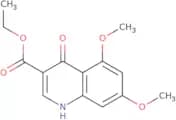
CAS:<p>Versatile small molecule scaffold</p>Formula:C8H7F2NOPurity:Min. 95%Molecular weight:171.14 g/molEthyl 5,7-dimethoxy-4-oxo-1,4-dihydroquinoline-3-carboxylate
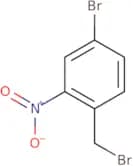
CAS:<p>Versatile small molecule scaffold</p>Formula:C14H15NO5Purity:Min. 95%Molecular weight:277.27 g/mol4-Bromo-2-nitrobenzyl bromide
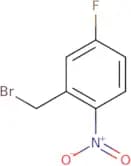
CAS:<p>Versatile small molecule scaffold</p>Formula:C7H5Br2NO2Purity:Min. 95%Molecular weight:294.93 g/mol2-(Bromomethyl)-4-fluoro-1-nitrobenzene
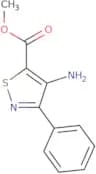
CAS:Versatile small molecule scaffoldFormula:C7H5BrFNO2Purity:Min. 95%Molecular weight:234.02 g/molMethyl 4-amino-3-phenylisothiazole-5-carboxylate
CAS:<p>Methyl 4-amino-3-phenylisothiazole-5-carboxylate (MPI) is a molecule that has been synthesized for experimental purposes. MPI interacts with polymorphs of other molecules, such as the crystalline form of caffeine. Its interaction energies are dependent on the type and number of solvents used and the crystallographic orientation. The structure of MPI has been determined using a centrosymmetric crystal packing model, which is based on pairwise interactions.<br>MPI is volatile, but it can be stored at a temperature below −20 °C. It can be stored in an orientations with different molecular energies.</p>Formula:C11H10N2O2SPurity:Min. 95%Molecular weight:234.27 g/molMethyl 4-amino-3-[3-(trifluoromethyl)phenyl]-1,2-thiazole-5-carboxylate
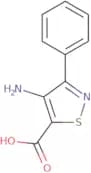
CAS:<p>Versatile small molecule scaffold</p>Formula:C12H9F3N2O2SPurity:Min. 95%Molecular weight:302.27 g/mol4-Amino-3-phenyl-1,2-thiazole-5-carboxylic acid
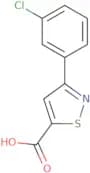
CAS:<p>Versatile small molecule scaffold</p>Formula:C10H8N2O2SPurity:Min. 95%Molecular weight:220.25 g/mol3-(3-Chlorophenyl)-1,2-thiazole-5-carboxylic acid
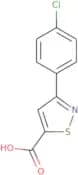
CAS:<p>Versatile small molecule scaffold</p>Formula:C10H6ClNO2SPurity:Min. 95%Molecular weight:239.68 g/mol3-(4-Chlorophenyl)-1,2-thiazole-5-carboxylic acid
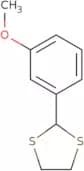
CAS:<p>Versatile small molecule scaffold</p>Formula:C10H6ClNO2SPurity:Min. 95%Molecular weight:239.68 g/mol2-(3-Methoxyphenyl)-1,3-dithiolane
CAS:<p>Versatile small molecule scaffold</p>Formula:C10H12OS2Purity:Min. 95%Molecular weight:212.3 g/mol1-(4-Phenylpyrimidin-2-yl)ethan-1-one
CAS:<p>Versatile small molecule scaffold</p>Formula:C12H10N2OPurity:Min. 95%Molecular weight:198.2 g/mol[3-(2-Pyrimidinyloxy)phenyl]methanol
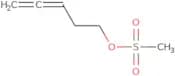
CAS:<p>Versatile small molecule scaffold</p>Formula:C11H10N2O2Purity:Min. 95%Molecular weight:202.21 g/molPenta-3,4-dien-1-yl methanesulfonate
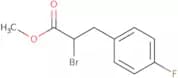
CAS:<p>Versatile small molecule scaffold</p>Formula:C6H10O3SPurity:Min. 95%Molecular weight:162.21 g/molMethyl 2-bromo-3-(4-fluorophenyl)propanoate
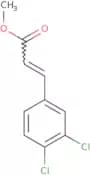
CAS:<p>Versatile small molecule scaffold</p>Formula:C10H10BrFO2Purity:Min. 95%Molecular weight:261.09 g/molMethyl 3-(3,4-dichlorophenyl)prop-2-enoate
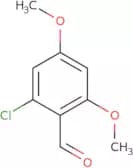
CAS:<p>Versatile small molecule scaffold</p>Formula:C10H8Cl2O2Purity:Min. 95%Molecular weight:231.07 g/mol2-Chloro-4,6-dimethoxybenzaldehyde
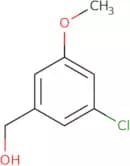
CAS:<p>Versatile small molecule scaffold</p>Formula:C9H9ClO3Purity:Min. 95%Molecular weight:200.62 g/mol3-Chloro-5-methoxybenzyl alcohol
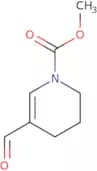
CAS:<p>Versatile small molecule scaffold</p>Formula:C8H9O2ClPurity:Min. 95%Molecular weight:172.6 g/molMethyl 5-formyl-1,2,3,4-tetrahydropyridine-1-carboxylate
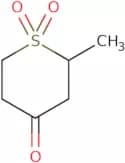
CAS:<p>Versatile small molecule scaffold</p>Formula:C8H11NO3Purity:Min. 95%Molecular weight:169.18 g/molTetrahydro-2-methyl-4H-Thiopyran-4-one 1,1-dioxide
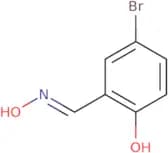
CAS:<p>Versatile small molecule scaffold</p>Formula:C6H10O3SPurity:Min. 95%Molecular weight:162.21 g/mol5-Bromo-2-hydroxybenzaldehyde oxime
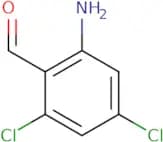
CAS:<p>Versatile small molecule scaffold</p>Formula:C7H6BrNO2Purity:Min. 95%Molecular weight:216.03 g/mol2-Amino-4,6-dichlorobenzaldehyde
CAS:<p>Versatile small molecule scaffold</p>Formula:C7H5Cl2NOPurity:Min. 95%Molecular weight:190.02 g/mol[4-(4-Methoxyphenyl)phenyl]methanamine hydrochloride
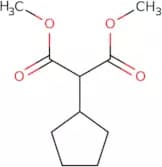
CAS:<p>Versatile small molecule scaffold</p>Formula:C14H16ClNOPurity:Min. 95%Molecular weight:249.73 g/molDimethyl Cyclopentylmalonate
CAS:<p>Dimethyl cyclopentylmalonate (DMCPM) is a solid polymerization catalyst that can be used in organic synthesis. It is synthesized by reacting an alkyl malonate with an aluminium chloride. DMCPM has been shown to initiate free radical polymerization of various monomers and polymers, such as polystyrene, poly(methyl methacrylate), and poly(vinyl acetate). This compound also has high activity in the production of polypropylene from ethylene, propylene, and butadiene. DMCPM can be synthesized from magnesium metal and a hydrocarbon group.</p>Formula:C10H16O4Purity:Min. 95%Molecular weight:200.23 g/mol[(2-Bromophenyl)(dimethylamino)phosphanyl]dimethylamine
CAS:<p>[(2-Bromophenyl)(dimethylamino)phosphanyl]dimethylamine is a β-unsaturated phosphane with a conformation that is stabilized by the presence of a double bond. The compound has been found to undergo two types of reactions, cyclization and acyclic rearrangement. The β-unsaturated phosphane undergoes cyclization at elevated temperatures, producing an unsaturated ketone. The acyclic rearrangement produces an α,β-unsaturated aldehyde through elimination of water and release of hydrogen gas. This reaction can be observed in the spectra as a protonated carbonyl band at 1725 cm−1. In addition to these two reactions, [(2-bromophenyl)(dimethylamino)phosphanyl]dimethylamine also forms an adduct with phenylacetaldehyde. This adduct has been shown to have antiinflammatory properties in vitro.</p>Formula:C10H16BrN2PPurity:Min. 95%Molecular weight:275.13 g/mol[(3-Bromophenyl)(dimethylamino)phosphanyl]dimethylamine
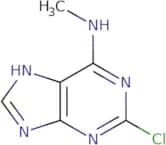
CAS:<p>Versatile small molecule scaffold</p>Formula:C10H16BrN2PPurity:Min. 95%Molecular weight:275.13 g/mol2-Chloro-6(methylamino)purine
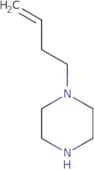
CAS:<p>2-Chloro-6(methylamino)purine is a potent inhibitor of xanthine oxidase. It is structurally similar to allopurinol, an inhibitor of xanthine oxidase that is used to treat gout. 2-Chloro-6(methylamino)purine inhibits the enzyme by forming a noncompetitive complex with it, which prevents the production of uric acid. This compound has been shown to be effective at inhibiting xanthine oxidase in humans and has been used as a lead compound for the development of new inhibitors of this enzyme.</p>Formula:C6H6ClN5Purity:Min. 95%Molecular weight:183.6 g/mol1-(But-3-en-1-yl)piperazine
CAS:Versatile small molecule scaffoldFormula:C8H16N2Purity:Min. 95%Molecular weight:140.23 g/mol

![2-{[(tert-Butoxy)carbonyl]amino}-3-(3-methoxyphenyl)propanoic acid](/_next/image/?url=https%3A%2Fstatic.cymitquimica.com%2Fproducts%2F3D%2Fthumb-webp%2FHDA27899.webp&w=3840&q=75)

![2-[(1,3-Dimethyl-2,6-dioxo-2,3,6,9-tetrahydro-1H-purin-8-yl)sulfanyl]acetic acid](/_next/image/?url=https%3A%2Fstatic.cymitquimica.com%2Fproducts%2F3D%2Fthumb-webp%2FHDA33112.webp&w=3840&q=75)
![2-[(1,3-Dimethyl-2,6-dioxo-2,3,6,7-tetrahydro-1H-purin-8-yl)sulfanyl]propanoic acid](/_next/image/?url=https%3A%2Fstatic.cymitquimica.com%2Fproducts%2F3D%2Fthumb-webp%2FHDA33113.webp&w=3840&q=75)
![tert-butyl N-[(2R)-1-oxopropan-2-yl]carbamate](/_next/image/?url=https%3A%2Fstatic.cymitquimica.com%2Fproducts%2F3D%2Fthumb-webp%2FHDA35356.webp&w=3840&q=75)
![1-[(3-Methylphenyl)methyl]piperidin-4-amine](/_next/image/?url=https%3A%2Fstatic.cymitquimica.com%2Fproducts%2F3D%2Fthumb-webp%2FHDA37882.webp&w=3840&q=75)
![Methyl 4-amino-3-[3-(trifluoromethyl)phenyl]-1,2-thiazole-5-carboxylate](/_next/image/?url=https%3A%2Fstatic.cymitquimica.com%2Fproducts%2F3D%2Fthumb-webp%2FHDA42465.webp&w=3840&q=75)
![[3-(2-Pyrimidinyloxy)phenyl]methanol](/_next/image/?url=https%3A%2Fstatic.cymitquimica.com%2Fproducts%2F3D%2Fthumb-webp%2FHDA44025.webp&w=3840&q=75)
![[4-(4-Methoxyphenyl)phenyl]methanamine hydrochloride](/_next/image/?url=https%3A%2Fstatic.cymitquimica.com%2Fproducts%2F3D%2Fthumb-webp%2FHDA48745.webp&w=3840&q=75)
![[(2-Bromophenyl)(dimethylamino)phosphanyl]dimethylamine](/_next/image/?url=https%3A%2Fstatic.cymitquimica.com%2Fproducts%2F3D%2Fthumb-webp%2FHDA49563.webp&w=3840&q=75)
![[(3-Bromophenyl)(dimethylamino)phosphanyl]dimethylamine](/_next/image/?url=https%3A%2Fstatic.cymitquimica.com%2Fproducts%2F3D%2Fthumb-webp%2FHDA49564.webp&w=3840&q=75)