Building Blocks
This section contains fundamental products for the synthesis of organic and biological compounds. Building blocks are the essential starting materials used to construct complex molecules through various chemical reactions. They play a critical role in drug discovery, material science, and chemical research. At CymitQuimica, we offer a diverse range of high-quality building blocks to support your innovative research and industrial projects, ensuring you have the essential components for successful synthesis.
Subcategories of "Building Blocks"
- Boronic Acids & Boronic Acid Derivatives(5,756 products)
- Chiral Building Blocks(1,242 products)
- Hydrocarbon Building Blocks(6,095 products)
- Organic Building Blocks(61,055 products)
Found 199650 products of "Building Blocks"
Sort by
Purity (%)
0
100
|
0
|
50
|
90
|
95
|
100
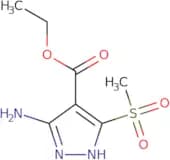
Ethyl 5-amino-3-methanesulfonyl-1H-pyrazole-4-carboxylate
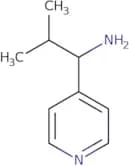
CAS:<p>Versatile small molecule scaffold</p>Formula:C7H11N3O4SPurity:Min. 95%Molecular weight:233.25 g/mol2-Methyl-1-(pyridin-4-yl)propan-1-amine
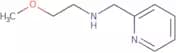
CAS:<p>Versatile small molecule scaffold</p>Formula:C9H14N2Purity:Min. 95%Molecular weight:150.22 g/mol(2-Methoxyethyl)(pyridin-2-ylmethyl)amine
CAS:<p>2-Methoxyethyl)(pyridin-2-ylmethyl)amine is a coordination compound that has the ability to bind metal ions. It crystallizes in an orthorhombic system, and its color is light yellow. The oxygen atoms are bound to two halides, which are connected by four tetradentate ligands. 2-Methoxyethyl)(pyridin-2-ylmethyl)amine has a phenolic group with an oxygen atom that forms a molecule with a mononuclear ligand. This substance can be used as a ligand for coordination compounds.</p>Formula:C9H14N2OPurity:Min. 95%Molecular weight:166.22 g/mol1,2-Bis(4-methoxyphenyl)ethan-1-amine hydrochloride
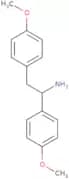
CAS:<p>1,2-Bis(4-methoxyphenyl)ethan-1-amine hydrochloride is an optical isomer of the industrial chemical 1,2-diaminobenzene. It has been shown to be a proton source in metal halides, and can be used as a kinetic probe of proton transfer reactions. The functionalities of this compound have been demonstrated by its ability to form carboxylic acids with different functional groups and isomers. The C=N bonds are highly reactive, which leads to the formation of diborane. This molecule has also been shown to be a competitive inhibitor of 6-membered ring enzymes such as reversed-phase HPLC and kinetically competitive inhibition.</p>Formula:C16H19NO2Purity:Min. 95%Molecular weight:257.33 g/mol1-(2-Bromophenyl)propan-1-one
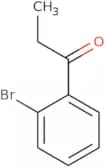
CAS:<p>1-(2-Bromophenyl)propan-1-one is a chemical compound that is generated from the reaction of bromobenzene and lithium. It is a useful intermediate for the synthesis of various organic compounds, such as cyclopentanones and butyllithium. The reaction proceeds through an intramolecular cyclization in which a ketone reacts with a lithium enolate to form a lactam.</p>Formula:C9H9BrOPurity:Min. 95%Molecular weight:213.07 g/mol5-(4-Bromo-phenyl)-4-methyl-thiophene-2-carboxylic acid
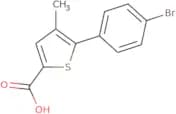
CAS:<p>Versatile small molecule scaffold</p>Formula:C12H9BrO2SPurity:Min. 95%Molecular weight:297.17 g/mol1-(3-Methoxyphenyl)ethylamine
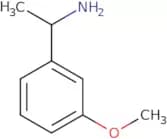
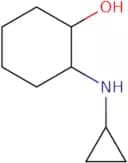
CAS:<p>1-(3-Methoxyphenyl)ethylamine is an enantiomer of the amino acid phenylalanine, and it has been used in the synthesis of racemic drugs. The optical properties of 1-(3-methoxyphenyl)ethylamine are different from those of other amino acids and can be used to create a chiral environment. This molecule can also be used as a calcimimetic that stimulates bone formation by increasing osteoblasts. It also inhibits aminotransferases and increases the production of malic acid, which is important for the synthesis of lactic acid. In addition, this molecule can be used as an efficient method for asymmetric synthesis with organic solvents such as amines or crystallography.</p>Formula:C9H13NOPurity:Min. 95%Molecular weight:151.21 g/molrac-(1R,2R)-2-(Cyclopropylamino)cyclohexan-1-ol
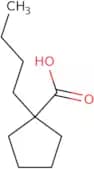
CAS:Versatile small molecule scaffoldFormula:C9H17NOPurity:Min. 95%Molecular weight:155.2 g/mol1-Butylcyclopentane-1-carboxylic acid
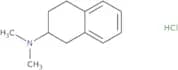
CAS:<p>Versatile small molecule scaffold</p>Formula:C10H18O2Purity:Min. 95%Molecular weight:170.25 g/molN,N-Dimethyl-1,2,3,4-tetrahydronaphthalen-2-amine hydrochloride
CAS:Controlled Product<p>Versatile small molecule scaffold</p>Formula:C12H18ClNPurity:Min. 95%Molecular weight:211.73 g/mol4-[3-(Dimethylamino)propoxy]aniline
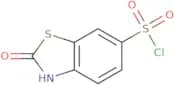
CAS:<p>4-[3-(Dimethylamino)propoxy]aniline is an antimicrobial agent that is a derivative of the amino acid aniline. It has been shown to have antimicrobial activity against Gram-positive and Gram-negative bacteria, as well as fungi. 4-[3-(Dimethylamino)propoxy]aniline has also been found to inhibit the growth of certain antibiotic-resistant bacteria, such as Staphylococcus aureus. This compound is used in pharmaceuticals, including antidepressant agents and antiseptics. 4-[3-(Dimethylamino)propoxy]aniline can be synthesized in two ways: by reacting sodium carbonate with diaminobenzene or by combining toluene with dimethylformamide followed by heating to produce a mixture of isomers.</p>Formula:C11H18N2OPurity:Min. 95%Molecular weight:194.28 g/mol2-Oxo-2,3-dihydro-benzothiazole-6-sulfonyl chloride
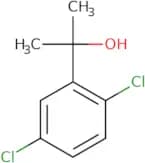
CAS:<p>Versatile small molecule scaffold</p>Formula:C7H4ClNO3S2Purity:Min. 95%Molecular weight:249.69 g/mol2-(2,5-Dichlorophenyl)propan-2-ol
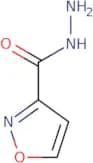
CAS:<p>Versatile small molecule scaffold</p>Formula:C9H10Cl2OPurity:Min. 95%Molecular weight:205.08 g/mol1,2-Oxazole-3-carbohydrazide
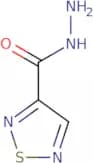
CAS:<p>1,2-Oxazole-3-carbohydrazide is an antibacterial agent that belongs to the class of isoxazoles. It has been shown to have antiplatelet properties and is a mesomorphic compound. This drug has also been shown to be active against a variety of bacteria, including Pseudomonas aeruginosa, Staphylococcus pyogenes, and Streptococcus pyogenes. 1,2-Oxazole-3-carbohydrazide has also been found to be effective in treating tuberculosis and may have antitubercular activity.</p>Formula:C4H5N3O2Purity:Min. 95%Molecular weight:127.1 g/mol1,2,5-Thiadiazole-3-carbohydrazide
CAS:<p>Versatile small molecule scaffold</p>Formula:C3H4N4OSPurity:Min. 95%Molecular weight:144.16 g/molSpiro[5.5]undecan-2-amine hydrochloride
CAS:<p>Versatile small molecule scaffold</p>Formula:C11H22ClNPurity:Min. 95%Molecular weight:203.75 g/molSpiro[4.5]decan-7-amine hydrochloride
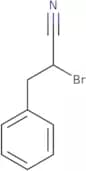
CAS:<p>Versatile small molecule scaffold</p>Formula:C10H20ClNPurity:Min. 95%Molecular weight:189.72 g/mol2-Bromo-3-phenylpropanenitrile
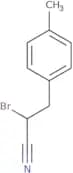
CAS:<p>Versatile small molecule scaffold</p>Formula:C9H8BrNPurity:Min. 95%Molecular weight:210.07 g/mol2-Bromo-3-(4-methylphenyl)propanenitrile
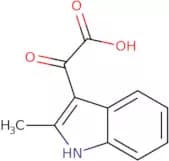
CAS:<p>Versatile small molecule scaffold</p>Formula:C10H10BrNPurity:Min. 95%Molecular weight:224.1 g/mol2-(2-Methyl-1H-indol-3-yl)-2-oxoacetic acid
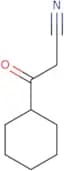
CAS:<p>Versatile small molecule scaffold</p>Formula:C11H9NO3Purity:Min. 95%Molecular weight:203.19 g/mol3-Cyclohexyl-3-oxopropanenitrile
CAS:<p>Curvularia lunata is a fungus that produces 3-cyclohexyl-3-oxopropanenitrile, an alkylating agent. Curvularia lunata has been shown to be effective in the treatment of inflammatory diseases and allergic diseases. The mechanism of action for its anti-inflammatory effects is not yet known, but it may be due to its ability to reduce the levels of prostaglandins and leukotrienes. Curvularia lunata also contains a chemical called optically active 3-cyclohexyl-3-oxopropanenitrile, which can be used as a starting material for the synthesis of other optically active compounds. Curvularia lunata is used as a natural product to synthesize stereoselective compounds with high optical purity.</p>Formula:C9H13NOPurity:Min. 95%Molecular weight:151.21 g/mol2-(3-Hydroxypropyl)cyclohexan-1-one
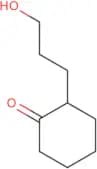
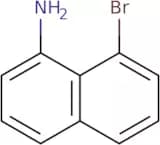
CAS:<p>Versatile small molecule scaffold</p>Formula:C9H16O2Purity:Min. 95%Molecular weight:156.22 g/mol8-bromonaphthalen-1-amine
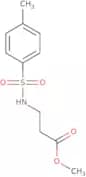
CAS:<p>8-Bromonaphthalen-1-amine is an organic compound that belongs to the dipole class of pyrazoles. It has a solute molecule and its orientation can be affected by the inclusion of other solutes. The interaction between 8-bromonaphthalen-1-amine and other molecules can be studied using structural studies and advances in computational chemistry. This compound can also be used to synthesize chiral compounds, as it is a useful synthetic precursor to trifluoride ion.</p>Formula:C10H8BrNPurity:Min. 95%Molecular weight:222.1 g/molMethyl 3-(4-methylbenzenesulfonamido)propanoate
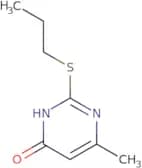
CAS:<p>Versatile small molecule scaffold</p>Formula:C11H15NO4SPurity:Min. 95%Molecular weight:257.31 g/mol6-Methyl-2-(propylsulfanyl)pyrimidin-4-ol
CAS:<p>Versatile small molecule scaffold</p>Formula:C8H12N2OSPurity:Min. 95%Molecular weight:184.26 g/mol10-Chloro-2-oxa-9-azatricyclo[9.4.0.0,3,8]pentadeca-1(15),3,5,7,9,11,13-heptaene
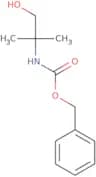
CAS:<p>Versatile small molecule scaffold</p>Formula:C13H8ClNOPurity:Min. 95%Molecular weight:229.66 g/mol2-(Cbz-amino)-2-methyl-1-propanol
CAS:<p>Versatile small molecule scaffold</p>Formula:C12H17NO3Purity:Min. 95%Molecular weight:223.27 g/mol6-Bromobenzo[d]isothiazol-3(2H)-one 1,1-dioxide
CAS:<p>Versatile small molecule scaffold</p>Formula:C7H4BrNO3SPurity:Min. 95%Molecular weight:262.08 g/mol6-Methoxybenzo[D]isothiazol-3(2H)-one 1,1-dioxide
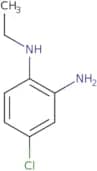
CAS:<p>Versatile small molecule scaffold</p>Formula:C8H7NO4SPurity:Min. 95%Molecular weight:213.21 g/mol4-Chloro-N1-ethylbenzene-1,2-diamine
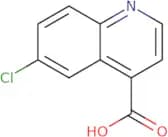
CAS:<p>Versatile small molecule scaffold</p>Formula:C8H11ClN2Purity:Min. 95%Molecular weight:170.64 g/mol6-Chloro-quinoline-4-carboxylic acid
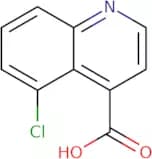
CAS:<p>Versatile small molecule scaffold</p>Formula:C10H6ClNO2Purity:Min. 95%Molecular weight:207.62 g/mol5-Chloroquinoline-4-carboxylic acid
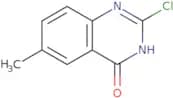
CAS:<p>Versatile small molecule scaffold</p>Formula:C10H6ClNO2Purity:Min. 95%Molecular weight:207.61 g/mol2-Chloro-6-methylquinazolin-4(3H)-one
CAS:<p>Versatile small molecule scaffold</p>Formula:C9H7ClN2OPurity:Min. 95%Molecular weight:194.62 g/molMethyl 2-[(prop-2-yn-1-yl)amino]acetate
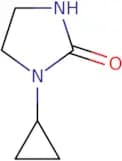
CAS:<p>Versatile small molecule scaffold</p>Formula:C6H9NO2Purity:Min. 95%Molecular weight:127.14 g/mol1-Cyclopropylimidazolidin-2-one
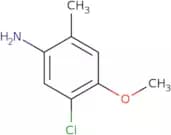
CAS:<p>Versatile small molecule scaffold</p>Formula:C6H10N2OPurity:Min. 95%Molecular weight:126.16 g/mol5-Chloro-4-methoxy-2-methylaniline
CAS:<p>Versatile small molecule scaffold</p>Formula:C8H10ClNOPurity:Min. 95%Molecular weight:171.63 g/mol2-[(Butylamino)methyl]phenol
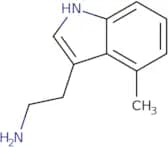
CAS:<p>Versatile small molecule scaffold</p>Formula:C11H17NOPurity:Min. 95%Molecular weight:179.26 g/mol2-(4-Methyl-1H-indol-3-yl)ethan-1-amine
CAS:Controlled Product<p>Versatile small molecule scaffold</p>Formula:C11H14N2Purity:Min. 95%Color and Shape:PowderMolecular weight:174.24 g/mol(3aR,6aS)-Rel-tetrahydro-cyclopenta[C]pyrrole-1,3(2H,3aH)-dione
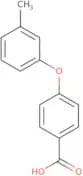
CAS:<p>Versatile small molecule scaffold</p>Formula:C7H9NO2Purity:Min. 95%Molecular weight:139.15 g/mol4-(3-Methylphenoxy)benzoic acid
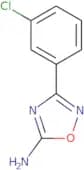
CAS:<p>Versatile small molecule scaffold</p>Formula:C14H12O3Purity:Min. 95%Molecular weight:228.24 g/mol3-(3-Chlorophenyl)-1,2,4-oxadiazol-5-amine
CAS:<p>Versatile small molecule scaffold</p>Formula:C8H6ClN3OPurity:Min. 95%Molecular weight:195.6 g/mol3-[4-(2-Methoxyphenyl)piperazin-1-yl]-3-oxopropanenitrile
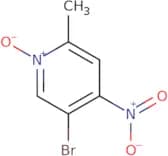
CAS:Controlled Product<p>Versatile small molecule scaffold</p>Formula:C14H17N3O2Purity:Min. 95%Molecular weight:259.3 g/mol5-Bromo-2-methyl-4-nitropyridine-N-oxide
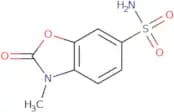
CAS:<p>Versatile small molecule scaffold</p>Formula:C6H5N2O3BrPurity:Min. 95%Molecular weight:233.01 g/mol3-Methyl-2-oxo-2,3-dihydro-1,3-benzoxazole-6-sulfonamide
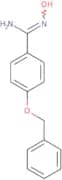
CAS:<p>Versatile small molecule scaffold</p>Formula:C8H8N2O4SPurity:Min. 95%Molecular weight:228.23 g/mol4-(Benzyloxy)-N'-hydroxybenzene-1-carboximidamide
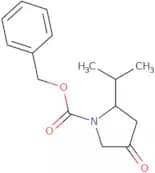
CAS:<p>Versatile small molecule scaffold</p>Formula:C14H14N2O2Purity:Min. 95%Molecular weight:242.27 g/molBenzyl 4-oxo-2-(propan-2-yl)pyrrolidine-1-carboxylate
CAS:<p>Versatile small molecule scaffold</p>Formula:C15H19NO3Purity:Min. 95%Molecular weight:261.32 g/molMethyl 6-oxospiro[2.5]octane-5-carboxylate
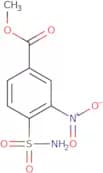
CAS:<p>Versatile small molecule scaffold</p>Formula:C10H14O3Purity:Min. 95%Molecular weight:182.22 g/molMethyl 3-nitro-4-sulfamoylbenzoate
CAS:<p>Versatile small molecule scaffold</p>Formula:C8H8N2O6SPurity:Min. 95%Molecular weight:260.23 g/mol2-[(2,5-Difluorophenyl)amino]pyridine-3-carboxylic acid
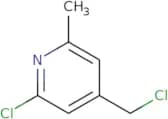
CAS:<p>Versatile small molecule scaffold</p>Formula:C12H8F2N2O2Purity:Min. 95%Molecular weight:250.2 g/mol2-Chloro-4-(chloromethyl)-6-methylpyridine
CAS:<p>Versatile small molecule scaffold</p>Formula:C7H7NCl2Purity:Min. 95%Molecular weight:176.04 g/mol

![4-[3-(Dimethylamino)propoxy]aniline](/_next/image/?url=https%3A%2Fstatic.cymitquimica.com%2Fproducts%2F3D%2Fthumb-webp%2FMCA42488.webp&w=3840&q=75)
![Spiro[5.5]undecan-2-amine hydrochloride](/_next/image/?url=https%3A%2Fstatic.cymitquimica.com%2Fproducts%2F3D%2Fthumb-webp%2FMCA43954.webp&w=3840&q=75)
![Spiro[4.5]decan-7-amine hydrochloride](/_next/image/?url=https%3A%2Fstatic.cymitquimica.com%2Fproducts%2F3D%2Fthumb-webp%2FMCA43956.webp&w=3840&q=75)
![10-Chloro-2-oxa-9-azatricyclo[9.4.0.0,3,8]pentadeca-1(15),3,5,7,9,11,13-heptaene](/_next/image/?url=https%3A%2Fstatic.cymitquimica.com%2Fproducts%2F3D%2Fthumb-webp%2FMCA46961.webp&w=3840&q=75)
![6-Bromobenzo[d]isothiazol-3(2H)-one 1,1-dioxide](/_next/image/?url=https%3A%2Fstatic.cymitquimica.com%2Fproducts%2F3D%2Fthumb-webp%2FMCA47392.webp&w=3840&q=75)
![6-Methoxybenzo[D]isothiazol-3(2H)-one 1,1-dioxide](/_next/image/?url=https%3A%2Fstatic.cymitquimica.com%2Fproducts%2F3D%2Fthumb-webp%2FMCA47395.webp&w=3840&q=75)
![Methyl 2-[(prop-2-yn-1-yl)amino]acetate](/_next/image/?url=https%3A%2Fstatic.cymitquimica.com%2Fproducts%2F3D%2Fthumb-webp%2FMCA49040.webp&w=3840&q=75)
![2-[(Butylamino)methyl]phenol](/_next/image/?url=https%3A%2Fstatic.cymitquimica.com%2Fproducts%2F3D%2Fthumb-webp%2FMCA49873.webp&w=3840&q=75)
![(3aR,6aS)-Rel-tetrahydro-cyclopenta[C]pyrrole-1,3(2H,3aH)-dione](/_next/image/?url=https%3A%2Fstatic.cymitquimica.com%2Fproducts%2F3D%2Fthumb-webp%2FMCA50605.webp&w=3840&q=75)
![3-[4-(2-Methoxyphenyl)piperazin-1-yl]-3-oxopropanenitrile](/_next/image/?url=https%3A%2Fstatic.cymitquimica.com%2Fproducts%2F3D%2Fthumb-webp%2FMCA50879.webp&w=3840&q=75)
![Methyl 6-oxospiro[2.5]octane-5-carboxylate](/_next/image/?url=https%3A%2Fstatic.cymitquimica.com%2Fproducts%2F3D%2Fthumb-webp%2FMFD89004.webp&w=3840&q=75)
![2-[(2,5-Difluorophenyl)amino]pyridine-3-carboxylic acid](/_next/image/?url=https%3A%2Fstatic.cymitquimica.com%2Fproducts%2F3D%2Fthumb-webp%2FMGA01531.webp&w=3840&q=75)