


Building Blocks
This section contains fundamental products for the synthesis of organic and biological compounds. Building blocks are the essential starting materials used to construct complex molecules through various chemical reactions. They play a critical role in drug discovery, material science, and chemical research. At CymitQuimica, we offer a diverse range of high-quality building blocks to support your innovative research and industrial projects, ensuring you have the essential components for successful synthesis.
Subcategories of "Building Blocks"
- Boronic Acids & Boronic Acid Derivatives(5,756 products)
- Chiral Building Blocks(1,242 products)
- Hydrocarbon Building Blocks(6,095 products)
- Organic Building Blocks(61,055 products)
Found 199650 products of "Building Blocks"
Sort by
Purity (%)
0
100
|
0
|
50
|
90
|
95
|
100
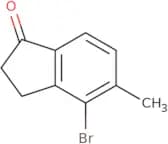
4-bromo-5-methyl-2,3-dihydro-1h-inden-1-one
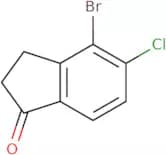
CAS:<p>Versatile small molecule scaffold</p>Formula:C10H9BrOPurity:Min. 95%Molecular weight:225.09 g/mol4-Bromo-5-chloro-2,3-dihydro-1H-inden-1-one
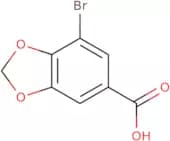
CAS:<p>Versatile small molecule scaffold</p>Formula:C9H6BrClOPurity:Min. 95%Molecular weight:245.5 g/mol7-bromo-1,3-dioxaindane-5-carboxylic acid
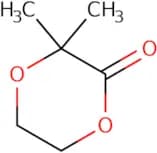
CAS:<p>Versatile small molecule scaffold</p>Formula:C8H5BrO4Purity:Min. 95%Molecular weight:245 g/mol3,3-Dimethyl-1,4-dioxan-2-one
CAS:<p>3,3-Dimethyl-1,4-dioxan-2-one (DMDO) is a chiral compound that is used in organic synthesis as a chiral auxiliary. This molecule has been shown to be useful for the stereoselective polymerization of lactones, enolates, amides and aldehydes. DMDO has also been investigated for its ability to form spindle-like polymers with glycolide and optical activity. 3,3-Dimethyl-1,4-dioxan-2-one is soluble in common organic solvents such as chloroform and dichloromethane at room temperature and can be used for the preparation of microparticles with a diameter up to 50 µm. The high yield of this compound makes it an attractive alternative to other synthetic methods.</p>Formula:C6H10O3Purity:Min. 95%Molecular weight:130.14 g/mol2-[(2-Bromoethoxy)methyl]oxirane
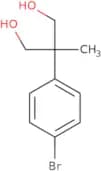
CAS:<p>Versatile small molecule scaffold</p>Formula:C5H9BrO2Purity:Min. 95%Molecular weight:181.03 g/mol2-(4-Bromophenyl)-2-methylpropane-1,3-diol
CAS:<p>Versatile small molecule scaffold</p>Formula:C10H13BrO2Purity:Min. 95%Molecular weight:245.11 g/mol2-[(6-Amino-1H-purin-8-yl)amino]ethan-1-ol
CAS:<p>2-[(6-Amino-1H-purin-8-yl)amino]ethan-1-ol (6APA) is a prodrug that is metabolized by the liver to 6-mercaptopurine (6MP). It is an antiinflammatory drug that has been shown to suppress collagen synthesis and inhibit the activity of proteases. 6APA is also used as a diagnostic agent for systemic diseases, such as reactive arthritis and systemic lupus erythematosus. This compound can be used in the treatment of inflammatory diseases, such as rheumatoid arthritis and Crohn's disease, due to its ability to inhibit the production of inflammatory compounds. The drug binds to affinity ligands which are associated with various proteins, including collagen. This binding prevents the formation of new proteins, which leads to cell death by inhibiting protein synthesis.</p>Formula:C7H10N6OPurity:Min. 95%Molecular weight:194.19 g/mol(1Z)-N'-Hydroxy-2,2-diphenylethanimidamide
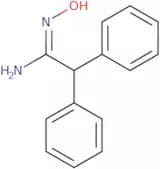
CAS:<p>Versatile small molecule scaffold</p>Formula:C14H14N2OPurity:Min. 95%Molecular weight:226.27 g/mol4-(Trichloroacetyl)-1H-pyrrole-2-carbonitrile
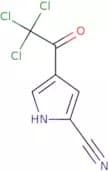
CAS:<p>Versatile small molecule scaffold</p>Formula:C7H3Cl3N2OPurity:Min. 95%Molecular weight:237.5 g/mol2-(1H-1,3-Benzodiazol-2-yl)-1-phenylethan-1-one
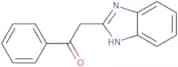
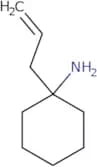
CAS:<p>2-(1H-1,3-Benzodiazol-2-yl)-1-phenylethanone is an unsymmetrical phenacyl chloride that is used in the synthesis of drugs. The generation of acidolysis products and the formation of active methylene compounds are catalyzed by 2-(1H-1,3-benzodiazol-2-yl)-1-phenylethanone. This compound is also used for the preparation of chlorides and methylhydrazones. Preparative methods for this compound involve thionyl chloride, hydrochloric acid, and phenylhydrazone.</p>Formula:C15H12N2OPurity:Min. 95%Molecular weight:236.27 g/mol1-(Prop-2-en-1-yl)cyclohexan-1-amine
CAS:<p>Versatile small molecule scaffold</p>Formula:C9H17NPurity:Min. 95%Molecular weight:139.24 g/mol(2-Chloroethyl)[(4-fluorophenyl)methyl]methylamine hydrochloride
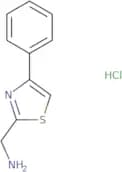
CAS:<p>Versatile small molecule scaffold</p>Formula:C10H14Cl2FNPurity:Min. 95%Molecular weight:238.13 g/mol4-Phenyl-thiazol-2-yl-methylamine hydrochloride
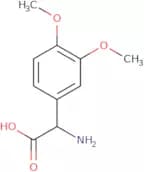
CAS:<p>Versatile small molecule scaffold</p>Formula:C10H11ClN2SPurity:Min. 95%Molecular weight:226.73 g/molamino(3,4-dimethoxyphenyl)acetic acid
CAS:<p>Versatile small molecule scaffold</p>Formula:C10H13NO4Purity:Min. 95%Molecular weight:211.22 g/mol1-Cyclohexyl-1H-1,3-benzodiazole
CAS:<p>1-Cyclohexyl-1H-1,3-benzodiazole is a synthesized chemical compound belonging to the class of amide benzimidazoles. It has been shown to be an effective inhibitor of xanthine oxidase and an inducer of apoptosis in leukemia cells.</p>Formula:C13H16N2Purity:Min. 95%Molecular weight:200.28 g/mol1-Benzylpiperidine-3-carbonitrile
CAS:<p>Versatile small molecule scaffold</p>Formula:C13H16N2Purity:Min. 95%Molecular weight:200.28 g/mol2-Chloro-6-[(4-chlorophenyl)sulfanyl]benzonitrile
CAS:<p>Versatile small molecule scaffold</p>Formula:C13H7Cl2NSPurity:Min. 95%Molecular weight:280.2 g/mol2-[(Methoxycarbonyl)amino]-2-methylpropanoic acid
CAS:<p>Versatile small molecule scaffold</p>Formula:C6H11NO4Purity:Min. 95%Molecular weight:161.16 g/mol1,3-Dioxo-2,3-dihydro-1H-isoindol-2-yl 2-{[(tert-butoxy)carbonyl]amino}acetate
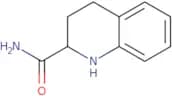
CAS:<p>Versatile small molecule scaffold</p>Formula:C15H16N2O6Purity:Min. 95%Molecular weight:320.3 g/mol1,2,3,4-Tetrahydroquinoline-2-carboxamide
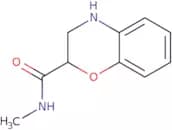
CAS:<p>1,2,3,4-Tetrahydroquinoline-2-carboxamide is a potent inhibitor of the enzyme histidine decarboxylase. It has been shown to have significant cytotoxicity against certain cancer cells and inhibit the proliferation of other cells in culture. 1,2,3,4-Tetrahydroquinoline-2-carboxamide has shown a potent inhibition of serotonin synthesis and significant anti-inflammatory effects in animal models. This drug also inhibits the production of retinoic acid by binding to the retinoic acid receptor subtype II receptor. In addition to its therapeutic effects on inflammation and bone mass, 1,2,3,4-tetrahydroquinoline-2-carboxamide has been shown to be effective in treating congestive heart failure and glomerulonephropathy due to its ability to inhibit angiotensin II type I receptors.</p>Formula:C10H12N2OPurity:Min. 95%Molecular weight:176.21 g/molN-Methyl-3,4-dihydro-2H-1,4-benzoxazine-2-carboxamide
CAS:<p>Versatile small molecule scaffold</p>Formula:C10H12N2O2Purity:Min. 95%Molecular weight:192.21 g/molethyl 3-(aminomethyl)benzoate hydrochloride
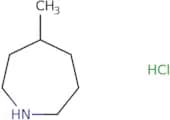
CAS:<p>Versatile small molecule scaffold</p>Formula:C10H14ClNO2Purity:Min. 95%Molecular weight:215.7 g/mol4-Methylazepane hydrochloride
CAS:<p>Versatile small molecule scaffold</p>Formula:C7H16ClNPurity:Min. 95%Molecular weight:149.66 g/mol1,4-Dichloro-5H,6H,7H-cyclopenta[D]pyridazine
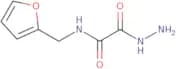
CAS:<p>1,4-Dichloro-5H,6H,7H-cyclopenta[D]pyridazine is a quaternary ammonium salt that has been shown to be an effective antibacterial agent. It binds to the bacterial cell wall by competitive inhibition and prevents the formation of an antibiotic-inhibitor complex with the enzyme cell wall synthesis that is required for cell wall biosynthesis, inhibiting protein synthesis and cell division. 1,4-Dichloro-5H,6H,7H-cyclopenta[D]pyridazine has also been shown to be effective against methacrylate microbeads in vitro. This drug is used as a disinfectant on polystyrene surfaces and can be used in combination with benzoyl peroxide or ethanol and benzoyl chloride to produce a disinfectant foam.</p>Formula:C7H6Cl2N2Purity:Min. 95%Molecular weight:189.04 g/molN-(Furan-2-ylmethyl)-1-(hydrazinecarbonyl)formamide
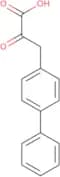
CAS:<p>Versatile small molecule scaffold</p>Formula:C7H9N3O3Purity:Min. 95%Molecular weight:183.16 g/mol2-Oxo-3-(4-phenylphenyl)propanoic acid
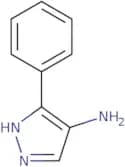
CAS:<p>2-Oxo-3-(4-phenylphenyl)propanoic acid is a chiral molecule that can be synthesized from 4-bromocinnamic acid and 2,3-dichlorobenzoyl chloride in two steps. The first step is an acid dehydrogenation of the 4-bromocinnamic acid to form the corresponding enol form. The second step is an arylation using 2,3-dichlorobenzoyl chloride. This compound has been found to be highly efficient and selective in its chemoenzymatic synthesis. Promiscuity of this compound has also been observed, which allows it to be used for the synthesis of various other compounds.</p>Formula:C15H12O3Purity:Min. 95%Molecular weight:240.25 g/mol3-Phenyl-1H-pyrazol-4-amine
CAS:<p>Versatile small molecule scaffold</p>Formula:C9H9N3Purity:Min. 95%Molecular weight:159.19 g/mol1-Methyl-5-phenyl-1H-pyrazol-4-amine
CAS:<p>Versatile small molecule scaffold</p>Formula:C10H11N3Purity:Min. 95%Molecular weight:173.21 g/mol2-[4-Chloro-2-(dimethylsulfamoyl)phenoxy]propanoic acid
CAS:<p>Versatile small molecule scaffold</p>Formula:C11H14ClNO5SPurity:Min. 95%Molecular weight:307.75 g/mol4-chloro-6-methyl-5h-pyrrolo[3,2-d]pyrimidine
CAS:<p>Versatile small molecule scaffold</p>Formula:C7H6ClN3Purity:Min. 95%Molecular weight:167.6 g/mol2-(Chloromethyl)-1H-benzimidazole hydrochloride
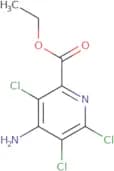
CAS:<p>Versatile small molecule scaffold</p>Formula:C8H8Cl2N2Purity:Min. 95%Molecular weight:203.07 g/molEthyl 4-amino-3,5,6-trichloropicolinate
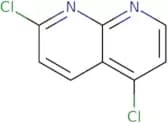
CAS:<p>Versatile small molecule scaffold</p>Formula:C8H7Cl3N2O2Purity:Min. 95%Molecular weight:269.5 g/mol2,5-Dichloro-1,8-naphthyridine
CAS:<p>Versatile small molecule scaffold</p>Formula:C8H4Cl2N2Purity:Min. 95%Molecular weight:199.03 g/mol4-[(2-Methoxyphenyl)methyl]-1H-imidazole hydrochloride
CAS:<p>Versatile small molecule scaffold</p>Formula:C11H13ClN2OPurity:Min. 95%Molecular weight:224.68 g/mol2-(3-Nitrophenyl)cyclopropane-1-carboxylic acid
CAS:<p>Versatile small molecule scaffold</p>Formula:C10H9NO4Purity:Min. 95%Molecular weight:207.18 g/mol4-Methoxy-5,8,8-trimethylbicyclo[3.2.1]oct-3-en-2-one
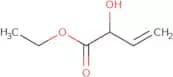
CAS:<p>Versatile small molecule scaffold</p>Formula:C12H18O2Purity:Min. 95%Molecular weight:194.27 g/molEthyl 2-hydroxybut-3-enoate
CAS:<p>Versatile small molecule scaffold</p>Formula:C6H10O3Purity:Min. 95%Molecular weight:130.14 g/mol2-Amino-N,N-dimethylethane-1-sulfonamide hydrochloride
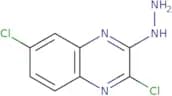
CAS:<p>Versatile small molecule scaffold</p>Formula:C4H13ClN2O2SPurity:Min. 95%Molecular weight:188.67 g/mol2,6-Dichloro-3-hydrazinoquinoxaline
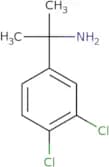
CAS:<p>Versatile small molecule scaffold</p>Formula:C8H6Cl2N4Purity:Min. 95%Molecular weight:229.06 g/mol2-(3,4-Dichlorophenyl)propan-2-amine
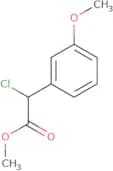
CAS:<p>Versatile small molecule scaffold</p>Formula:C9H11Cl2NPurity:Min. 95%Molecular weight:204.09 g/molMethyl 2-chloro-2-(3-methoxyphenyl)acetate
CAS:<p>Versatile small molecule scaffold</p>Formula:C10H11ClO3Purity:Min. 95%Molecular weight:214.64 g/mol2-Chloro-N-[1-(4-chlorophenyl)ethyl]acetamide
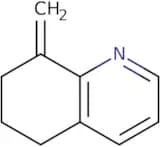
CAS:<p>Versatile small molecule scaffold</p>Formula:C10H11Cl2NOPurity:Min. 95%Molecular weight:232.1 g/mol8-Methylidene-5,6,7,8-tetrahydroquinoline
CAS:<p>Versatile small molecule scaffold</p>Formula:C10H11NPurity:Min. 95%Molecular weight:145.2 g/mol7-Methyl-5-phenylpyrazolo[1,5-a]pyrimidin-2-ol
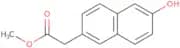
CAS:<p>Versatile small molecule scaffold</p>Formula:C13H11N3OPurity:Min. 95%Molecular weight:225.25 g/molMethyl 2-(6-hydroxynaphthalen-2-yl)acetate
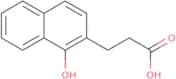
CAS:<p>Versatile small molecule scaffold</p>Formula:C13H12O3Purity:Min. 95%Molecular weight:216.23 g/mol3-(1-Hydroxynaphthalen-2-yl)propanoic acid
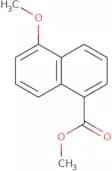
CAS:<p>Versatile small molecule scaffold</p>Formula:C13H12O3Purity:Min. 95%Molecular weight:216.23 g/molMethyl 5-methoxy-1-naphthoate
CAS:<p>Versatile small molecule scaffold</p>Formula:C13H12O3Purity:Min. 95%Molecular weight:216.23 g/mol[1-(2-Phenylethyl)pyrrolidin-3-yl]methanamine
CAS:<p>Versatile small molecule scaffold</p>Formula:C13H20N2Purity:Min. 95%Molecular weight:204.31 g/mol(1-Benzyl-4-methylpiperazin-2-yl)methanol
CAS:<p>Versatile small molecule scaffold</p>Formula:C13H20N2OPurity:Min. 95%Molecular weight:220.3 g/mol3-Butyl-1-[(4-methylphenyl)methyl]thiourea
CAS:<p>Versatile small molecule scaffold</p>Formula:C13H20N2SPurity:Min. 95%Molecular weight:236.38 g/mol

![2-[(2-Bromoethoxy)methyl]oxirane](/_next/image/?url=https%3A%2Fstatic.cymitquimica.com%2Fproducts%2F3D%2Fthumb-webp%2FRCA80359.webp&w=3840&q=75)
![2-[(6-Amino-1H-purin-8-yl)amino]ethan-1-ol](/_next/image/?url=https%3A%2Fstatic.cymitquimica.com%2Fproducts%2F3D%2Fthumb-webp%2FRCA81329.webp&w=3840&q=75)
![(2-Chloroethyl)[(4-fluorophenyl)methyl]methylamine hydrochloride](/_next/image/?url=https%3A%2Fstatic.cymitquimica.com%2Fproducts%2F3D%2Fthumb-webp%2FRDA81770.webp&w=3840&q=75)


![2-Chloro-6-[(4-chlorophenyl)sulfanyl]benzonitrile](/_next/image/?url=https%3A%2Fstatic.cymitquimica.com%2Fproducts%2F3D%2Fthumb-webp%2FRDA82205.webp&w=3840&q=75)
![2-[(Methoxycarbonyl)amino]-2-methylpropanoic acid](/_next/image/?url=https%3A%2Fstatic.cymitquimica.com%2Fproducts%2F3D%2Fthumb-webp%2FRDA82696.webp&w=3840&q=75)
![1,3-Dioxo-2,3-dihydro-1H-isoindol-2-yl 2-{[(tert-butoxy)carbonyl]amino}acetate](/_next/image/?url=https%3A%2Fstatic.cymitquimica.com%2Fproducts%2F3D%2Fthumb-webp%2FRDA83743.webp&w=3840&q=75)

![1,4-Dichloro-5H,6H,7H-cyclopenta[D]pyridazine](/_next/image/?url=https%3A%2Fstatic.cymitquimica.com%2Fproducts%2F3D%2Fthumb-webp%2FRDA84680.webp&w=3840&q=75)

![2-[4-Chloro-2-(dimethylsulfamoyl)phenoxy]propanoic acid](/_next/image/?url=https%3A%2Fstatic.cymitquimica.com%2Fproducts%2F3D%2Fthumb-webp%2FRDA85920.webp&w=3840&q=75)
![4-chloro-6-methyl-5h-pyrrolo[3,2-d]pyrimidine](/_next/image/?url=https%3A%2Fstatic.cymitquimica.com%2Fproducts%2F3D%2Fthumb-webp%2FRDA86235.webp&w=3840&q=75)

![4-[(2-Methoxyphenyl)methyl]-1H-imidazole hydrochloride](/_next/image/?url=https%3A%2Fstatic.cymitquimica.com%2Fproducts%2F3D%2Fthumb-webp%2FRDA87445.webp&w=3840&q=75)

![4-Methoxy-5,8,8-trimethylbicyclo[3.2.1]oct-3-en-2-one](/_next/image/?url=https%3A%2Fstatic.cymitquimica.com%2Fproducts%2F3D%2Fthumb-webp%2FRDA88113.webp&w=3840&q=75)

![2-Chloro-N-[1-(4-chlorophenyl)ethyl]acetamide](/_next/image/?url=https%3A%2Fstatic.cymitquimica.com%2Fproducts%2F3D%2Fthumb-webp%2FRDA90033.webp&w=3840&q=75)
![7-Methyl-5-phenylpyrazolo[1,5-a]pyrimidin-2-ol](/_next/image/?url=https%3A%2Fstatic.cymitquimica.com%2Fproducts%2F3D%2Fthumb-webp%2FRDA90203.webp&w=3840&q=75)
![[1-(2-Phenylethyl)pyrrolidin-3-yl]methanamine](/_next/image/?url=https%3A%2Fstatic.cymitquimica.com%2Fproducts%2F3D%2Fthumb-webp%2FRDA90423.webp&w=3840&q=75)
![3-Butyl-1-[(4-methylphenyl)methyl]thiourea](/_next/image/?url=https%3A%2Fstatic.cymitquimica.com%2Fproducts%2F3D%2Fthumb-webp%2FRDA90564.webp&w=3840&q=75)