


Building Blocks
This section contains fundamental products for the synthesis of organic and biological compounds. Building blocks are the essential starting materials used to construct complex molecules through various chemical reactions. They play a critical role in drug discovery, material science, and chemical research. At CymitQuimica, we offer a diverse range of high-quality building blocks to support your innovative research and industrial projects, ensuring you have the essential components for successful synthesis.
Subcategories of "Building Blocks"
- Boronic Acids & Boronic Acid Derivatives(5,756 products)
- Chiral Building Blocks(1,242 products)
- Hydrocarbon Building Blocks(6,095 products)
- Organic Building Blocks(61,055 products)
Found 199650 products of "Building Blocks"
Sort by
Purity (%)
0
100
|
0
|
50
|
90
|
95
|
100
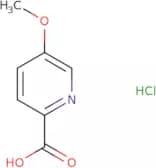
5-Methoxypyridine-2-carboxylic acid hydrochloride
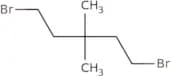
CAS:<p>Versatile small molecule scaffold</p>Formula:C7H8ClNO3Purity:Min. 95%Molecular weight:189.59 g/mol1,5-Dibromo-3,3-dimethylpentane
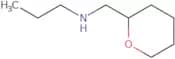
CAS:<p>Versatile small molecule scaffold</p>Formula:C7H14Br2Purity:Min. 95%Molecular weight:257.99 g/mol(Oxan-2-ylmethyl)(propyl)amine
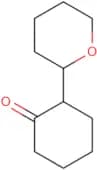
CAS:<p>Versatile small molecule scaffold</p>Formula:C9H19NOPurity:Min. 95%Molecular weight:157.25 g/mol2-(Oxan-2-yl)cyclohexan-1-one
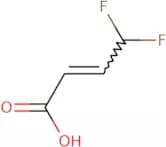
CAS:<p>Versatile small molecule scaffold</p>Formula:C11H18O2Purity:Min. 95%Molecular weight:182.3 g/mol4,4-Difluoro-but-2-enoic acid
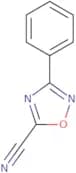
CAS:<p>Versatile small molecule scaffold</p>Formula:C4H4F2O2Purity:Min. 95%Molecular weight:122.07 g/mol3-Phenyl-1,2,4-oxadiazole-5-carbonitrile
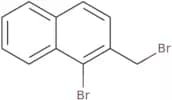
CAS:<p>Versatile small molecule scaffold</p>Formula:C9H5N3OPurity:Min. 95%Molecular weight:171.16 g/mol1-Bromo-2-(bromomethyl)naphthalene
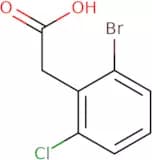
CAS:<p>1-Bromo-2-(bromomethyl)naphthalene is an organic compound that has a chiral center. It is a ligand in coordination chemistry and can be used as a starting material for the synthesis of other compounds. 1-Bromo-2-(bromomethyl)naphthalene crystallizes in the orthorhombic space group Pna21, with cell dimensions of a = 15.02 Å, b = 13.77 Å, c = 13.91 Å, α = 90°, β = 90°, γ = 90°. The molecular structure has been determined by x-ray diffraction data collected at 100 K on beamline I06 at the Advanced Photon Source synchrotron facility in Illinois. The crystal structure contains two molecules per asymmetric unit, with an approximate Z value of 2 (atoms are ordered according to their atomic numbers). One molecule is oriented parallel to</p>Formula:C11H8Br2Purity:Min. 95%Molecular weight:299.99 g/mol2-(2-Bromo-6-chlorophenyl)acetic acid
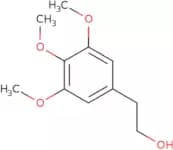
CAS:<p>Versatile small molecule scaffold</p>Formula:C8H6BrClO2Purity:Min. 95%Molecular weight:249.49 g/mol2-(3,4,5-Trimethoxyphenyl)ethanol
CAS:Controlled Product<p>2-(3,4,5-Trimethoxyphenyl)ethanol is a conjugate of 3,4,5-trimethoxybenzaldehyde and ethanol. It has shown in vitro antifungal activity against Candida strains and antibacterial activity against Escherichia coli and Staphylococcus aureus. 2-(3,4,5-Trimethoxyphenyl)ethanol can be used as an antifungal agent in the treatment of fungal infections. It has also been shown to act as an acetoacetate receptor for the conversion of acetoacetate into acetoacetyl CoA during fatty acid synthesis. This compound has also been used in the synthesis of mescaline.</p>Formula:C11H16O4Purity:Min. 95%Molecular weight:212.24 g/mol1-Methyl-2,6,7-trioxabicyclo[2.2.2]octan-4-amine
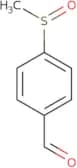
CAS:<p>Versatile small molecule scaffold</p>Formula:C6H11NO3Purity:Min. 95%Molecular weight:145.16 g/mol4-Methanesulfinylbenzaldehyde
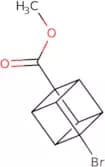
CAS:<p>4-Methanesulfinylbenzaldehyde is an antiinflammatory agent that inhibits the production of prostaglandin E2 (PGE2) by inhibiting the conversion of arachidonic acid to PGE2. It also has antioxidant properties, which may be due to its ability to inhibit peroxide oxidation. 4-Methanesulfinylbenzaldehyde is used in the treatment of inflammatory skin diseases such as atopic dermatitis, acne vulgaris and psoriasis.</p>Formula:C8H8O2SPurity:Min. 95%Molecular weight:168.21 g/molMethyl (1S,2R,3R,8S)-4-bromocubane-1-carboxylate
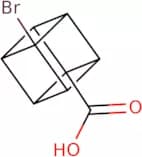
CAS:<p>Methyl (1S,2R,3R,8S)-4-bromocubane-1-carboxylate is an experimental compound that has been shown to produce efficient crystallization of various organic compounds. It is a vicinal difunctional reagent with the carbonyl group on one end and the fluorine atom at the other. It is an X-ray sensitive substance and can be used for x-ray diffraction studies. This compound is also useful for preparing carbonyl fluorides. Methyl (1S,2R,3R,8S)-4-bromocubane-1-carboxylate can be used in crystallography studies because it forms well defined crystals in space groups P21/n and P21/c.</p>Formula:C10H9BrO2Purity:Min. 95%Molecular weight:241.08 g/mol8-Bromocubane-1-carboxylic acid
CAS:<p>Versatile small molecule scaffold</p>Formula:C9H7BrO2Purity:Min. 95%Molecular weight:227.05 g/mol5-(Aminomethyl)benzo[b]furan
CAS:<p>5-(Aminomethyl)benzo[b]furan is a drug that has been shown to inhibit the histamine h3 receptor and transcriptase. It has been used in the treatment of allergic reactions, such as those caused by histamine release. The drug is classified as a non-nucleoside inhibitor of reverse transcriptase. 5-(Aminomethyl)benzo[b]furan has also been shown to be effective against viral strains that are resistant to nucleoside analogues, such as HIV-1, HIV-2, and influenza A. 5-(Aminomethyl)benzo[b]furan binds to the active site of reverse transcriptase and inhibits the synthesis of viral RNA from single-stranded DNA. This binding prevents the formation of a double-stranded DNA with complementary RNA template necessary for viral replication.</p>Formula:C9H9NOPurity:Min. 95%Molecular weight:147.17 g/mol4-Hydroxy-1-methyl-1H-pyrazolo[3,4-b]pyridine-5-carboxylic acid
CAS:<p>Versatile small molecule scaffold</p>Formula:C8H7N3O3Purity:Min. 95%Molecular weight:193.16 g/molEthyl 4-chloro-1-methyl-1H-pyrazolo[3,4-b]pyridine-5-carboxylate
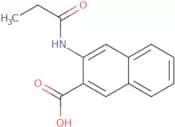
CAS:<p>Versatile small molecule scaffold</p>Formula:C10H10ClN3O2Purity:Min. 95%Molecular weight:239.66 g/mol3-Propanamidonaphthalene-2-carboxylic acid
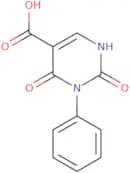
CAS:<p>Versatile small molecule scaffold</p>Formula:C14H13NO3Purity:Min. 95%Molecular weight:243.26 g/mol2,4-Dioxo-3-phenyl-1,2,3,4-tetrahydropyrimidine-5-carboxylic acid
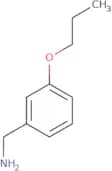
CAS:<p>Versatile small molecule scaffold</p>Formula:C11H8N2O4Purity:Min. 95%Molecular weight:232.19 g/mol(3-Propoxyphenyl)methanamine hydrochloride
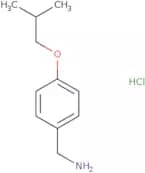
CAS:<p>Versatile small molecule scaffold</p>Formula:C10H16ClNOPurity:Min. 95%Molecular weight:201.7 g/mol(4-Isobutoxyphenyl)methanamine hydrochloride
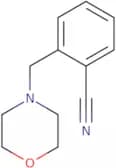
CAS:<p>Versatile small molecule scaffold</p>Formula:C11H18ClNOPurity:Min. 95%Molecular weight:215.72 g/mol2-(Morpholinomethyl)benzonitrile
CAS:<p>Versatile small molecule scaffold</p>Formula:C12H14N2OPurity:Min. 95%Molecular weight:202.26 g/mol4-[(Phenylamino)methyl]benzonitrile
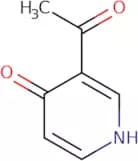
CAS:<p>Versatile small molecule scaffold</p>Formula:C14H12N2Purity:Min. 95%Molecular weight:208.26 g/mol3-Acetylpyridin-4(1H)-one
CAS:<p>Versatile small molecule scaffold</p>Formula:C7H7NO2Purity:Min. 95%Molecular weight:137.14 g/molO-[(3-Pyridyl)methyl]hydroxylamine
CAS:<p>O-[(3-Pyridyl)methyl]hydroxylamine is an epimer of hydroxylamine. It is a nucleic acid that can be enzymatically synthesized and is used in the synthesis of oligosaccharides with uronic acids, such as dermatan sulfate. O-[(3-Pyridyl)methyl]hydroxylamine attacks sulfated glycosaminoglycans and glycosaminoglycan chains in the skin, causing a loss of water from the skin. This drug has been shown to have affinity for dermatan and deuterium, which may result in its use as a marker for dermatan sulfate.</p>Formula:C6H8N2OPurity:Min. 95%Molecular weight:124.14 g/mol3,3,5-Trimethylpiperidine
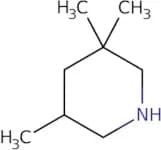
CAS:<p>Versatile small molecule scaffold</p>Formula:C8H17NPurity:Min. 95%Molecular weight:127.23 g/mol1-(1-Methyl-piperidin-4-yl)-ethanol
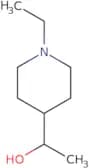
CAS:<p>Versatile small molecule scaffold</p>Formula:C8H17NOPurity:Min. 95%Molecular weight:143.22 g/mol1-(1-Ethylpiperidin-4-yl)ethan-1-ol
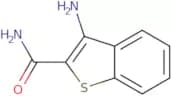
CAS:<p>Versatile small molecule scaffold</p>Formula:C9H19NOPurity:Min. 95%Molecular weight:157.25 g/mol3-Amino-1-benzothiophene-2-carboxamide
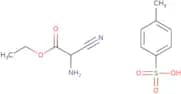
CAS:<p>Versatile small molecule scaffold</p>Formula:C9H8N2OSPurity:Min. 95%Molecular weight:192.24 g/molEthyl 2-amino-2-cyanoacetate 4-methylbenzenesulfonate
CAS:<p>Versatile small molecule scaffold</p>Formula:C12H16N2O5SPurity:Min. 95%Molecular weight:300.33 g/mol3-[(2-Aminophenyl)sulfanyl]-2-methylpropanenitrile
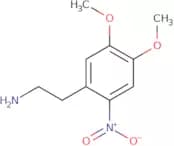
CAS:<p>Versatile small molecule scaffold</p>Formula:C10H12N2SPurity:Min. 95%Molecular weight:192.28 g/mol2-(4,5-Dimethoxy-2-nitrophenyl)ethan-1-amine
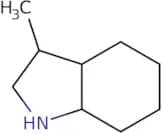
CAS:Controlled Product<p>Versatile small molecule scaffold</p>Formula:C10H14N2O4Purity:Min. 95%Molecular weight:226.23 g/mol3-Methyl-octahydro-1H-indole
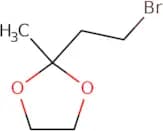
CAS:<p>Versatile small molecule scaffold</p>Formula:C9H17NPurity:Min. 95%Molecular weight:139.24 g/mol2-(2-Bromoethyl)-2-methyl-1,3-dioxolane
CAS:2-(2-Bromoethyl)-2-methyl-1,3-dioxolane is a carbonyl compound that can be used to form an asymmetric epoxide from an ethylene. This product has been shown to produce isolated yields of ketones and acetals. It is a reagent for the asymmetric synthesis of alcohols and amines. 2-(2-Bromoethyl)-2-methyl-1,3-dioxolane also reacts with benzene in the presence of an acid catalyst to give a mixture of epoxides.Formula:C6H11BrO2Purity:Min. 95%Molecular weight:195.06 g/mol4-Azaspiro[bicyclo[2.2.2]octane-2,4'-imidazolidine]-2',5'-dione
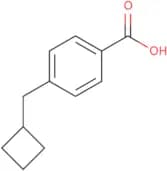
CAS:Versatile small molecule scaffoldFormula:C9H13N3O2Purity:Min. 95%Molecular weight:195.22 g/mol4-(Cyclobutylmethyl)benzoic acid
CAS:<p>Versatile small molecule scaffold</p>Formula:C12H14O2Purity:Min. 95%Molecular weight:190.24 g/mol2',4'-Dichloropropiophenone
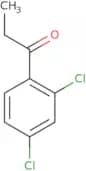
CAS:<p>2',4'-Dichloropropiophenone is an organic solvent that is used in pharmaceuticals. It has been shown to be a versatile reagent for the synthesis of chalcones and other types of compounds. 2',4'-Dichloropropiophenone can be used in the cross-coupling reaction, which involves the coupling of two organic molecules using a metal catalyst (usually copper) to generate new compounds. The dehydrohalogenating reaction, which involves the conversion of epoxides into alcohols, can be performed with 2',4'-dichloropropiophenone. This compound also reacts with amines to form oximes or aziridines and with epoxy groups to form epoxy ethers. Finally, it is an oxidant that can react with benzene to produce phenols, biphenyls, or nitrobenzenes.</p>Formula:C9H8Cl2OPurity:Min. 95%Molecular weight:203.06 g/moltert-Butylamino-acetic acid ethyl ester
CAS:<p>Versatile small molecule scaffold</p>Formula:C8H17NO2Purity:Min. 95%Molecular weight:159.23 g/mol2-{[(2,2,2-Trifluoroethoxy)carbonyl]amino}acetic acid
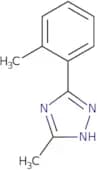
CAS:<p>Versatile small molecule scaffold</p>Formula:C5H6F3NO4Purity:Min. 95%Molecular weight:201.1 g/mol3-Methyl-5-(2-methylphenyl)-1H-1,2,4-triazole
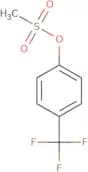
CAS:<p>Versatile small molecule scaffold</p>Formula:C10H11N3Purity:Min. 95%Molecular weight:173.21 g/mol4-(Trifluoromethyl)phenyl methanesulfonate
CAS:<p>Versatile small molecule scaffold</p>Formula:C8H7F3O3SPurity:Min. 95%Molecular weight:240.2 g/mol2-Ethyl-3-methylquinoxaline
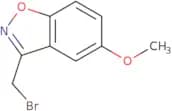
CAS:<p>Quinoxalines are a class of heterocyclic compounds that is structurally related to the more common amino acid, tryptophan. They are typically synthesized by modifications of the quinoxaline ring system with epoxide, amine, or carbonyl groups. Quinoxalines can be analyzed using many different techniques including gas chromatography-mass spectrometry, liquid chromatography-mass spectrometry, and nuclear magnetic resonance spectroscopy. The most common modification is the addition of an aminoguanidine group that is used to distinguish between 2-ethyl-3-methylquinoxaline and 3-ethyl-2-methylquinoxaline. The reaction time between glyoxal and aniline to produce 2-ethyl-3-methylquinoxaline can be optimized by adding potassium dichromate as a catalyst.</p>Formula:C11H12N2Purity:Min. 95%Molecular weight:172.23 g/mol3-(Bromomethyl)-5-methoxy-1,2-benzoxazole
CAS:Versatile small molecule scaffoldFormula:C9H8BrNO2Purity:Min. 95%Molecular weight:242.07 g/mol2,6-Dimethyl-4-methoxybenzoic acid
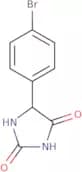
CAS:<p>Versatile small molecule scaffold</p>Formula:C10H12O3Purity:Min. 95%Molecular weight:180.2 g/mol5-(4-Bromophenyl)imidazolidine-2,4-dione
CAS:<p>Versatile small molecule scaffold</p>Formula:C9H7BrN2O2Purity:Min. 95%Molecular weight:255.07 g/mol2-[3-Bromo-4-(propan-2-yloxy)phenyl]acetonitrile
CAS:Versatile small molecule scaffoldFormula:C11H12BrNOPurity:Min. 95%Molecular weight:254.12 g/molEthyl 3-[(5-hydroxypentyl)(methyl)amino]propanoate
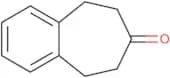
CAS:Versatile small molecule scaffoldFormula:C11H23NO3Purity:Min. 95%Molecular weight:217.31 g/mol5,6,8,9-Tetrahydrobenzocyclohepten-7-one
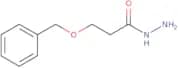
CAS:<p>5,6,8,9-Tetrahydrobenzocyclohepten-7-one is a methylated analogue of benzocycloheptene. It is prepared by the reaction of dichlorocarbene (1) with 7-hydroxybenzocycloheptene (2). The deuterium isotope effect on the conformation of 5,6,8,9-tetrahydrobenzocyclohepten-7-one has been investigated using a spectroscopic technique. The reaction parameters have been optimized for this transformation to produce the desired product in high yield.</p>Formula:C11H12OPurity:Min. 95%Molecular weight:160.22 g/mol3-(Benzyloxy)propanehydrazide
CAS:<p>Versatile small molecule scaffold</p>Formula:C10H14N2O2Purity:Min. 95%Molecular weight:194.23 g/mol2-[5-Oxo-1-(pyridin-2-yl)-2,5-dihydro-1H-pyrazol-3-yl]acetic acid
CAS:<p>Versatile small molecule scaffold</p>Formula:C10H9N3O3Purity:Min. 95%Molecular weight:219.2 g/mol3H,4H-Pyrido[3,2-d][1,2,3]triazin-4-one
CAS:<p>3H,4H-Pyrido[3,2-d][1,2,3]triazin-4-one is a heterocyclic compound that belongs to the group of endometriosis drugs. It has been shown to inhibit tyrosine kinase and thus has a proliferative effect on the skeleton. 3H,4H-Pyrido[3,2-d][1,2,3]triazin-4-one also has an antiangiogenic activity that prevents the formation of new blood vessels from pre-existing ones. This drug also inhibits tumor growth by blocking cell division and may cause cancerous cells to self destruct. 3H,4H-Pyrido[3,2-d][1,2,3]triazin-4-one can be used to treat symptom of endometriosis such as pain and infertility.</p>Formula:C6H4N4OPurity:Min. 95%Molecular weight:148.12 g/mol

![1-Methyl-2,6,7-trioxabicyclo[2.2.2]octan-4-amine](/_next/image/?url=https%3A%2Fstatic.cymitquimica.com%2Fproducts%2F3D%2Fthumb-webp%2FMBA78752.webp&w=3840&q=75)
![5-(Aminomethyl)benzo[b]furan](/_next/image/?url=https%3A%2Fstatic.cymitquimica.com%2Fproducts%2F3D%2Fthumb-webp%2FMBA79808.webp&w=3840&q=75)
![4-Hydroxy-1-methyl-1H-pyrazolo[3,4-b]pyridine-5-carboxylic acid](/_next/image/?url=https%3A%2Fstatic.cymitquimica.com%2Fproducts%2F3D%2Fthumb-webp%2FMBA80004.webp&w=3840&q=75)
![Ethyl 4-chloro-1-methyl-1H-pyrazolo[3,4-b]pyridine-5-carboxylate](/_next/image/?url=https%3A%2Fstatic.cymitquimica.com%2Fproducts%2F3D%2Fthumb-webp%2FMBA80157.webp&w=3840&q=75)
![4-[(Phenylamino)methyl]benzonitrile](/_next/image/?url=https%3A%2Fstatic.cymitquimica.com%2Fproducts%2F3D%2Fthumb-webp%2FMBA81249.webp&w=3840&q=75)
![O-[(3-Pyridyl)methyl]hydroxylamine](/_next/image/?url=https%3A%2Fstatic.cymitquimica.com%2Fproducts%2F3D%2Fthumb-webp%2FMBA83220.webp&w=3840&q=75)
![3-[(2-Aminophenyl)sulfanyl]-2-methylpropanenitrile](/_next/image/?url=https%3A%2Fstatic.cymitquimica.com%2Fproducts%2F3D%2Fthumb-webp%2FMBA84563.webp&w=3840&q=75)
![4-Azaspiro[bicyclo[2.2.2]octane-2,4'-imidazolidine]-2',5'-dione](/_next/image/?url=https%3A%2Fstatic.cymitquimica.com%2Fproducts%2F3D%2Fthumb-webp%2FMBA87420.webp&w=3840&q=75)

![2-{[(2,2,2-Trifluoroethoxy)carbonyl]amino}acetic acid](/_next/image/?url=https%3A%2Fstatic.cymitquimica.com%2Fproducts%2F3D%2Fthumb-webp%2FMBA88815.webp&w=3840&q=75)


![2-[3-Bromo-4-(propan-2-yloxy)phenyl]acetonitrile](/_next/image/?url=https%3A%2Fstatic.cymitquimica.com%2Fproducts%2F3D%2Fthumb-webp%2FMBA94639.webp&w=3840&q=75)
![Ethyl 3-[(5-hydroxypentyl)(methyl)amino]propanoate](/_next/image/?url=https%3A%2Fstatic.cymitquimica.com%2Fproducts%2F3D%2Fthumb-webp%2FMBA94715.webp&w=3840&q=75)
![2-[5-Oxo-1-(pyridin-2-yl)-2,5-dihydro-1H-pyrazol-3-yl]acetic acid](/_next/image/?url=https%3A%2Fstatic.cymitquimica.com%2Fproducts%2F3D%2Fthumb-webp%2FMBA95919.webp&w=3840&q=75)
![3H,4H-Pyrido[3,2-d][1,2,3]triazin-4-one](/_next/image/?url=https%3A%2Fstatic.cymitquimica.com%2Fproducts%2F3D%2Fthumb-webp%2FMBA96289.webp&w=3840&q=75)