Building Blocks
This section contains fundamental products for the synthesis of organic and biological compounds. Building blocks are the essential starting materials used to construct complex molecules through various chemical reactions. They play a critical role in drug discovery, material science, and chemical research. At CymitQuimica, we offer a diverse range of high-quality building blocks to support your innovative research and industrial projects, ensuring you have the essential components for successful synthesis.
Subcategories of "Building Blocks"
- Boronic Acids & Boronic Acid Derivatives(5,756 products)
- Chiral Building Blocks(1,242 products)
- Hydrocarbon Building Blocks(6,095 products)
- Organic Building Blocks(61,055 products)
Found 199650 products of "Building Blocks"
Sort by
Purity (%)
0
100
|
0
|
50
|
90
|
95
|
100
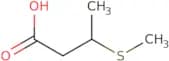
3-(Methylsulfanyl)butanoic acid
CAS:<p>Versatile small molecule scaffold</p>Formula:C5H10O2SPurity:Min. 95%Molecular weight:134.2 g/mol2-Amino-4-oxohexanoic acid hydrochloride
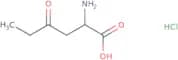
CAS:<p>Versatile small molecule scaffold</p>Formula:C6H12ClNO3Purity:Min. 95%Molecular weight:181.62 g/molrac-(1R,2R)-2-(4-Methylphenyl)cyclopropane-1-carboxylic acid
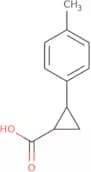
CAS:Versatile small molecule scaffoldFormula:C11H12O2Purity:Min. 95%Molecular weight:176.21 g/molrac-(1R,2R)-2-(3-Chlorophenyl)cyclopropane-1-carboxylic acid
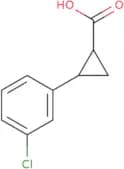
CAS:<p>Versatile small molecule scaffold</p>Formula:C10H9ClO2Purity:Min. 95%Molecular weight:196.63 g/molrac-(1R,2R)-2-(4-Nitrophenyl)cyclopropane-1-carboxylic acid
CAS:<p>Versatile small molecule scaffold</p>Formula:C10H9NO4Purity:Min. 95%Molecular weight:207.18 g/mol5-Chloro-3-nitrosalicylaldehyde
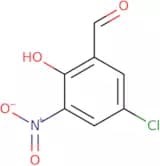
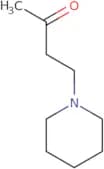
CAS:<p>5-Chloro-3-nitrosalicylaldehyde is a cyclohexanol with catalytic properties. It has been shown to have high activity in the transfer and selectivity of cyclohexanone from cyclohexane. 5-Chloro-3-nitrosalicylaldehyde has also been used as a ligand in the preparation of catalysts for electrochemical reactions. 5-Chloro-3-nitrosalicylaldehyde is used in spectroscopic studies and elemental analysis, which includes elemental analysis by gas chromatography, atomic absorption spectroscopy, inductively coupled plasma mass spectrometry, and X ray powder diffraction.</p>Formula:C7H4ClNO4Purity:Min. 95%Molecular weight:201.56 g/mol4-(Piperidin-1-yl)butan-2-one
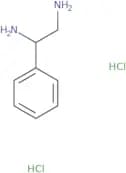
CAS:<p>Versatile small molecule scaffold</p>Formula:C9H17NOPurity:Min. 95%Molecular weight:155.24 g/mol1-Phenylethane-1,2-diamine dihydrochloride
CAS:<p>Versatile small molecule scaffold</p>Formula:C8H14Cl2N2Purity:Min. 95%Molecular weight:209.12 g/mol2-Propenoic acid, 3-(4-cyanophenyl)-, (E)-
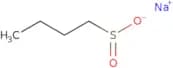
CAS:<p>2-Propenoic acid, 3-(4-cyanophenyl)-, (E)- is a fatty acid that is used in the production of biodiesel. This reaction is catalyzed by an acid methyl ester, which can be either reactive or unreactive. The product of this reaction - fatty acid methyl esters - has significant activity as an anion and has a high boiling point. It also has the potential to be used as a fuel in the future.</p>Formula:C10H7NO2Purity:Min. 95%Molecular weight:173.17 g/molSodium butane-1-sulfinate
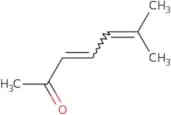
CAS:<p>Sodium butane-1-sulfinate is a reagent that can be used to synthesize sulfoxides, pyrrole derivatives, and other organic compounds. It is also used as a salt form for pharmaceuticals. Sodium butane-1-sulfinate may be used to produce sulfoxides, which are often used in organic synthesis because they are both reactive and unreactive. This compound has been found to be an antagonist of the CRTH2 receptor, which is involved in the production of prostaglandins that regulate inflammation.</p>Formula:C4H9NaO2SPurity:Min. 95%Molecular weight:144.17 g/mol6-Methyl-3,5-heptadien-2-one
CAS:<p>This product is a mixture of 6-methyl-3,5-heptadien-2-one and 2,6-dimethyloctane. It has a pleasant, fruity odor. It is used as an additive for perfumes and other products to improve the smell. This product can be found in foods such as meat, cheese, chocolate, and coffee. The minutiflora plant contains this compound. It is also present in propolis and chitosan nanoparticles (as an antioxidant). The maltol content of this product is about 95% with yields ranging from 10% to 50%.</p>Formula:C8H12OPurity:Min. 95%Molecular weight:124.18 g/molBicyclo[3.1.0]hexane-6-carboxylic acid, somers
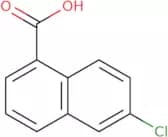
CAS:<p>Bicyclo[3.1.0]hexane-6-carboxylic acid, somers is an organic compound that is a carboxylic acid derivative with a cyclopentane ring and six carboxyl groups. It is used in the synthesis of other compounds, such as hydroxyalkyl, tetrahydropyranyl, sulfur, carboxylic acid, alkylthio, c1-6 alkyl, cycloalkyl and efficient carboxylic. Bicyclo[3.1.0]hexane-6-carboxylic acid, somers can be synthesized from bicyclo[2.2.1]heptane-2-carboxylic acid by reaction with ethylene oxide and hydrogen sulfide in the presence of a catalytic amount of hydrochloric acid or pyridine hydrochloride.</p>Formula:C7H10O2Purity:Min. 95%Molecular weight:126.15 g/mol6-Chloronaphthalene-1-carboxylic acid
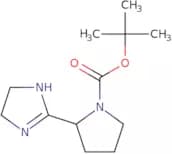
CAS:<p>6-Chloronaphthalene-1-carboxylic acid is a chlorinated aromatic compound with the chemical formula ClCH=CClO2H. The compound was first synthesized in 1887 by Friedel and Crafts reaction between aluminum chloride and 2-furoic acid. It is an intermediate in the production of chlorobenzene, which is used to make polychlorinated biphenyls (PCBs). 6-Chloronaphthalene-1-carboxylic acid can be prepared by nitration of benzene or toluene, followed by hydrolysis with hydrochloric acid. It also has applications as a herbicide.</p>Formula:C11H7ClO2Purity:Min. 95%Molecular weight:206.62 g/moltert-Butyl 2-(4,5-dihydro-1H-imidazol-2-yl)pyrrolidine-1-carboxylate
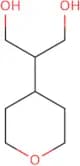
CAS:<p>Versatile small molecule scaffold</p>Formula:C12H21N3O2Purity:Min. 95%Molecular weight:239.31 g/mol2-(Oxan-4-yl)propane-1,3-diol
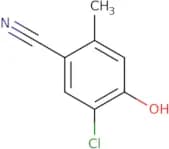
CAS:<p>Versatile small molecule scaffold</p>Formula:C8H16O3Purity:Min. 95%Molecular weight:160.21 g/mol5-Chloro-4-hydroxy-2-methylbenzonitrile
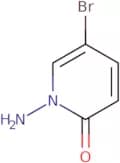
CAS:<p>Versatile small molecule scaffold</p>Formula:C8H6ClNOPurity:Min. 95%Molecular weight:167.59 g/mol1-Amino-5-bromo-1,2-dihydropyridin-2-one
CAS:<p>Versatile small molecule scaffold</p>Formula:C5H5BrN2OPurity:Min. 95%Molecular weight:189.01 g/mol8-Oxo-7H,8H-imidazo[1,2-a]pyrazine-2-carboxylic acid
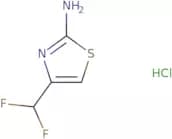
CAS:<p>Versatile small molecule scaffold</p>Formula:C7H5N3O3Purity:Min. 95%Molecular weight:179.13 g/mol4-(Difluoromethyl)-1,3-thiazol-2-amine hydrochloride
CAS:<p>Versatile small molecule scaffold</p>Formula:C4H5ClF2N2SPurity:Min. 95%Molecular weight:186.61 g/mol[(5,5-Dimethylpyrrolidin-3-yl)methyl]dimethylamine
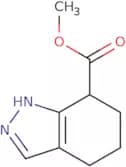
CAS:<p>Versatile small molecule scaffold</p>Formula:C9H20N2Purity:Min. 95%Molecular weight:156.3 g/molMethyl 4,5,6,7-tetrahydro-1H-indazole-7-carboxylate
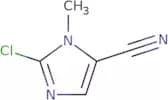
CAS:<p>Versatile small molecule scaffold</p>Formula:C9H12N2O2Purity:Min. 95%Molecular weight:180.2 g/mol2-Chloro-1-methyl-1H-imidazole-5-carbonitrile
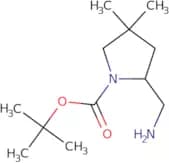
CAS:<p>Versatile small molecule scaffold</p>Formula:C5H4ClN3Purity:Min. 95%Molecular weight:141.56 g/moltert-Butyl 2-(aminomethyl)-4,4-dimethylpyrrolidine-1-carboxylate
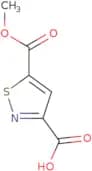
CAS:<p>Versatile small molecule scaffold</p>Formula:C12H24N2O2Purity:Min. 95%Molecular weight:228.33 g/mol5-(Methoxycarbonyl)-1,2-thiazole-3-carboxylic acid
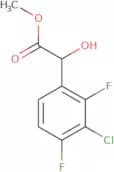
CAS:<p>Versatile small molecule scaffold</p>Formula:C6H5NO4SPurity:Min. 95%Molecular weight:187.2 g/molMethyl 2-(3-chloro-2,4-difluorophenyl)-2-hydroxyacetate
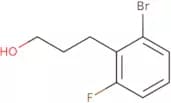
CAS:<p>Versatile small molecule scaffold</p>Formula:C9H7ClF2O3Purity:Min. 95%Molecular weight:236.6 g/mol3-(2-Bromo-6-fluorophenyl)propan-1-ol
CAS:<p>Versatile small molecule scaffold</p>Formula:C9H10BrFOPurity:Min. 95%Molecular weight:233.08 g/mol1-(3-Methanesulfonylphenyl)cyclopentane-1-carboxylic acid
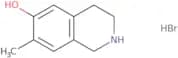
CAS:<p>Versatile small molecule scaffold</p>Formula:C13H16O4SPurity:Min. 95%Molecular weight:268.33 g/mol7-Methyl-1,2,3,4-tetrahydroisoquinolin-6-ol hydrobromide
CAS:<p>Versatile small molecule scaffold</p>Formula:C10H14BrNOPurity:Min. 95%Molecular weight:244.13 g/mol3-[3-(3-Hydroxypropyl)phenyl]propan-1-ol
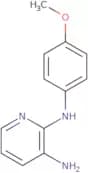
CAS:<p>Versatile small molecule scaffold</p>Formula:C12H18O2Purity:Min. 95%Molecular weight:194.27 g/mol2-N-(4-Methoxyphenyl)pyridine-2,3-diamine
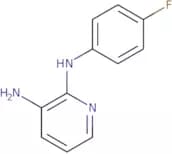
CAS:<p>Versatile small molecule scaffold</p>Formula:C12H13N3OPurity:Min. 95%Molecular weight:215.25 g/mol2-N-(4-Fluorophenyl)pyridine-2,3-diamine
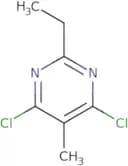
CAS:<p>Versatile small molecule scaffold</p>Formula:C11H10FN3Purity:Min. 95%Molecular weight:203.22 g/mol4,6-Dichloro-2-ethyl-5-methylpyrimidine
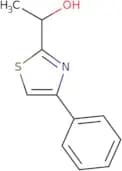
CAS:<p>Versatile small molecule scaffold</p>Formula:C7H8Cl2N2Purity:Min. 95%Molecular weight:191.05 g/mol1-(4-Phenyl-1,3-thiazol-2-yl)ethan-1-ol
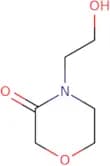
CAS:<p>Versatile small molecule scaffold</p>Formula:C11H11NOSPurity:Min. 95%Molecular weight:205.28 g/mol4-(2-hydroxyethyl)morpholin-3-one
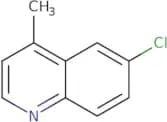
CAS:<p>Versatile small molecule scaffold</p>Formula:C6H11NO3Purity:Min. 95%Molecular weight:145.15 g/mol6-Chloro-4-methylquinoline
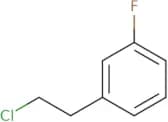
CAS:<p>6-Chloro-4-methylquinoline is a quinoline compound that is used as a catalyst in organic synthesis. It is soluble in butanediol, carbon tetrachloride, and anilines. 6-Chloro-4-methylquinoline catalyzes the conversion of 1,2-dichlorobutane to 2,3-dichloropropane with carbon tetrachloride and butanediol as the reaction solvent. The process can be accelerated by using molecular sieves or aluminum oxide as a catalyst. 6-Chloro-4-methylquinoline has been shown to be effective for the production of 2,3 dichloropropane from 1,2 dichlorobutane via the following reaction:</p>Formula:C10H8ClNPurity:Min. 95%Molecular weight:177.63 g/molBenzene, 1-(2-chloroethyl)-3-fluoro-
CAS:<p>Benzene, 1-(2-chloroethyl)-3-fluoro-, is a fluorinated benzene that is used as an organic sorbent. It has been shown to be nonpolar and polar in nature, with the fluorine atoms contributing to its polarity. The molecule has structural analogs with other fluorinated compounds. In addition, it can be used in chromatographic applications as a stationary phase or as an eluent.</p>Formula:C8H8ClFPurity:Min. 95%Molecular weight:158.6 g/mol6,7,8,9-Tetrahydro-5H-pyrido[2,3-b]azepine
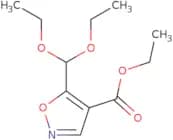
CAS:<p>Versatile small molecule scaffold</p>Formula:C9H12N2Purity:Min. 95%Molecular weight:148.2 g/molEthyl 5-(diethoxymethyl)-1,2-oxazole-4-carboxylate
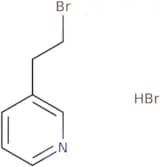
CAS:<p>Versatile small molecule scaffold</p>Formula:C11H17NO5Purity:Min. 95%Molecular weight:243.26 g/mol3-(2-Bromoethyl)pyridine hydrobromide
CAS:<p>Versatile small molecule scaffold</p>Formula:C7H9Br2NPurity:Min. 95%Molecular weight:266.96 g/mol1-(1,3-Thiazol-4-yl)ethan-1-ol
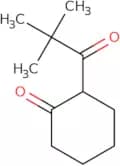
CAS:<p>Versatile small molecule scaffold</p>Formula:C5H7NOSPurity:Min. 95%Molecular weight:129.18 g/mol2-(2,2-Dimethylpropanoyl)cyclohexan-1-one
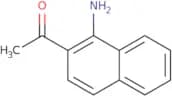
CAS:Versatile small molecule scaffoldFormula:C11H18O2Purity:Min. 95%Molecular weight:182.26 g/mol1-(1-Aminonaphthalen-2-yl)ethan-1-one
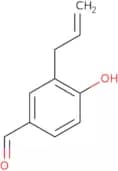
CAS:<p>Versatile small molecule scaffold</p>Formula:C12H11NOPurity:Min. 95%Molecular weight:185.22 g/mol3-Allyl-4-hydroxybenzaldehyde
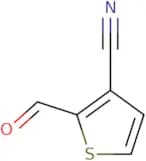
CAS:<p>3-Allyl-4-hydroxybenzaldehyde is a hydroxyalkyl, 6-membered, heteroaromatic ring with a hydroxyl group. It has a hydroxy, alkoxycarbonyl, formyl group, alkoxy group, acid group, alkenyl, alkyloxy, formyl and alkenyl group. 3-Allyl-4-hydroxybenzaldehyde can be found in the chemical family of nitro, carbamoyl.</p>Formula:C10H10O2Purity:Min. 95%Molecular weight:162.19 g/mol2-Formylthiophene-3-carbonitrile
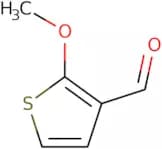
CAS:<p>Versatile small molecule scaffold</p>Formula:C6H3NOSPurity:Min. 95%Molecular weight:137.16 g/mol2-Methoxy-3-thiophenecarboxaldehyde
CAS:<p>Versatile small molecule scaffold</p>Formula:C6H6O2SPurity:Min. 95%Molecular weight:142.17 g/mol1',2'-Dihydrospiro[cyclopentane-1,3'-indole]-2'-one
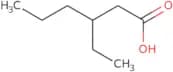
CAS:1',2'-Dihydrospiro[cyclopentane-1,3'-indole]-2'-one is a bromodomain inhibitor that inhibits the function of the bromodomain and prevents it from binding to acetylated lysine residues in the N-terminal domain of histones. This drug has been shown to inhibit the growth and proliferation of cancer cells in vitro. 1',2'-Dihydrospiro[cyclopentane-1,3'-indole]-2'-one is used as an excipient or diluent in pharmaceutical formulations. The drug is also used therapeutically as bromodomain inhibitors for cancers including breast, prostate, and colorectal cancers.Formula:C12H13NOPurity:Min. 95%Molecular weight:187.24 g/mol3-Ethylhexanoic acid
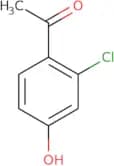
CAS:<p>3-Ethylhexanoic acid is an organic compound that can be synthesized by reacting benzyl chloride with triethylamine and aluminum chloride in the presence of a catalyst such as sulfuric acid. 3-Ethylhexanoic acid is used to produce polymers, solvents, and plasticizers. It has been shown that 3-ethylhexanoic acid reacts with birch wood to give a mixture of enolates, which can then be alkylated to produce a variety of compounds. The reduction of 3-ethylhexanoic acid using lithium reduces it to 2-ethylhexanol.</p>Formula:C8H16O2Purity:Min. 95%Molecular weight:144.21 g/mol1-(2-Chloro-4-methoxyphenyl)ethanone
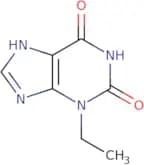
CAS:<p>Versatile small molecule scaffold</p>Formula:C9H9ClO2Purity:Min. 95%Molecular weight:184.62 g/mol3-Ethyl-1H-purine-2,6(3H,7H)-dione
CAS:Controlled Product<p>3-Ethyl-1H-purine-2,6(3H,7H)-dione is a pharmaceutical preparation that is used in the treatment of cardiac diseases. It has been shown to be effective in the treatment of cardiac disease by lowering blood pressure and improving exercise tolerance. This medication should not be taken if you have a history of congestive heart failure or cardiogenic shock.</p>Formula:C7H8N4O2Purity:Min. 95%Molecular weight:180.16 g/mol



![Bicyclo[3.1.0]hexane-6-carboxylic acid, somers](/_next/image/?url=https%3A%2Fstatic.cymitquimica.com%2Fproducts%2F3D%2Fthumb-webp%2FRAA65037.webp&w=3840&q=75)
![8-Oxo-7H,8H-imidazo[1,2-a]pyrazine-2-carboxylic acid](/_next/image/?url=https%3A%2Fstatic.cymitquimica.com%2Fproducts%2F3D%2Fthumb-webp%2FRAD20798.webp&w=3840&q=75)
![[(5,5-Dimethylpyrrolidin-3-yl)methyl]dimethylamine](/_next/image/?url=https%3A%2Fstatic.cymitquimica.com%2Fproducts%2F3D%2Fthumb-webp%2FRAD22550.webp&w=3840&q=75)

![3-[3-(3-Hydroxypropyl)phenyl]propan-1-ol](/_next/image/?url=https%3A%2Fstatic.cymitquimica.com%2Fproducts%2F3D%2Fthumb-webp%2FRBA00985.webp&w=3840&q=75)
![6,7,8,9-Tetrahydro-5H-pyrido[2,3-b]azepine](/_next/image/?url=https%3A%2Fstatic.cymitquimica.com%2Fproducts%2F3D%2Fthumb-webp%2FRBA03870.webp&w=3840&q=75)

![1',2'-Dihydrospiro[cyclopentane-1,3'-indole]-2'-one](/_next/image/?url=https%3A%2Fstatic.cymitquimica.com%2Fproducts%2F3D%2Fthumb-webp%2FRBA05867.webp&w=3840&q=75)