Building Blocks
This section contains fundamental products for the synthesis of organic and biological compounds. Building blocks are the essential starting materials used to construct complex molecules through various chemical reactions. They play a critical role in drug discovery, material science, and chemical research. At CymitQuimica, we offer a diverse range of high-quality building blocks to support your innovative research and industrial projects, ensuring you have the essential components for successful synthesis.
Subcategories of "Building Blocks"
- Boronic Acids & Boronic Acid Derivatives(5,756 products)
- Chiral Building Blocks(1,242 products)
- Hydrocarbon Building Blocks(6,095 products)
- Organic Building Blocks(61,051 products)
Found 199813 products of "Building Blocks"
Sort by
Purity (%)
0
100
|
0
|
50
|
90
|
95
|
100
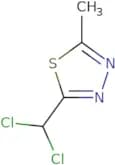
2-(Dichloromethyl)-5-methyl-1,3,4-thiadiazole
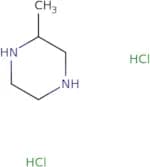
CAS:Versatile small molecule scaffoldFormula:C4H4Cl2N2SPurity:Min. 95%Molecular weight:183.06 g/mol(R)-2-Methylpiperazine dihydrochloride
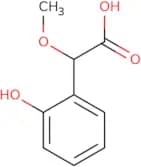
CAS:<p>Versatile small molecule scaffold</p>Formula:C5H14Cl2N2Purity:Min. 95%Molecular weight:173.08 g/mol2-(2-Hydroxyphenyl)-2-methoxyacetic acid
CAS:Versatile small molecule scaffoldFormula:C9H10O4Purity:Min. 95%Molecular weight:182.17 g/mol[(4-Phenylphenyl)methyl]hydrazine hydrochloride
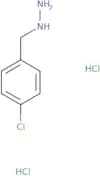
CAS:Versatile small molecule scaffoldFormula:C13H15ClN2Purity:Min. 95%Molecular weight:234.72 g/mol(4-Chlorobenzyl)hydrazine hydrochloride
CAS:Versatile small molecule scaffoldFormula:C7H10Cl2N2Purity:Min. 95%Molecular weight:193.07 g/molDimethyl bicyclo[3.1.1]heptane-1,5-dicarboxylate
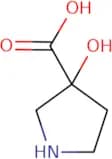
CAS:<p>Versatile small molecule scaffold</p>Formula:C11H16O4Purity:Min. 95%Molecular weight:212.24 g/mol3-Hydroxypyrrolidine-3-carboxylic acid
CAS:<p>Versatile small molecule scaffold</p>Formula:C5H9NO3Purity:Min. 95%Molecular weight:131.13 g/mol2,3-Dimethylbutane-1-sulfonyl chloride
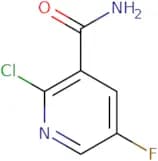
CAS:Versatile small molecule scaffoldFormula:C6H13ClO2SPurity:Min. 95%Molecular weight:184.7 g/mol2-Chloro-5-fluoronicotinamide
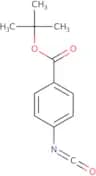
CAS:<p>Versatile small molecule scaffold</p>Formula:C6H4ClFN2OPurity:Min. 95%Molecular weight:174.56 g/moltert-Butyl 4-isocyanatobenzoate
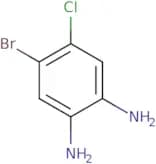
CAS:<p>Versatile small molecule scaffold</p>Formula:C12H13NO3Purity:Min. 95%Molecular weight:219.24 g/mol4-Bromo-5-chlorobenzene-1,2-diamine
CAS:<p>Versatile small molecule scaffold</p>Formula:C6H6BrClN2Purity:Min. 95%Molecular weight:221.48 g/molIndeno[2,1-b]chromene-6-carbaldehyde
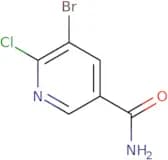
CAS:<p>Versatile small molecule scaffold</p>Formula:C17H10O2Purity:Min. 95%Molecular weight:246.26 g/mol5-Bromo-6-chloropyridine-3-carboxamide
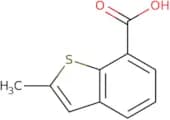
CAS:<p>Versatile small molecule scaffold</p>Formula:C6H4BrClN2OPurity:Min. 95%Color and Shape:PowderMolecular weight:235.5 g/mol2-Methyl-1-benzothiophene-7-carboxylic acid
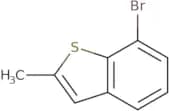
CAS:Versatile small molecule scaffoldFormula:C10H8O2SPurity:Min. 95%Molecular weight:192.24 g/mol7-Bromo-2-methyl-1-benzothiophene
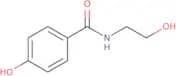
CAS:<p>Versatile small molecule scaffold</p>Formula:C9H7BrSPurity:Min. 95%Molecular weight:227.12 g/mol4-Hydroxy-N-(2-hydroxyethyl)benzamide
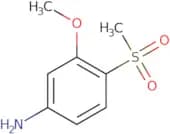
CAS:<p>4-Hydroxy-N-(2-hydroxyethyl)benzamide (4OHEBA) is a natural product that belongs to the class of phenolic compounds. It is found in macroalgae and has been shown to have anti-inflammatory properties, which may be due to its ability to inhibit prostaglandin synthesis. 4OHEBA has also been shown to have chemical diversity and studies show that it can be used in preservative systems.</p>Formula:C9H11NO3Purity:Min. 95%Molecular weight:181.19 g/mol4-Methanesulfonyl-3-methoxyaniline
CAS:<p>Versatile small molecule scaffold</p>Formula:C8H11NO3SPurity:Min. 95%Molecular weight:201.25 g/mol2-Ethynyl-1H-indole
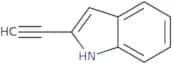
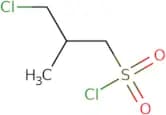
CAS:<p>2-Ethynyl-1H-indole is a synthetic nucleoside analog of the anti-viral drug acyclovir. It is an activated prodrug that is hydrolyzed by esterases to its active form, which inhibits viral polymerase and thus prevents the synthesis of new viral DNA. 2-Ethynyl-1H-indole also has been shown to have inhibitory effects on chronic bronchitis and emphysema, as well as demonstrating cytotoxic activity in vitro. The enantiomers of 2-ethynyl-1H indole have different pharmacological activities. The (R)-enantiomer is more potent than the (S)-enantiomer in inhibiting erythrocyte coagulation and platelet aggregation in vitro.</p>Formula:C10H7NPurity:Min. 95%Molecular weight:141.17 g/mol3-Chloro-2-methylpropane-1-sulfonyl chloride
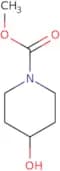
CAS:<p>Versatile small molecule scaffold</p>Formula:C4H8Cl2O2SPurity:Min. 95%Molecular weight:191.08 g/molMethyl 4-hydroxypiperidine-1-carboxyl
CAS:Versatile small molecule scaffoldFormula:C7H13NO3Purity:Min. 95%Molecular weight:159.18 g/mol2-[(2,4-Dimethylphenyl)sulfanyl]acetic acid
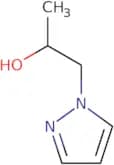
CAS:<p>Versatile small molecule scaffold</p>Formula:C10H12O2SPurity:Min. 95%Molecular weight:196.27 g/mol1-(1H-Pyrazol-1-yl)propan-2-ol
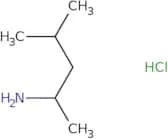
CAS:<p>Versatile small molecule scaffold</p>Formula:C6H10N2OPurity:Min. 95%Molecular weight:126.16 g/mol(2R)-4-Methylpentan-2-amine hydrochloride
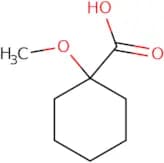
CAS:Controlled Product<p>Versatile small molecule scaffold</p>Formula:C6H16ClNPurity:Min. 95%Molecular weight:137.65 g/mol1-Methoxycyclohexane-1-carboxylic acid
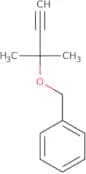
CAS:<p>1-Methoxycyclohexane-1-carboxylic acid is a potent histone deacetylase (HDAC) inhibitor. It binds to the catalytic site of HDACs and prevents them from removing acetyl groups from lysine residues on histones, which are proteins that are important for gene expression. 1-Methoxycyclohexane-1-carboxylic acid has been shown to inhibit the proliferation of recombinant cells and chronic bronchitis in animals. This compound may also be effective against other inflammatory diseases as it inhibits prostaglandin synthesis by inhibiting cyclooxygenases and nitric oxide synthases.</p>Formula:C8H14O3Purity:Min. 95%Molecular weight:158.19 g/mol(((2-Methylbut-3-yn-2-yl)oxy)methyl)benzene
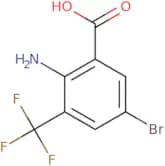
CAS:Versatile small molecule scaffoldFormula:C12H14OPurity:Min. 95%Molecular weight:174.24 g/mol2-Amino-5-bromo-3-(trifluoromethyl)benzoic acid
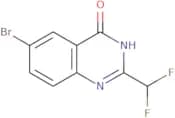
CAS:<p>Versatile small molecule scaffold</p>Formula:C8H5NO2F3BrPurity:Min. 95%Molecular weight:284.03 g/mol6-Bromo-2-(difluoromethyl)-3,4-dihydroquinazolin-4-one
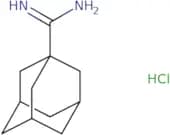
CAS:<p>Versatile small molecule scaffold</p>Formula:C9H5BrF2N2OPurity:Min. 95%Molecular weight:275.05 g/molAdamantane-1-carboxamidine hydrochloride
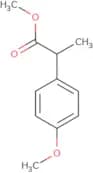
CAS:<p>Versatile small molecule scaffold</p>Formula:C11H19ClN2Purity:Min. 95%Molecular weight:214.73 g/molMethyl 2-(4-methoxyphenyl)propanoate
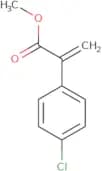
CAS:<p>Versatile small molecule scaffold</p>Formula:C11H14O3Purity:Min. 95%Molecular weight:194.23 g/molMethyl 2-(4-chlorophenyl)prop-2-enoate
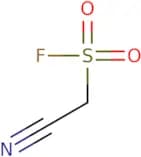
CAS:<p>Versatile small molecule scaffold</p>Formula:C10H9ClO2Purity:Min. 95%Molecular weight:196.63 g/molCyanomethanesulfonyl fluoride
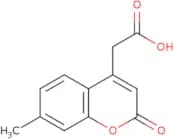
CAS:<p>Versatile small molecule scaffold</p>Formula:C2H2FNO2SPurity:Min. 95%Molecular weight:123.11 g/mol(7-Methyl-2-oxo-2H-chromen-4-yl)acetic acid
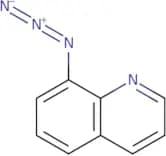
CAS:<p>(7-Methyl-2-oxo-2H-chromen-4-yl)acetic acid is a coumarin derivative that is used as a fluorescent probe to study the interaction of electron donors and acceptors. This compound has been shown to have photophysical properties, such as fluorescence and photoinduced electron transfer, which can be modulated by the presence of electron donors, such as piperidine or styryl. (7-Methyl-2-oxo-2H-chromen-4-yl)acetic acid belongs to the group of ethylenic compounds with moieties that are similar to those found in coumarin and phenothiazine.</p>Formula:C12H10O4Purity:Min. 95%Molecular weight:218.21 g/mol8-Azidoquinoline
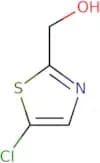
CAS:<p>8-Azidoquinoline is a chemical compound that belongs to the class of x-ray crystal structures. It has been shown to have cytotoxic effects on kidney cells in culture. 8-Azidoquinoline can be used as a precursor for the synthesis of other derivatives that are useful in cancer research, such as 8-azidopurine and 8-azidoadenosine. This chemical can also be used for cross-coupling reactions with amines, which isomerizes the ring and opens it for further reactions. The isomers of this molecule are formed by the replacement of one or more hydrogen atoms with an azide group.</p>Formula:C9H6N4Purity:Min. 95%Molecular weight:170.17 g/mol(5-Chloro-1,3-thiazol-2-yl)methanol
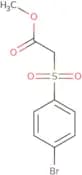
CAS:<p>Versatile small molecule scaffold</p>Formula:C4H4NOSClPurity:Min. 95%Molecular weight:149.59 g/molMethyl 2-(4-bromobenzenesulfonyl)acetate
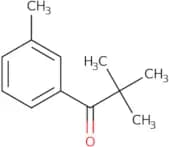
CAS:<p>Versatile small molecule scaffold</p>Formula:C9H9BrO4SPurity:Min. 95%Molecular weight:293.14 g/mol2,2-Dimethyl-1-m-tolylpropan-1-one
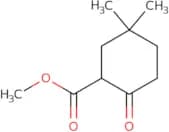
CAS:<p>Versatile small molecule scaffold</p>Formula:C12H16OPurity:Min. 95%Molecular weight:176.26 g/molMethyl 5,5-Dimethyl-2-oxocyclohexanecarboxylate
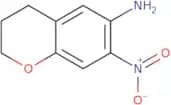
CAS:Versatile small molecule scaffoldFormula:C10H16O3Purity:Min. 95%Molecular weight:184.23 g/mol7-Nitro-3,4-dihydro-2H-chromen-6-ylamine
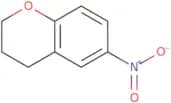
CAS:<p>Versatile small molecule scaffold</p>Formula:C9H10N2O3Purity:Min. 95%Molecular weight:194.19 g/mol6-Nitro-3,4-dihydro-2H-1-benzopyran
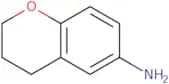
CAS:<p>Ai Product Descriptions 50 Creative</p>Formula:C9H9NO3Purity:Min. 95%Molecular weight:179.17 g/mol3,4-dihydro-2H-1-benzopyran-6-amine
CAS:<p>3,4-dihydro-2H-1-benzopyran-6-amine is an olefinic, reactive chemical that is used as an excipient in the preparation of polyenes. It can be used as a reactant to form heterocycles and unsaturated fatty acids. 3,4-dihydro-2H-1-benzopyran-6-amine has been shown to inhibit platelet aggregation and has been used as a ligand for the study of chemical reactions. This drug also has a wittig reaction with amido compounds to form hydrocarbon groups.</p>Formula:C9H11NOPurity:Min. 95%Molecular weight:149.19 g/mol2-Amino-2-(4-methyl-1,3-thiazol-5-yl)acetic acid
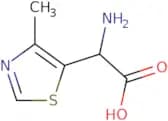
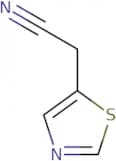
CAS:<p>Versatile small molecule scaffold</p>Formula:C6H8N2O2SPurity:Min. 95%Molecular weight:172.21 g/mol2-(1,3-Thiazol-5-yl)acetonitrile
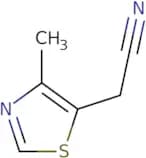
CAS:<p>Versatile small molecule scaffold</p>Formula:C5H4N2SPurity:Min. 95%Molecular weight:124.17 g/mol2-(4-Methyl-1,3-thiazol-5-yl)acetonitrile
CAS:<p>Versatile small molecule scaffold</p>Formula:C6H6N2SPurity:Min. 95%Molecular weight:138.19 g/mol2-(Dimethylamino)-4-phenyl-1,3-thiazole-5-carbaldehyde
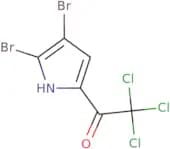
CAS:<p>Versatile small molecule scaffold</p>Formula:C12H12N2OSPurity:Min. 95%Molecular weight:232.3 g/mol2,2,2-Trichloro-1-(4,5-dibromo-1H-pyrrol-2-yl)-1-ethanone
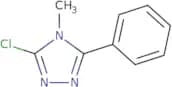
CAS:<p>Versatile small molecule scaffold</p>Formula:C6H2Br2Cl3NOPurity:Min. 95%Molecular weight:370.27 g/mol3-Chloro-4-methyl-5-phenyl-4H-1,2,4-triazole
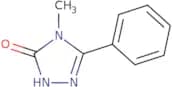
CAS:<p>Versatile small molecule scaffold</p>Formula:C9H8ClN3Purity:Min. 95%Molecular weight:193.63 g/mol4-Methyl-3-phenyl-4,5-dihydro-1H-1,2,4-triazol-5-one
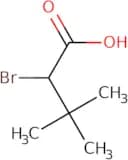
CAS:Versatile small molecule scaffoldFormula:C9H9N3OPurity:Min. 95%Molecular weight:175.19 g/mol2-Bromo-3,3-dimethylbutanoic acid
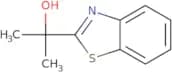
CAS:<p>Versatile small molecule scaffold</p>Formula:C6H11BrO2Purity:Min. 95%Molecular weight:195.05 g/mol2-(1,3-Benzothiazol-2-yl)propan-2-ol
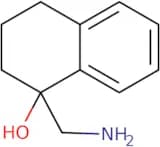
CAS:<p>2-(1,3-Benzothiazol-2-yl)propan-2-ol is an organic perchlorate. It is a white crystalline solid that has a melting point of about 5°C and a boiling point of about 170°F. The molecular weight of 2-(1,3-Benzothiazol-2-yl)propan-2-ol is 134.19 grams/mol. This substance is not hazardous to health and can be used in the production of substances such as acylation agents, carbinols, and perchloric acid.</p>Formula:C10H11NOSPurity:Min. 95%Molecular weight:193.27 g/mol1-(Aminomethyl)-1,2,3,4-tetrahydronaphthalen-1-ol
CAS:<p>Versatile small molecule scaffold</p>Formula:C11H15NOPurity:Min. 95%Molecular weight:177.24 g/mol

![[(4-Phenylphenyl)methyl]hydrazine hydrochloride](/_next/image/?url=https%3A%2Fstatic.cymitquimica.com%2Fproducts%2F3D%2Fthumb-webp%2FADA33307.webp&w=3840&q=75)
![Dimethyl bicyclo[3.1.1]heptane-1,5-dicarboxylate](/_next/image/?url=https%3A%2Fstatic.cymitquimica.com%2Fproducts%2F3D%2Fthumb-webp%2FADA32854.webp&w=3840&q=75)

![Indeno[2,1-b]chromene-6-carbaldehyde](/_next/image/?url=https%3A%2Fstatic.cymitquimica.com%2Fproducts%2F3D%2Fthumb-webp%2FADA29382.webp&w=3840&q=75)
![2-[(2,4-Dimethylphenyl)sulfanyl]acetic acid](/_next/image/?url=https%3A%2Fstatic.cymitquimica.com%2Fproducts%2F3D%2Fthumb-webp%2FADA24312.webp&w=3840&q=75)