


Building Blocks
This section contains fundamental products for the synthesis of organic and biological compounds. Building blocks are the essential starting materials used to construct complex molecules through various chemical reactions. They play a critical role in drug discovery, material science, and chemical research. At CymitQuimica, we offer a diverse range of high-quality building blocks to support your innovative research and industrial projects, ensuring you have the essential components for successful synthesis.
Subcategories of "Building Blocks"
- Boronic Acids & Boronic Acid Derivatives(5,756 products)
- Chiral Building Blocks(1,242 products)
- Hydrocarbon Building Blocks(6,095 products)
- Organic Building Blocks(61,051 products)
Found 199813 products of "Building Blocks"
Sort by
Purity (%)
0
100
|
0
|
50
|
90
|
95
|
100
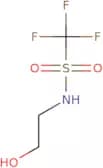
1,1,1-Trifluoro-N-(2-hydroxyethyl)methanesulfonamide
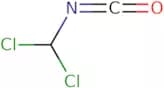
CAS:<p>Versatile small molecule scaffold</p>Formula:C3H6F3NO3SPurity:Min. 95%Molecular weight:193.15 g/molDichloro(isocyanato)methane
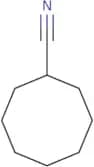
CAS:<p>Dichloro(isocyanato)methane is a chemical compound that belongs to the haloalkyl group. It can be used in dyestuffs, as a reagent for the modification of quinoline derivatives, and in the production of nitro compounds. Dichloro(isocyanato)methane has two isomers: monochloro-dichloromethane and dichloro-monochloromethane. The former is a kinetic product while the latter is thermodynamic. This compound is also polymorphic and has two expressible forms: one with an electron density on chlorine atom and another with an electron density on carbon atom.</p>Formula:C2HCl2NOPurity:Min. 95%Molecular weight:125.94 g/molCyclooctanecarbonitrile
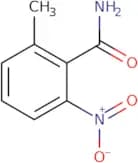
CAS:<p>Cyclooctanecarbonitrile is a hydroxy group that is used as a polymerization initiator. It can be synthesized by the reaction of cyclooctane and carbon monoxide. Cyclooctanecarbonitrile is an amine with a homogeneous catalyst, which also has functional groups such as an isopropyl group. Cyclooctanecarbonitrile is used in industrial processes to make polyvinyl chloride (PVC) and ethylene vinyl acetate (EVA). This compound also has the ability to inhibit insulin resistance and may be useful for treating diabetes. The polymerization of cyclooctanecarbonitrile can be catalyzed by titanium or zirconium.</p>Formula:C9H15NPurity:Min. 95%Molecular weight:137.22 g/mol2-Methyl-6-nitrobenzamide
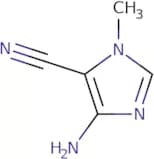
CAS:<p>Versatile small molecule scaffold</p>Formula:C8H8N2O3Purity:Min. 95%Molecular weight:180.16 g/mol4-Amino-1-methylimidazole-5-carbonitrile
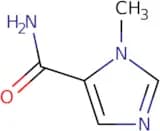
CAS:<p>Versatile small molecule scaffold</p>Formula:C5H6N4Purity:Min. 95%Molecular weight:122.13 g/mol1-Methyl-1H-imidazole-5-carboxamide
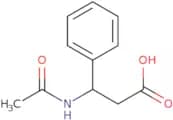
CAS:<p>Versatile small molecule scaffold</p>Formula:C5H7N3OPurity:Min. 95%Molecular weight:125.13 g/molN-Acetyl-DL-²-phenylalanine
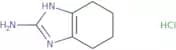
CAS:<p>Versatile small molecule scaffold</p>Formula:C11H13NO3Purity:Min. 95%Molecular weight:207.23 g/mol4,5,6,7-Tetrahydro-1H-1,3-benzodiazol-2-amine hydrochloride
CAS:Versatile small molecule scaffoldFormula:C7H12ClN3Purity:Min. 95%Molecular weight:173.64 g/molN-(4,5,6,7-Tetrahydro-1H-1,3-benzodiazol-2-yl)acetamide
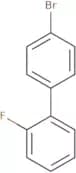
CAS:<p>Versatile small molecule scaffold</p>Formula:C9H13N3OPurity:Min. 95%Molecular weight:179.22 g/mol4'-bromo-2-fluoro-1,1'-biphenyl
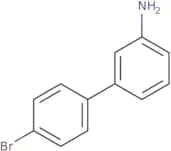
CAS:<p>Versatile small molecule scaffold</p>Formula:C12H8BrFPurity:Min. 95%Molecular weight:251.1 g/mol3-(4-Bromophenyl)aniline
CAS:<p>Versatile small molecule scaffold</p>Formula:C12H10BrNPurity:Min. 95%Molecular weight:248.12 g/mol4-Cyclopropylphenylacetic acid
CAS:<p>Versatile small molecule scaffold</p>Formula:C11H12O2Purity:Min. 95%Molecular weight:176.22 g/molMethyl 2-[(2-aminoethyl)sulfanyl]acetate hydrochloride
CAS:<p>Versatile small molecule scaffold</p>Formula:C5H12ClNO2SPurity:Min. 95%Molecular weight:185.67 g/mol4-Bromo-1H-benzo[d]imidazol-2(3H)-one
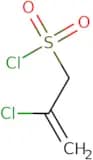
CAS:<p>Versatile small molecule scaffold</p>Formula:C7H5BrN2OPurity:Min. 95%Molecular weight:213.03 g/mol2-Chloroprop-2-ene-1-sulfonyl chloride
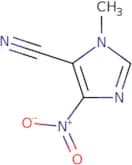
CAS:<p>Versatile small molecule scaffold</p>Formula:C3H4Cl2O2SPurity:Min. 95%Molecular weight:175.03 g/mol1-Methyl-4-nitro-1H-imidazole-5-carbonitrile
CAS:<p>1-Methyl-4-nitro-1H-imidazole-5-carbonitrile is a nitroimidazole that is activated by oxidation. It has been shown to be effective against strains of bacteria that are resistant to other antibiotics, such as methicillin and erythromycin. Nitroimidazoles are analogues of sulfonamides and have a reactive methylsulfonyl group that can be used to form covalent bonds with nucleophiles. 1-Methyl-4-nitro-1H-imidazole-5-carbonitrile is an example of a substituent in which the substituent is a bromo group. This substituent has been shown to react with nucleophiles, such as alkyl halides and thiols, which may lead to the formation of new compounds.</p>Formula:C5H4N4O2Purity:Min. 95%Molecular weight:152.11 g/molN-Cyclopentylaniline
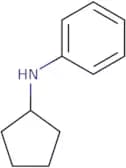
CAS:<p>N-Cyclopentylaniline is a chemical compound that is used to control pests. It has been shown to be effective as an anti-inflammatory in inflammatory pain and inflammatory diseases. N-Cyclopentylaniline also has hypotensive properties, which may be due to its ability to block the action of the enzyme phosphodiesterase 4, preventing the breakdown of cyclic AMP. This leads to vasodilation and reduced blood pressure, which can result in a decrease in heart rate. The drug has been shown to have receptor agonism effects on cannabinoid type 1 and 2 receptors, which are associated with chronic pain relief.</p>Formula:C11H15NPurity:Min. 95%Molecular weight:161.24 g/mol4-Propylcyclohexanone
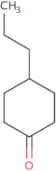
CAS:<p>4-Propylcyclohexanone is a cycloalkane that can be synthesized from butyric acid and hydroxide solution. The activation energy for this reaction is 41.7 kJ mol−1. The reaction can be catalyzed by potassium phosphate or sodium hydroxide solution, which are good bases. 4-Propylcyclohexanone has two functional groups: a hydroxyl group and a cycloalkane ring. This compound is an important precursor to eugenol, which is used in the production of perfumes, flavors, and other chemicals.</p>Formula:C9H16OPurity:Min. 95%Molecular weight:140.23 g/molN-(1-Cyano-1-methylethyl)acetamide
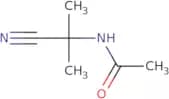
CAS:<p>Versatile small molecule scaffold</p>Formula:C6H10N2OPurity:Min. 95%Molecular weight:126.16 g/mol2-Methyl-4-phenylbutanal
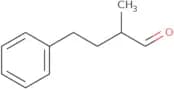
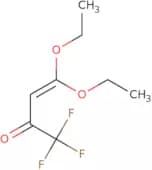
CAS:<p>Versatile small molecule scaffold</p>Formula:C11H14OPurity:90%MinMolecular weight:162.23 g/mol4,4-Diethoxy-1,1,1-trifluorobut-3-en-2-one
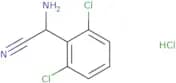
CAS:<p>Versatile small molecule scaffold</p>Formula:C8H11F3O3Purity:Min. 95%Molecular weight:212.17 g/mol2-Amino-2-(2,6-dichlorophenyl)acetonitrile hydrochloride
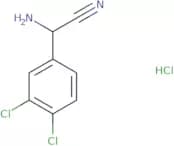
CAS:<p>Versatile small molecule scaffold</p>Formula:C8H7Cl3N2Purity:Min. 95%Molecular weight:237.5 g/mol2-Amino-2-(3,4-dichlorophenyl)acetonitrile hydrochloride
CAS:<p>Versatile small molecule scaffold</p>Formula:C8H7Cl3N2Purity:Min. 95%Molecular weight:237.5 g/mol4-[5-(Pyridin-3-yl)-1,2,4-oxadiazol-3-yl]phenol
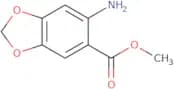
CAS:<p>Versatile small molecule scaffold</p>Formula:C13H9N3O2Purity:Min. 95%Molecular weight:239.23 g/molMethyl 6-amino-1,3-dioxaindane-5-carboxylate
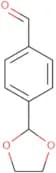
CAS:<p>Versatile small molecule scaffold</p>Formula:C9H9NO4Purity:Min. 95%Molecular weight:195.17 g/mol4-(1,3-Dioxolan-2-yl)benzaldehyde
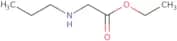
CAS:<p>Versatile small molecule scaffold</p>Formula:C10H10O3Purity:Min. 95%Molecular weight:178.18 g/molethyl 2-(propylamino)acetate
CAS:<p>Ethyl 2-(propylamino)acetate is an amine that is classified as a nucleophile. It reacts with other molecules to form new compounds and has been shown to react with a variety of nucleophiles including alcohols, carboxylic acids, and phenols. Spectroscopic techniques have revealed that ethyl 2-(propylamino)acetate exists in two isomeric forms: the cis-isomer and the trans-isomer. The cis-isomer is more reactive than the trans-isomer because it has a greater electron density on its alpha carbon atom.</p>Formula:C7H15NO2Purity:Min. 95%Molecular weight:145.2 g/molEthyl 5-methyl-1,2,4-oxadiazole-3-carboxylate
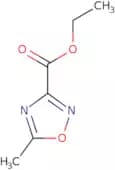
CAS:<p>Versatile small molecule scaffold</p>Formula:C6H8N2O3Purity:Min. 95%Molecular weight:156.14 g/mol4-(Benzyloxy)-2-bromo-5-methoxybenzaldehyde
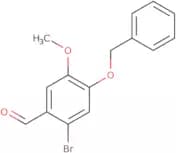
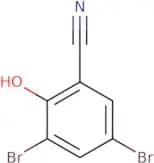
CAS:<p>Versatile small molecule scaffold</p>Formula:C15H13BrO3Purity:Min. 95%Molecular weight:321.2 g/mol3,5-Dibromo-2-hydroxybenzonitrile
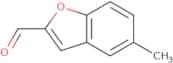
CAS:<p>3,5-Dibromo-2-hydroxybenzonitrile is an organic compound with the formula C6H4Br2O. It is a yellow liquid that is soluble in organic solvents. 3,5-Dibromo-2-hydroxybenzonitrile can be synthesized by reacting tert-butyl nitrite with bromine and acetonitrile in a solvent. The reaction rate of this chemical reaction is rapid and the molecule has been shown to be stable when exposed to light. The hydroxyl group on the molecule makes it hydrophobic, which means it does not dissolve well in water. 3,5-Dibromo-2-hydroxybenzonitrile has a photolabile profile, meaning that it quickly decomposes when exposed to light. This chemical compound has two isomers: synopses A and B. Synopsis A has an electron configuration of 1s22s22p</p>Formula:C7H3Br2NOPurity:Min. 95%Molecular weight:276.92 g/mol5-Methyl-1-benzofuran-2-carbaldehyde
CAS:<p>Versatile small molecule scaffold</p>Formula:C10H8O2Purity:Min. 95%Molecular weight:160.17 g/mol2-Pyridin-2-yl-cyclopropanecarboxylic acid
CAS:<p>2-Pyridin-2-yl-cyclopropanecarboxylic acid is a chemotype that belongs to the class of echs. It has been shown to regulate the expression of genes in the erythroid lineage and inhibit Keap1. 2-Pyridin-2-yl-cyclopropanecarboxylic acid has been shown to bind to erythrocyte proteins and act as an anti-oxidant. This molecule has also been found to interact with proteins such as glutathione reductase, cytochrome P450, and glutathione S transferases. 2-Pyridin-2-yl-cyclopropanecarboxylic acid disrupts homoeostasis by regulating the levels of cytoprotective agents such as heme oxygenase 1 and prostaglandins. The therapeutic effect of this molecule is currently being researched for use in medicinal treatments.</p>Formula:C9H9NO2Purity:Min. 95%Molecular weight:163.18 g/mol3,4-Dihydro-2H-1,4-benzoxazine-2-carboxylic acid
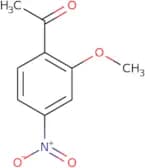
CAS:<p>3,4-Dihydro-2H-1,4-benzoxazine-2-carboxylic acid is a chemical compound that is used in the synthesis of esters. It can be used to separate mixtures of compounds in liquid chromatography and reversed phase liquid chromatography. This chemical compound has been shown to have adrenolytic properties, which are due to its ability to modify the activity of the alpha and beta adrenergic receptors. 3,4-Dihydro-2H-1,4-benzoxazine-2-carboxylic acid inhibits lipogenesis by inhibiting enzymes that catalyze this process.</p>Formula:C9H9NO3Purity:Min. 95%Molecular weight:179.17 g/mol1-(2-Methoxy-4-nitrophenyl)ethanone
CAS:<p>Versatile small molecule scaffold</p>Formula:C9H9NO4Purity:Min. 95%Molecular weight:195.17 g/mol2-Ethyl-4-nitro-benzoic acid
CAS:<p>Versatile small molecule scaffold</p>Formula:C9H9NO4Purity:Min. 95%Molecular weight:195.17 g/mol2-Ethyl-5-nitrobenzoic acid
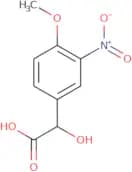
CAS:<p>Versatile small molecule scaffold</p>Formula:C9H9NO4Purity:Min. 95%Molecular weight:195.17 g/mol2-Hydroxy-2-(4-methoxy-3-nitrophenyl)acetic acid
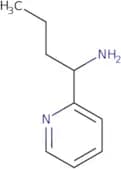
CAS:<p>Versatile small molecule scaffold</p>Formula:C9H9NO6Purity:Min. 95%Molecular weight:227.17 g/mol1-(Pyridin-2-yl)butan-1-amine
CAS:<p>Versatile small molecule scaffold</p>Formula:C9H14N2Purity:Min. 95%Molecular weight:150.22 g/mol1-[4-(Aminomethyl)phenyl]ethan-1-amine
CAS:Versatile small molecule scaffoldFormula:C9H14N2Purity:Min. 95%Molecular weight:150.22 g/mol2-tert-Butyl-6-methylpyrimidin-4-ol
CAS:<p>Versatile small molecule scaffold</p>Formula:C9H14N2OPurity:Min. 95%Molecular weight:166.22 g/mol6,6-Dimethyl-1,3-diazaspiro[4.4]nonane-2,4-dione
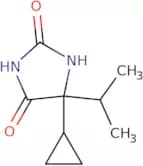
CAS:<p>Versatile small molecule scaffold</p>Formula:C9H14N2O2Purity:Min. 95%Molecular weight:182.22 g/mol5-Cyclopropyl-5-(propan-2-yl)imidazolidine-2,4-dione
CAS:<p>Versatile small molecule scaffold</p>Formula:C9H14N2O2Purity:Min. 95%Molecular weight:182.22 g/mol5-Cyclopropyl-5-propylimidazolidine-2,4-dione
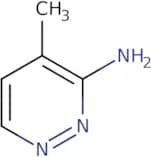
CAS:<p>Versatile small molecule scaffold</p>Formula:C9H14N2O2Purity:Min. 95%Molecular weight:182.22 g/mol3-Amino-4-methyl-pyridazine
CAS:<p>3-Amino-4-methyl-pyridazine is a pyridazine molecule that has analgesic properties. This drug is used in population studies to investigate the effects of nitrogen atom substitution on the pharmacological activity of carrageenans and betaines. 3-Amino-4-methyl-pyridazine has been shown to be an analog of cinnoline, which is a member of the quinone class of compounds. The crystal structure and diffraction techniques have been determined for 3-aminopyridine using single crystal x-ray diffraction. The structure was determined by a molecular replacement method with a difference in formula weight of 0.01%.</p>Formula:C5H7N3Purity:Min. 95%Molecular weight:109.13 g/mol5-Oxobicyclo[2.2.1]heptane-2,3-dicarboxylic acid
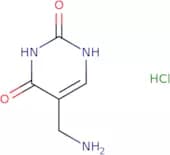
CAS:<p>Versatile small molecule scaffold</p>Formula:C9H10O5Purity:Min. 95%Molecular weight:198.17 g/mol5-(Aminomethyl)-2,4(1H,3H)-pyrimidinedione hydrochloride
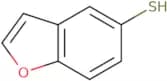
CAS:<p>Versatile small molecule scaffold</p>Formula:C5H8ClN3O2Purity:Min. 95%Molecular weight:177.59 g/mol1-Benzofuran-5-thiol
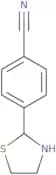
CAS:<p>Versatile small molecule scaffold</p>Formula:C8H6OSPurity:Min. 95%Molecular weight:150.2 g/mol4-(1,3-Thiazolidin-2-yl)benzonitrile
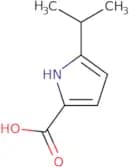
CAS:<p>Versatile small molecule scaffold</p>Formula:C10H10N2SPurity:Min. 95%Molecular weight:190.27 g/mol5-Isopropyl-1H-pyrrole-2-carboxylic acid
CAS:<p>Versatile small molecule scaffold</p>Formula:C8H11NO2Purity:Min. 95%Molecular weight:153.18 g/mol8-Oxa-2-azaspiro[4.5]decane-1,3-dione
CAS:<p>Versatile small molecule scaffold</p>Formula:C8H11NO3Purity:Min. 95%Molecular weight:169.18 g/mol



![Methyl 2-[(2-aminoethyl)sulfanyl]acetate hydrochloride](/_next/image/?url=https%3A%2Fstatic.cymitquimica.com%2Fproducts%2F3D%2Fthumb-webp%2FQBA64285.webp&w=3840&q=75)
![4-Bromo-1H-benzo[d]imidazol-2(3H)-one](/_next/image/?url=https%3A%2Fstatic.cymitquimica.com%2Fproducts%2F3D%2Fthumb-webp%2FQBA64416.webp&w=3840&q=75)
![4-[5-(Pyridin-3-yl)-1,2,4-oxadiazol-3-yl]phenol](/_next/image/?url=https%3A%2Fstatic.cymitquimica.com%2Fproducts%2F3D%2Fthumb-webp%2FQBA67880.webp&w=3840&q=75)




![1-[4-(Aminomethyl)phenyl]ethan-1-amine](/_next/image/?url=https%3A%2Fstatic.cymitquimica.com%2Fproducts%2F3D%2Fthumb-webp%2FQDA56531.webp&w=3840&q=75)

![6,6-Dimethyl-1,3-diazaspiro[4.4]nonane-2,4-dione](/_next/image/?url=https%3A%2Fstatic.cymitquimica.com%2Fproducts%2F3D%2Fthumb-webp%2FQDA56574.webp&w=3840&q=75)

![5-Oxobicyclo[2.2.1]heptane-2,3-dicarboxylic acid](/_next/image/?url=https%3A%2Fstatic.cymitquimica.com%2Fproducts%2F3D%2Fthumb-webp%2FQDA58232.webp&w=3840&q=75)
![8-Oxa-2-azaspiro[4.5]decane-1,3-dione](/_next/image/?url=https%3A%2Fstatic.cymitquimica.com%2Fproducts%2F3D%2Fthumb-webp%2FQDA60723.webp&w=3840&q=75)