Building Blocks
This section contains fundamental products for the synthesis of organic and biological compounds. Building blocks are the essential starting materials used to construct complex molecules through various chemical reactions. They play a critical role in drug discovery, material science, and chemical research. At CymitQuimica, we offer a diverse range of high-quality building blocks to support your innovative research and industrial projects, ensuring you have the essential components for successful synthesis.
Subcategories of "Building Blocks"
- Boronic Acids & Boronic Acid Derivatives(5,778 products)
- Chiral Building Blocks(1,242 products)
- Hydrocarbon Building Blocks(6,098 products)
- Organic Building Blocks(61,098 products)
Found 199594 products of "Building Blocks"
Sort by
Purity (%)
0
100
|
0
|
50
|
90
|
95
|
100
3-[(5-Cyclopropyl-1,3,4-oxadiazol-2-yl)carbamoyl]propanoic acid
CAS:<p>Versatile small molecule scaffold</p>Formula:C9H11N3O4Purity:Min. 95%Molecular weight:225.2 g/molRef: 3D-GWB42449
Discontinued product2-([(Furan-2-ylmethyl)(methyl)carbamoyl]amino)acetic acid
CAS:<p>Versatile small molecule scaffold</p>Formula:C9H12N2O4Purity:Min. 95%Molecular weight:212.2 g/molRef: 3D-GWB17908
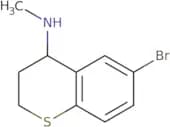
Discontinued product6-Bromo-N-methyl-3,4-dihydro-2H-1-benzothiopyran-4-amine
CAS:<p>Versatile small molecule scaffold</p>Formula:C10H12BrNSPurity:Min. 95%Molecular weight:258.18 g/molRef: 3D-GWB17719
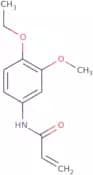
Discontinued productN-(4-Ethoxy-3-methoxyphenyl)prop-2-enamide
CAS:<p>Versatile small molecule scaffold</p>Formula:C12H15NO3Purity:Min. 95%Molecular weight:221.25 g/molRef: 3D-GWB15912
Discontinued product2-[4-(Thiophen-3-ylmethyl)piperazin-1-yl]ethan-1-ol
CAS:<p>Versatile small molecule scaffold</p>Formula:C11H18N2OSPurity:Min. 95%Molecular weight:226.34 g/molRef: 3D-GNA85857
Discontinued product4-Chloro-5-methyl-6-phenylthieno[2,3-d]pyrimidine
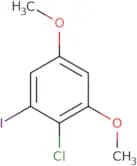
CAS:<p>Versatile small molecule scaffold</p>Formula:C13H9N2SClPurity:Min. 95%Molecular weight:260.74 g/mol2-Chloro-1-iodo-3,5-dimethoxybenzene
CAS:<p>Versatile small molecule scaffold</p>Formula:C8H8ClIO2Purity:Min. 95%Molecular weight:298.5 g/molRef: 3D-FXC22420
Discontinued product3,6-Dimethylimidazo[2,1-b]thiazole-5-carbaldehyde
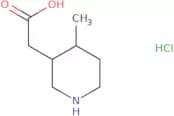
CAS:<p>Versatile small molecule scaffold</p>Formula:C8H8N2OSPurity:Min. 95%Molecular weight:180.23 g/mol2-(4-Methylpiperidin-3-yl)acetic acid hydrochloride
CAS:<p>Versatile small molecule scaffold</p>Formula:C8H16ClNO2Purity:Min. 95%Molecular weight:193.67 g/molRef: 3D-FDD49894
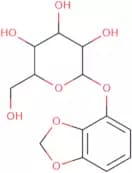
Discontinued product(2S,3R,4S,5S,6R)-2-(1,3-Dioxaindan-4-yloxy)-6-(hydroxymethyl)oxane-3,4,5-triol
CAS:<p>Versatile small molecule scaffold</p>Formula:C13H16O8Purity:Min. 95%Molecular weight:300.26 g/molRef: 3D-FDD47456
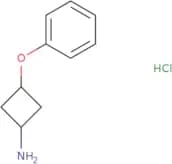
Discontinued product3-Phenoxycyclobutanamine hydrochloride
CAS:<p>Versatile small molecule scaffold</p>Formula:C10H14ClNOPurity:Min. 95%Molecular weight:199.68 g/molRef: 3D-FDD47454
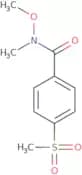
Discontinued product4-Methanesulfonyl-N-methoxy-N-methylbenzamide
CAS:<p>Versatile small molecule scaffold</p>Formula:C10H13NO4SPurity:Min. 95%Molecular weight:243.28 g/molRef: 3D-FDC90510
Discontinued product8-Methylpyrido[2,3-d]pyridazin-5-amine
CAS:<p>Versatile small molecule scaffold</p>Formula:C8H8N4Purity:Min. 95%Molecular weight:160.18 g/molRef: 3D-FDC75598
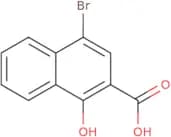
Discontinued product4-bromo-1-hydroxynaphthalene-2-carboxylic acid
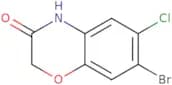
CAS:<p>4-Bromo-1-hydroxynaphthalene-2-carboxylic acid (4BHN) is a spectroscopic compound that has been used as a radioligand to study the binding of dopamine and dopamine D3 receptors. This compound binds to the d3 receptor with high affinity and specificity, but it does not interact with the d1 or d2 receptors. 4BHN has been shown to act as an agonist at the dopamine D3 receptor. It also acts as an antagonist at the piperidine site of the dopamine D2 receptor. The effects of 4BHN are reversible, which means that it can be displaced by unlabeled 4BHN or other compounds that bind to the same site on the receptor. This technique is useful for studying drug interactions and for determining whether drugs have a subtype selectivity profile.</p>Formula:C11H7BrO3Purity:Min. 95%Molecular weight:267.1 g/mol7-Bromo-6-chloro-3,4-dihydro-2H-1,4-benzoxazin-3-one
CAS:<p>Versatile small molecule scaffold</p>Formula:C8H5BrClNO2Purity:Min. 95%Molecular weight:262.49 g/molRef: 3D-FAA79156
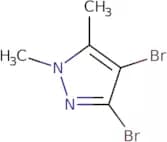
Discontinued product3,4-Dibromo-1,5-dimethyl-1H-pyrazole
CAS:<p>Versatile small molecule scaffold</p>Formula:C5H6Br2N2Purity:Min. 95%Molecular weight:253.92 g/molRef: 3D-FAA77595
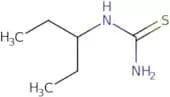
Discontinued product(Pentan-3-yl)thiourea
CAS:<p>Versatile small molecule scaffold</p>Formula:C6H14N2SPurity:Min. 95%Molecular weight:146.26 g/molRef: 3D-EJB65468
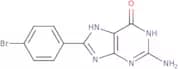
Discontinued product2-Amino-8-(4-bromophenyl)-6,9-dihydro-1H-purin-6-one
CAS:<p>Versatile small molecule scaffold</p>Formula:C11H8BrN5OPurity:Min. 95%Molecular weight:306.12 g/mol2,2,2-Trifluoro-1-(4-methyl-1H-indol-3-yl)ethan-1-one
CAS:Controlled Product<p>Versatile small molecule scaffold</p>Formula:C11H8F3NOPurity:Min. 95%Molecular weight:227.18 g/molRef: 3D-EDA87801
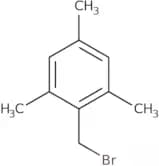
Discontinued product2-Bromomethyl-1,3,5-trimethylbenzene
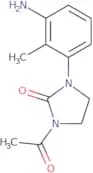
CAS:<p>2-Bromomethyl-1,3,5-trimethylbenzene is a semivolatile organic compound with a bromophenol functional group. It has been shown to react with malic acid and pyridine ring to form two isomers. The reaction rate of this compound is higher at lower temperatures than at higher temperatures. It has been shown to be a ligand that binds metal ions and reacts with them electrochemically. 2-Bromomethyl-1,3,5-trimethylbenzene has also been used as an intermediate in the synthesis of trisaccharide ligands for coordination chemistry studies.</p>Formula:C10H13BrPurity:Min. 95%Molecular weight:213.11 g/mol1-Acetyl-3-(3-amino-2-methylphenyl)imidazolidin-2-one
CAS:<p>Versatile small molecule scaffold</p>Formula:C12H15N3O2Purity:Min. 95%Molecular weight:233.27 g/molRef: 3D-DXC60636
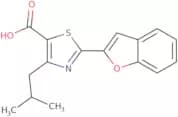
Discontinued product2-(1-Benzofuran-2-yl)-4-(2-methylpropyl)-1,3-thiazole-5-carboxylic acid
CAS:<p>Versatile small molecule scaffold</p>Formula:C16H15NO3SPurity:Min. 95%Molecular weight:301.4 g/molRef: 3D-DWC62314
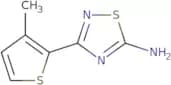
Discontinued product3-(3-Methylthiophen-2-yl)-1,2,4-thiadiazol-5-amine
CAS:<p>Versatile small molecule scaffold</p>Formula:C7H7N3S2Purity:Min. 95%Molecular weight:197.3 g/molRef: 3D-DWB98117
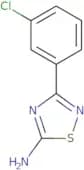
Discontinued product3-(3-Chlorophenyl)-1,2,4-thiadiazol-5-amine
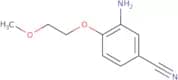
CAS:<p>Versatile small molecule scaffold</p>Formula:C8H6ClN3SPurity:Min. 95%Molecular weight:211.67 g/mol3-Amino-4-(2-methoxyethoxy)benzonitrile
CAS:<p>Versatile small molecule scaffold</p>Formula:C10H12N2O2Purity:Min. 95%Molecular weight:192.21 g/mol3,3-Dimethyl-1,2,3,4-tetrahydroquinolin-4-one hydrochloride
CAS:<p>Versatile small molecule scaffold</p>Formula:C11H14ClNOPurity:Min. 95%Molecular weight:211.69 g/molRef: 3D-DND98992
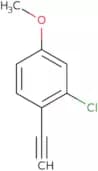
Discontinued product2-Chloro-1-ethynyl-4-methoxybenzene
CAS:<p>Versatile small molecule scaffold</p>Formula:C9H7ClOPurity:Min. 95%Molecular weight:166.6 g/molRef: 3D-DGA44068
Discontinued product4,5-Dihydroxy-2,3-dihydro-1H-isoindole-1,3-dione
CAS:4,5-Dihydroxy-2,3-dihydro-1H-isoindole-1,3-dione is a molybdenum compound with a hydroxyl group. It has been shown to inhibit the growth of bacteria that are resistant to penicillin by binding to the penicillin-binding proteins in their cell wall. 4,5-Dihydroxy-2,3-dihydro-1H-isoindole-1,3-dione has been found to be an effective inhibitor of polymer film formation when used in conjunction with 3 chloroperoxybenzoic acid. This compound also has been shown to have anti bacterial properties against Escherichia coli and Pseudomonas aeruginosa. 4,5-Dihydroxy -2,3 -dihydro -1H -isoindole -1,3 -dione may also have environmental applications due itsFormula:C8H5NO4Purity:Min. 95%Molecular weight:179.13 g/molRef: 3D-DGA35672
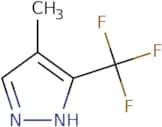
Discontinued product4-Methyl-3-(trifluoromethyl)-1H-pyrazole
CAS:<p>4-Methyl-3-(trifluoromethyl)-1H-pyrazole is a nitro, methoxy, cyano, chlorine, trifluoromethyl, trifluoromethoxy, halogenated pyrazole fungicide. The substituents on the molecule are methyl and trifluoromethyl groups. 4-Methyl-3-(trifluoromethyl)-1H-pyrazole is a potent inhibitor of fungal growth with a broad spectrum of activity. It has been used in agriculture as well as in the treatment of dermatitis caused by Candida albicans.</p>Formula:C5H5N2F3Purity:Min. 95%Molecular weight:150.1 g/molRef: 3D-DGA08514
Discontinued producttert-Butyl N-[(1S,4R)-4-(hydroxymethyl)cyclopent-2-en-1-yl]carbamate
CAS:<p>Versatile small molecule scaffold</p>Formula:C11H19NO3Purity:Min. 95%Molecular weight:213.27 g/molRef: 3D-DGA01143
Discontinued productEthyl 3-(2-aminoethyl)-1H-indole-2-carboxylate hydrochloride
CAS:<p>Versatile small molecule scaffold</p>Formula:C13H17ClN2O2Purity:Min. 95%Molecular weight:268.7 g/molRef: 3D-DCA59032
Discontinued product2-{7-Methyl-3H-imidazo[4,5-b]pyridin-2-yl}acetonitrile
CAS:<p>Versatile small molecule scaffold</p>Formula:C9H8N4Purity:Min. 95%Molecular weight:172.19 g/molRef: 3D-CYA77713
Discontinued productN-{[2-(Prop-2-en-1-yloxy)phenyl]methyl}-1,3-dioxaindan-5-amine hydrochloride
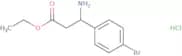
CAS:<p>Versatile small molecule scaffold</p>Formula:C17H18ClNO3Purity:Min. 95%Molecular weight:319.8 g/molEthyl 3-amino-3-(4-bromophenyl)propanoate hydrochloride
CAS:<p>Versatile small molecule scaffold</p>Formula:C11H15BrClNO2Purity:Min. 95%Molecular weight:308.6 g/molRef: 3D-CVA84192
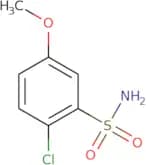
Discontinued product2-Chloro-5-methoxybenzene-1-sulfonamide
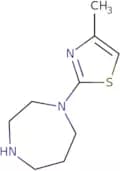
CAS:<p>2-Chloro-5-methoxybenzene-1-sulfonamide is a selective nematicide that has been shown to be effective against parasitic nematodes. It is a member of the class of compounds known as parasitic nematides. This compound is active against both larval and adult forms of these worms, but it does not affect other organisms or plants. 2-Chloro-5-methoxybenzene-1-sulfonamide is believed to act by binding to specific sites on the nematode's body and interfering with their biological properties.</p>Formula:C7H8ClNO3SPurity:Min. 95%Molecular weight:221.66 g/mol1-(4-Methyl-1,3-thiazol-2-yl)-1,4-diazepane
CAS:<p>Versatile small molecule scaffold</p>Formula:C9H15N3SPurity:Min. 95%Molecular weight:197.3 g/molRef: 3D-CFA26804
Discontinued product3-Boc-3-azabicyclo[3.2.1]octan-8-amine
CAS:<p>Versatile small molecule scaffold</p>Formula:C12H22N2O2Purity:Min. 95%Molecular weight:226.32 g/mol3-(Methoxycarbonyl)pyridine-4-carboxylic acid
CAS:<p>Versatile small molecule scaffold</p>Formula:C8H7NO4Purity:Min. 95%Molecular weight:181.15 g/mol3-Methylbenzo[b]thiophene-2-carboxylic acid
CAS:<p>3-Methylbenzo[b]thiophene-2-carboxylic acid (MBTCA) is a heterocyclic compound that is an intermediate in the synthesis of 3-methylthiophene-2-carboxylic acid, a precursor to other drugs. MBTCA is an aerobic, nonpolar compound that has shown antimicrobial activity against some bacteria and fungi. It also has been shown to have practicality as a biomolecular probe for methyl groups in organic solvents. MBTCA can be synthesized by nitration of benzene in the presence of sulfur and sulfoxides. This reaction produces nitrobenzene, which can then be oxidized by potassium permanganate or hydrogen peroxide to produce MBTCA. The most common isomer of MBTCA is 2-(3,5-dimethoxybenzylidene)tetrahydrofuran, with three methyl groups on the</p>Formula:C10H8O2SPurity:Min. 95%Molecular weight:192.23 g/mol2-Acetylbenzoic acid
CAS:<p>2-Acetylbenzoic acid is a functional molecule that contains an acetyl group. It can form hydrogen bonds with other molecules and has been shown to induce apoptosis in cells. The reaction products of 2-acetylbenzoic acid are malonic acid, acetylsalicylic acid, and 2-benzoylbenzoic acid. These three compounds are made by the addition of hydrogen or hydroxide to the molecule 2-acetylbenzoic acid. The molecule has two functional groups: a carbonyl group and an acetyl group. The chemical structure of this molecule can be seen in the figure below.<br>2-Acetylbenzoic Acid</p>Formula:C9H8O3Purity:Min. 95%Color and Shape:PowderMolecular weight:164.16 g/molRef: 3D-FA05086
Discontinued product2-Bromo-3,3,3-trifluoro-1-propene
CAS:Controlled Product<p>2-Bromo-3,3,3-trifluoro-1-propene is a chemical compound that has been synthesized in an asymmetric reaction. The reactant is bromopropane and the product is 2,2,2-trifluoropropene. The methylene group on the propene molecule is activated by the nucleophilic attack of a fluoride ion from hydrogen fluoride to form a cavity with a highly strained bond. The kinetic study of this reaction revealed that the activation energy for the reaction is 42 kJ/mol. Palladium-catalyzed coupling reactions are catalyzed by palladium and require nonpolar solvents such as toluene or dichloromethane. This type of reaction has been shown to be exothermic with an isolated yield of 1%.</p>Formula:C3H2BrF3Purity:Min. 95%Color and Shape:Colorless PowderMolecular weight:174.95 g/mol2-Bromo-4-(4-fluorophenyl)-1,3-thiazole
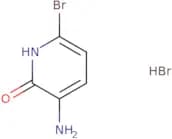
CAS:<p>Versatile small molecule scaffold</p>Formula:C9H5NFSBrPurity:Min. 95%Molecular weight:258.11 g/mol3-amino-6-bromopyridin-2-ol hydrobromide
CAS:<p>Versatile small molecule scaffold</p>Formula:C5H6Br2N2OPurity:Min. 95%Molecular weight:269.9 g/molGivinostat hydrochloride
CAS:<p>Givinostat hydrochloride is a research chemical that has shown potential in various fields. It is a molybdenum-based compound that has been studied for its effects on dopamine release and hydrogen evolution. Givinostat hydrochloride has also been investigated as an osteoclast inhibitor, which may be beneficial in the treatment of bone-related disorders such as osteoporosis. Additionally, it has shown promise as a retinoid and calpain inhibitor, suggesting its potential use in dermatological conditions and neurodegenerative diseases. The compound contains fluorine atoms, making it suitable for imaging studies using fluorine MRI techniques. Givinostat hydrochloride has been tested on MDA-MB-231 cells and has shown inhibitory effects on their growth, indicating its potential as an anticancer agent.</p>Formula:C24H27N3O4·HClPurity:Min. 95%Molecular weight:457.95 g/mol
![3-[(5-Cyclopropyl-1,3,4-oxadiazol-2-yl)carbamoyl]propanoic acid](/_next/image/?url=https%3A%2Fstatic.cymitquimica.com%2Fproducts%2F3D%2Fthumb-webp%2FGWB42449.webp&w=3840&q=75)

![2-([(Furan-2-ylmethyl)(methyl)carbamoyl]amino)acetic acid](/_next/image/?url=https%3A%2Fstatic.cymitquimica.com%2Fproducts%2F3D%2Fthumb-webp%2FGWB17908.webp&w=3840&q=75)
![2-[4-(Thiophen-3-ylmethyl)piperazin-1-yl]ethan-1-ol](/_next/image/?url=https%3A%2Fstatic.cymitquimica.com%2Fproducts%2F3D%2Fthumb-webp%2FGNA85857.webp&w=3840&q=75)
![4-Chloro-5-methyl-6-phenylthieno[2,3-d]pyrimidine](/_next/image/?url=https%3A%2Fstatic.cymitquimica.com%2Fproducts%2F3D%2Fthumb-webp%2FGMA93478.webp&w=3840&q=75)
![3,6-Dimethylimidazo[2,1-b]thiazole-5-carbaldehyde](/_next/image/?url=https%3A%2Fstatic.cymitquimica.com%2Fproducts%2F3D%2Fthumb-webp%2FFFA18230.webp&w=3840&q=75)
![8-Methylpyrido[2,3-d]pyridazin-5-amine](/_next/image/?url=https%3A%2Fstatic.cymitquimica.com%2Fproducts%2F3D%2Fthumb-webp%2FFDC75598.webp&w=3840&q=75)


![tert-Butyl N-[(1S,4R)-4-(hydroxymethyl)cyclopent-2-en-1-yl]carbamate](/_next/image/?url=https%3A%2Fstatic.cymitquimica.com%2Fproducts%2F3D%2Fthumb-webp%2FDGA01143.webp&w=3840&q=75)

![2-{7-Methyl-3H-imidazo[4,5-b]pyridin-2-yl}acetonitrile](/_next/image/?url=https%3A%2Fstatic.cymitquimica.com%2Fproducts%2F3D%2Fthumb-webp%2FCYA77713.webp&w=3840&q=75)
![N-{[2-(Prop-2-en-1-yloxy)phenyl]methyl}-1,3-dioxaindan-5-amine hydrochloride](/_next/image/?url=https%3A%2Fstatic.cymitquimica.com%2Fproducts%2F3D%2Fthumb-webp%2FCVD03113.webp&w=3840&q=75)
![3-Boc-3-azabicyclo[3.2.1]octan-8-amine](/_next/image/?url=https%3A%2Fstatic.cymitquimica.com%2Fproducts%2F3D%2Fthumb-webp%2FFDC76351.webp&w=3840&q=75)

![3-Methylbenzo[b]thiophene-2-carboxylic acid](/_next/image/?url=https%3A%2Fstatic.cymitquimica.com%2Fproducts%2F3D%2Fthumb-webp%2FDAA13378.webp&w=3840&q=75)