Building Blocks
Subcategories of "Building Blocks"
- Boronic Acids & Boronic Acid Derivatives(5,781 products)
- Chiral Building Blocks(1,242 products)
- Hydrocarbon Building Blocks(6,101 products)
- Organic Building Blocks(61,033 products)
Found 205320 products of "Building Blocks"
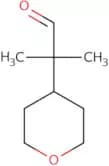
2-Methyl-2-(oxan-4-yl)propanal
CAS:Versatile small molecule scaffold
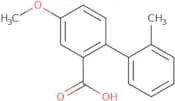
Formula:C9H16O2Purity:Min. 95%Molecular weight:156.22 g/mol5-Methoxy-2-(2-methylphenyl)benzoic acid
CAS:Versatile small molecule scaffold
Formula:C15H14O3Purity:Min. 95%Molecular weight:242.27 g/molRef: 3D-IXB65707
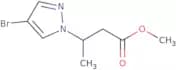
Discontinued productMethyl 3-(4-bromo-1H-pyrazol-1-yl)butanoate
CAS:Versatile small molecule scaffoldFormula:C8H11BrN2O2Purity:Min. 95%Molecular weight:247.09 g/molRef: 3D-IXB66373
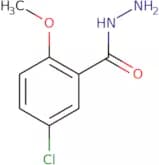
Discontinued product5-Chloro-2-methoxybenzohydrazide
CAS:Versatile small molecule scaffold
Formula:C8H9ClN2O2Purity:Min. 95%Molecular weight:200.62 g/molRef: 3D-IBA97711
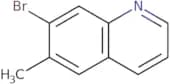
Discontinued product7-Bromo-6-methylquinoline
CAS:Versatile small molecule scaffold
Formula:C10H8BrNPurity:Min. 95%Molecular weight:222.08 g/molRef: 3D-EFC31602
Discontinued product[1,2,3]Triazolo[1,5-a]pyridine-6-carboxylic acid
CAS:1,2,3-Triazolo[1,5-a]pyridine-6-carboxylic acid is a heteroaryl compound that has been shown to interact with the adenosine receptor. This drug has been shown to have anti-inflammatory effects in animal models of colitis and is currently being investigated for its potential use in IBD.
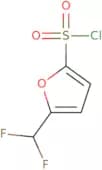
Formula:C7H5N3O2Purity:Min. 95%Molecular weight:163.13 g/mol5-(Difluoromethyl)furan-2-sulfonyl chloride
CAS:Versatile small molecule scaffoldFormula:C5H3ClF2O3SPurity:Min. 95%Molecular weight:216.59 g/molRef: 3D-KWC57927
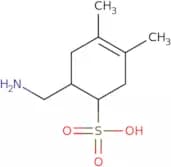
Discontinued product6-(Aminomethyl)-3,4-dimethylcyclohex-3-ene-1-sulfonic acid
CAS:Versatile small molecule scaffold
Formula:C9H17NO3SPurity:Min. 95%Molecular weight:219.3 g/molRef: 3D-GLB07428
Discontinued product3-Amino-4-(2,2,2-trifluoroethoxy)benzoic acid
CAS:Versatile small molecule scaffold
Formula:C9H8F3NO3Purity:Min. 95%Molecular weight:235.16 g/molRef: 3D-IXB67562
Discontinued product(3-Chlorophenyl)(2-methoxyphenyl)methanamine
CAS:Versatile small molecule scaffold
Formula:C14H14ClNOPurity:Min. 95%Molecular weight:247.72 g/molRef: 3D-IXB68703
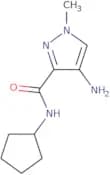
Discontinued product4-Amino-N-cyclopentyl-1-methyl-1H-pyrazole-3-carboxamide
CAS:Versatile small molecule scaffoldFormula:C10H16N4OPurity:Min. 95%Molecular weight:208.26 g/molRef: 3D-GLB08757
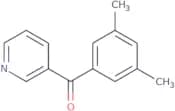
Discontinued product3-(3,5-Dimethylbenzoyl)pyridine
CAS:Versatile small molecule scaffold
Formula:C14H13NOPurity:Min. 95%Molecular weight:211.26 g/molRef: 3D-IXB68749
Discontinued productMethyl 4-(3-hydroxyphenyl)-2,4-dioxobutanoate
CAS:Versatile small molecule scaffoldFormula:C11H10O5Purity:Min. 95%Molecular weight:222.19 g/molRef: 3D-KCA64063
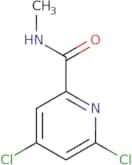
Discontinued product4,6-Dichloro-N-methylpyridine-2-carboxamide
CAS:Versatile small molecule scaffoldFormula:C7H6Cl2N2OPurity:Min. 95%Molecular weight:205.04 g/mol4-(Furan-2-yl)thiazol-2-amine
CAS:Versatile small molecule scaffold
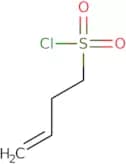
Formula:C7H6N2OSPurity:Min. 95%Molecular weight:166.2 g/mol3-Butene-1-sulfonyl Chloride
CAS:3-Butene-1-sulfonyl chloride is a reagent that is used in the synthesis of organic compounds. It is a functional group that yields metathesis reactions, which are used in chemistry and biology. 3-Butene-1-sulfonyl chloride can be used as an inhibitor to stop the activity of thrombin, which plays an important role in blood coagulation. This compound has also been shown to have potential against cancer cells and other diseases because it has been synthesized with a spacer and linker to create a cyclic biomolecular that inhibits protein synthesis by binding to ribosomes. The metathesis reaction occurs when two different molecules are mixed together and react with each other through the formation of new bonds. The spacer is a synthetic molecule that separates the linker from the functional group on one side of the molecule, while the linker connects to another functional group on the other side of the molecule. Cyclisation refers to
Formula:C4H7ClO2SPurity:Min. 95%Molecular weight:154.62 g/molRef: 3D-IBA99436
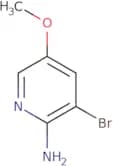
Discontinued product3-bromo-5-methoxypyridin-2-amine
CAS:Versatile small molecule scaffold
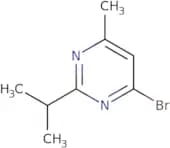
Formula:C6H7BrN2OPurity:Min. 95%Molecular weight:203 g/mol4-Bromo-6-methyl-2-(propan-2-yl)pyrimidine
CAS:Versatile small molecule scaffold
Formula:C8H11BrN2Purity:Min. 95%Molecular weight:215.09 g/molRef: 3D-JVB26320
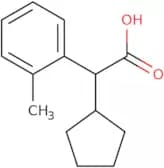
Discontinued product2-Cyclopentyl-2-(o-tolyl)acetic acid
CAS:Versatile small molecule scaffold
Formula:C14H18O2Purity:Min. 95%Molecular weight:218.29 g/molRef: 3D-LBA45060
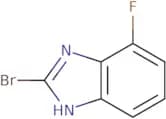
Discontinued product2-Bromo-4-fluoro-1H-1,3-benzodiazole
CAS:Versatile small molecule scaffoldFormula:C7H4BrFN2Purity:Min. 95%Molecular weight:215.02 g/molRef: 3D-EFC32775
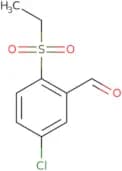
Discontinued product5-Chloro-2-(ethanesulfonyl)benzaldehyde
CAS:Versatile small molecule scaffoldFormula:C9H9ClO3SPurity:Min. 95%Molecular weight:232.68 g/molRef: 3D-EFC32784
Discontinued product4-Methoxy-1-benzothiophene-7-carboxylic acid
CAS:Versatile small molecule scaffold
Formula:C10H8O3SPurity:Min. 95%Molecular weight:208.24 g/molRef: 3D-FMC96629
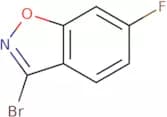
Discontinued product3-Bromo-6-fluoro-1,2-benzoxazole
CAS:Versatile small molecule scaffold
Formula:C7H3BrFNOPurity:Min. 95%Molecular weight:216.01 g/mol1-(3-Ethyloxetan-3-yl)piperazine
CAS:Versatile small molecule scaffold
Formula:C9H18N2OPurity:Min. 95%Molecular weight:170.3 g/molRef: 3D-DBD71356
Discontinued product5-Chloro-6-[(methylsulfanyl)methyl]pyridin-2-amine
CAS:Versatile small molecule scaffold
Formula:C7H9ClN2SPurity:Min. 95%Molecular weight:188.68 g/molRef: 3D-JDC14679
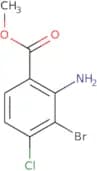
Discontinued productMethyl 2-amino-3-bromo-4-chlorobenzoate
CAS:Versatile small molecule scaffoldFormula:C8H7BrClNO2Purity:Min. 95%Molecular weight:264.5 g/molRef: 3D-EFC33015
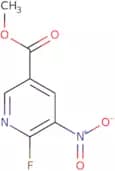
Discontinued productMethyl 6-fluoro-5-nitropyridine-3-carboxylate
CAS:Versatile small molecule scaffold
Formula:C7H5FN2O4Purity:Min. 95%Molecular weight:200.12 g/molRef: 3D-EFC33155
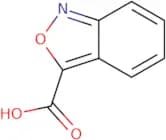
Discontinued product2,1-benzisoxazole-3-carboxylic acid
CAS:2,1-benzisoxazole-3-carboxylic acid (BIX) is a small molecule with antimicrobial and anticancer activity. It has been shown to be selective against candidum, a fungus that causes oral thrush in humans. BIX has also been shown to suppress the growth of plasmodium, the malaria parasite that causes malaria. This compound is synthesized by diazo coupling of 2-aminobenzoic acid and benzisoxazole with potassium carbonate and potassium chloride. BIX has also been shown to have an antiplasmodial effect against Plasmodium falciparum, the most virulent form of this parasite, which is responsible for more than 90% of deaths from malaria. The mechanism of action is not yet known but may be due to inhibition of protein synthesis or inhibition of mitochondrial function.
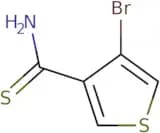
Formula:C8H5NO3Purity:Min. 95%Molecular weight:163.13 g/mol4-Bromo-thiophene-3-carbothioic acid amide
CAS:Versatile small molecule scaffold
Formula:C5H4BrNS2Purity:Min. 95%Molecular weight:222.1 g/molRef: 3D-EFC33423
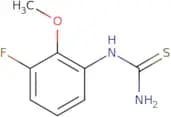
Discontinued product(3-Fluoro-2-methoxyphenyl)thiourea
CAS:Versatile small molecule scaffold
Formula:C8H9FN2OSPurity:Min. 95%Molecular weight:200.24 g/molRef: 3D-EFC33479
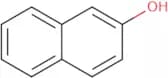
Discontinued product2-Naphthol
CAS:2-Naphthol is an organic compound with the chemical formula C10H7O. It is a derivative of naphthalene, and is produced by the condensation of two molecules of malonic acid in the presence of a reducing agent such as sodium borohydride. 2-Naphthol is used as a pesticide and as a chemical intermediate in the production of other chemicals. 2-Naphthol has been shown to be toxic to humans and animals; it may cause liver damage, kidney damage, and skin irritation. The acute oral LD50 for rats is 690 mg/kg body weight. 2-Naphthol binds to cell receptors that are involved in a variety of physiological processes including heme transport, phagocytosis, oxidative burst, chemotaxis, and respiratory burst. This binding inhibits these functions leading to cell death.
Formula:C10H8OPurity:Min. 95%Color and Shape:White To Yellow To Pink To Light Brown SolidMolecular weight:144.17 g/molRef: 3D-FN01578
Discontinued product3-(3-Methylbutyl)cyclopentan-1-one
CAS:Versatile small molecule scaffold
Formula:C10H18OPurity:Min. 95%Molecular weight:154.25 g/molRef: 3D-DCA00296
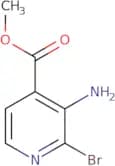
Discontinued productMethyl 3-amino-2-bromoisonicotinate
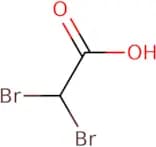
CAS:Versatile small molecule scaffoldFormula:C7H7BrN2O2Purity:Min. 95%Molecular weight:231.05 g/molDibromoacetic Acid
CAS:Dibromoacetic acid is a genotoxic chemical that is used to form an acid. It has been shown to have toxic effects on the testes, and can also cause liver damage. Dibromoacetic acid binds to DNA and alters its structure by forming bromoacetic adducts. The binding of dibromoacetic acid to DNA alters the way in which it replicates, leading to mutations. This compound has been detected in human plasma at levels close to those seen in samples from people with occupational exposure, indicating that it may be found in the environment as well. Dibromoacetic acid has been shown to induce inflammation and increase toll-like receptor (TLR) expression through activation of NF-κB signaling pathways. It is able to do this because it contains a hydroxyl group, which allows for oxidation catalysts to bind with it easily.
Formula:C2H2Br2O2Purity:Min. 95%Molecular weight:217.84 g/molRef: 3D-AAA63164
Discontinued product1-Pentadecanol
CAS:1-Pentadecanol is a cyclase inhibitor that was first isolated from copper chloride. It has been shown to be an effective inhibitor of the enzyme cyclase, which catalyzes the conversion of cyclic AMP to cyclic GMP. 1-Pentadecanol can be used as a reference substance for electrochemical impedance spectroscopy. The compound also has odorant binding properties and can be used as a substrate in analytical methods for p-hydroxybenzoic acid and caproic acid. 1-Pentadecanol is found in many types of food, including cheese, chocolate, coffee, and wine.
Formula:C15H32OPurity:Min. 95%Molecular weight:228.41 g/molRef: 3D-AAA62976
Discontinued product1-Bromopentadecane-1-13C
CAS:1-Bromopentadecane-1-13C is a 13C labelled derivative of pentadecane that is used as a reactant in organic synthesis. It has been used to investigate the structural analysis of pyridinium, coumarin derivatives and alkynyl groups. This compound also has chain reaction properties and can be used to study the reactions of aromatic hydrocarbons. 1-Bromopentadecane-1-13C reacts with hydrogen chloride to form fatty acids, which are then converted into fatty acid chlorides by atp levels. The formation of these fatty acid chlorides is an important intermediate in the production of polychlorinated biphenyls (PCBs).
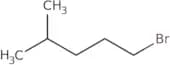
Formula:C15H31BrPurity:Min. 95%Molecular weight:292.31 g/mol1-Bromo-4-methylpentane
CAS:1-Bromo-4-methylpentane is a long-chain, dehydrohalogenated pheromone that has been shown to inhibit the growth of Leishmania by binding to the topoisomerase enzyme. This compound is synthesized from heptadecane and chloroacetonitrile in the presence of cuprate and tetrahydrofuran. 1-Bromo-4-methylpentane has also been shown to be an alkylating agent. It reacts with chloride, converting it into chloroform. The bromine atom on the carbon adjacent to the double bond then attacks a fatty acid, adding it to the molecule. The resulting alkoxycarbonyl group then reacts with a second fatty acid molecule, yielding a new 1-bromoalkoxycarbonyl group.
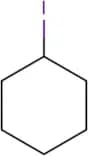
Formula:C6H13BrPurity:Min. 95%Molecular weight:165.07 g/molIodocyclohexane
CAS:Iodocyclohexane is an antimicrobial agent that has the chemical formula CHClI. It is a colorless, volatile liquid which has been shown to have some antibacterial properties. Iodocyclohexane is not toxic when applied externally to the skin and has been used in medical devices such as eye drops, ointments, and ear drops. Iodocyclohexane is also used in agriculture as a fungicide. The chemical structure of iodocyclohexane includes a hydroxyl group (-OH) and a nitrogen atom (N). These two groups make it more resistant to degradation by bacteria or fungi. The presence of these two groups also provides iodocyclohexane with biological properties such as the ability to inhibit bacterial growth and prevent the formation of resistant mutant strains.
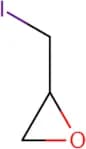
Formula:C6H11IPurity:Min. 95%Molecular weight:210.06 g/mol2-(Iodomethyl)oxirane
CAS:2-(Iodomethyl)oxirane is a chemical compound that contains a hydroxyl group, two nitrogen atoms, and a single hydrochloric acid molecule. It is not soluble in water and is only slightly soluble in organic solvents. 2-(Iodomethyl)oxirane can be used to remove pollutants from wastewater. This chemical reacts with the carboxylic acid groups on the pollutant molecules to form an ester. The ester can then be broken down by enzymes or by heating it to produce the original hydroxy group and carboxylic acid. 2-(Iodomethyl)oxirane has been shown to react with aliphatic hydrocarbons, naphthalene, fatty acids, alkynyl groups, alkanoic acids, and carbonyl groups.
Formula:C3H5IOPurity:Min. 95%Molecular weight:183.98 g/molRef: 3D-AAA62457
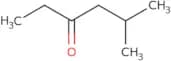
Discontinued productEthyl isobutyl ketone
CAS:Ethyl isobutyl ketone, also known as acetone, belongs to the group of aliphatic ketones. It is a colorless and volatile liquid that has a sweet odor. Ethyl isobutyl ketone can be used in the synthesis of pharmaceuticals, dyes, and perfumes. In addition to this, it has shown to have properties of a solvent in organic chemistry and as an active oxygen source in electrochemical impedance spectroscopy. This product also has functional groups such as hydroxy and carbonyl groups that are responsible for its solvency in water and its viscosity. Nitro and hydroxyl groups on the other hand are responsible for its solvency in water vapor.
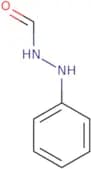
Formula:C7H14OPurity:Min. 95%Molecular weight:114.19 g/molN'-Phenylcarbohydrazide
CAS:N'-Phenylcarbohydrazide is an anion that binds to the nitrogen atom in the ammonium ion. It can be hydrolysed by a feedback inhibition mechanism. This compound has been used as a precursor for various analogues, often those of carbonyl compounds. N'-Phenylcarbohydrazide is also used as a reagent in organic synthesis and has been shown to inhibit bacterial growth when used at high concentrations.
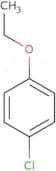
Formula:C7H8N2OPurity:Min. 95%Molecular weight:136.15 g/mol4-Chlorophenetole
CAS:4-Chlorophenetole is a colorless gas with a pungent odor that is soluble in water. It is used as an intermediate for organic synthesis, being converted to piperidine in the presence of sodium formate and hydrogen chloride. 4-Chlorophenetole can be prepared by reduction of naphthalene with sodium and ethylene or by treatment with sodium metal. 4-Chlorophenetole has been used as an insecticide but its toxicity to mammals has made it less desirable than other compounds. Its use as a fumigant has decreased due to its continued production of chlorides, which are toxic to humans.
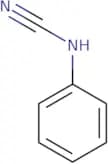
4-Chlorophenetole also reacts with dipolar molecules such as chlorides and gaseous chlorine to produce a constant emission of light at visible wavelengths (λ=548 nm).Formula:C8H9ClOPurity:Min. 95%Molecular weight:156.61 g/molN-Phenylcyanamide
CAS:N-Phenylcyanamide is a nitrogen-containing compound that has been shown to have biological properties. It binds to the mitochondria and inhibits the mitochondrial membrane potential, which is required for cell division, leading to the death of cancer cells in cervical cancer. N-Phenylcyanamide also reacts with human serum and forms a crystalline product, which has been shown to be reactive in solution. The structure of this product is determined by crystallography.
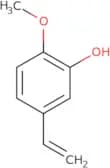
Formula:C7H6N2Purity:Min. 95%Molecular weight:118.14 g/mol5-Ethenyl-2-methoxyphenol
CAS:5-Ethenyl-2-methoxyphenol is a volatile compound that has been isolated from the bark of the cinnamon tree. It has shown anticancer activities "in vitro" and "in vivo". 5-Ethenyl-2-methoxyphenol has been shown to be demethylated by cytochrome P450 enzymes, which may result in its antitumor activity. This active compound can also be detected in postharvested fruit and vegetables as well as processed foods such as apple juice, tomato sauce, and dried fruits. 5-Ethenyl-2-methoxyphenol is responsible for the characteristic flavor of cinnamon, so it is often used as a flavoring agent in food processing.
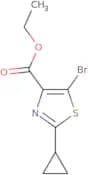
Formula:C9H10O2Purity:Min. 95%Color and Shape:PowderMolecular weight:150.17 g/molEthyl 5-bromo-2-cyclopropyl-1,3-thiazole-4-carboxylate
CAS:Versatile small molecule scaffold
Formula:C9H10BrNO2SPurity:Min. 95%Molecular weight:276.15 g/molRef: 3D-EFC34532
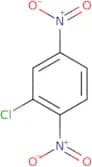
Discontinued product2-Chloro-1,4-dinitrobenzene
CAS:Versatile small molecule scaffold
Formula:C6H3ClN2O4Purity:Min. 95%Molecular weight:202.55 g/mol(Dimethyl-1,2-thiazol-4-yl)methanol
CAS:Versatile small molecule scaffold
Formula:C6H9NOSPurity:Min. 95%Molecular weight:143.21 g/molRef: 3D-DCA06443
Discontinued productMethyl 5-methyl-2-oxo-2,3-dihydro-1H-imidazole-4-carboxylate
CAS:Versatile small molecule scaffoldFormula:C6H8N2O3Purity:Min. 95%Molecular weight:156.14 g/molRef: 3D-DCA06464
Discontinued product3-(2-Chloroethyl)-5,5-dimethylimidazolidine-2,4-dione
CAS:Versatile small molecule scaffold
Formula:C7H11ClN2O2Purity:Min. 95%Molecular weight:190.63 g/molRef: 3D-DCA06653
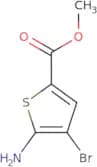
Discontinued productMethyl 5-amino-4-bromothiophene-2-carboxylate
CAS:Versatile small molecule scaffold
Formula:C6H6BrNO2SPurity:Min. 95%Molecular weight:236.09 g/molRef: 3D-EFC34749
Discontinued product

![[1,2,3]Triazolo[1,5-a]pyridine-6-carboxylic acid](/_next/image/?url=https%3A%2Fstatic.cymitquimica.com%2Fproducts%2F3D%2Fthumb-webp%2FFMC79583.webp&w=3840&q=75)






![5-Chloro-6-[(methylsulfanyl)methyl]pyridin-2-amine](/_next/image/?url=https%3A%2Fstatic.cymitquimica.com%2Fproducts%2F3D%2Fthumb-webp%2FJDC14679.webp&w=3840&q=75)