Building Blocks
Subcategories of "Building Blocks"
- Boronic Acids & Boronic Acid Derivatives(5,774 products)
- Chiral Building Blocks(1,237 products)
- Hydrocarbon Building Blocks(6,098 products)
- Organic Building Blocks(60,980 products)
Found 205158 products of "Building Blocks"
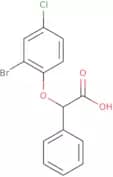
2-(2-Bromo-4-chlorophenoxy)-2-phenylacetic acid
CAS:Versatile small molecule scaffold
Formula:C14H10BrClO3Purity:Min. 95%Molecular weight:341.58 g/mol5-Methyl-4-(phenoxymethyl)furan-2-carboxylic acid
CAS:Versatile small molecule scaffold
Formula:C13H12O4Purity:Min. 95%Molecular weight:232.23 g/mol6-(4-Methoxyphenyl)-3-methyl-[1,2]oxazolo[5,4-b]pyridine-4-carboxylic acid
CAS:Versatile small molecule scaffold
Formula:C15H12N2O4Purity:Min. 95%Molecular weight:284.27 g/molEthyl 1-((4-chlorophenyl)sulfonyl)-4-piperidinecarboxylate
CAS:Versatile small molecule scaffold
Formula:C14H18ClNO4SPurity:Min. 95%Molecular weight:331.8 g/molRef: 3D-NMA68503
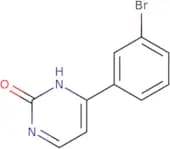
Discontinued product4-(3-Bromophenyl)pyrimidin-2-ol
CAS:Versatile small molecule scaffold
Formula:C10H7BrN2OPurity:Min. 95%Molecular weight:251.08 g/molPyrrolo[1,2-b]pyridazin-4(1H)-one
CAS:Versatile small molecule scaffold
Formula:C7H6N2OPurity:Min. 95%Molecular weight:134.14 g/molRef: 3D-NKB72026
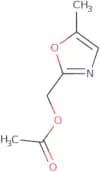
Discontinued product(5-Methyl-1,3-oxazol-2-yl)methyl acetate
CAS:Versatile small molecule scaffold
Formula:C7H9NO3Purity:Min. 95%Molecular weight:155.15 g/molRef: 3D-NKB02241
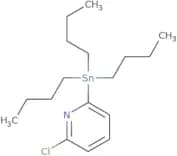
Discontinued product6-Chloro-2-(tributylstannyl)pyridine
CAS:Controlled ProductVersatile small molecule scaffold
Formula:C17H30ClNSnPurity:Min. 95%Molecular weight:402.59 g/molRef: 3D-NKA69899
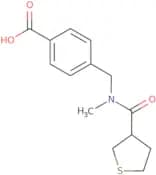
Discontinued product4-((N-Methyltetrahydrothiophene-3-carboxamido)methyl)benzoic acid
CAS:Versatile small molecule scaffold
Formula:C14H17NO3SPurity:Min. 95%Molecular weight:279.36 g/molRef: 3D-NJC85077
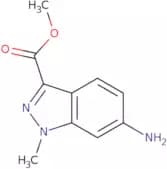
Discontinued productMethyl 6-amino-1-methyl-1H-indazole-3-carboxylate
CAS:Controlled ProductVersatile small molecule scaffold
Formula:C10H11N3O2Purity:Min. 95%Molecular weight:205.21 g/molRef: 3D-NEC38069
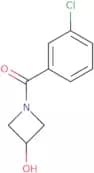
Discontinued product1-(3-Chlorobenzoyl)azetidin-3-ol
CAS:Versatile small molecule scaffold
Formula:C10H10ClNO2Purity:Min. 95%Molecular weight:211.64 g/molRef: 3D-NDC98075
Discontinued product4-Methyl-4,6-diazaspiro[2.4]heptan-5-one
CAS:Versatile small molecule scaffoldFormula:C6H10N2OPurity:Min. 95%Molecular weight:126.16 g/molRef: 3D-NDC49329
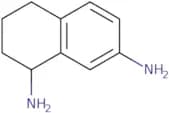
Discontinued product1,2,3,4-Tetrahydronaphthalene-1,7-diamine
CAS:Versatile small molecule scaffold
Formula:C10H14N2Purity:Min. 95%Molecular weight:162.23 g/molRef: 3D-NCA12552
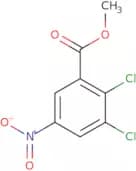
Discontinued productMethyl 2,3-dichloro-5-nitrobenzoate
CAS:Versatile small molecule scaffold
Formula:C8H5Cl2NO4Purity:Min. 95%Molecular weight:250.03 g/molRef: 3D-NCA10554
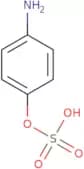
Discontinued product4-Aminophenol sulfate(2:1)
CAS:Versatile small molecule scaffold
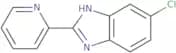
Formula:C12H16N2O6SPurity:Min. 95%Color and Shape:PowderMolecular weight:316.33 g/mol6-Chloro-2-(pyridin-2-yl)-1H-1,3-benzodiazole
CAS:Versatile small molecule scaffold
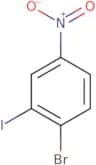
Formula:C12H8ClN3Purity:Min. 95%Molecular weight:229.66 g/mol4-Bromo-3-iodonitrobenzene
CAS:4-Bromo-3-iodonitrobenzene is a pyrrole derivative that yields 4-bromo-3-iodobenzene upon treatment with palladium. It is a precursor to other products, such as 3-iodo-4-(pyrrolidinomethyl)benzoic acid and 4-(pyrrolidinomethyl)benzoic acid. This compound can be used in the synthesis of biomolecules, such as nucleosides, nucleotides, amino acids, peptides, and proteins. The synthesis of this compound involves deuterium exchange between the bromine and the hydrogen on the nitrogen atom. For example, if 4-bromo-3-iodonitrobenzene reacts with sodium methoxide in methanol it will produce 4-(methylamino)-3-(iodomethyl)aniline hydrochloride. The reaction yield of this
Formula:C6H3BrINO2Purity:Min. 95%Molecular weight:327.9 g/molRef: 3D-NCA03763
Discontinued product2-(2-Oxooxolan-3-yl)acetic acid
CAS:Versatile small molecule scaffold
Formula:C6H8O4Purity:Min. 95%Molecular weight:144.1 g/molRef: 3D-NAA28116
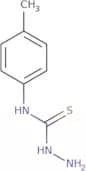
Discontinued product4-(4-Methylphenyl)-3-thiosemicarbazide
CAS:4-(4-Methylphenyl)-3-thiosemicarbazide is a carbonyl compound. It has been shown to be an inhibitor of acetylcholinesterase, an enzyme that breaks down the neurotransmitter acetylcholine, which is involved in muscle contraction. This inhibition causes paralysis and death in insects. 4-(4-Methylphenyl)-3-thiosemicarbazide has also been shown to be active against gram-negative bacteria. The structure of this molecule was determined by its vibrational spectra and multinuclear NMR data. 4-(4-Methylphenyl)-3-thiosemicarbazide stabilizes the dihedral angle between two nitrogen atoms, which are necessary for formation rate.
Formula:C8H11N3SPurity:Min. 95%Molecular weight:181.26 g/mol8-Aminonaphthalene-2-sulfonamide
CAS:Versatile small molecule scaffold
Formula:C10H10N2O2SPurity:Min. 95%Molecular weight:222.3 g/molRef: 3D-NAA26152
Discontinued product1-(2-Bromoethoxy)naphthalene
CAS:Versatile small molecule scaffold
Formula:C12H11BrOPurity:Min. 95%Molecular weight:251.12 g/molRef: 3D-NAA24779
Discontinued product4-Nitro-1-propyl-1H-imidazole
CAS:Versatile small molecule scaffold
Formula:C6H9N3O2Purity:Min. 95%Molecular weight:155.15 g/molRef: 3D-NAA23008
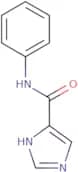
Discontinued productN-Phenyl-1H-imidazole-5-carboxamide
CAS:Versatile small molecule scaffold
Formula:C10H9N3OPurity:Min. 95%Molecular weight:187.2 g/molRef: 3D-NAA18913
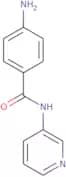
Discontinued product4-Amino-N-pyridin-3-ylbenzamide
CAS:Versatile small molecule scaffold
Formula:C12H11N3OPurity:Min. 95%Molecular weight:213.24 g/mol2-Ethyl-[1,3,4]oxadiazole
CAS:Versatile small molecule scaffold
Formula:C4H6N2OPurity:Min. 95%Molecular weight:98.1 g/molRef: 3D-NAA14861
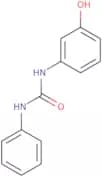
Discontinued product3-(3-Hydroxyphenyl)-1-phenylurea
CAS:Versatile small molecule scaffold
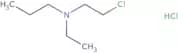
Formula:C13H12N2O2Purity:Min. 95%Molecular weight:228.25 g/molN-(2-Chloroethyl)-N-ethylpropan-1-amine hydrochloride
CAS:Controlled ProductVersatile small molecule scaffold
Formula:C7H17Cl2NPurity:Min. 95%Molecular weight:186.12 g/molRef: 3D-NAA10593
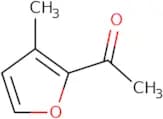
Discontinued product1-(3-Methylfuran-2-yl)ethan-1-one
CAS:1-(3-Methylfuran-2-yl)ethan-1-one is a heterocyclic compound that can be found in the leaves and tubercles of Bignoniaceae plants. It is structurally related to an oxygen heterocycle, which is a class of organic compounds with oxygen in their molecular structures. 1-(3-Methylfuran-2-yl)ethan-1-one has been isolated from the leaves of Blechnum pennaefolium and the tubers of Tuberculosa leontopodioides by alkaline hydrolysis. It has shown antimicrobial activity against Gram positive bacteria. The diacetate form was isolated from the leaves of Bignonia colemanii and shown to have antiviral properties. Formylation reactions are also possible with this compound, as it has been shown to react with sodium methoxide or dimethyl sulfoxide to produce formaldehyde and methanal respectively.
Formula:C7H8O2Purity:Min. 95%Molecular weight:124.14 g/molRef: 3D-NAA10145
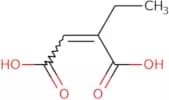
Discontinued product2-Ethylbut-2-enedioic acid
CAS:2-Ethylbut-2-enedioic acid is an aliphatic hydrocarbon that has a particle size of about 1 micron. It is a monocarboxylic acid that is commonly used as a precursor to the synthesis of polycarboxylic acids. 2-Ethylbut-2-enedioic acid can be activated by reacting with tertiary amines or phosphines and subsequently reacting with alcohols or thiols. The latter reaction will produce esters or ethers, respectively. This compound has been shown to have antiinflammatory effects in models of autoimmune diseases, such as arthritis and colitis, which are due to its ability to inhibit the production of proinflammatory cytokines.
Formula:C6H8O4Purity:Min. 95%Molecular weight:144.12 g/molRef: 3D-NAA07460
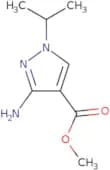
Discontinued productMethyl 3-amino-1-(propan-2-yl)-1H-pyrazole-4-carboxylate
CAS:Versatile small molecule scaffold
Formula:C8H13N3O2Purity:Min. 95%Molecular weight:183.21 g/molRef: 3D-MWC97411
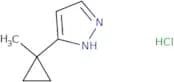
Discontinued product3-(1-Methylcyclopropyl)-1H-pyrazole hydrochloride
CAS:Versatile small molecule scaffoldFormula:C7H11ClN2Purity:Min. 95%Molecular weight:158.63 g/molRef: 3D-MWC91923
Discontinued product1-[(4-Methylphenyl)methyl]-1H-1,3-benzodiazole-2-carbaldehyde
CAS:Versatile small molecule scaffold
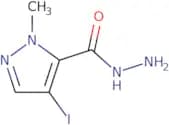
Formula:C16H14N2OPurity:Min. 95%Molecular weight:250.29 g/mol4-Iodo-1-methyl-1H-pyrazole-5-carbohydrazide
CAS:Versatile small molecule scaffold
Formula:C5H7IN4OPurity:Min. 95%Molecular weight:266.04 g/molRef: 3D-MVA81000
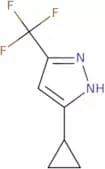
Discontinued product5-cyclopropyl-3-(trifluoromethyl)-1h-pyrazole
CAS:Versatile small molecule scaffoldFormula:C7H7F3N2Purity:Min. 95%Molecular weight:176.14 g/molRef: 3D-MSB29585
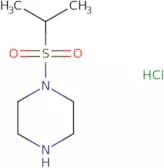
Discontinued product1-(Propane-2-sulfonyl)piperazine hydrochloride
CAS:Versatile small molecule scaffoldFormula:C7H17ClN2O2SPurity:Min. 95%Molecular weight:228.74 g/mol(3-Methoxyoxan-3-yl)methanol
CAS:Versatile small molecule scaffold
Formula:C7H14O3Purity:Min. 95%Molecular weight:146.2 g/molRef: 3D-MKD47250
Discontinued productFuro[2,3-c]pyridine-2-carboxylic acid
CAS:Versatile small molecule scaffold
Formula:C8H5NO3Purity:Min. 95%Molecular weight:163.13 g/molRef: 3D-MEA37215
Discontinued productFuro[3,2-c]pyridine-2-carbaldehyde
CAS:Versatile small molecule scaffold
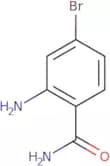
Formula:C8H5NO2Purity:Min. 95%Molecular weight:147.13 g/mol2-Amino-4-bromobenzamide
CAS:2-Amino-4-bromobenzamide is a ring-opening reaction system that is used in the synthesis of isatins. It has been shown to be an efficient and rapid method for the synthesis of this class of heterocyclic compounds. The oxidative nature of this reaction makes it useful for generating reactive intermediates, which can be used for further transformations.
Formula:C7H7BrN2OPurity:Min. 95%Molecular weight:215.05 g/mol6-Chloro-2-fluoroquinoxaline
CAS:Versatile small molecule scaffold
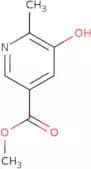
Formula:C8H4ClFN2Purity:Min. 95%Molecular weight:182.58 g/mol5-Hydroxy-6-methyl-nicotinic acid methyl ester
CAS:Versatile small molecule scaffold
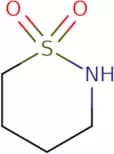
Formula:C8H9NO3Purity:Min. 95%Molecular weight:167.16 g/mol1lambda6,2-thiazinane-1,1-dione
CAS:1,2-Thiazinane-1,1-dione is a short-chain alkylating agent that has been shown to have neuropathic and inflammatory pain relief. It binds to a number of halides and inhibits their action, including the inhibition of angiotensin I-converting enzyme (ACE), which is an antihypertensive agent. 1,2-Thiazinane-1,1-dione also inhibits the production of epoxides in c1-4 alkyl groups. This drug also has antibacterial properties and can be used as a chemical probe for ligand binding studies.
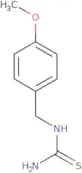
Formula:C4H9NO2SPurity:Min. 95%Molecular weight:135.2 g/mol1-(4-Methoxybenzyl)-2-thiourea
CAS:Versatile small molecule scaffold
Formula:C9H12N2OSPurity:Min. 95%Molecular weight:196.27 g/molRef: 3D-MBA41264
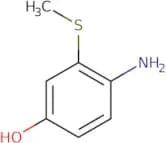
Discontinued product4-amino-3-(methylsulfanyl)phenol
CAS:Versatile small molecule scaffold
Formula:C7H9NOSPurity:Min. 95%Molecular weight:155.21 g/mol2-[(2-Methylphenyl)amino]-4,5-dihydro-1,3-thiazol-4-one
CAS:Versatile small molecule scaffold
Formula:C10H10N2OSPurity:Min. 95%Molecular weight:206.27 g/molRef: 3D-MBA39499
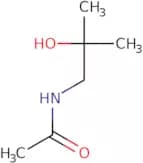
Discontinued productN-(2-Hydroxy-2-methylpropyl)acetamide
CAS:N-(2-Hydroxy-2-methylpropyl)acetamide (HMPA) is a molecule inhibitor that inhibits the activity of inflammatory bowel disease (IBD)-associated kinases. HMPA is a member of a family of molecules that are inhibitors of IBD-associated kinases, which may be useful for the treatment of IBD. HMPA has shown in vitro inhibition against two kinases, JNK1 and p38 MAPK, which are both important mediators in the progression of IBD. This drug may be used to inhibit inflammation in the digestive tract by blocking these inflammatory pathways.
Formula:C6H13NO2Purity:Min. 95%Molecular weight:131.17 g/molRef: 3D-MBA15062
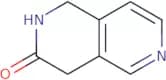
Discontinued product1,2-Dihydro-2,6-naphthyridin-3(4H)-one
CAS:Versatile small molecule scaffold
Formula:C8H8N2OPurity:Min. 95%Molecular weight:148.16 g/molRef: 3D-MBA12544
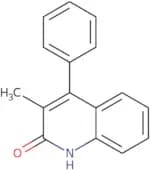
Discontinued product3-Methyl-4-phenyl-1,2-dihydroquinolin-2-one
CAS:Versatile small molecule scaffold
Formula:C16H13NOPurity:Min. 95%Molecular weight:235.28 g/molRef: 3D-MBA11875
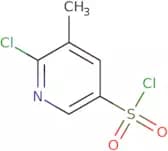
Discontinued product6-Chloro-5-methyl-pyridine-3-sulphonyl chloride
CAS:Versatile small molecule scaffold
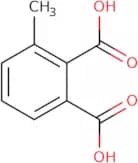
Formula:C6H5Cl2NO2SPurity:Min. 95%Molecular weight:226.07 g/mol3-Methylphthalic Acid
CAS:3-Methylphthalic Acid is a chemical that is used in the production of polyvinyl chloride. It is produced by the dioxygenation of phthalic anhydride and methanol, which produces 3-methylphthalic acid as well as 1,1-dichloroethane. The chemical can be used as a surfactant in polyvinyl chloride and styrene production processes. 3-Methylphthalic Acid has been shown to have adverse health effects on laboratory animals, including polyvinyl chloride workers who are exposed to it for prolonged periods of time. The chemical can cause irritation and corrosion to skin and eyes, as well as damage to the liver and kidneys.
Formula:C9H8O4Purity:Min. 95%Molecular weight:180.16 g/molRef: 3D-MBA10274
Discontinued product


![6-(4-Methoxyphenyl)-3-methyl-[1,2]oxazolo[5,4-b]pyridine-4-carboxylic acid](/_next/image/?url=https%3A%2Fstatic.cymitquimica.com%2Fproducts%2F3D%2Fthumb-webp%2FNMB00171.webp&w=3840&q=75)

![Pyrrolo[1,2-b]pyridazin-4(1H)-one](/_next/image/?url=https%3A%2Fstatic.cymitquimica.com%2Fproducts%2F3D%2Fthumb-webp%2FNKB72026.webp&w=3840&q=75)
![4-Methyl-4,6-diazaspiro[2.4]heptan-5-one](/_next/image/?url=https%3A%2Fstatic.cymitquimica.com%2Fproducts%2F3D%2Fthumb-webp%2FNDC49329.webp&w=3840&q=75)

![2-Ethyl-[1,3,4]oxadiazole](/_next/image/?url=https%3A%2Fstatic.cymitquimica.com%2Fproducts%2F3D%2Fthumb-webp%2FNAA14861.webp&w=3840&q=75)
![1-[(4-Methylphenyl)methyl]-1H-1,3-benzodiazole-2-carbaldehyde](/_next/image/?url=https%3A%2Fstatic.cymitquimica.com%2Fproducts%2F3D%2Fthumb-webp%2FMWA01030.webp&w=3840&q=75)
![Furo[2,3-c]pyridine-2-carboxylic acid](/_next/image/?url=https%3A%2Fstatic.cymitquimica.com%2Fproducts%2F3D%2Fthumb-webp%2FMEA37215.webp&w=3840&q=75)
![Furo[3,2-c]pyridine-2-carbaldehyde](/_next/image/?url=https%3A%2Fstatic.cymitquimica.com%2Fproducts%2F3D%2Fthumb-webp%2FMEA37207.webp&w=3840&q=75)

![2-[(2-Methylphenyl)amino]-4,5-dihydro-1,3-thiazol-4-one](/_next/image/?url=https%3A%2Fstatic.cymitquimica.com%2Fproducts%2F3D%2Fthumb-webp%2FMBA39499.webp&w=3840&q=75)