Building Blocks
Subcategories of "Building Blocks"
- Boronic Acids & Boronic Acid Derivatives(5,778 products)
- Chiral Building Blocks(1,243 products)
- Hydrocarbon Building Blocks(6,099 products)
- Organic Building Blocks(61,038 products)
Found 205376 products of "Building Blocks"
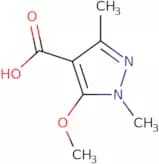
5-Methoxy-1,3-dimethyl-1H-pyrazole-4-carboxylic acid
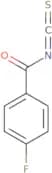
CAS:Versatile small molecule scaffoldFormula:C7H10N2O3Purity:Min. 95%Molecular weight:170.17 g/mol4-Fluorobenzoyl isothiocyanate
CAS:4-Fluorobenzoyl isothiocyanate (FBITC) is a fluorescent molecule that binds to the glutamate receptor. The binding of FBITC to the GluN2B subunit of the NMDA receptor leads to conformational changes in the receptor and decreases its ability to bind glutamate. This process has been shown using x-ray diffraction data, which also showed that FBITC was able to chelate with magnesium ions, indicating a possible allosteric modulator for these receptors.
Formula:C8H4FNOSPurity:Min. 95%Molecular weight:181.19 g/mol(1S)-1-(2,3-Dihydro-1H-inden-5-yl)ethan-1-ol
CAS:Versatile small molecule scaffoldFormula:C11H14OPurity:Min. 95%Molecular weight:162.23 g/molRef: 3D-MYB25242
Discontinued product7-Oxa-1-azaspiro[3.5]nonan-2-one
CAS:Versatile small molecule scaffold
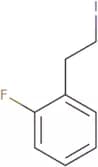
Formula:C7H11NO2Purity:Min. 95%Molecular weight:141.17 g/mol1-Fluoro-2-(2-iodoethyl)benzene
CAS:Versatile small molecule scaffold
Formula:C8H8FIPurity:Min. 95%Molecular weight:250.05 g/molRef: 3D-DHA68513
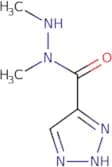
Discontinued productDimethyl-1H-1,2,3-triazole-4-carbohydrazide
CAS:Versatile small molecule scaffold
Formula:C5H9N5OPurity:Min. 95%Molecular weight:155.16 g/molRef: 3D-MZC90811
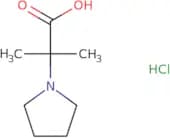
Discontinued product2-Methyl-2-(pyrrolidin-1-yl)propanoic acid hydrochloride
CAS:Versatile small molecule scaffold
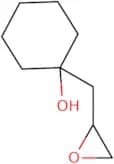
Formula:C8H16ClNO2Purity:Min. 95%Molecular weight:193.67 g/mol1-(Oxiran-2-ylmethyl)cyclohexan-1-ol
CAS:Versatile small molecule scaffold
Formula:C9H16O2Purity:Min. 95%Molecular weight:156.22 g/molRef: 3D-LBA39924
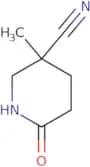
Discontinued product3-Methyl-6-oxopiperidine-3-carbonitrile
CAS:Versatile small molecule scaffoldFormula:C7H10N2OPurity:Min. 95%Molecular weight:138.17 g/molRef: 3D-LCD60619
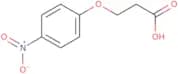
Discontinued product3-(4-Nitrophenoxy)propionic acid
CAS:3-(4-Nitrophenoxy)propionic acid is a promiscuous compound that can be used to synthesize other compounds. It reacts with hydrochloric acid, nitro groups, and phosphorus pentoxide to produce nitro compounds. 3-(4-Nitrophenoxy)propionic acid reacts with benzoylamine in the presence of a cocatalyst to form alkoxycarbonyl products. The cocatalyst is typically a metal such as zinc or magnesium. 3-(4-Nitrophenoxy)propionic acid is also used as an agrochemical for controlling influenza virus and Influenzae bacteria.
!--Formula:C9H9NO5Purity:Min. 95%Molecular weight:211.17 g/molrac-(2R,4S)-1-[(tert-Butoxy)carbonyl]-4-ethylpiperidine-2-carboxylic acid
CAS:Versatile small molecule scaffoldFormula:C13H23NO4Purity:Min. 95%Molecular weight:257.33 g/molRef: 3D-YEA81184
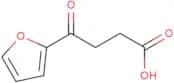
Discontinued product4-(Furan-2-yl)-4-oxobutanoic acid
CAS:Versatile small molecule scaffold
Formula:C8H8O4Purity:Min. 95%Molecular weight:168.15 g/molRef: 3D-KAA56400
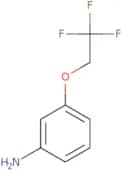
Discontinued product3-(2,2,2-Trifluoroethoxy)aniline
CAS:Versatile small molecule scaffold
Formula:C8H8F3NOPurity:Min. 95%Molecular weight:191.15 g/mol2-(Benzylamino)-1-[3-(difluoromethoxy)phenyl]ethan-1-ol
CAS:Versatile small molecule scaffoldFormula:C16H17F2NO2Purity:Min. 95%Molecular weight:293.31 g/molRef: 3D-XWC80204
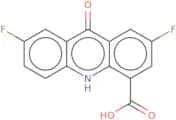
Discontinued product2,7-Difluoro-9-oxo-9,10-dihydroacridine-4-carboxylic acid
CAS:Versatile small molecule scaffold
Formula:C14H7F2NO3Purity:Min. 95%Molecular weight:275.2 g/molRef: 3D-XWC80123
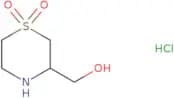
Discontinued product(S)-3-(Hydroxymethyl)thiomorpholine 1,1-dioxide hydrochloride
CAS:Versatile small molecule scaffoldFormula:C5H12ClNO3SPurity:Min. 95%Molecular weight:201.67 g/molRef: 3D-XWC60981
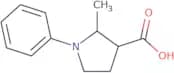
Discontinued product2-Methyl-1-phenylpyrrolidine-3-carboxylic acid
CAS:Versatile small molecule scaffold
Formula:C12H15NO2Purity:Min. 95%Molecular weight:205.25 g/molRef: 3D-XWC56732
Discontinued product4,5-Dihydro-1H-imidazol-2-amine hydrochloride
CAS:Please enquire for more information about 4,5-Dihydro-1H-imidazol-2-amine hydrochloride including the price, delivery time and more detailed product information at the technical inquiry form on this page
Formula:C3H7N3•HClPurity:Min. 95%Molecular weight:121.57 g/molRef: 3D-FD183639
Discontinued product8-Bromo-2-methylimidazo[1,2-a]pyridine
CAS:Versatile small molecule scaffold
Formula:C8H7N2BrPurity:Min. 95%Molecular weight:211.05 g/mol3-Hydroxy-5-methylpyridine
CAS:3-Hydroxy-5-methylpyridine (3HMP) is a chemical substance that has been classified as an amine. It is a product of the metabolism of purines, which are nitrogenous bases found in DNA and RNA. 3HMP is produced by aerogenic bacteria (such as Enterobacter), and can be used to estimate the number of these bacteria present in water samples. 3HMP has been shown to have antiviral properties against influenza virus, and can be used as a biomarker for the presence of other viruses in animals. 3HMP also has mineralization properties, which have been studied extensively, particularly with regards to pancreatic disease.
Formula:C6H7NOPurity:Min. 95%Color and Shape:PowderMolecular weight:109.13 g/molRef: 3D-FH16174
Discontinued product2-Bromo-3,3,3-trifluoro-1-propene
CAS:Controlled Product2-Bromo-3,3,3-trifluoro-1-propene is a chemical compound that has been synthesized in an asymmetric reaction. The reactant is bromopropane and the product is 2,2,2-trifluoropropene. The methylene group on the propene molecule is activated by the nucleophilic attack of a fluoride ion from hydrogen fluoride to form a cavity with a highly strained bond. The kinetic study of this reaction revealed that the activation energy for the reaction is 42 kJ/mol. Palladium-catalyzed coupling reactions are catalyzed by palladium and require nonpolar solvents such as toluene or dichloromethane. This type of reaction has been shown to be exothermic with an isolated yield of 1%.
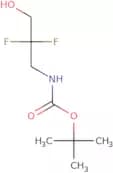
Formula:C3H2BrF3Purity:Min. 95%Color and Shape:Colorless PowderMolecular weight:174.95 g/moltert-Butyl (2,2-difluoro-3-hydroxypropyl)carbamate
CAS:Versatile small molecule scaffoldFormula:C10H13NO4Purity:Min. 95%Molecular weight:211.21 g/mol4-Chloro-2-hydroxy-6-methylphenylboronic acid
CAS:Versatile small molecule scaffoldFormula:C7H8BClO3Purity:Min. 95%Molecular weight:186.4 g/mol1-Hydroxycyclopentane-1-carbonitrile
CAS:1-Hydroxycyclopentane-1-carbonitrile is a monomer that is hydrolyzed to form benzoin and cyanohydrins. It can be used in the production of scifinder as a monomer or dimerizer.
Formula:C6H9NOPurity:Min. 95%Molecular weight:111.14 g/mol4,5-Dihydroxy-2,3-Pentanedione
CAS:4,5-Dihydroxy-2,3-pentanedione is a carbonyl compound that is the product of the oxidation of ascorbic acid. It is used in wastewater treatment and has antimicrobial properties against infectious diseases. This compound has been shown to inhibit protein synthesis by binding to the ribosome and preventing the formation of peptide bonds between amino acids. 4,5-Dihydroxy-2,3-pentanedione has also been shown to bind to plasma proteins, which may be due to its acyl chain structure. 4,5-Dihydroxy-2,3-pentanedione can be synthesized in a catalytic mechanism that involves dehydroascorbic acid and molecular oxygen.
Formula:C5H8O4Purity:Min. 95%Color and Shape:PowderMolecular weight:132.11 g/molRef: 3D-FD180770
Discontinued productPiperyline
CAS:Piperyline is an alkanoic acid that has shown to be effective against skin cancer. It also has antimicrobial properties, which may be due to its ability to bind metal ions and form polymeric compounds. Piperyline inhibits microbial growth by inhibiting the synthesis of proteins and nucleic acids. The antimicrobial activity is related to its cationic polymerization with hydroxyl groups, which forms a structure that can inhibit microbial enzymes and disrupt microbial cell membranes. This compound also interacts with the skin's natural lipids, making it difficult for microorganisms to attach and grow on the skin. Piperyline is synthesized in organic chemistry laboratories as an amide precursor of other pharmaceuticals such as penicillin.
Formula:C16H17NO3Purity:Min. 95%Molecular weight:271.31 g/mol


![7-Oxa-1-azaspiro[3.5]nonan-2-one](/_next/image/?url=https%3A%2Fstatic.cymitquimica.com%2Fproducts%2F3D%2Fthumb-webp%2FDHA24292.webp&w=3840&q=75)
![rac-(2R,4S)-1-[(tert-Butoxy)carbonyl]-4-ethylpiperidine-2-carboxylic acid](/_next/image/?url=https%3A%2Fstatic.cymitquimica.com%2Fproducts%2F3D%2Fthumb-webp%2FYEA81184.webp&w=3840&q=75)
![2-(Benzylamino)-1-[3-(difluoromethoxy)phenyl]ethan-1-ol](/_next/image/?url=https%3A%2Fstatic.cymitquimica.com%2Fproducts%2F3D%2Fthumb-webp%2FXWC80204.webp&w=3840&q=75)
![8-Bromo-2-methylimidazo[1,2-a]pyridine](/_next/image/?url=https%3A%2Fstatic.cymitquimica.com%2Fproducts%2F3D%2Fthumb-webp%2FUXB37475.webp&w=3840&q=75)