Building Blocks
This section contains fundamental products for the synthesis of organic and biological compounds. Building blocks are the essential starting materials used to construct complex molecules through various chemical reactions. They play a critical role in drug discovery, material science, and chemical research. At CymitQuimica, we offer a diverse range of high-quality building blocks to support your innovative research and industrial projects, ensuring you have the essential components for successful synthesis.
Subcategories of "Building Blocks"
- Boronic Acids & Boronic Acid Derivatives(5,778 products)
- Chiral Building Blocks(1,242 products)
- Hydrocarbon Building Blocks(6,098 products)
- Organic Building Blocks(61,092 products)
Found 199296 products of "Building Blocks"
Sort by
Purity (%)
0
100
|
0
|
50
|
90
|
95
|
100
3-[(6-Chloropyrimidin-4-yl)amino]propanamide
CAS:<p>Versatile small molecule scaffold</p>Formula:C7H9ClN4OPurity:Min. 95%Molecular weight:200.62 g/mol1-(3-Methoxyphenyl)ethane-1-sulfonamide
CAS:<p>Versatile small molecule scaffold</p>Formula:C9H13NO3SPurity:Min. 95%Molecular weight:215.27 g/molRef: 3D-AAC48760
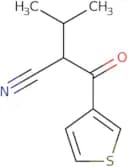
Discontinued product3-Methyl-2-(thiophene-3-carbonyl)butanenitrile
CAS:<p>Versatile small molecule scaffold</p>Formula:C10H11NOSPurity:Min. 95%Molecular weight:193.27 g/molRef: 3D-AAC35155
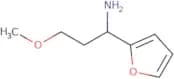
Discontinued product1-(Furan-2-yl)-3-methoxypropan-1-amine
CAS:<p>Versatile small molecule scaffold</p>Formula:C8H13NO2Purity:Min. 95%Molecular weight:155.19 g/molRef: 3D-AAC28244
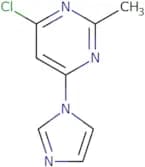
Discontinued product4-Chloro-6-(1H-imidazol-1-yl)-2-methylpyrimidine
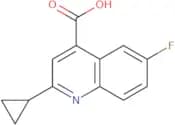
CAS:<p>Versatile small molecule scaffold</p>Formula:C8H7ClN4Purity:Min. 95%Molecular weight:194.62 g/mol2-Cyclopropyl-6-fluoroquinoline-4-carboxylic acid
CAS:<p>Versatile small molecule scaffold</p>Formula:C13H10FNO2Purity:Min. 95%Molecular weight:231.22 g/molRef: 3D-AAA78458
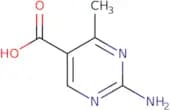
Discontinued product2-Amino-4-methyl-pyrimidine-5-carboxylic acid
CAS:<p>2-Amino-4-methyl-pyrimidine-5-carboxylic acid is a spleen cell immunogen that induces antibody production in animals. 2-Amino-4-methyl-pyrimidine-5-carboxylic acid is an immunogen that belongs to the class of pyrimidine carboxylic acids. It has been optimised for use as an animal vaccine by inoculating it into tissues and monitoring antibody production with an enzyme linked immunosorbent assay. This compound has also been used to monitor and screen for antibodies in liquid chromatography.</p>Formula:C6H7N3O2Purity:Min. 95%Molecular weight:153.14 g/molRef: 3D-AAA76951
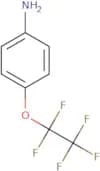
Discontinued product4-(Perfluoroethoxy)aniline
CAS:<p>Versatile small molecule scaffold</p>Formula:C8H6F5NOPurity:Min. 95%Molecular weight:227.13 g/molRef: 3D-AAA71785
Discontinued product2-(Chloromethyl)-4-cyclohexyl-1,3-thiazole
CAS:<p>Versatile small molecule scaffold</p>Formula:C10H14ClNSPurity:Min. 95%Molecular weight:215.74 g/molRef: 3D-VGA88163
Discontinued product6-[3-(4-Methoxyphenyl)-1H-pyrazol-1-yl]pyridazine-3-thiol
CAS:<p>Versatile small molecule scaffold</p>Formula:C14H12N4OSPurity:Min. 95%Molecular weight:284.34 g/molRef: 3D-VWC51580
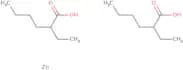
Discontinued productEthylhexanoic acid zinc
CAS:<p>Ethylhexanoic acid zinc salt is a viscosity-increasing agent that is used in the production of high-viscosity polymers. It is a carboxylate salt of ethyl hexanoic acid and zinc. The reaction of ethylhexane with zirconium oxide produces a viscous liquid with a strong cationic polymerization activity. This product reacts with diphenyl ether and aromatic hydrocarbons to form solid products. The reaction with calcium stearate, an ester of glycerol, results in the formation of particles that are insoluble in water but soluble in organic solvents. Ethylhexane also reacts with ethylene diamine to form methyl myristate, which has kinetic data available for it.</p>Formula:C16H30O4ZnPurity:Min. 95%Molecular weight:351.8 g/mol{[(2S,4S)-4-Fluoro-1-[(2-methyl-1,3-thiazol-4-yl)methyl]pyrrolidin-2-yl]methyl}(methyl)amine
CAS:<p>Versatile small molecule scaffold</p>Formula:C11H18FN3SPurity:Min. 95%Molecular weight:243.35 g/molRef: 3D-VXC57248
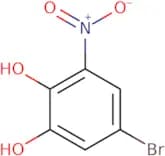
Discontinued product5-bromo-3-nitrobenzene-1,2-diol
CAS:<p>Versatile small molecule scaffold</p>Formula:C6H4BrNO4Purity:Min. 95%Molecular weight:234.01 g/molRef: 3D-WBB77999
Discontinued product[(1-Ethyl-1H-1,3-benzodiazol-2-yl)methyl](methyl)amine
CAS:Controlled Product<p>Versatile small molecule scaffold</p>Formula:C11H15N3Purity:Min. 95%Molecular weight:189.26 g/mol2-[2-(Naphthalen-1-yl)-1,3-thiazol-4-yl]acetic acid
CAS:<p>Versatile small molecule scaffold</p>Formula:C15H11NO2SPurity:Min. 95%Molecular weight:269.3 g/mol2-Chloro-N-[cyclopentyl(phenyl)methyl]acetamide
CAS:<p>Versatile small molecule scaffold</p>Formula:C14H18ClNOPurity:Min. 95%Molecular weight:251.75 g/mol2,6-Dichloro-N'-hydroxybenzene-1-carboximidamide
CAS:<p>Versatile small molecule scaffold</p>Formula:C7H6Cl2N2OPurity:Min. 95%Molecular weight:205.04 g/molRef: 3D-YAA50521
Discontinued productEthyl 3-(4-fluorophenyl)-2-methyl-3-oxopropanoate
CAS:<p>Versatile small molecule scaffold</p>Formula:C12H13FO3Purity:Min. 95%Molecular weight:224.23 g/molRef: 3D-YEC51120
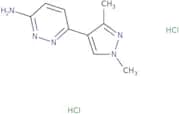
Discontinued product6-(1,3-Dimethyl-1H-pyrazol-4-yl)pyridazin-3-amine dihydrochloride
CAS:<p>Versatile small molecule scaffold</p>Formula:C9H13Cl2N5Purity:Min. 95%Molecular weight:262.14 g/molRef: 3D-FDD54856
Discontinued product5-[(2-Methoxyphenyl)(methyl)sulfamoyl]-2-methylbenzoic acid
CAS:<p>Versatile small molecule scaffold</p>Formula:C16H17NO5SPurity:Min. 95%Molecular weight:335.4 g/molRef: 3D-FQA34216
Discontinued product[4-(Pyridin-2-yl)-1,3-thiazol-2-yl]methanamine dihydrochloride
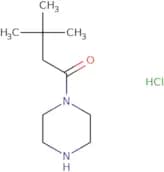
CAS:<p>Versatile small molecule scaffold</p>Formula:C9H11Cl2N3SPurity:Min. 95%Molecular weight:264.17 g/mol3,3-Dimethyl-1-(piperazin-1-yl)butan-1-one hydrochloride
CAS:<p>Versatile small molecule scaffold</p>Formula:C10H21ClN2OPurity:Min. 95%Molecular weight:220.74 g/mol3-[(4-Methylphenyl)methyl]azetidine hydrochloride
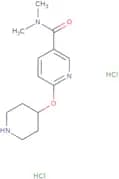
CAS:<p>Versatile small molecule scaffold</p>Formula:C11H16ClNPurity:Min. 95%Molecular weight:197.7 g/molN,N-Dimethyl-6-(piperidin-4-yloxy)pyridine-3-carboxamide dihydrochloride
CAS:<p>Versatile small molecule scaffold</p>Formula:C13H21Cl2N3O2Purity:Min. 95%Molecular weight:322.2 g/molRef: 3D-FDD53991
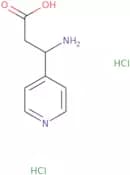
Discontinued product3-Amino-3-(pyridin-4-yl)propanoic acid dihydrochloride
CAS:Versatile small molecule scaffoldFormula:C8H12Cl2N2O2Purity:Min. 95%Molecular weight:239.1 g/molN-[2-(Propan-2-yl)phenyl]-1,3-benzothiazol-2-amine
CAS:<p>Versatile small molecule scaffold</p>Formula:C16H16N2SPurity:Min. 95%Molecular weight:268.4 g/molRef: 3D-FQA34613
Discontinued productN-(1,3-Dioxaindan-5-yl)-2-{[5-(1H-indol-3-yl)-1,3,4-oxadiazol-2-yl]sulfanyl}acetamide
CAS:<p>Versatile small molecule scaffold</p>Formula:C19H14N4O4SPurity:Min. 95%Molecular weight:394.4 g/molRef: 3D-FQA45175
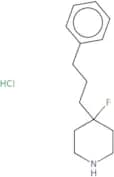
Discontinued product4-Fluoro-4-phenylpiperidine hydrochloride
CAS:<p>4-Fluoro-4-phenylpiperidine hydrochloride is a drug that is structurally related to the neurotransmitter glutamate. It binds to the same metabotropic receptor as glutamate, but with an increased affinity for the receptor. 4-Fluoro-4-phenylpiperidine hydrochloride has been shown to be orally active and is a potent allosteric modulator of this type of receptor. It has been optimized for medicinal use by modifying its hydrophobic nature and functional activity profile. The optimization process has led to an increase in binding affinity, which may lead to better therapeutic effects.</p>Formula:C11H15ClFNPurity:Min. 95%Molecular weight:215.7 g/molRef: 3D-GSB38225
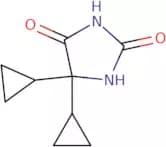
Discontinued product5,5-Dicyclopropylimidazolidine-2,4-dione
CAS:<p>5,5-Dicyclopropylimidazolidine-2,4-dione is an ammonium salt that has a strong antispasmodic effect. It is used to treat muscle spasms and other types of spasticity. 5,5-Dicyclopropylimidazolidine-2,4-dione also has an alkali metal (e.g., sodium) or alkali earth metal (e.g., magnesium) salt form that can be used for the treatment of cystitis, pyelonephritis, and other urinary tract infections. This compound is converted to the corresponding hydantoin derivative in vivo by hydrolysis of the ethoxide group. Hydantoins are related to the hydantoin class of nonsteroidal anti-inflammatory drugs (NSAIDs).</p>Formula:C9H12N2O2Purity:Min. 95%Molecular weight:180.2 g/molRef: 3D-HAA25075
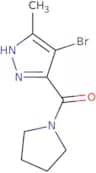
Discontinued product(4-Bromo-5-methyl-1H-pyrazol-3-yl)(pyrrolidin-1-yl)methanone
CAS:Controlled Product<p>Versatile small molecule scaffold</p>Formula:C9H12BrN3OPurity:Min. 95%Molecular weight:258.12 g/molRef: 3D-HAC84481
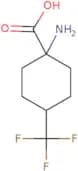
Discontinued product(1S,4S)-Rel-1-amino-4-(trifluoromethyl)cyclohexane-1-carboxylic acid
CAS:<p>Versatile small molecule scaffold</p>Formula:C8H12F3NO2Purity:Min. 95%Molecular weight:211.18 g/molRef: 3D-HCD24898
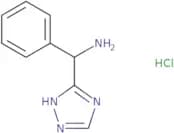
Discontinued productPhenyl(4H-1,2,4-triazol-3-yl)methanamine hydrochloride
CAS:<p>Versatile small molecule scaffold</p>Formula:C9H11ClN4Purity:Min. 95%Molecular weight:210.66 g/moltert-Butyl 5-bromo-3,4-dihydro-2,7-naphthyridine-2(1H)-carboxylate
CAS:<p>Versatile small molecule scaffold</p>Formula:C13H17BrN2O2Purity:Min. 95%Molecular weight:313.19 g/mol2-Bromo-3,3,3-trifluoro-1-propene
CAS:Controlled Product<p>2-Bromo-3,3,3-trifluoro-1-propene is a chemical compound that has been synthesized in an asymmetric reaction. The reactant is bromopropane and the product is 2,2,2-trifluoropropene. The methylene group on the propene molecule is activated by the nucleophilic attack of a fluoride ion from hydrogen fluoride to form a cavity with a highly strained bond. The kinetic study of this reaction revealed that the activation energy for the reaction is 42 kJ/mol. Palladium-catalyzed coupling reactions are catalyzed by palladium and require nonpolar solvents such as toluene or dichloromethane. This type of reaction has been shown to be exothermic with an isolated yield of 1%.</p>Formula:C3H2BrF3Purity:Min. 95%Color and Shape:Colorless PowderMolecular weight:174.95 g/mol3-Boc-3-azabicyclo[3.2.1]octan-8-amine
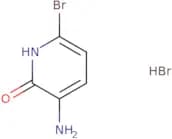
CAS:<p>Versatile small molecule scaffold</p>Formula:C12H22N2O2Purity:Min. 95%Molecular weight:226.32 g/mol3-amino-6-bromopyridin-2-ol hydrobromide
CAS:<p>Versatile small molecule scaffold</p>Formula:C5H6Br2N2OPurity:Min. 95%Molecular weight:269.9 g/mol6,6-Difluorospiro[3.3]heptan-2-amine Hydrochloride
CAS:<p>Versatile small molecule scaffold</p>Formula:C7H11F2N·HClPurity:Min. 95%Molecular weight:147.17 g/mol(2S,3R)-2-((((9H-Fluoren-9-yl)methoxy)carbonyl)amino)-3-methoxybutanoic acid
CAS:<p>Versatile small molecule scaffold</p>Formula:C20H21NO5Purity:Min. 95%Molecular weight:355.4 g/mol1-[3-(Dimethylamino)propyl]-1-(4-fluorophenyl)-1,3-dihydro-3-oxo-5-isobenzofurancarbonitrile
CAS:<p>Please enquire for more information about 1-[3-(Dimethylamino)propyl]-1-(4-fluorophenyl)-1,3-dihydro-3-oxo-5-isobenzofurancarbonitrile including the price, delivery time and more detailed product information at the technical inquiry form on this page</p>Formula:C20H19FN2O2Purity:Min. 95%Molecular weight:338.38 g/molRef: 3D-FD184085
Discontinued product3-Methylbenzo[b]thiophene-2-carboxylic acid
CAS:<p>3-Methylbenzo[b]thiophene-2-carboxylic acid (MBTCA) is a heterocyclic compound that is an intermediate in the synthesis of 3-methylthiophene-2-carboxylic acid, a precursor to other drugs. MBTCA is an aerobic, nonpolar compound that has shown antimicrobial activity against some bacteria and fungi. It also has been shown to have practicality as a biomolecular probe for methyl groups in organic solvents. MBTCA can be synthesized by nitration of benzene in the presence of sulfur and sulfoxides. This reaction produces nitrobenzene, which can then be oxidized by potassium permanganate or hydrogen peroxide to produce MBTCA. The most common isomer of MBTCA is 2-(3,5-dimethoxybenzylidene)tetrahydrofuran, with three methyl groups on the</p>Formula:C10H8O2SPurity:Min. 95%Molecular weight:192.23 g/mol2-Bromo-4-(4-fluorophenyl)-1,3-thiazole
CAS:<p>Versatile small molecule scaffold</p>Formula:C9H5NFSBrPurity:Min. 95%Molecular weight:258.11 g/mol2-Acetylbenzoic acid
CAS:<p>2-Acetylbenzoic acid is a functional molecule that contains an acetyl group. It can form hydrogen bonds with other molecules and has been shown to induce apoptosis in cells. The reaction products of 2-acetylbenzoic acid are malonic acid, acetylsalicylic acid, and 2-benzoylbenzoic acid. These three compounds are made by the addition of hydrogen or hydroxide to the molecule 2-acetylbenzoic acid. The molecule has two functional groups: a carbonyl group and an acetyl group. The chemical structure of this molecule can be seen in the figure below.<br>2-Acetylbenzoic Acid</p>Formula:C9H8O3Purity:Min. 95%Color and Shape:PowderMolecular weight:164.16 g/molRef: 3D-FA05086
Discontinued product3-(Methoxycarbonyl)pyridine-4-carboxylic acid
CAS:<p>Versatile small molecule scaffold</p>Formula:C8H7NO4Purity:Min. 95%Molecular weight:181.15 g/mol3-[5-(Aminomethyl)-1-oxo-2,3-dihydro-1H-isoindol-2-yl]piperidine-2,6-dione hydrochloride
CAS:<p>Versatile small molecule scaffold</p>Formula:C14H16ClN3O3Purity:Min. 95%Molecular weight:309.75 g/molH-Ser-Ala-Glu-Glu-Tyr-Glu-Tyr-Pro-Ser OH trifluoroacetate
CAS:<p>Please enquire for more information about H-Ser-Ala-Glu-Glu-Tyr-Glu-Tyr-Pro-Ser OH trifluoroacetate including the price, delivery time and more detailed product information at the technical inquiry form on this page</p>Formula:C47H63N9O20•(C2HF3O2)xPurity:Min. 95%Ref: 3D-FS183525
Discontinued productGivinostat hydrochloride
CAS:<p>Givinostat hydrochloride is a research chemical that has shown potential in various fields. It is a molybdenum-based compound that has been studied for its effects on dopamine release and hydrogen evolution. Givinostat hydrochloride has also been investigated as an osteoclast inhibitor, which may be beneficial in the treatment of bone-related disorders such as osteoporosis. Additionally, it has shown promise as a retinoid and calpain inhibitor, suggesting its potential use in dermatological conditions and neurodegenerative diseases. The compound contains fluorine atoms, making it suitable for imaging studies using fluorine MRI techniques. Givinostat hydrochloride has been tested on MDA-MB-231 cells and has shown inhibitory effects on their growth, indicating its potential as an anticancer agent.</p>Formula:C24H27N3O4·HClPurity:Min. 95%Molecular weight:457.95 g/mol
![3-[(6-Chloropyrimidin-4-yl)amino]propanamide](/_next/image/?url=https%3A%2Fstatic.cymitquimica.com%2Fproducts%2F3D%2Fthumb-webp%2FAAC48959.webp&w=3840&q=75)



![6-[3-(4-Methoxyphenyl)-1H-pyrazol-1-yl]pyridazine-3-thiol](/_next/image/?url=https%3A%2Fstatic.cymitquimica.com%2Fproducts%2F3D%2Fthumb-webp%2FVWC51580.webp&w=3840&q=75)
![{[(2S,4S)-4-Fluoro-1-[(2-methyl-1,3-thiazol-4-yl)methyl]pyrrolidin-2-yl]methyl}(methyl)amine](/_next/image/?url=https%3A%2Fstatic.cymitquimica.com%2Fproducts%2F3D%2Fthumb-webp%2FVXC57248.webp&w=3840&q=75)
amine](/_next/image/?url=https%3A%2Fstatic.cymitquimica.com%2Fproducts%2F3D%2Fthumb-webp%2FWLB14727.webp&w=3840&q=75)
![2-[2-(Naphthalen-1-yl)-1,3-thiazol-4-yl]acetic acid](/_next/image/?url=https%3A%2Fstatic.cymitquimica.com%2Fproducts%2F3D%2Fthumb-webp%2FYAA35315.webp&w=3840&q=75)
![2-Chloro-N-[cyclopentyl(phenyl)methyl]acetamide](/_next/image/?url=https%3A%2Fstatic.cymitquimica.com%2Fproducts%2F3D%2Fthumb-webp%2FYAA45943.webp&w=3840&q=75)
![5-[(2-Methoxyphenyl)(methyl)sulfamoyl]-2-methylbenzoic acid](/_next/image/?url=https%3A%2Fstatic.cymitquimica.com%2Fproducts%2F3D%2Fthumb-webp%2FFQA34216.webp&w=3840&q=75)
![[4-(Pyridin-2-yl)-1,3-thiazol-2-yl]methanamine dihydrochloride](/_next/image/?url=https%3A%2Fstatic.cymitquimica.com%2Fproducts%2F3D%2Fthumb-webp%2FFDD54132.webp&w=3840&q=75)
![3-[(4-Methylphenyl)methyl]azetidine hydrochloride](/_next/image/?url=https%3A%2Fstatic.cymitquimica.com%2Fproducts%2F3D%2Fthumb-webp%2FFDD54017.webp&w=3840&q=75)
![N-[2-(Propan-2-yl)phenyl]-1,3-benzothiazol-2-amine](/_next/image/?url=https%3A%2Fstatic.cymitquimica.com%2Fproducts%2F3D%2Fthumb-webp%2FFQA34613.webp&w=3840&q=75)
![N-(1,3-Dioxaindan-5-yl)-2-{[5-(1H-indol-3-yl)-1,3,4-oxadiazol-2-yl]sulfanyl}acetamide](/_next/image/?url=https%3A%2Fstatic.cymitquimica.com%2Fproducts%2F3D%2Fthumb-webp%2FFQA45175.webp&w=3840&q=75)


![3-Boc-3-azabicyclo[3.2.1]octan-8-amine](/_next/image/?url=https%3A%2Fstatic.cymitquimica.com%2Fproducts%2F3D%2Fthumb-webp%2FFDC76351.webp&w=3840&q=75)
![6,6-Difluorospiro[3.3]heptan-2-amine Hydrochloride](/_next/image/?url=https%3A%2Fstatic.cymitquimica.com%2Fproducts%2F3D%2Fthumb-webp%2FYGC03271.webp&w=3840&q=75)

![1-[3-(Dimethylamino)propyl]-1-(4-fluorophenyl)-1,3-dihydro-3-oxo-5-isobenzofurancarbonitrile](/_next/image/?url=https%3A%2Fstatic.cymitquimica.com%2Fproducts%2F3D%2Fthumb-webp%2FFD184085.webp&w=3840&q=75)
![3-Methylbenzo[b]thiophene-2-carboxylic acid](/_next/image/?url=https%3A%2Fstatic.cymitquimica.com%2Fproducts%2F3D%2Fthumb-webp%2FDAA13378.webp&w=3840&q=75)


![3-[5-(Aminomethyl)-1-oxo-2,3-dihydro-1H-isoindol-2-yl]piperidine-2,6-dione hydrochloride](/_next/image/?url=https%3A%2Fstatic.cymitquimica.com%2Fproducts%2F3D%2Fthumb-webp%2FIWB26469.webp&w=3840&q=75)