


Building Blocks
This section contains fundamental products for the synthesis of organic and biological compounds. Building blocks are the essential starting materials used to construct complex molecules through various chemical reactions. They play a critical role in drug discovery, material science, and chemical research. At CymitQuimica, we offer a diverse range of high-quality building blocks to support your innovative research and industrial projects, ensuring you have the essential components for successful synthesis.
Subcategories of "Building Blocks"
- Boronic Acids & Boronic Acid Derivatives(5,778 products)
- Chiral Building Blocks(1,242 products)
- Hydrocarbon Building Blocks(6,098 products)
- Organic Building Blocks(61,092 products)
Found 199296 products of "Building Blocks"
Sort by
Purity (%)
0
100
|
0
|
50
|
90
|
95
|
100
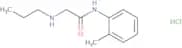
N-(2-Methylphenyl)-2-(propylamino)acetamide hydrochloride
CAS:<p>Versatile small molecule scaffold</p>Formula:C12H19ClN2OPurity:Min. 95%Molecular weight:242.74 g/molRef: 3D-ZRB71277
Discontinued productCyclopropyl(1H-1,2,3,4-tetrazol-5-yl)methanamine
CAS:<p>Versatile small molecule scaffold</p>Formula:C5H9N5Purity:Min. 95%Molecular weight:139.16 g/molRef: 3D-ZZB18815
Discontinued product1-Methanesulfonylcyclopropane-1-carboxylic acid
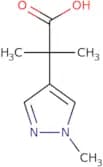
CAS:<p>Versatile small molecule scaffold</p>Formula:C5H8O4SPurity:Min. 95%Molecular weight:164.18 g/mol2-Methyl-2-(1-methyl-1H-pyrazol-4-yl)propanoic acid
CAS:<p>Versatile small molecule scaffold</p>Formula:C8H12N2O2Purity:Min. 95%Molecular weight:168.19 g/molRef: 3D-ZZB31328
Discontinued product1-[(Oxan-4-yl)methyl]-1H-pyrazole-4-carboxylic acid
CAS:<p>Versatile small molecule scaffold</p>Formula:C10H14N2O3Purity:Min. 95%Molecular weight:210.23 g/molRef: 3D-ZZB32393
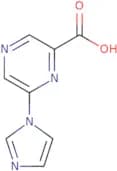
Discontinued product6-(1H-Imidazol-1-yl)pyrazine-2-carboxylic acid
CAS:<p>Versatile small molecule scaffold</p>Formula:C8H6N4O2Purity:Min. 95%Molecular weight:190.2 g/molRef: 3D-JLC89866
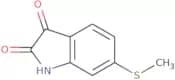
Discontinued product6-(Methylsulfanyl)-2,3-dihydro-1H-indole-2,3-dione
CAS:<p>Versatile small molecule scaffold</p>Formula:C9H7NO2SPurity:Min. 95%Molecular weight:193.22 g/molRef: 3D-JCA86843
Discontinued productQuinoline-5-carbonitrile
CAS:<p>Quinoline-5-carbonitrile is a cyanide compound that can be used in the synthesis of heterocyclic compounds. The reaction between quinoline and 5-cyanovaleric acid produces 6-nitroquinoline, which is then converted to dimethyl sulfoxide by alcoholysis. This reaction product can then be used to synthesize an amide or nucleophile. Quinoline-5-carbonitrile reacts with potassium in the presence of bifunctional hydrazide to produce a cyanide ion, which can be hydrolyzed by an acid to release hydrogen cyanide gas. This experiment has been shown as a model for reactions involving cyano compounds.</p>Formula:C10H6N2Purity:Min. 95%Molecular weight:154.17 g/molRef: 3D-JCA55102
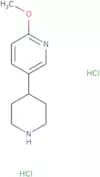
Discontinued product2-Methoxy-5-(piperidin-4-yl)pyridine dihydrochloride
CAS:<p>Versatile small molecule scaffold</p>Formula:C11H18Cl2N2OPurity:Min. 95%Molecular weight:265.18 g/molRef: 3D-JBD30495
Discontinued productrac-[(2R,3S)-1-Cyclopropyl-2-(1-methyl-1H-pyrazol-5-yl)piperidin-3-yl]methanamine
CAS:<p>Versatile small molecule scaffold</p>Formula:C13H22N4Purity:Min. 95%Molecular weight:234.3 g/molRef: 3D-JBD29468
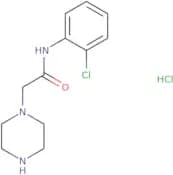
Discontinued productN-(2-Chlorophenyl)-2-(piperazin-1-yl)acetamide hydrochloride
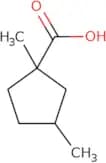
CAS:<p>Versatile small molecule scaffold</p>Formula:C12H17Cl2N3OPurity:Min. 95%Molecular weight:290.19 g/mol1,3-Dimethylcyclopentane-1-carboxylic acid
CAS:<p>Versatile small molecule scaffold</p>Formula:C8H14O2Purity:Min. 95%Molecular weight:142.2 g/molRef: 3D-KJB37906
Discontinued product2-[(1-Phenylethyl)amino]propanoic acid hydrochloride
CAS:<p>Versatile small molecule scaffold</p>Formula:C11H16ClNO2Purity:Min. 95%Molecular weight:229.7 g/molRef: 3D-KJC81808
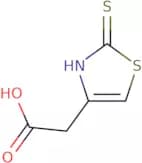
Discontinued product2-(2-Sulfanyl-1,3-thiazol-4-yl)acetic acid
CAS:<p>Versatile small molecule scaffold</p>Formula:C5H5NO2S2Purity:Min. 95%Molecular weight:175.2 g/molRef: 3D-LBA36579
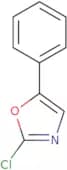
Discontinued product2-Chloro-5-phenyloxazole
CAS:<p>2-Chloro-5-phenyloxazole is an organic compound that belongs to the class of c2-6 alkenyl, acyloxyalkyl, and formyl compounds. It is also a carboxylic acid derivative. 2-Chloro-5-phenyloxazole has been shown to be active against bacteria such as Staphylococcus aureus and Pseudomonas aeruginosa. This drug has been shown to have antibacterial properties against a variety of organisms, including gram positive and gram negative bacteria.</p>Formula:C9H6ClNOPurity:Min. 95%Molecular weight:179.6 g/molRef: 3D-MCA12443
Discontinued producttert-Butyl 3-(prop-2-yn-1-yl)pyrrolidine-1-carboxylate
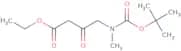
CAS:<p>Versatile small molecule scaffold</p>Formula:C12H19NO2Purity:Min. 95%Molecular weight:209.28 g/molEthyl 4-((tert-butoxycarbonyl)(methyl)amino)-3-oxobutanoate
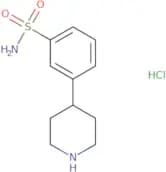
CAS:<p>Versatile small molecule scaffold</p>Formula:C12H21NO5Purity:Min. 95%Molecular weight:259.3 g/mol3-(Piperidin-4-yl)benzene-1-sulfonamide hydrochloride
CAS:<p>Versatile small molecule scaffold</p>Formula:C11H17ClN2O2SPurity:Min. 95%Molecular weight:276.78 g/molRef: 3D-MKD60360
Discontinued productMethyl 6-oxobicyclo[3.2.0]heptane-3-carboxylate
CAS:<p>Versatile small molecule scaffold</p>Formula:C9H12O3Purity:Min. 95%Molecular weight:168.19 g/molRef: 3D-MKD61320
Discontinued productrac-(1R,2S)-2-[(tert-Butoxy)carbonyl]cyclobutane-1-carboxylic acid
CAS:<p>Versatile small molecule scaffold</p>Formula:C10H16O4Purity:Min. 95%Molecular weight:200.2 g/molRef: 3D-MKD63070
Discontinued product2-Cyano-N-[3-methyl-1-(4-methylphenyl)-1H-pyrazol-5-yl]acetamide
CAS:<p>Versatile small molecule scaffold</p>Formula:C14H14N4OPurity:Min. 95%Molecular weight:254.29 g/molRef: 3D-HKB22464
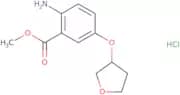
Discontinued productMethyl 2-amino-5-(oxolan-3-yloxy)benzoate hydrochloride
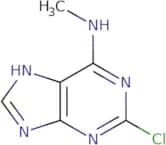
CAS:<p>Versatile small molecule scaffold</p>Formula:C12H16ClNO4Purity:Min. 95%Molecular weight:273.71 g/mol2-Chloro-6(methylamino)purine
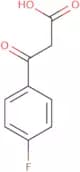
CAS:<p>2-Chloro-6(methylamino)purine is a potent inhibitor of xanthine oxidase. It is structurally similar to allopurinol, an inhibitor of xanthine oxidase that is used to treat gout. 2-Chloro-6(methylamino)purine inhibits the enzyme by forming a noncompetitive complex with it, which prevents the production of uric acid. This compound has been shown to be effective at inhibiting xanthine oxidase in humans and has been used as a lead compound for the development of new inhibitors of this enzyme.</p>Formula:C6H6ClN5Purity:Min. 95%Molecular weight:183.6 g/mol3-(4-Fluorophenyl)-2-oxopropanoic acid
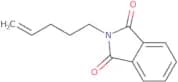
CAS:<p>Versatile small molecule scaffold</p>Formula:C9H7FO3Purity:Min. 95%Molecular weight:182.15 g/mol2-(Pent-4-en-1-yl)-2,3-dihydro-1H-isoindole-1,3-dione
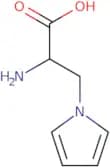
CAS:<p>Versatile small molecule scaffold</p>Formula:C13H13NO2Purity:Min. 95%Molecular weight:215.25 g/mol2-Amino-3-(1H-pyrrol-1-yl)propanoic acid
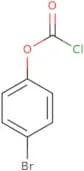
CAS:<p>Versatile small molecule scaffold</p>Formula:C7H10N2O2Purity:Min. 95%Molecular weight:154.17 g/mol4-Bromophenyl chloroformate
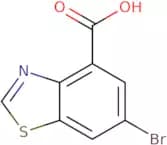
CAS:<p>Versatile small molecule scaffold</p>Formula:C7H4BrClO2Purity:Min. 95%Molecular weight:235.46 g/mol6-Bromo-1,3-benzothiazole-4-carboxylic acid
CAS:<p>Versatile small molecule scaffold</p>Formula:C8H4BrNO2SPurity:Min. 95%Molecular weight:258.09 g/mol5-fluoro-7-methyl-1,2-benzisothiazol-3(2H)-one 1,1-dioxide
CAS:<p>Versatile small molecule scaffold</p>Formula:C8H6FNO3SPurity:Min. 95%Molecular weight:215.2 g/molRef: 3D-JFC42865
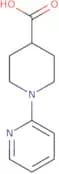
Discontinued product1-(Pyridin-2-yl)piperidine-4-carboxylic acid
CAS:<p>Versatile small molecule scaffold</p>Formula:C11H14N2O2Purity:Min. 95%Molecular weight:206.24 g/molRef: 3D-KCB82770
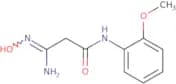
Discontinued product2-(N'-Hydroxycarbamimidoyl)-N-(2-methoxyphenyl)acetamide
CAS:<p>Versatile small molecule scaffold</p>Formula:C10H13N3O3Purity:Min. 95%Molecular weight:223.23 g/molRef: 3D-KEB32127
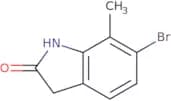
Discontinued product6-Bromo-7-methyl-1,3-dihydro-indol-2-one
CAS:<p>Versatile small molecule scaffold</p>Formula:C9H8BrNOPurity:Min. 95%Molecular weight:226.07 g/mol3-[5-(Aminomethyl)-1-oxo-2,3-dihydro-1H-isoindol-2-yl]piperidine-2,6-dione hydrochloride
CAS:<p>Versatile small molecule scaffold</p>Formula:C14H16ClN3O3Purity:Min. 95%Molecular weight:309.75 g/mol2-Bromo-3,3,3-trifluoro-1-propene
CAS:Controlled Product<p>2-Bromo-3,3,3-trifluoro-1-propene is a chemical compound that has been synthesized in an asymmetric reaction. The reactant is bromopropane and the product is 2,2,2-trifluoropropene. The methylene group on the propene molecule is activated by the nucleophilic attack of a fluoride ion from hydrogen fluoride to form a cavity with a highly strained bond. The kinetic study of this reaction revealed that the activation energy for the reaction is 42 kJ/mol. Palladium-catalyzed coupling reactions are catalyzed by palladium and require nonpolar solvents such as toluene or dichloromethane. This type of reaction has been shown to be exothermic with an isolated yield of 1%.</p>Formula:C3H2BrF3Purity:Min. 95%Color and Shape:Colorless PowderMolecular weight:174.95 g/mol3-(Methoxycarbonyl)pyridine-4-carboxylic acid
CAS:<p>Versatile small molecule scaffold</p>Formula:C8H7NO4Purity:Min. 95%Molecular weight:181.15 g/mol2-Acetylbenzoic acid
CAS:<p>2-Acetylbenzoic acid is a functional molecule that contains an acetyl group. It can form hydrogen bonds with other molecules and has been shown to induce apoptosis in cells. The reaction products of 2-acetylbenzoic acid are malonic acid, acetylsalicylic acid, and 2-benzoylbenzoic acid. These three compounds are made by the addition of hydrogen or hydroxide to the molecule 2-acetylbenzoic acid. The molecule has two functional groups: a carbonyl group and an acetyl group. The chemical structure of this molecule can be seen in the figure below.<br>2-Acetylbenzoic Acid</p>Formula:C9H8O3Purity:Min. 95%Color and Shape:PowderMolecular weight:164.16 g/molRef: 3D-FA05086
Discontinued producttert-Butyl 5-bromo-3,4-dihydro-2,7-naphthyridine-2(1H)-carboxylate
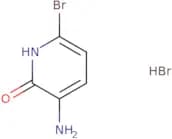
CAS:<p>Versatile small molecule scaffold</p>Formula:C13H17BrN2O2Purity:Min. 95%Molecular weight:313.19 g/mol3-amino-6-bromopyridin-2-ol hydrobromide
CAS:<p>Versatile small molecule scaffold</p>Formula:C5H6Br2N2OPurity:Min. 95%Molecular weight:269.9 g/mol1-[3-(Dimethylamino)propyl]-1-(4-fluorophenyl)-1,3-dihydro-3-oxo-5-isobenzofurancarbonitrile
CAS:<p>Please enquire for more information about 1-[3-(Dimethylamino)propyl]-1-(4-fluorophenyl)-1,3-dihydro-3-oxo-5-isobenzofurancarbonitrile including the price, delivery time and more detailed product information at the technical inquiry form on this page</p>Formula:C20H19FN2O2Purity:Min. 95%Molecular weight:338.38 g/molRef: 3D-FD184085
Discontinued product3-Methylbenzo[b]thiophene-2-carboxylic acid
CAS:<p>3-Methylbenzo[b]thiophene-2-carboxylic acid (MBTCA) is a heterocyclic compound that is an intermediate in the synthesis of 3-methylthiophene-2-carboxylic acid, a precursor to other drugs. MBTCA is an aerobic, nonpolar compound that has shown antimicrobial activity against some bacteria and fungi. It also has been shown to have practicality as a biomolecular probe for methyl groups in organic solvents. MBTCA can be synthesized by nitration of benzene in the presence of sulfur and sulfoxides. This reaction produces nitrobenzene, which can then be oxidized by potassium permanganate or hydrogen peroxide to produce MBTCA. The most common isomer of MBTCA is 2-(3,5-dimethoxybenzylidene)tetrahydrofuran, with three methyl groups on the</p>Formula:C10H8O2SPurity:Min. 95%Molecular weight:192.23 g/mol3-Boc-3-azabicyclo[3.2.1]octan-8-amine
CAS:<p>Versatile small molecule scaffold</p>Formula:C12H22N2O2Purity:Min. 95%Molecular weight:226.32 g/mol6,6-Difluorospiro[3.3]heptan-2-amine Hydrochloride
CAS:<p>Versatile small molecule scaffold</p>Formula:C7H11F2N·HClPurity:Min. 95%Molecular weight:147.17 g/mol2-Bromo-4-(4-fluorophenyl)-1,3-thiazole
CAS:<p>Versatile small molecule scaffold</p>Formula:C9H5NFSBrPurity:Min. 95%Molecular weight:258.11 g/mol(2S,3R)-2-((((9H-Fluoren-9-yl)methoxy)carbonyl)amino)-3-methoxybutanoic acid
CAS:<p>Versatile small molecule scaffold</p>Formula:C20H21NO5Purity:Min. 95%Molecular weight:355.4 g/molH-Ser-Ala-Glu-Glu-Tyr-Glu-Tyr-Pro-Ser OH trifluoroacetate
CAS:<p>Please enquire for more information about H-Ser-Ala-Glu-Glu-Tyr-Glu-Tyr-Pro-Ser OH trifluoroacetate including the price, delivery time and more detailed product information at the technical inquiry form on this page</p>Formula:C47H63N9O20•(C2HF3O2)xPurity:Min. 95%Ref: 3D-FS183525
Discontinued productGivinostat hydrochloride
CAS:<p>Givinostat hydrochloride is a research chemical that has shown potential in various fields. It is a molybdenum-based compound that has been studied for its effects on dopamine release and hydrogen evolution. Givinostat hydrochloride has also been investigated as an osteoclast inhibitor, which may be beneficial in the treatment of bone-related disorders such as osteoporosis. Additionally, it has shown promise as a retinoid and calpain inhibitor, suggesting its potential use in dermatological conditions and neurodegenerative diseases. The compound contains fluorine atoms, making it suitable for imaging studies using fluorine MRI techniques. Givinostat hydrochloride has been tested on MDA-MB-231 cells and has shown inhibitory effects on their growth, indicating its potential as an anticancer agent.</p>Formula:C24H27N3O4·HClPurity:Min. 95%Molecular weight:457.95 g/mol

![1-[(Oxan-4-yl)methyl]-1H-pyrazole-4-carboxylic acid](/_next/image/?url=https%3A%2Fstatic.cymitquimica.com%2Fproducts%2F3D%2Fthumb-webp%2FZZB32393.webp&w=3840&q=75)
![rac-[(2R,3S)-1-Cyclopropyl-2-(1-methyl-1H-pyrazol-5-yl)piperidin-3-yl]methanamine](/_next/image/?url=https%3A%2Fstatic.cymitquimica.com%2Fproducts%2F3D%2Fthumb-webp%2FJBD29468.webp&w=3840&q=75)
![2-[(1-Phenylethyl)amino]propanoic acid hydrochloride](/_next/image/?url=https%3A%2Fstatic.cymitquimica.com%2Fproducts%2F3D%2Fthumb-webp%2FKJC81808.webp&w=3840&q=75)

![Methyl 6-oxobicyclo[3.2.0]heptane-3-carboxylate](/_next/image/?url=https%3A%2Fstatic.cymitquimica.com%2Fproducts%2F3D%2Fthumb-webp%2FMKD61320.webp&w=3840&q=75)
![rac-(1R,2S)-2-[(tert-Butoxy)carbonyl]cyclobutane-1-carboxylic acid](/_next/image/?url=https%3A%2Fstatic.cymitquimica.com%2Fproducts%2F3D%2Fthumb-webp%2FMKD63070.webp&w=3840&q=75)
![2-Cyano-N-[3-methyl-1-(4-methylphenyl)-1H-pyrazol-5-yl]acetamide](/_next/image/?url=https%3A%2Fstatic.cymitquimica.com%2Fproducts%2F3D%2Fthumb-webp%2FHKB22464.webp&w=3840&q=75)

![3-[5-(Aminomethyl)-1-oxo-2,3-dihydro-1H-isoindol-2-yl]piperidine-2,6-dione hydrochloride](/_next/image/?url=https%3A%2Fstatic.cymitquimica.com%2Fproducts%2F3D%2Fthumb-webp%2FIWB26469.webp&w=3840&q=75)


![1-[3-(Dimethylamino)propyl]-1-(4-fluorophenyl)-1,3-dihydro-3-oxo-5-isobenzofurancarbonitrile](/_next/image/?url=https%3A%2Fstatic.cymitquimica.com%2Fproducts%2F3D%2Fthumb-webp%2FFD184085.webp&w=3840&q=75)
![3-Methylbenzo[b]thiophene-2-carboxylic acid](/_next/image/?url=https%3A%2Fstatic.cymitquimica.com%2Fproducts%2F3D%2Fthumb-webp%2FDAA13378.webp&w=3840&q=75)
![3-Boc-3-azabicyclo[3.2.1]octan-8-amine](/_next/image/?url=https%3A%2Fstatic.cymitquimica.com%2Fproducts%2F3D%2Fthumb-webp%2FFDC76351.webp&w=3840&q=75)
![6,6-Difluorospiro[3.3]heptan-2-amine Hydrochloride](/_next/image/?url=https%3A%2Fstatic.cymitquimica.com%2Fproducts%2F3D%2Fthumb-webp%2FYGC03271.webp&w=3840&q=75)



