Building Blocks
Subcategories of "Building Blocks"
- Boronic Acids & Boronic Acid Derivatives(5,774 products)
- Chiral Building Blocks(1,237 products)
- Hydrocarbon Building Blocks(6,098 products)
- Organic Building Blocks(60,970 products)
Found 205135 products of "Building Blocks"
7-Bromo-1-methylnaphthalene
CAS:7-Bromo-1-methylnaphthalene is a fluorescent dye that can be used to measure the concentration of DNA, RNA, and proteins. This compound is an intercalator, which means that it can bind to double stranded DNA or RNA near the center of the molecule where there is a space for binding. It has been used in the study of the thymic gland because it binds to DNA and RNA in cells from this organ. 7-Bromo-1-methylnaphthalene has also been used as a skeleton for organic compounds, such as dimethylammonium. The bromine atom in this compound can be replaced with other atoms like iodine or chlorine to make different colored dyes.
Formula:C11H9BrPurity:Min. 95%Molecular weight:221.09 g/mol(Chloromethyl)cyclohexane
CAS:(Chloromethyl)cyclohexane is a synthase gene that is responsible for synthesizing the enzyme chloromethyl cyclohexane, which is used as a solid catalyst. The synthesis of (chloromethyl)cyclohexane from phenyl groups and liquid crystal composition has been demonstrated using expression plasmids and active oxygen. The compound inhibits inflammatory diseases by preventing the production of arachidonic acid, which is an inflammatory agent. This compound also inhibits the production of prostaglandins, which are involved in the release of histamine from mast cells. Pharmaceutical preparations that contain this compound are primarily used to treat rheumatoid arthritis and other inflammatory diseases.
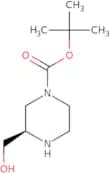
Formula:C7H13ClPurity:Min. 95%Molecular weight:132.63 g/mol(R)-4-N-Boc-2-hydroxymethyl-piperazine
CAS:Please enquire for more information about (R)-4-N-Boc-2-hydroxymethyl-piperazine including the price, delivery time and more detailed product information at the technical inquiry form on this page
Formula:C10H20N2O3Purity:Min. 95%Molecular weight:216.28 g/mol(S)-2-(N-Boc-aminomethyl)morpholine
CAS:Versatile small molecule scaffold
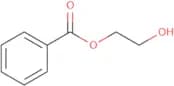
Formula:C10H20N2O3Purity:Min. 95%Molecular weight:216.27 g/mol2-Hydroxyethyl benzoate
CAS:2-Hydroxyethyl benzoate is a model system that has been used to study the mechanism of hydrolysis of an ester with a hydroxyl group. The reaction products are a metal hydroxide and a chloride ion. 2-Hydroxyethyl benzoate is an antimicrobial agent that has shown activity against bacteria, fungi, and protozoa. It is thought to work by reacting with fatty acids in the cell membrane, leading to disruption of the membrane and leakage of cellular contents. It also reacts with chloride ions to form hydroxybenzoic acid and water molecules. The activation energy for this reaction was found to be around 19 kJ mol−1.
Formula:C9H10O3Purity:Min. 95%Molecular weight:166.17 g/mol2-Bromo-5-fluoro-4-nitroaniline
CAS:2-Bromo-5-fluoro-4-nitroaniline can be synthesized in a reaction system of ammonium chloride, hydrochloric acid, and water vapor. The reaction is carried out at a temperature of 190°C under reflux. The efficiency of this synthesis is high, and the chemical yield is about 90%.
Formula:C6H4BrFN2O2Purity:Min. 95%Molecular weight:235.01 g/molPotassium tert-butyl N-[3-(trifluoroboranuidyl)propyl]carbamate
CAS:Versatile small molecule scaffold
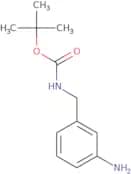
Formula:C8H16BF3KNO2Purity:Min. 95%Molecular weight:265.13 g/mol(3-Aminobenzyl)carbamic acid tert-butyl ester
CAS:Versatile small molecule scaffold
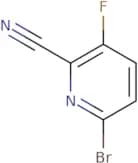
Formula:C12H18N2O2Purity:Min. 95%Molecular weight:222.28 g/mol6-Bromo-3-fluoropyridine-2-carbonitrile
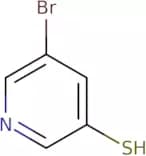
CAS:Versatile small molecule scaffoldFormula:C6H2N2FBrPurity:Min. 95%Molecular weight:200.99 g/mol5-Bromopyridine-3-thiol
CAS:Versatile small molecule scaffold
Formula:C5H4BrNSPurity:Min. 95%Molecular weight:190.06 g/mol1,2-Bis(chlorodimethylsilyl)ethane
CAS:1,2-Bis(chlorodimethylsilyl)ethane is a reactive chemical that is synthesized from hydroxychloroformates and hydrogen chloride. It reacts with silicon to form chlorosilanes, which are then used in the polymerization of siloxanes. 1,2-Bis(chlorodimethylsilyl)ethane has been shown to be an effective initiator for the polymerization of methyl methacrylate and ethylene glycol dimethacrylate. 1,2-Bis(chlorodimethylsilyl)ethane is also used as a hydroxyl group donor in organic reactions.
Formula:C6H16Cl2Si2Purity:Min. 95 Area-%Color and Shape:PowderMolecular weight:215.27 g/molethyl 6-benzyl-2-oxa-6-azaspiro[3.4]octane-8-carboxylate
CAS:Versatile small molecule scaffold
Formula:C16H21NO3Purity:Min. 95%Molecular weight:275.35 g/molCoproporphyrin III
CAS:Please enquire for more information about Coproporphyrin III including the price, delivery time and more detailed product information at the technical inquiry form on this page
Formula:C36H38N4O8Purity:Min. 95%Molecular weight:654.71 g/molRef: 3D-FC183946
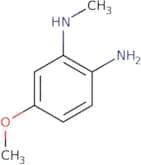
Discontinued product5-Methoxy-N1-methylbenzene-1,2-diamine
CAS:Versatile small molecule scaffold
Formula:C8H12N2OPurity:Min. 95%Molecular weight:152.19 g/mol4(4,4,5,5-Tetramethyl-1,3,2-dioxaborolan-2-yl)-2,3-dihydro-1H-inden-1-one
CAS:Versatile small molecule scaffold
Formula:C15H19BO3Purity:Min. 95%Molecular weight:258.12 g/mol6,7-dihydro-5h-pyrrolo[3,4-d]pyrimidin-2-amine 2hcl
CAS:Versatile small molecule scaffold
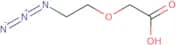
Formula:C6H10Cl2N4Purity:Min. 95%Molecular weight:209.07 g/mol2-(2-Azidoethoxy)acetic Acid
CAS:2-(2-Azidoethoxy)acetic Acid is a hydrophobic antibacterial agent that can be used to inhibit bacterial growth by disrupting the cell membrane. It has been shown to inhibit the growth of Staphylococcus aureus and Escherichia coli, which may be due to its ability to bind to the glutathione moiety in the bacterial cell membrane. 2-(2-Azidoethoxy)acetic Acid has been shown to have antimicrobial activity against both Gram-positive and Gram-negative bacteria in vitro. This compound is also able to cross the cell membrane, inhibiting bacterial replication in vivo.
Formula:C4H7N3O3Purity:Min. 95%Molecular weight:145.12 g/molRef: 3D-EDA59848
Discontinued product1-Hydroxycyclopentane-1-carbonitrile
CAS:1-Hydroxycyclopentane-1-carbonitrile is a monomer that is hydrolyzed to form benzoin and cyanohydrins. It can be used in the production of scifinder as a monomer or dimerizer.
Formula:C6H9NOPurity:Min. 95%Molecular weight:111.14 g/mol4-Chloro-2-hydroxy-6-methylphenylboronic acid
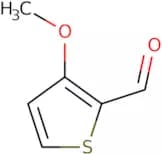
CAS:Versatile small molecule scaffoldFormula:C7H8BClO3Purity:Min. 95%Molecular weight:186.4 g/mol3-Methoxythiophene-2-carbaldehyde
CAS:3-Methoxythiophene-2-carbaldehyde is a ligand that has been shown to form a stable complex with potassium chloride. This compound is also reactive, and can be stabilized in the reaction vessel. In the presence of sulfate ions, 3-methoxythiophene-2-carbaldehyde will react to form a phosphotungstic acid precipitate. The dehydrated salt can be recrystallized by adding phosphotungstic acid, which stabilizes the product.
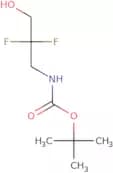
Formula:C6H6O2SPurity:Min. 95%Molecular weight:142.18 g/moltert-Butyl (2,2-difluoro-3-hydroxypropyl)carbamate
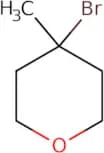
CAS:Versatile small molecule scaffoldFormula:C10H13NO4Purity:Min. 95%Molecular weight:211.21 g/mol4-Bromo-4-methyltetrahydropyran
CAS:Versatile small molecule scaffold
Formula:C6H11BrOPurity:Min. 95%Molecular weight:179.06 g/mol2,7-Naphthyridin-1(2H)-one
CAS:Cabozantinib is a small molecule that is the first to target VEGFR-2, which is a receptor tyrosine kinase involved in the development of fibrosis. Cabozantinib inhibits the activity of VEGFR-2 by binding to its ATP-binding site and blocking the phosphorylation of downstream signaling pathways. Cabozantinib has been shown to have antifibrotic properties in both preclinical and clinical models. The drug candidate has been shown to reduce kidney fibrosis in animal models. The standard dose for cabozantinib was found to be 5 mg/kg, with a maximum tolerated dose of 20 mg/kg. In vitro studies have indicated that cabozantinib binds with high affinity to the ATP-binding pocket of VEGFR-2, exhibiting competitive inhibition against other kinases such as PDGFR-beta and cKit, as well as diaryliodonium (a specific inhibitor). Caboz
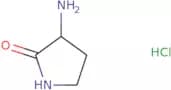
Formula:C8H6N2OPurity:Min. 95%Molecular weight:146.14 g/mol3-aminopyrrolidin-2-one hcl
CAS:3-Aminopyrrolidin-2-one hcl is an antibiotic that is used to treat tuberculosis. It inhibits the enzyme transacylase, which catalyses the conversion of L-lysine into L-pipecolic acid in bacteria. This antibiotic has been shown to be effective against Mycobacterium tuberculosis and Mycobacterium avium complex. 3-Aminopyrrolidin-2-one hcl has a broad spectrum of activity against gram positive and gram negative bacteria, but it is not active against acid-fast bacteria.
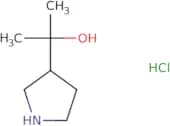
Formula:C4H9ClN2OPurity:Min. 95%Molecular weight:136.58 g/mol(S)-2-(3-Pyrrolidinyl)-2-propanol Hydrochloride ee
CAS:Versatile small molecule scaffold
Formula:C7H16ClNOPurity:Min. 95%Molecular weight:165.66 g/mol4,5-Dihydroxy-2,3-Pentanedione
CAS:4,5-Dihydroxy-2,3-pentanedione is a carbonyl compound that is the product of the oxidation of ascorbic acid. It is used in wastewater treatment and has antimicrobial properties against infectious diseases. This compound has been shown to inhibit protein synthesis by binding to the ribosome and preventing the formation of peptide bonds between amino acids. 4,5-Dihydroxy-2,3-pentanedione has also been shown to bind to plasma proteins, which may be due to its acyl chain structure. 4,5-Dihydroxy-2,3-pentanedione can be synthesized in a catalytic mechanism that involves dehydroascorbic acid and molecular oxygen.
Formula:C5H8O4Purity:Min. 95%Color and Shape:PowderMolecular weight:132.11 g/molRef: 3D-FD180770
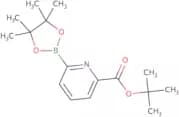
Discontinued producttert-Butyl 6-(4,4,5,5-tetramethyl-1,3,2-dioxaborolan-2-yl)picolinate
CAS:Versatile small molecule scaffoldFormula:C16H24BNO4Purity:Min. 95%Molecular weight:305.2 g/molRef: 3D-KCC40419
Discontinued product1-(4-Ethylphenyl)-2,2,2-trifluoroethan-1-ol
CAS:Versatile small molecule scaffold
Formula:C10H11F3OPurity:Min. 95%Molecular weight:204.19 g/molTripropylphosphine
CAS:Tripropylphosphine is a fatty acid that can be synthesized by reacting tripropyl alcohol with phosphorus trichloride. Tripropylphosphine is soluble in organic solvents, and has an optical rotation of +58°. It has been shown to have cancer-inhibiting properties, as well as the ability to inhibit tumor growth and induce apoptosis in cancer cells. This compound may also be used as a growth regulator, since it inhibits the synthesis of certain proteins and enzymes.
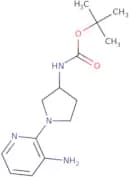
Formula:C9H21PPurity:Min. 95%Molecular weight:160.24 g/mol(R)-tert-Butyl 1-(3-aminopyridin-2-yl)pyrrolidin-3-ylcarbamate
CAS:Versatile small molecule scaffoldFormula:C14H22N4O2Purity:Min. 95%Molecular weight:278.35 g/molRef: 3D-IZB85984
Discontinued productPiperyline
CAS:Piperyline is an alkanoic acid that has shown to be effective against skin cancer. It also has antimicrobial properties, which may be due to its ability to bind metal ions and form polymeric compounds. Piperyline inhibits microbial growth by inhibiting the synthesis of proteins and nucleic acids. The antimicrobial activity is related to its cationic polymerization with hydroxyl groups, which forms a structure that can inhibit microbial enzymes and disrupt microbial cell membranes. This compound also interacts with the skin's natural lipids, making it difficult for microorganisms to attach and grow on the skin. Piperyline is synthesized in organic chemistry laboratories as an amide precursor of other pharmaceuticals such as penicillin.
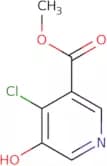
Formula:C16H17NO3Purity:Min. 95%Molecular weight:271.31 g/molMethyl 4-chloro-5-hydroxy-3-pyridinecarboxylate
CAS:Versatile small molecule scaffold
Formula:C7H6ClNO3Purity:Min. 95%Molecular weight:187.58 g/molN-(2-Methyl-6-benzoxazolyl)-2-propenamide
CAS:Please enquire for more information about N-(2-Methyl-6-benzoxazolyl)-2-propenamide including the price, delivery time and more detailed product information at the technical inquiry form on this page
Formula:C11H10N2O2Purity:Min. 95%Molecular weight:202.21 g/molRef: 3D-FM184094
Discontinued productMacaridine
CAS:Please enquire for more information about Macaridine including the price, delivery time and more detailed product information at the technical inquiry form on this page
Formula:C13H13NO2Purity:Min. 95%Molecular weight:215.25 g/molRef: 3D-FM183770
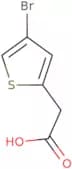
Discontinued product4-Bromothiophene-2-acetic acid
CAS:Versatile small molecule scaffold
Formula:C6H5BrO2SPurity:Min. 95%Molecular weight:221.07 g/mol




![Potassium tert-butyl N-[3-(trifluoroboranuidyl)propyl]carbamate](/_next/image/?url=https%3A%2Fstatic.cymitquimica.com%2Fproducts%2F3D%2Fthumb-webp%2FCNC28926.webp&w=3840&q=75)

![ethyl 6-benzyl-2-oxa-6-azaspiro[3.4]octane-8-carboxylate](/_next/image/?url=https%3A%2Fstatic.cymitquimica.com%2Fproducts%2F3D%2Fthumb-webp%2FLBC69289.webp&w=3840&q=75)


![6,7-dihydro-5h-pyrrolo[3,4-d]pyrimidin-2-amine 2hcl](/_next/image/?url=https%3A%2Fstatic.cymitquimica.com%2Fproducts%2F3D%2Fthumb-webp%2FHGA32752.webp&w=3840&q=75)