Building Blocks
This section contains fundamental products for the synthesis of organic and biological compounds. Building blocks are the essential starting materials used to construct complex molecules through various chemical reactions. They play a critical role in drug discovery, material science, and chemical research. At CymitQuimica, we offer a diverse range of high-quality building blocks to support your innovative research and industrial projects, ensuring you have the essential components for successful synthesis.
Subcategories of "Building Blocks"
- Boronic Acids & Boronic Acid Derivatives(5,778 products)
- Chiral Building Blocks(1,242 products)
- Hydrocarbon Building Blocks(6,098 products)
- Organic Building Blocks(61,092 products)
Found 199296 products of "Building Blocks"
Sort by
Purity (%)
0
100
|
0
|
50
|
90
|
95
|
100
N-[2-(1-Hydroxyethyl)phenyl]propanamide
CAS:<p>Versatile small molecule scaffold</p>Formula:C11H15NO2Purity:Min. 95%Molecular weight:193.24 g/molRef: 3D-GWB64243
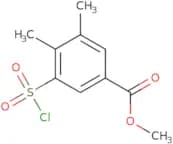
Discontinued productMethyl 3-(chlorosulfonyl)-4,5-dimethylbenzoate
CAS:<p>Versatile small molecule scaffold</p>Formula:C10H11ClO4SPurity:Min. 95%Molecular weight:262.71 g/molRef: 3D-GWB63480
Discontinued productBicyclo[4.1.0]heptan-7-ylmethanol
CAS:<p>Bicyclo[4.1.0]heptan-7-ylmethanol is a hydride inhibitor of lactate dehydrogenase, which is an enzyme that catalyzes the conversion of pyruvate to lactate in the liver. Bicyclo[4.1.0]heptan-7-ylmethanol has inhibitory properties against aldehyde dehydrogenase and alcohol dehydrogenase, which are enzymes involved in the metabolism of aldehydes and alcohols respectively. This substance also inhibits mitochondrial monoamine oxidase (MAO), which is an enzyme that breaks down neurotransmitters such as dopamine, norepinephrine, and serotonin. Bicyclo[4.1.0]heptan-7-ylmethanol can be used to inhibit the function of MAO in order to increase levels of these neurotransmitters in the brain, which may be helpful for conditions like depression or Parkinson</p>Formula:C8H14OPurity:Min. 95%Molecular weight:126.2 g/molRef: 3D-GAA22639
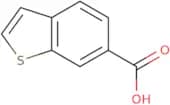
Discontinued product1-Benzothiophene-6-carboxylic acid
CAS:<p>1-Benzothiophene-6-carboxylic acid is a nicotinic acetylcholine receptor agonist that has been shown to have high oral bioavailability and efficacy in vivo. It binds to the α7 nicotinic acetylcholine receptor and activates the receptor, leading to increased neurotransmitter release. 1-Benzothiophene-6-carboxylic acid has been shown to be effective in vivo in models of neuropathic pain and Parkinson's disease. This drug also has a low affinity for other receptors, such as muscarinic acetylcholine receptors, which reduces the chance of adverse effects.</p>Formula:C9H6O2SPurity:Min. 95%Molecular weight:178.21 g/molN-(1,3-Dioxaindan-5-yl)-2-{[5-(1H-indol-3-yl)-1,3,4-oxadiazol-2-yl]sulfanyl}acetamide
CAS:<p>Versatile small molecule scaffold</p>Formula:C19H14N4O4SPurity:Min. 95%Molecular weight:394.4 g/molRef: 3D-FQA45175
Discontinued productN-[2-(Propan-2-yl)phenyl]-1,3-benzothiazol-2-amine
CAS:<p>Versatile small molecule scaffold</p>Formula:C16H16N2SPurity:Min. 95%Molecular weight:268.4 g/molRef: 3D-FQA34613
Discontinued product5-[(2-Methoxyphenyl)(methyl)sulfamoyl]-2-methylbenzoic acid
CAS:<p>Versatile small molecule scaffold</p>Formula:C16H17NO5SPurity:Min. 95%Molecular weight:335.4 g/molRef: 3D-FQA34216
Discontinued product1-Methyl-1,4,5,6,7,8-hexahydropyrazolo[4,3-c]azepine
CAS:<p>Versatile small molecule scaffold</p>Formula:C8H13N3Purity:Min. 95%Molecular weight:151.21 g/mol(1R)-1-[4-(Trifluoromethyl)phenyl]ethane-1,2-diol
CAS:<p>Versatile small molecule scaffold</p>Formula:C9H9F3O2Purity:Min. 95%Molecular weight:206.16 g/molRef: 3D-FKA73311
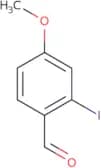
Discontinued product2-Iodo-4-methoxybenzaldehyde
CAS:<p>2-Iodo-4-methoxybenzaldehyde is a chiral compound that can be synthesized through an intramolecular, stereoselective cyclic annulation reaction. The key step in this process is the arylation of 2-iodo-4-methoxybenzaldehyde with ethyl bromide. This compound can also be synthesized by reacting 2-iodobenzoic acid with formaldehyde in the presence of a base. In addition, 2-Iodo-4-methoxybenzaldehyde can be produced by the sequence of nitrogen substitution and tricyclic annulation.</p>Formula:C8H7IO2Purity:Min. 95%Molecular weight:262.04 g/molRef: 3D-FEA46913
Discontinued product[2-Amino-3-(trifluoromethyl)phenyl]methanol
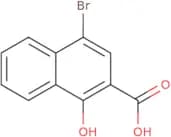
CAS:<p>Versatile small molecule scaffold</p>Formula:C8H8F3NOPurity:Min. 95%Molecular weight:191.15 g/mol4-bromo-1-hydroxynaphthalene-2-carboxylic acid
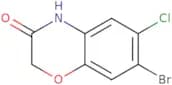
CAS:<p>4-Bromo-1-hydroxynaphthalene-2-carboxylic acid (4BHN) is a spectroscopic compound that has been used as a radioligand to study the binding of dopamine and dopamine D3 receptors. This compound binds to the d3 receptor with high affinity and specificity, but it does not interact with the d1 or d2 receptors. 4BHN has been shown to act as an agonist at the dopamine D3 receptor. It also acts as an antagonist at the piperidine site of the dopamine D2 receptor. The effects of 4BHN are reversible, which means that it can be displaced by unlabeled 4BHN or other compounds that bind to the same site on the receptor. This technique is useful for studying drug interactions and for determining whether drugs have a subtype selectivity profile.</p>Formula:C11H7BrO3Purity:Min. 95%Molecular weight:267.1 g/mol7-Bromo-6-chloro-3,4-dihydro-2H-1,4-benzoxazin-3-one
CAS:<p>Versatile small molecule scaffold</p>Formula:C8H5BrClNO2Purity:Min. 95%Molecular weight:262.49 g/molRef: 3D-FAA79156
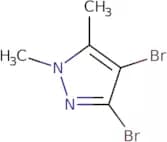
Discontinued product3,4-Dibromo-1,5-dimethyl-1H-pyrazole
CAS:<p>Versatile small molecule scaffold</p>Formula:C5H6Br2N2Purity:Min. 95%Molecular weight:253.92 g/molRef: 3D-FAA77595
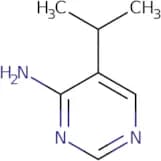
Discontinued product5-(Propan-2-yl)pyrimidin-4-amine
CAS:<p>Versatile small molecule scaffold</p>Formula:C7H11N3Purity:Min. 95%Molecular weight:137.18 g/molRef: 3D-FAA00030
Discontinued producttert-Butyl (4aS,7aS)-octahydro-1H-pyrrolo[3,4-b]pyridine-6-carboxylate
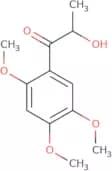
CAS:<p>Versatile small molecule scaffold</p>Formula:C12H22N2O2Purity:Min. 95%Molecular weight:226.32 g/mol(2R)-2-Hydroxy-1-(2,4,5-trimethoxyphenyl)propan-1-one
CAS:<p>(2R)-2-Hydroxy-1-(2,4,5-trimethoxyphenyl)propan-1-one is an efficient method for the synthesis of adenosine. This method is based on a cyclic reaction with trimethoxybenzene and yields 2 moles of adenosine per mole of trimethoxybenzene. The reaction time is short and the yield is high. This synthetic route has been used to produce large quantities of adenosine for use in pharmacological studies. (2R)-2-Hydroxy-1-(2,4,5-trimethoxyphenyl)propan-1-one can be used as an enantiomer for the synthesis of other compounds. It was also shown that nitrite mediates this reaction</p>Formula:C12H16O5Purity:Min. 95%Molecular weight:240.25 g/molRef: 3D-EZB00535
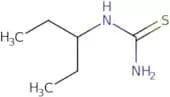
Discontinued product(Pentan-3-yl)thiourea
CAS:<p>Versatile small molecule scaffold</p>Formula:C6H14N2SPurity:Min. 95%Molecular weight:146.26 g/molRef: 3D-EJB65468
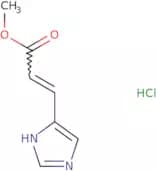
Discontinued productMethyl (2E)-3-(1H-imidazol-4-yl)prop-2-enoate hydrochloride
CAS:<p>Versatile small molecule scaffold</p>Formula:C7H9ClN2O2Purity:Min. 95%Molecular weight:188.61 g/mol1-(7,7-Dimethylbicyclo[2.2.1]heptan-1-yl)ethan-1-one
CAS:<p>Versatile small molecule scaffold</p>Formula:C11H18OPurity:Min. 95%Molecular weight:166.26 g/molRef: 3D-ECA13139
Discontinued product1-Chloro-3-ethylpentan-2-one
CAS:<p>1-Chloro-3-ethylpentan-2-one is a chemical compound that contains a nitrogen atom and is classified as an organic compound. It has been used in the synthesis of other chemicals including pharmaceuticals, herbicides, and plastics. This chemical has been shown to hydrate at 180 degrees Celsius to form a nitrite salt. It can be used as an orienting agent for synthesizing other compounds.</p>Formula:C7H13ClOPurity:Min. 95%Molecular weight:148.63 g/molRef: 3D-ECA03493
Discontinued product1-{[(9H-Fluoren-9-yl)methoxy]carbonyl}-4-methoxypiperidine-4-carboxylic acid
CAS:<p>Versatile small molecule scaffold</p>Formula:C22H23NO5Purity:Min. 95%Molecular weight:381.4 g/molRef: 3D-EAD01083
Discontinued product1-[(tert-Butoxy)carbonyl]-3-(methoxymethyl)azetidine-3-carboxylic acid
CAS:<p>Versatile small molecule scaffold</p>Formula:C11H19NO5Purity:Min. 95%Molecular weight:245.27 g/molRef: 3D-EAC94560
Discontinued product1-Cyclopropyl-3-methyl-1H-pyrazole-5-carboxylic acid
CAS:<p>Versatile small molecule scaffold</p>Formula:C8H10N2O2Purity:Min. 95%Molecular weight:166.18 g/molRef: 3D-EAC19992
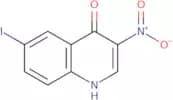
Discontinued product6-Iodo-3-nitroquinolin-4-ol
CAS:<p>Versatile small molecule scaffold</p>Formula:C9H5IN2O3Purity:Min. 95%Molecular weight:316.05 g/molRef: 3D-DYB57870
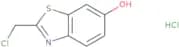
Discontinued product2-(Chloromethyl)-1,3-benzothiazol-6-ol hydrochloride
CAS:Versatile small molecule scaffoldFormula:C8H7Cl2NOSPurity:Min. 95%Molecular weight:236.12 g/molRef: 3D-DXC58529
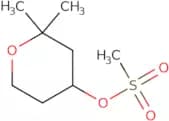
Discontinued product2,2-Dimethyloxan-4-yl methanesulfonate
CAS:<p>Versatile small molecule scaffold</p>Formula:C8H16O4SPurity:Min. 95%Molecular weight:208.28 g/molRef: 3D-DSA87106
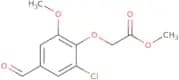
Discontinued productMethyl (2-chloro-4-formyl-6-methoxyphenoxy)acetate
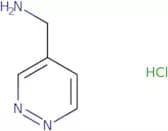
CAS:<p>Versatile small molecule scaffold</p>Formula:C11H11ClO5Purity:Min. 95%Molecular weight:258.65 g/molPyridazin-4-ylmethanamine dihydrochloride
CAS:<p>Versatile small molecule scaffold</p>Formula:C5H9Cl2N3Purity:Min. 95%Molecular weight:182.05 g/moltert-Butyl N-[1-(2-hydroxyethyl)cyclobutyl]carbamate
CAS:<p>Versatile small molecule scaffold</p>Formula:C11H21NO3Purity:Min. 95%Molecular weight:215.29 g/molN-(2-Aminophenyl)butanamide hydrochloride
CAS:<p>Versatile small molecule scaffold</p>Formula:C10H15ClN2OPurity:Min. 95%Molecular weight:214.7 g/mol2-Amino-3-[3-chloro-5-(methylsulfanyl)phenyl]propanoic acid hydrochloride
CAS:<p>Versatile small molecule scaffold</p>Formula:C10H13Cl2NO2SPurity:Min. 95%Molecular weight:282.2 g/molRef: 3D-DQD63987
Discontinued product3-[5-(Aminomethyl)-1-oxo-2,3-dihydro-1H-isoindol-2-yl]piperidine-2,6-dione hydrochloride
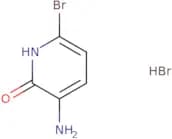
CAS:<p>Versatile small molecule scaffold</p>Formula:C14H16ClN3O3Purity:Min. 95%Molecular weight:309.75 g/mol3-amino-6-bromopyridin-2-ol hydrobromide
CAS:<p>Versatile small molecule scaffold</p>Formula:C5H6Br2N2OPurity:Min. 95%Molecular weight:269.9 g/mol3-Methylbenzo[b]thiophene-2-carboxylic acid
CAS:<p>3-Methylbenzo[b]thiophene-2-carboxylic acid (MBTCA) is a heterocyclic compound that is an intermediate in the synthesis of 3-methylthiophene-2-carboxylic acid, a precursor to other drugs. MBTCA is an aerobic, nonpolar compound that has shown antimicrobial activity against some bacteria and fungi. It also has been shown to have practicality as a biomolecular probe for methyl groups in organic solvents. MBTCA can be synthesized by nitration of benzene in the presence of sulfur and sulfoxides. This reaction produces nitrobenzene, which can then be oxidized by potassium permanganate or hydrogen peroxide to produce MBTCA. The most common isomer of MBTCA is 2-(3,5-dimethoxybenzylidene)tetrahydrofuran, with three methyl groups on the</p>Formula:C10H8O2SPurity:Min. 95%Molecular weight:192.23 g/mol(2S,3R)-2-((((9H-Fluoren-9-yl)methoxy)carbonyl)amino)-3-methoxybutanoic acid
CAS:<p>Versatile small molecule scaffold</p>Formula:C20H21NO5Purity:Min. 95%Molecular weight:355.4 g/mol2-Bromo-3,3,3-trifluoro-1-propene
CAS:Controlled Product<p>2-Bromo-3,3,3-trifluoro-1-propene is a chemical compound that has been synthesized in an asymmetric reaction. The reactant is bromopropane and the product is 2,2,2-trifluoropropene. The methylene group on the propene molecule is activated by the nucleophilic attack of a fluoride ion from hydrogen fluoride to form a cavity with a highly strained bond. The kinetic study of this reaction revealed that the activation energy for the reaction is 42 kJ/mol. Palladium-catalyzed coupling reactions are catalyzed by palladium and require nonpolar solvents such as toluene or dichloromethane. This type of reaction has been shown to be exothermic with an isolated yield of 1%.</p>Formula:C3H2BrF3Purity:Min. 95%Color and Shape:Colorless PowderMolecular weight:174.95 g/mol2-Bromo-4-(4-fluorophenyl)-1,3-thiazole
CAS:<p>Versatile small molecule scaffold</p>Formula:C9H5NFSBrPurity:Min. 95%Molecular weight:258.11 g/mol3-(Methoxycarbonyl)pyridine-4-carboxylic acid
CAS:<p>Versatile small molecule scaffold</p>Formula:C8H7NO4Purity:Min. 95%Molecular weight:181.15 g/mol3-Boc-3-azabicyclo[3.2.1]octan-8-amine
CAS:<p>Versatile small molecule scaffold</p>Formula:C12H22N2O2Purity:Min. 95%Molecular weight:226.32 g/mol2-Acetylbenzoic acid
CAS:<p>2-Acetylbenzoic acid is a functional molecule that contains an acetyl group. It can form hydrogen bonds with other molecules and has been shown to induce apoptosis in cells. The reaction products of 2-acetylbenzoic acid are malonic acid, acetylsalicylic acid, and 2-benzoylbenzoic acid. These three compounds are made by the addition of hydrogen or hydroxide to the molecule 2-acetylbenzoic acid. The molecule has two functional groups: a carbonyl group and an acetyl group. The chemical structure of this molecule can be seen in the figure below.<br>2-Acetylbenzoic Acid</p>Formula:C9H8O3Purity:Min. 95%Color and Shape:PowderMolecular weight:164.16 g/molRef: 3D-FA05086
Discontinued product1-[3-(Dimethylamino)propyl]-1-(4-fluorophenyl)-1,3-dihydro-3-oxo-5-isobenzofurancarbonitrile
CAS:<p>Please enquire for more information about 1-[3-(Dimethylamino)propyl]-1-(4-fluorophenyl)-1,3-dihydro-3-oxo-5-isobenzofurancarbonitrile including the price, delivery time and more detailed product information at the technical inquiry form on this page</p>Formula:C20H19FN2O2Purity:Min. 95%Molecular weight:338.38 g/molRef: 3D-FD184085
Discontinued producttert-Butyl 5-bromo-3,4-dihydro-2,7-naphthyridine-2(1H)-carboxylate
CAS:<p>Versatile small molecule scaffold</p>Formula:C13H17BrN2O2Purity:Min. 95%Molecular weight:313.19 g/mol6,6-Difluorospiro[3.3]heptan-2-amine Hydrochloride
CAS:<p>Versatile small molecule scaffold</p>Formula:C7H11F2N·HClPurity:Min. 95%Molecular weight:147.17 g/molH-Ser-Ala-Glu-Glu-Tyr-Glu-Tyr-Pro-Ser OH trifluoroacetate
CAS:<p>Please enquire for more information about H-Ser-Ala-Glu-Glu-Tyr-Glu-Tyr-Pro-Ser OH trifluoroacetate including the price, delivery time and more detailed product information at the technical inquiry form on this page</p>Formula:C47H63N9O20•(C2HF3O2)xPurity:Min. 95%Ref: 3D-FS183525
Discontinued productGivinostat hydrochloride
CAS:<p>Givinostat hydrochloride is a research chemical that has shown potential in various fields. It is a molybdenum-based compound that has been studied for its effects on dopamine release and hydrogen evolution. Givinostat hydrochloride has also been investigated as an osteoclast inhibitor, which may be beneficial in the treatment of bone-related disorders such as osteoporosis. Additionally, it has shown promise as a retinoid and calpain inhibitor, suggesting its potential use in dermatological conditions and neurodegenerative diseases. The compound contains fluorine atoms, making it suitable for imaging studies using fluorine MRI techniques. Givinostat hydrochloride has been tested on MDA-MB-231 cells and has shown inhibitory effects on their growth, indicating its potential as an anticancer agent.</p>Formula:C24H27N3O4·HClPurity:Min. 95%Molecular weight:457.95 g/mol
![N-[2-(1-Hydroxyethyl)phenyl]propanamide](/_next/image/?url=https%3A%2Fstatic.cymitquimica.com%2Fproducts%2F3D%2Fthumb-webp%2FGWB64243.webp&w=3840&q=75)

![Bicyclo[4.1.0]heptan-7-ylmethanol](/_next/image/?url=https%3A%2Fstatic.cymitquimica.com%2Fproducts%2F3D%2Fthumb-webp%2FGAA22639.webp&w=3840&q=75)
![N-(1,3-Dioxaindan-5-yl)-2-{[5-(1H-indol-3-yl)-1,3,4-oxadiazol-2-yl]sulfanyl}acetamide](/_next/image/?url=https%3A%2Fstatic.cymitquimica.com%2Fproducts%2F3D%2Fthumb-webp%2FFQA45175.webp&w=3840&q=75)
![N-[2-(Propan-2-yl)phenyl]-1,3-benzothiazol-2-amine](/_next/image/?url=https%3A%2Fstatic.cymitquimica.com%2Fproducts%2F3D%2Fthumb-webp%2FFQA34613.webp&w=3840&q=75)
![5-[(2-Methoxyphenyl)(methyl)sulfamoyl]-2-methylbenzoic acid](/_next/image/?url=https%3A%2Fstatic.cymitquimica.com%2Fproducts%2F3D%2Fthumb-webp%2FFQA34216.webp&w=3840&q=75)
![1-Methyl-1,4,5,6,7,8-hexahydropyrazolo[4,3-c]azepine](/_next/image/?url=https%3A%2Fstatic.cymitquimica.com%2Fproducts%2F3D%2Fthumb-webp%2FFKC42823.webp&w=3840&q=75)
![(1R)-1-[4-(Trifluoromethyl)phenyl]ethane-1,2-diol](/_next/image/?url=https%3A%2Fstatic.cymitquimica.com%2Fproducts%2F3D%2Fthumb-webp%2FFKA73311.webp&w=3840&q=75)
![[2-Amino-3-(trifluoromethyl)phenyl]methanol](/_next/image/?url=https%3A%2Fstatic.cymitquimica.com%2Fproducts%2F3D%2Fthumb-webp%2FFCA41460.webp&w=3840&q=75)
![tert-Butyl (4aS,7aS)-octahydro-1H-pyrrolo[3,4-b]pyridine-6-carboxylate](/_next/image/?url=https%3A%2Fstatic.cymitquimica.com%2Fproducts%2F3D%2Fthumb-webp%2FEZB42851.webp&w=3840&q=75)
![1-(7,7-Dimethylbicyclo[2.2.1]heptan-1-yl)ethan-1-one](/_next/image/?url=https%3A%2Fstatic.cymitquimica.com%2Fproducts%2F3D%2Fthumb-webp%2FECA13139.webp&w=3840&q=75)

![1-{[(9H-Fluoren-9-yl)methoxy]carbonyl}-4-methoxypiperidine-4-carboxylic acid](/_next/image/?url=https%3A%2Fstatic.cymitquimica.com%2Fproducts%2F3D%2Fthumb-webp%2FEAD01083.webp&w=3840&q=75)
![1-[(tert-Butoxy)carbonyl]-3-(methoxymethyl)azetidine-3-carboxylic acid](/_next/image/?url=https%3A%2Fstatic.cymitquimica.com%2Fproducts%2F3D%2Fthumb-webp%2FEAC94560.webp&w=3840&q=75)

![tert-Butyl N-[1-(2-hydroxyethyl)cyclobutyl]carbamate](/_next/image/?url=https%3A%2Fstatic.cymitquimica.com%2Fproducts%2F3D%2Fthumb-webp%2FDRB26697.webp&w=3840&q=75)
![2-Amino-3-[3-chloro-5-(methylsulfanyl)phenyl]propanoic acid hydrochloride](/_next/image/?url=https%3A%2Fstatic.cymitquimica.com%2Fproducts%2F3D%2Fthumb-webp%2FDQD63987.webp&w=3840&q=75)
![3-[5-(Aminomethyl)-1-oxo-2,3-dihydro-1H-isoindol-2-yl]piperidine-2,6-dione hydrochloride](/_next/image/?url=https%3A%2Fstatic.cymitquimica.com%2Fproducts%2F3D%2Fthumb-webp%2FIWB26469.webp&w=3840&q=75)
![3-Methylbenzo[b]thiophene-2-carboxylic acid](/_next/image/?url=https%3A%2Fstatic.cymitquimica.com%2Fproducts%2F3D%2Fthumb-webp%2FDAA13378.webp&w=3840&q=75)


![3-Boc-3-azabicyclo[3.2.1]octan-8-amine](/_next/image/?url=https%3A%2Fstatic.cymitquimica.com%2Fproducts%2F3D%2Fthumb-webp%2FFDC76351.webp&w=3840&q=75)

![1-[3-(Dimethylamino)propyl]-1-(4-fluorophenyl)-1,3-dihydro-3-oxo-5-isobenzofurancarbonitrile](/_next/image/?url=https%3A%2Fstatic.cymitquimica.com%2Fproducts%2F3D%2Fthumb-webp%2FFD184085.webp&w=3840&q=75)

![6,6-Difluorospiro[3.3]heptan-2-amine Hydrochloride](/_next/image/?url=https%3A%2Fstatic.cymitquimica.com%2Fproducts%2F3D%2Fthumb-webp%2FYGC03271.webp&w=3840&q=75)