Building Blocks
This section contains fundamental products for the synthesis of organic and biological compounds. Building blocks are the essential starting materials used to construct complex molecules through various chemical reactions. They play a critical role in drug discovery, material science, and chemical research. At CymitQuimica, we offer a diverse range of high-quality building blocks to support your innovative research and industrial projects, ensuring you have the essential components for successful synthesis.
Subcategories of "Building Blocks"
- Boronic Acids & Boronic Acid Derivatives(5,756 products)
- Chiral Building Blocks(1,242 products)
- Hydrocarbon Building Blocks(6,095 products)
- Organic Building Blocks(61,037 products)
Found 196200 products of "Building Blocks"
Sort by
Purity (%)
0
100
|
0
|
50
|
90
|
95
|
100
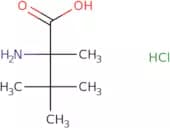
2-Amino-2-t-butylpropanoic acid HCl
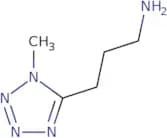
CAS:<p>Versatile small molecule scaffold</p>Formula:C7H15NO2·HClPurity:Min. 95%Molecular weight:181.66 g/mol3-(1-Methyl-1H-1,2,3,4-tetrazol-5-yl)propan-1-amine
CAS:<p>Versatile small molecule scaffold</p>Formula:C5H11N5Purity:Min. 95%Molecular weight:141.2 g/molRef: 3D-SAC17952
Discontinued product3-Benzylpiperazin-2-one
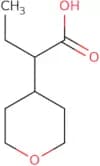
CAS:<p>Versatile small molecule scaffold</p>Formula:C11H14N2OPurity:Min. 95%Molecular weight:190.24 g/mol2-(Oxan-4-yl)butanoic acid
CAS:<p>Versatile small molecule scaffold</p>Formula:C9H16O3Purity:Min. 95%Molecular weight:172.22 g/molRef: 3D-VXB34063
Discontinued producttert-Butyl N-{2-amino-1-[4-(propan-2-yl)phenyl]ethyl}carbamate
CAS:<p>Versatile small molecule scaffold</p>Formula:C16H26N2O2Purity:Min. 95%Molecular weight:278.39 g/molPB-22 3-carboxyindole metabolite solution
CAS:Controlled Product<p>PB-22 is a synthetic cannabinoid, which can be classified as a CB1 receptor agonist. It is one of the many cannabinoids that have been created in an attempt to circumvent drug laws by creating compounds that are similar to those found in cannabis but have different chemical structures. PB-22 has shown to increase locomotor activity and stimulate the cb1 receptor in mice. Magnetic resonance spectroscopy (MRS) and assays were used to determine the binding affinity of PB-22 for the CB1 receptor. The MRS data showed that PB-22 bound with high affinity to the CB1 receptor and had a lower affinity for CB2 receptors. This suggests that PB-22 may be more potent than other synthetic cannabinoids, such as JWH-018 and CP 55,940, which bind better with CB2 receptors than CB1 receptors.<br>PB-22 is an analog of JWH-073 and has been shown to have a stronger effect on locomotor activity than JWH</p>Formula:C14H17NO2Purity:Min. 95%Molecular weight:231.29 g/mol3-(4-Iodophenyl)-1H-pyrazole
CAS:<p>Versatile small molecule scaffold</p>Formula:C9H7IN2Purity:Min. 95%Molecular weight:270.07 g/molRef: 3D-UQB00792
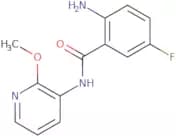
Discontinued product2-Amino-5-fluoro-N-(2-methoxypyridin-3-yl)benzamide
CAS:<p>Versatile small molecule scaffold</p>Formula:C13H12FN3O2Purity:Min. 95%Molecular weight:261.25 g/molRef: 3D-DWB18561
Discontinued product2-{[2-Formyl-4-(trifluoromethyl)phenyl](methyl)amino}acetic acid
CAS:<p>Versatile small molecule scaffold</p>Formula:C11H10F3NO3Purity:Min. 95%Molecular weight:261.2 g/mol4-({[(9H-Fluoren-9-yl)methoxy]carbonyl}amino)cyclopent-2-ene-1-carboxylic acid
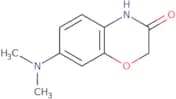
CAS:<p>Versatile small molecule scaffold</p>Formula:C21H19NO4Purity:Min. 95%Molecular weight:349.4 g/mol7-(Dimethylamino)-3,4-dihydro-2H-1,4-benzoxazin-3-one
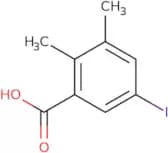
CAS:<p>Versatile small molecule scaffold</p>Formula:C10H12N2O2Purity:Min. 95%Molecular weight:192.21 g/mol5-Iodo-2,3-dimethylbenzoic acid
CAS:<p>Versatile small molecule scaffold</p>Formula:C9H9IO2Purity:Min. 95%Molecular weight:276.07 g/molRef: 3D-FAA61333
Discontinued product2-Hydroxy-[1,1'-biphenyl]-3-carboxylic acid
CAS:<p>2-Hydroxy-[1,1'-biphenyl]-3-carboxylic acid (2HBC) is a monomer that belongs to the group of ester compounds. It has been shown to inhibit the growth of trichophyton mentagrophytes and other fungi by forming hydrogen bonds with the enzyme activities in the cell wall. 2HBC also inhibits microbial growth by binding to enzymes such as phospholipase A2, cyclooxygenase, and lipoxygenase, which are involved in inflammatory processes. This drug also inhibits bacterial growth by binding to the ribosome, preventing protein synthesis and leading to cell death. The inhibition of microbial growth is not limited to bacteria; it also occurs in fungi and protozoa. 2HBC has been shown to be active against both extracellular and intracellular microbial infections.</p>Formula:C13H10O3Purity:Min. 95%Molecular weight:214.22 g/mol3-(3-Aminopropyl)-1,3-diazaspiro[4.5]decane-2,4-dione
CAS:<p>Versatile small molecule scaffold</p>Formula:C11H19N3O2Purity:Min. 95%Molecular weight:225.29 g/molRef: 3D-ZMB83566
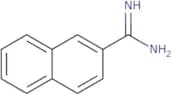
Discontinued productNaphthalene-2-carboximidamide
CAS:<p>Naphthalene-2-carboximidamide is a benzamidine derivative that interacts with the active site of serine proteases. It was shown to have potent inhibitory potency against a number of proteinases, including urokinase-type plasminogen activator (uPA), matrix metalloproteinase-9 (MMP-9), and cathepsin G. The interaction of naphthalene-2-carboximidamide with uPA was specific and led to inhibition of its catalytic activity. Naphthalene-2-carboximidamide has been tested in clinical trials for the treatment of influenza.</p>Formula:C11H10N2Purity:Min. 95%Molecular weight:170.21 g/mol1-(4-Chlorophenyl)-2-(pyridin-2-yl)ethan-1-one
CAS:<p>Versatile small molecule scaffold</p>Formula:C13H10ClNOPurity:Min. 95%Molecular weight:231.68 g/mol2-Cyclohexyl-1,3-thiazole-5-carbaldehyde
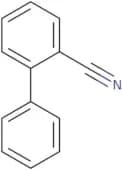
CAS:<p>Versatile small molecule scaffold</p>Formula:C10H13NOSPurity:Min. 95%Molecular weight:195.28 g/mol2-Cyanobiphenyl
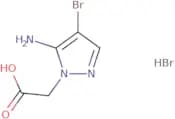
CAS:<p>2-Cyanobiphenyl is a versatile research chemical that has various applications in the field of chemistry. It is a biphenyl compound that is commonly used as a fluorescent probe in scientific experiments. The chemical structure of 2-Cyanobiphenyl makes it an ideal candidate for studying phase transitions and solid-state NMR (Nuclear Magnetic Resonance). Researchers often use this compound to investigate the phase transition temperature and properties of different materials, such as nematic liquid crystals.</p>Formula:C13H9NPurity:Min. 95%Molecular weight:179.22 g/mol2-(5-Amino-4-bromo-1H-pyrazol-1-yl)acetic acid hydrobromide
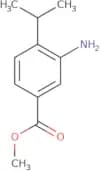
CAS:<p>Versatile small molecule scaffold</p>Formula:C5H7Br2N3O2Purity:Min. 95%Molecular weight:300.94 g/molMethyl 3-amino-4-(propan-2-yl)benzoate
CAS:<p>Versatile small molecule scaffold</p>Formula:C11H15NO2Purity:Min. 95%Molecular weight:193.24 g/molRef: 3D-ZAA83044
Discontinued product7-Chloro-5-methylpyrazolo[1,5-a]pyrimidine-3-carbonitrile
CAS:<p>Versatile small molecule scaffold</p>Formula:C8H5ClN4Purity:Min. 95%Molecular weight:192.6 g/molRef: 3D-NFA90434
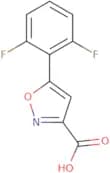
Discontinued product5-(2,6-Difluorophenyl)-1,2-oxazole-3-carboxylic acid
CAS:<p>Versatile small molecule scaffold</p>Formula:C10H5F2NO3Purity:Min. 95%Molecular weight:225.15 g/mol3-{[3-(Trifluoromethyl)phenyl]methyl}azetidine hydrochloride
CAS:<p>Versatile small molecule scaffold</p>Formula:C11H13ClF3NPurity:Min. 95%Molecular weight:251.67 g/molRef: 3D-GXB45823
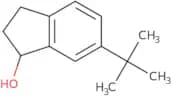
Discontinued product6-tert-Butyl-2,3-dihydro-1H-inden-1-ol
CAS:<p>Versatile small molecule scaffold</p>Formula:C13H18OPurity:Min. 95%Molecular weight:190.28 g/molRef: 3D-BLA89009
Discontinued product[2-(Piperidin-1-yl)pyridin-3-yl]methanamine dihydrochloride
CAS:<p>Versatile small molecule scaffold</p>Formula:C11H19Cl2N3Purity:Min. 95%Molecular weight:264.19 g/molRef: 3D-FDD50657
Discontinued product1'-(tert-Butoxycarbonyl)-[1,4'-bipiperidine]-4-carboxylic acid
CAS:<p>Versatile small molecule scaffold</p>Formula:C16H28N2O4Purity:Min. 95%Molecular weight:312.4 g/molRef: 3D-BIA81059
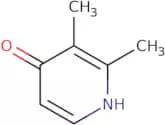
Discontinued product2,3-Dimethyl-1,4-dihydropyridin-4-one
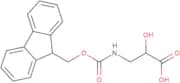
CAS:<p>Versatile small molecule scaffold</p>Formula:C7H9NOPurity:Min. 95%Molecular weight:123.15 g/molFmoc-(S)-3-amino-2-hydroxypropionic acid
CAS:<p>Versatile small molecule scaffold</p>Formula:C18H17NO5Purity:Min. 95%Molecular weight:327.3 g/molRef: 3D-XGA72123
Discontinued productN-[3-(Aminomethyl)phenyl]cyclobutanecarboxamide
CAS:<p>Versatile small molecule scaffold</p>Formula:C12H16N2OPurity:Min. 95%Molecular weight:204.27 g/molRef: 3D-BMB24704
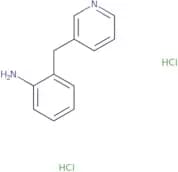
Discontinued product2-(Pyridin-3-ylmethyl)aniline dihydrochloride
CAS:<p>Versatile small molecule scaffold</p>Formula:C12H14Cl2N2Purity:Min. 95%Molecular weight:257.16 g/molRef: 3D-DXC61085
Discontinued product5-ethyl-2-methylmorpholine
CAS:<p>Versatile small molecule scaffold</p>Formula:C7H15NOPurity:Min. 95%Molecular weight:129.2 g/molRef: 3D-TEB44485
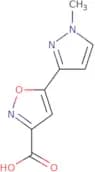
Discontinued product5-(1-Methyl-1H-pyrazol-3-yl)-1,2-oxazole-3-carboxylic acid
CAS:<p>Versatile small molecule scaffold</p>Formula:C8H7N3O3Purity:Min. 95%Molecular weight:193.16 g/molMethyl-2-benzyl-5-methyl-octahydro-1H-pyrrolo[3,4-c]pyridine-7a-carboxylate
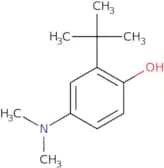
CAS:<p>Versatile small molecule scaffold</p>Formula:C17H24N2O2Purity:Min. 95%Molecular weight:288.4 g/mol2-tert-Butyl-4-(dimethylamino)phenol
CAS:<p>Versatile small molecule scaffold</p>Formula:C12H19NOPurity:Min. 95%Molecular weight:193.28 g/molRef: 3D-TZB40201
Discontinued product[4-(Pentan-3-yloxy)phenyl]methanol
CAS:<p>Versatile small molecule scaffold</p>Formula:C12H18O2Purity:Min. 95%Molecular weight:194.27 g/molRef: 3D-LXB63429
Discontinued product3-(Hydroxymethyl)cyclobutan-1-one
CAS:<p>3-(Hydroxymethyl)cyclobutan-1-one is a synthetic piperazine derivative that has been shown to have antitumor and antimycobacterial activities. It is a selective inhibitor of the enzyme purine nucleoside phosphorylase (PNP), which catalyzes the conversion of inosine monophosphate (IMP) to xanthosine monophosphate (XMP). This inhibition results in an accumulation of IMP and deoxyinosine monophosphate (dIMP) in tumor cells. 3-(Hydroxymethyl)cyclobutan-1-one also inhibits Mycobacterium tuberculosis, but not other bacteria such as Escherichia coli or Staphylococcus aureus. The product is synthetically produced by reacting cyclobutanone with hydroxylamine.</p>Formula:C5H8O2Purity:Min. 95%Molecular weight:100.12 g/molRef: 3D-IHA61618
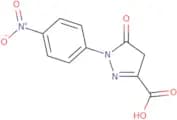
Discontinued product1-(4-Nitrophenyl)-5-oxo-4,5-dihydro-1H-pyrazole-3-carboxylic acid
CAS:<p>Versatile small molecule scaffold</p>Formula:C10H7N3O5Purity:Min. 95%Molecular weight:249.18 g/molRef: 3D-MCA08402
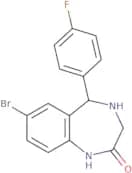
Discontinued product7-Bromo-5-(4-fluorophenyl)-2,3,4,5-tetrahydro-1H-1,4-benzodiazepin-2-one
CAS:Controlled Product<p>Versatile small molecule scaffold</p>Formula:C15H12BrFN2OPurity:Min. 95%Molecular weight:335.17 g/molRef: 3D-MKB20154
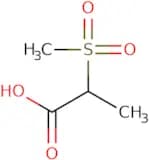
Discontinued product2-(Methylsulfonyl)propanoic acid
CAS:<p>Versatile small molecule scaffold</p>Formula:C4H8O4SPurity:Min. 95%Molecular weight:152.17 g/mol(3S,3aS,6aR)-3-Methoxy-hexahydro-2H-1λ⁶-thieno[2,3-c]pyrrole-1,1-dione
CAS:<p>Versatile small molecule scaffold</p>Formula:C7H13NO3SPurity:Min. 95%Molecular weight:191.25 g/molRef: 3D-UDD28844
Discontinued product4-{[(2,2,2-Trifluoroethoxy)carbonyl]amino}benzoic acid
CAS:<p>Versatile small molecule scaffold</p>Formula:C10H8F3NO4Purity:Min. 95%Molecular weight:263.17 g/molRef: 3D-HCC28632
Discontinued product1-Methyl-1H,4H,5H,6H,7H-pyrazolo[4,3-c]pyridin-4-one
CAS:<p>Versatile small molecule scaffold</p>Formula:C7H9N3OPurity:Min. 95%Molecular weight:151.17 g/molRef: 3D-HAC40386
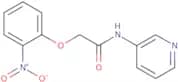
Discontinued product2-(2-Nitrophenoxy)-N-(pyridin-3-yl)acetamide
CAS:<p>Versatile small molecule scaffold</p>Formula:C13H11N3O4Purity:Min. 95%Molecular weight:273.24 g/mol4-Aminoisothiochroman 2,2-dioxide hydrochloride
CAS:<p>Versatile small molecule scaffold</p>Formula:C9H12ClNO2SPurity:Min. 95%Molecular weight:233.72 g/molRef: 3D-MXB83061
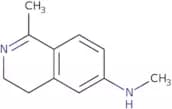
Discontinued productN,1-Dimethyl-3,4-dihydroisoquinolin-6-amine
CAS:<p>Versatile small molecule scaffold</p>Formula:C11H14N2Purity:Min. 95%Molecular weight:174.24 g/molRef: 3D-NFA97687
Discontinued product1-Hydroxy-1,3-dihydro-2,1-benzoxaborole-6-carbaldehyde
CAS:<p>Versatile small molecule scaffold</p>Formula:C8H7BO3Purity:Min. 95%Molecular weight:161.95 g/molRef: 3D-VXB62194
Discontinued product2-Bromo-3,3,3-trifluoro-1-propene
CAS:Controlled Product<p>2-Bromo-3,3,3-trifluoro-1-propene is a chemical compound that has been synthesized in an asymmetric reaction. The reactant is bromopropane and the product is 2,2,2-trifluoropropene. The methylene group on the propene molecule is activated by the nucleophilic attack of a fluoride ion from hydrogen fluoride to form a cavity with a highly strained bond. The kinetic study of this reaction revealed that the activation energy for the reaction is 42 kJ/mol. Palladium-catalyzed coupling reactions are catalyzed by palladium and require nonpolar solvents such as toluene or dichloromethane. This type of reaction has been shown to be exothermic with an isolated yield of 1%.</p>Formula:C3H2BrF3Purity:Min. 95%Color and Shape:Colorless PowderMolecular weight:174.95 g/mol2-Oxa-spiro[3.3]heptan-6-ol
CAS:<p>Versatile small molecule scaffold</p>Formula:C6H10O2Purity:Min. 95%Molecular weight:114.14 g/mol2-Cyano-5-fluorophenol
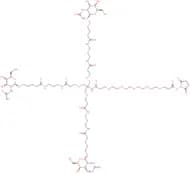
CAS:<p>2-Cyano-5-fluorophenol is an organic compound that is used as a precursor to medicines and other chemicals. It reacts with calcium hydroxide in water to form 2-cyano-5-hydroxyfluorobenzene, which can be hydrolyzed to form 2-cyano-5-chlorofluorobenzene. This compound can also react with sodium hydroxide to produce sodium cyanate, which can be hydrolyzed to form sodium chloride and hydrogen cyanide gas. The alkali metal ions are needed for this reaction, which is why the product should not be exposed to water or moisture. 2-Cyano-5-fluorophenol has been shown to have liquid crystal properties and is used in the production of certain types of polymers. 2Cyano-5Fluorophenol crystals are also used in some medicines such as acetaminophen (paracetamol).</p>Formula:C7H4FNOPurity:Min. 95%Molecular weight:137.11 g/molTri-b-GalNAc-PEG5-NHS ester
CAS:<p>Tri-GalNAc-NHS ester is a multivalent molecule composed of three GalNAc cluster arms. It is a protein degrader and a ligand of the asialoglycoprotein receptor (ASGPR) used for the development of targeted therapies for liver diseases. The GalNAc arms enable high-affinity binding to the ASGPR on hepatocyte surfaces. The crucial functional group, N-hydroxysuccinimide (NHS) ester, is known for its ease of conjugation with various biomolecules possessing amine (NH2) groups. This biocompatible reaction strategy allows the design and development of targeted conjugates such as drug-GalNAc conjugates, siRNA delivery vehicles, or probes for ASGPR imaging in the liver.</p>Formula:C79H137N11O37Purity:Min. 95%Color and Shape:PowderMolecular weight:1,832.99 g/molRef: 3D-FT183733
Discontinued product


![tert-Butyl N-{2-amino-1-[4-(propan-2-yl)phenyl]ethyl}carbamate](/_next/image/?url=https%3A%2Fstatic.cymitquimica.com%2Fproducts%2F3D%2Fthumb-webp%2FUQB35517.webp&w=3840&q=75)

amino}acetic acid](/_next/image/?url=https%3A%2Fstatic.cymitquimica.com%2Fproducts%2F3D%2Fthumb-webp%2FDNB06231.webp&w=3840&q=75)
![4-({[(9H-Fluoren-9-yl)methoxy]carbonyl}amino)cyclopent-2-ene-1-carboxylic acid](/_next/image/?url=https%3A%2Fstatic.cymitquimica.com%2Fproducts%2F3D%2Fthumb-webp%2FEMB97663.webp&w=3840&q=75)
![2-Hydroxy-[1,1'-biphenyl]-3-carboxylic acid](/_next/image/?url=https%3A%2Fstatic.cymitquimica.com%2Fproducts%2F3D%2Fthumb-webp%2FAAA30406.webp&w=3840&q=75)
![3-(3-Aminopropyl)-1,3-diazaspiro[4.5]decane-2,4-dione](/_next/image/?url=https%3A%2Fstatic.cymitquimica.com%2Fproducts%2F3D%2Fthumb-webp%2FZMB83566.webp&w=3840&q=75)


![7-Chloro-5-methylpyrazolo[1,5-a]pyrimidine-3-carbonitrile](/_next/image/?url=https%3A%2Fstatic.cymitquimica.com%2Fproducts%2F3D%2Fthumb-webp%2FNFA90434.webp&w=3840&q=75)
![3-{[3-(Trifluoromethyl)phenyl]methyl}azetidine hydrochloride](/_next/image/?url=https%3A%2Fstatic.cymitquimica.com%2Fproducts%2F3D%2Fthumb-webp%2FGXB45823.webp&w=3840&q=75)
![[2-(Piperidin-1-yl)pyridin-3-yl]methanamine dihydrochloride](/_next/image/?url=https%3A%2Fstatic.cymitquimica.com%2Fproducts%2F3D%2Fthumb-webp%2FFDD50657.webp&w=3840&q=75)
![1'-(tert-Butoxycarbonyl)-[1,4'-bipiperidine]-4-carboxylic acid](/_next/image/?url=https%3A%2Fstatic.cymitquimica.com%2Fproducts%2F3D%2Fthumb-webp%2FBIA81059.webp&w=3840&q=75)
![N-[3-(Aminomethyl)phenyl]cyclobutanecarboxamide](/_next/image/?url=https%3A%2Fstatic.cymitquimica.com%2Fproducts%2F3D%2Fthumb-webp%2FBMB24704.webp&w=3840&q=75)

![Methyl-2-benzyl-5-methyl-octahydro-1H-pyrrolo[3,4-c]pyridine-7a-carboxylate](/_next/image/?url=https%3A%2Fstatic.cymitquimica.com%2Fproducts%2F3D%2Fthumb-webp%2FVXC57025.webp&w=3840&q=75)
![[4-(Pentan-3-yloxy)phenyl]methanol](/_next/image/?url=https%3A%2Fstatic.cymitquimica.com%2Fproducts%2F3D%2Fthumb-webp%2FLXB63429.webp&w=3840&q=75)

![(3S,3aS,6aR)-3-Methoxy-hexahydro-2H-1λ⁶-thieno[2,3-c]pyrrole-1,1-dione](/_next/image/?url=https%3A%2Fstatic.cymitquimica.com%2Fproducts%2F3D%2Fthumb-webp%2FUDD28844.webp&w=3840&q=75)
![4-{[(2,2,2-Trifluoroethoxy)carbonyl]amino}benzoic acid](/_next/image/?url=https%3A%2Fstatic.cymitquimica.com%2Fproducts%2F3D%2Fthumb-webp%2FHCC28632.webp&w=3840&q=75)
![1-Methyl-1H,4H,5H,6H,7H-pyrazolo[4,3-c]pyridin-4-one](/_next/image/?url=https%3A%2Fstatic.cymitquimica.com%2Fproducts%2F3D%2Fthumb-webp%2FHAC40386.webp&w=3840&q=75)



![2-Oxa-spiro[3.3]heptan-6-ol](/_next/image/?url=https%3A%2Fstatic.cymitquimica.com%2Fproducts%2F3D%2Fthumb-webp%2FNEC38108.webp&w=3840&q=75)