Building Blocks
This section contains fundamental products for the synthesis of organic and biological compounds. Building blocks are the essential starting materials used to construct complex molecules through various chemical reactions. They play a critical role in drug discovery, material science, and chemical research. At CymitQuimica, we offer a diverse range of high-quality building blocks to support your innovative research and industrial projects, ensuring you have the essential components for successful synthesis.
Subcategories of "Building Blocks"
- Boronic Acids & Boronic Acid Derivatives(5,756 products)
- Chiral Building Blocks(1,242 products)
- Hydrocarbon Building Blocks(6,095 products)
- Organic Building Blocks(61,037 products)
Found 196139 products of "Building Blocks"
Sort by
Purity (%)
0
100
|
0
|
50
|
90
|
95
|
100
(2E)-3-[2-(Allyloxy)phenyl]acrylic acid
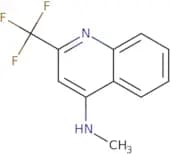
CAS:<p>Versatile small molecule scaffold</p>Formula:C12H12O3Purity:Min. 95%Molecular weight:204.22 g/molN-Methyl-2-(trifluoromethyl)quinolin-4-amine
CAS:<p>Versatile small molecule scaffold</p>Formula:C11H9F3N2Purity:Min. 95%Molecular weight:226.2 g/molRef: 3D-AAC32902
Discontinued producttert-Butyl 6-amino-5H,6H,7H,8H,9H-imidazo[1,2-a][1,4]diazepine-8-carboxylate
CAS:<p>Versatile small molecule scaffold</p>Formula:C12H20N4O2Purity:Min. 95%Molecular weight:252.3 g/molRef: 3D-MRD28171
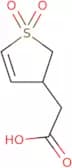
Discontinued product2,3-Dihydro-3-thiopheneacetic acid 1,1-dioxide
CAS:<p>2,3-Dihydro-3-thiopheneacetic acid 1,1-dioxide is a nucleophilic reagent that can be used to synthesize amides. It reacts with amines to form 2,3-dihydro-3-thiophenecarboxylic acid 1,1-diamide. Reactions of this compound with heterocycles such as pyridine and quinoline result in the formation of heterocyclic amines.</p>Formula:C6H8O4SPurity:Min. 95%Molecular weight:176.19 g/mol2-Ethoxyethyl 2-methylbenzene-1-sulfonate
CAS:<p>Versatile small molecule scaffold</p>Formula:C11H16O4SPurity:Min. 95%Molecular weight:244.3 g/mol6-Bromo-4-hydroxy-8-methylquinoline-3-carbonitrile
CAS:<p>Versatile small molecule scaffold</p>Formula:C11H7BrN2OPurity:Min. 95%Molecular weight:263.09 g/molRef: 3D-SCA64341
Discontinued product5-Butyl-4H,7H-[1,2,4]triazolo[1,5-a]pyrimidin-7-one
CAS:<p>Versatile small molecule scaffold</p>Formula:C9H12N4OPurity:Min. 95%Molecular weight:192.22 g/molRef: 3D-TGA68647
Discontinued product2-[5-(Aminomethyl)oxolan-3-yl]acetamide hydrochloride
CAS:<p>Versatile small molecule scaffold</p>Formula:C7H15ClN2O2Purity:Min. 95%Molecular weight:194.7 g/molRef: 3D-MRD27540
Discontinued product7',8'-Dihydro-6'H-spiro[azetidine-3,5'-imidazo[1,2-a]pyrimidine]-7'-one dihydrochloride
CAS:<p>Versatile small molecule scaffold</p>Formula:C8H12Cl2N4OPurity:Min. 95%Molecular weight:251.11 g/molRef: 3D-MKD83202
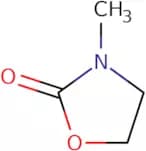
Discontinued product3-Methyl-2-oxazolidone
CAS:<p>3-Methyl-2-oxazolidone is an organic compound that is soluble in water and has a molecular weight of 114.3 g/mol. It can be produced by the reaction of methanol with oxalic acid, acetic acid, or malonic acid. 3-Methyl-2-oxazolidone is used as a solvent to dissolve other compounds and is used in the manufacture of sulfa drugs, hydrogen chloride, glycol ethers, and tetraphenylborates. 3-Methyl-2-oxazolidone has been shown to have electrochemical properties including proton conductivity and hydroxyl group oxidation. It also exhibits magnetic resonance properties due to its solute nature.</p>Formula:C4H7NO2Purity:Min. 95%4-(Benzyloxy)-3-chloro-5-methoxybenzaldehyde
CAS:<p>Versatile small molecule scaffold</p>Formula:C15H13ClO3Purity:Min. 95%Molecular weight:276.71 g/molRef: 3D-MBA68767
Discontinued product(3S,3aS,6aR)-3-Methoxy-hexahydro-2H-1λ⁶-thieno[2,3-c]pyrrole-1,1-dione
CAS:<p>Versatile small molecule scaffold</p>Formula:C7H13NO3SPurity:Min. 95%Molecular weight:191.25 g/molRef: 3D-UDD28844
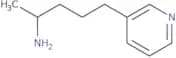
Discontinued product5-(Pyridin-3-yl)pentan-2-amine
CAS:<p>Versatile small molecule scaffold</p>Formula:C10H16N2Purity:Min. 95%Molecular weight:164.25 g/molRef: 3D-LEA84881
Discontinued product3-{[(Pyridin-2-yl)methyl]amino}benzoic acid
CAS:<p>Versatile small molecule scaffold</p>Formula:C13H12N2O2Purity:Min. 95%Molecular weight:228.25 g/molRef: 3D-UTB34707
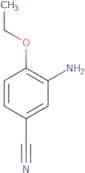
Discontinued product3-Amino-4-ethoxybenzonitrile
CAS:<p>Versatile small molecule scaffold</p>Formula:C9H10N2OPurity:Min. 95%Molecular weight:162.19 g/mol5-Amino-3-methyl-4-isoxazolecarboxamide
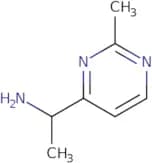
CAS:<p>Versatile small molecule scaffold</p>Formula:C5H7N3O2Purity:Min. 95%Molecular weight:141.13 g/mol1-(2-Methylpyrimidin-4-yl)ethan-1-amine
CAS:<p>Versatile small molecule scaffold</p>Formula:C7H11N3Purity:Min. 95%Molecular weight:137.18 g/molRef: 3D-JJC20141
Discontinued product3-(Trifluoromethyl)-1,4,5,7-tetrahydropyrano[3,4-c]pyrazole
CAS:<p>Versatile small molecule scaffold</p>Formula:C7H7F3N2OPurity:Min. 95%Molecular weight:192.14 g/mol3-Bromo-5-tert-butylphenol
CAS:<p>Versatile small molecule scaffold</p>Formula:C10H13BrOPurity:Min. 95%Molecular weight:229.11 g/molRef: 3D-XRB66126
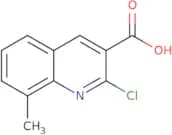
Discontinued product2-Chloro-8-methylquinoline-3-carboxylic acid
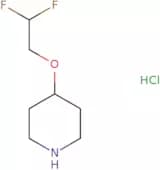
CAS:<p>Versatile small molecule scaffold</p>Formula:C11H8ClNO2Purity:Min. 95%Molecular weight:221.64 g/mol4-(2,2-Difluoroethoxy)piperidine
CAS:<p>Versatile small molecule scaffold</p>Formula:C7H14ClF2NOPurity:Min. 95%Molecular weight:201.64 g/mol2-Cyclohexyl-1,3-thiazole-5-carbaldehyde
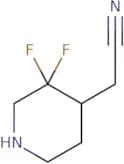
CAS:<p>Versatile small molecule scaffold</p>Formula:C10H13NOSPurity:Min. 95%Molecular weight:195.28 g/mol2-(3,3-Difluoropiperidin-4-yl)acetonitrile
CAS:<p>Versatile small molecule scaffold</p>Formula:C7H10F2N2Purity:Min. 95%Molecular weight:160.16 g/molRef: 3D-HWC51655
Discontinued product7-Bromo-8-chloro-1,2,3,4-tetrahydroisoquinoline
CAS:<p>Versatile small molecule scaffold</p>Formula:C9H9BrClNPurity:Min. 95%Molecular weight:246.53 g/molRef: 3D-HWC33044
Discontinued product[2-(Cyclopropylamino)ethyl]dimethylamine dihydrochloride
CAS:<p>Versatile small molecule scaffold</p>Formula:C7H18Cl2N2Purity:Min. 95%Molecular weight:201.13 g/molRef: 3D-HPC25761
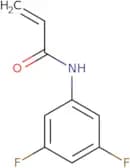
Discontinued productN-(3,5-Difluorophenyl)prop-2-enamide
CAS:<p>Versatile small molecule scaffold</p>Formula:C9H7F2NOPurity:Min. 95%Molecular weight:183.15 g/molRef: 3D-GWB75581
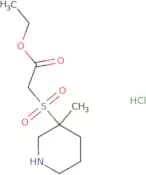
Discontinued productEthyl 2-((3-methylpiperidin-3-yl)sulfonyl)acetate hydrochloride
CAS:<p>Versatile small molecule scaffold</p>Formula:C10H20ClNO4SPurity:Min. 95%Molecular weight:285.79 g/mol1-Butyl-2-(4-methoxyphenyl)-5-oxopyrrolidine-3-carboxylic acid
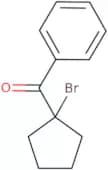
CAS:<p>Versatile small molecule scaffold</p>Formula:C16H21NO4Purity:Min. 95%Molecular weight:291.34 g/mol(1-Bromocyclopentyl)(phenyl)methanone
CAS:<p>Versatile small molecule scaffold</p>Formula:C12H13BrOPurity:Min. 95%Molecular weight:253.13 g/molRef: 3D-GAA74066
Discontinued product2-[Ethyl(propan-2-yl)amino]ethan-1-ol
CAS:Controlled Product<p>Versatile small molecule scaffold</p>Formula:C7H17NOPurity:Min. 95%Molecular weight:131.22 g/molPB-22 3-carboxyindole metabolite solution
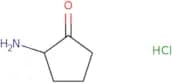
CAS:Controlled Product<p>PB-22 is a synthetic cannabinoid, which can be classified as a CB1 receptor agonist. It is one of the many cannabinoids that have been created in an attempt to circumvent drug laws by creating compounds that are similar to those found in cannabis but have different chemical structures. PB-22 has shown to increase locomotor activity and stimulate the cb1 receptor in mice. Magnetic resonance spectroscopy (MRS) and assays were used to determine the binding affinity of PB-22 for the CB1 receptor. The MRS data showed that PB-22 bound with high affinity to the CB1 receptor and had a lower affinity for CB2 receptors. This suggests that PB-22 may be more potent than other synthetic cannabinoids, such as JWH-018 and CP 55,940, which bind better with CB2 receptors than CB1 receptors.<br>PB-22 is an analog of JWH-073 and has been shown to have a stronger effect on locomotor activity than JWH</p>Formula:C14H17NO2Purity:Min. 95%Molecular weight:231.29 g/mol2-Aminocyclopentan-1-one hydrochloride
CAS:<p>Versatile small molecule scaffold</p>Formula:C5H10ClNOPurity:Min. 95%Molecular weight:135.59 g/mol1-(4,6-Dimethylpyrimidin-2-yl)-3-methyl-1H-pyrazole-4-carboxylic acid
CAS:<p>Versatile small molecule scaffold</p>Formula:C11H12N4O2Purity:Min. 95%Molecular weight:232.24 g/molRef: 3D-CWB50860
Discontinued product3-{[3-(Trifluoromethyl)-1H-pyrazol-1-yl]methyl}benzoic acid
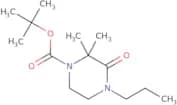
CAS:<p>Versatile small molecule scaffold</p>Formula:C12H9F3N2O2Purity:Min. 95%Molecular weight:270.21 g/moltert-Butyl 2,2-dimethyl-3-oxo-4-propylpiperazine-1-carboxylate
CAS:<p>Versatile small molecule scaffold</p>Formula:C14H26N2O3Purity:Min. 95%Molecular weight:270.37 g/molRef: 3D-DXC60477
Discontinued product2-Oxa-spiro[3.3]heptan-6-ol
CAS:<p>Versatile small molecule scaffold</p>Formula:C6H10O2Purity:Min. 95%Molecular weight:114.14 g/mol2-Bromo-3,3,3-trifluoro-1-propene
CAS:Controlled Product<p>2-Bromo-3,3,3-trifluoro-1-propene is a chemical compound that has been synthesized in an asymmetric reaction. The reactant is bromopropane and the product is 2,2,2-trifluoropropene. The methylene group on the propene molecule is activated by the nucleophilic attack of a fluoride ion from hydrogen fluoride to form a cavity with a highly strained bond. The kinetic study of this reaction revealed that the activation energy for the reaction is 42 kJ/mol. Palladium-catalyzed coupling reactions are catalyzed by palladium and require nonpolar solvents such as toluene or dichloromethane. This type of reaction has been shown to be exothermic with an isolated yield of 1%.</p>Formula:C3H2BrF3Purity:Min. 95%Color and Shape:Colorless PowderMolecular weight:174.95 g/mol2-Cyano-5-fluorophenol
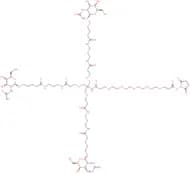
CAS:<p>2-Cyano-5-fluorophenol is an organic compound that is used as a precursor to medicines and other chemicals. It reacts with calcium hydroxide in water to form 2-cyano-5-hydroxyfluorobenzene, which can be hydrolyzed to form 2-cyano-5-chlorofluorobenzene. This compound can also react with sodium hydroxide to produce sodium cyanate, which can be hydrolyzed to form sodium chloride and hydrogen cyanide gas. The alkali metal ions are needed for this reaction, which is why the product should not be exposed to water or moisture. 2-Cyano-5-fluorophenol has been shown to have liquid crystal properties and is used in the production of certain types of polymers. 2Cyano-5Fluorophenol crystals are also used in some medicines such as acetaminophen (paracetamol).</p>Formula:C7H4FNOPurity:Min. 95%Molecular weight:137.11 g/molTri-b-GalNAc-PEG5-NHS ester
CAS:<p>Tri-GalNAc-NHS ester is a multivalent molecule composed of three GalNAc cluster arms. It is a protein degrader and a ligand of the asialoglycoprotein receptor (ASGPR) used for the development of targeted therapies for liver diseases. The GalNAc arms enable high-affinity binding to the ASGPR on hepatocyte surfaces. The crucial functional group, N-hydroxysuccinimide (NHS) ester, is known for its ease of conjugation with various biomolecules possessing amine (NH2) groups. This biocompatible reaction strategy allows the design and development of targeted conjugates such as drug-GalNAc conjugates, siRNA delivery vehicles, or probes for ASGPR imaging in the liver.</p>Formula:C79H137N11O37Purity:Min. 95%Color and Shape:PowderMolecular weight:1,832.99 g/molRef: 3D-FT183733
Discontinued product
![(2E)-3-[2-(Allyloxy)phenyl]acrylic acid](/_next/image/?url=https%3A%2Fstatic.cymitquimica.com%2Fproducts%2F3D%2Fthumb-webp%2FPWB51701.webp&w=3840&q=75)

![tert-Butyl 6-amino-5H,6H,7H,8H,9H-imidazo[1,2-a][1,4]diazepine-8-carboxylate](/_next/image/?url=https%3A%2Fstatic.cymitquimica.com%2Fproducts%2F3D%2Fthumb-webp%2FMRD28171.webp&w=3840&q=75)


![5-Butyl-4H,7H-[1,2,4]triazolo[1,5-a]pyrimidin-7-one](/_next/image/?url=https%3A%2Fstatic.cymitquimica.com%2Fproducts%2F3D%2Fthumb-webp%2FTGA68647.webp&w=3840&q=75)
![2-[5-(Aminomethyl)oxolan-3-yl]acetamide hydrochloride](/_next/image/?url=https%3A%2Fstatic.cymitquimica.com%2Fproducts%2F3D%2Fthumb-webp%2FMRD27540.webp&w=3840&q=75)
![7',8'-Dihydro-6'H-spiro[azetidine-3,5'-imidazo[1,2-a]pyrimidine]-7'-one dihydrochloride](/_next/image/?url=https%3A%2Fstatic.cymitquimica.com%2Fproducts%2F3D%2Fthumb-webp%2FMKD83202.webp&w=3840&q=75)

![(3S,3aS,6aR)-3-Methoxy-hexahydro-2H-1λ⁶-thieno[2,3-c]pyrrole-1,1-dione](/_next/image/?url=https%3A%2Fstatic.cymitquimica.com%2Fproducts%2F3D%2Fthumb-webp%2FUDD28844.webp&w=3840&q=75)
![3-{[(Pyridin-2-yl)methyl]amino}benzoic acid](/_next/image/?url=https%3A%2Fstatic.cymitquimica.com%2Fproducts%2F3D%2Fthumb-webp%2FUTB34707.webp&w=3840&q=75)

![3-(Trifluoromethyl)-1,4,5,7-tetrahydropyrano[3,4-c]pyrazole](/_next/image/?url=https%3A%2Fstatic.cymitquimica.com%2Fproducts%2F3D%2Fthumb-webp%2FXQB93148.webp&w=3840&q=75)



![[2-(Cyclopropylamino)ethyl]dimethylamine dihydrochloride](/_next/image/?url=https%3A%2Fstatic.cymitquimica.com%2Fproducts%2F3D%2Fthumb-webp%2FHPC25761.webp&w=3840&q=75)

![2-[Ethyl(propan-2-yl)amino]ethan-1-ol](/_next/image/?url=https%3A%2Fstatic.cymitquimica.com%2Fproducts%2F3D%2Fthumb-webp%2FCAA89361.webp&w=3840&q=75)


![3-{[3-(Trifluoromethyl)-1H-pyrazol-1-yl]methyl}benzoic acid](/_next/image/?url=https%3A%2Fstatic.cymitquimica.com%2Fproducts%2F3D%2Fthumb-webp%2FEQB64362.webp&w=3840&q=75)
![2-Oxa-spiro[3.3]heptan-6-ol](/_next/image/?url=https%3A%2Fstatic.cymitquimica.com%2Fproducts%2F3D%2Fthumb-webp%2FNEC38108.webp&w=3840&q=75)