Building Blocks
This section contains fundamental products for the synthesis of organic and biological compounds. Building blocks are the essential starting materials used to construct complex molecules through various chemical reactions. They play a critical role in drug discovery, material science, and chemical research. At CymitQuimica, we offer a diverse range of high-quality building blocks to support your innovative research and industrial projects, ensuring you have the essential components for successful synthesis.
Subcategories of "Building Blocks"
- Boronic Acids & Boronic Acid Derivatives(5,778 products)
- Chiral Building Blocks(1,242 products)
- Hydrocarbon Building Blocks(6,098 products)
- Organic Building Blocks(61,098 products)
Found 199594 products of "Building Blocks"
Sort by
Purity (%)
0
100
|
0
|
50
|
90
|
95
|
100
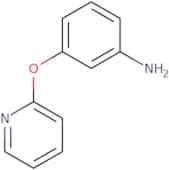
3-(Pyridin-2-yloxy)aniline
CAS:<p>3-(Pyridin-2-yloxy)aniline is a synthetic compound that is used as a potent inhibitor of the enzyme tyrosine hydroxylase. This enzyme catalyzes the conversion of tyrosine to L-3,4-dihydroxyphenylalanine and plays a key role in the synthesis of dopamine. 3-(Pyridin-2-yloxy)aniline has been shown to be effective in treating Parkinson's disease and other disorders that involve neuronal degeneration and cell death. This drug inhibits the production of dopamine by binding to tyrosine hydroxylase, thereby preventing it from converting tyrosine into L-3,4-dihydroxyphenylalanine. The compound also has significant inhibitory activity against cyclin dependent kinases (CDKs), which are enzymes that regulate the activity of protein kinases.</p>Formula:C11H10N2OPurity:Min. 95%Molecular weight:186.21 g/mol5-Bromo-4-phenyl-1,3-thiazol-2-amine
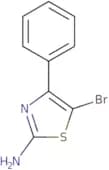
CAS:<p>Versatile small molecule scaffold</p>Formula:C9H7BrN2SPurity:Min. 95%Molecular weight:255.14 g/mol4-[2-(Trifluoromethyl)phenoxy]aniline
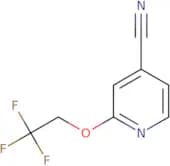
CAS:<p>Versatile small molecule scaffold</p>Formula:C13H10F3NOPurity:Min. 95%Molecular weight:253.22 g/mol2-(2,2,2-Trifluoroethoxy)pyridine-4-carbonitrile
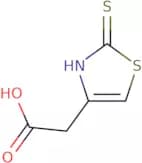
CAS:<p>Versatile small molecule scaffold</p>Formula:C8H5F3N2OPurity:Min. 95%Molecular weight:202.13 g/mol2-(2-Sulfanyl-1,3-thiazol-4-yl)acetic acid
CAS:<p>Versatile small molecule scaffold</p>Formula:C5H5NO2S2Purity:Min. 95%Molecular weight:175.2 g/molRef: 3D-LBA36579
Discontinued product2-Hydroxy-4-methoxybenzene-1-sulfonamide
CAS:<p>Versatile small molecule scaffold</p>Formula:C7H9NO4SPurity:Min. 95%Molecular weight:203.22 g/molRef: 3D-TZB39379
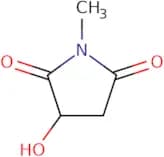
Discontinued product3-Hydroxy-1-methylpyrrolidine-2,5-dione
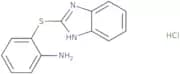
CAS:<p>3-Hydroxy-1-methylpyrrolidine-2,5-dione is a chemical compound that is used as an intermediate in the synthesis of various pharmaceuticals. It is not known to have any direct health effects on humans. 3-Hydroxy-1-methylpyrrolidine-2,5-dione has been detected in human urine and plasma samples by GC/MS and LC/MS methods. The detection limit of this substance in urine and plasma has been reported to be 0.05 ng/mL. Monitoring studies have shown that 3-hydroxy-1 methylpyrrolidine 2,5 dione can be found at levels up to 1 ppm in the general population.</p>Formula:C5H7NO3Purity:Min. 95%Molecular weight:129.11 g/mol2-(1H-1,3-Benzodiazol-2-ylsulfanyl)aniline
CAS:<p>Versatile small molecule scaffold</p>Formula:C13H12ClN3SPurity:Min. 95%Molecular weight:277.77 g/mol4-Methoxybicyclo[2.2.2]octan-1-amine hydrochloride
CAS:<p>Versatile small molecule scaffold</p>Formula:C9H18ClNOPurity:Min. 95%Molecular weight:191.7 g/molRef: 3D-KFA90838
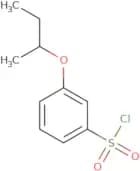
Discontinued product3-(Butan-2-yloxy)benzene-1-sulfonyl chloride
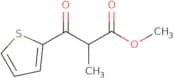
CAS:<p>Versatile small molecule scaffold</p>Formula:C10H13ClO3SPurity:Min. 95%Molecular weight:248.73 g/molMethyl 2-methyl-3-oxo-3-(thiophen-2-yl)propanoate
CAS:<p>Versatile small molecule scaffold</p>Formula:C9H10O3SPurity:Min. 95%Molecular weight:198.24 g/molRef: 3D-KCA84831
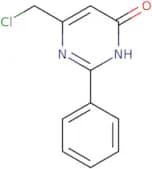
Discontinued product6-(Chloromethyl)-2-phenylpyrimidin-4-ol
CAS:<p>Versatile small molecule scaffold</p>Formula:C11H9ClN2OPurity:Min. 95%Molecular weight:220.65 g/mol[3,5-Bis(aminomethyl)phenyl]methanamine trihydrochloride
CAS:<p>Versatile small molecule scaffold</p>Formula:C9H18Cl3N3Purity:Min. 95%Molecular weight:274.6 g/molRef: 3D-UCA14657
Discontinued product1-[(2-Aminoethyl)sulfanyl]-4-bromobenzene
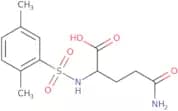
CAS:<p>Versatile small molecule scaffold</p>Formula:C8H10BrNSPurity:Min. 95%Molecular weight:232.15 g/mol4-Carbamoyl-2-(2,5-dimethylbenzenesulfonamido)butanoic acid
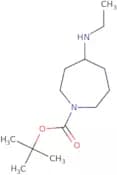
CAS:<p>Versatile small molecule scaffold</p>Formula:C13H18N2O5SPurity:Min. 95%Molecular weight:314.36 g/moltert-Butyl 4-(ethylamino)azepane-1-carboxylate
CAS:<p>Versatile small molecule scaffold</p>Formula:C13H26N2O2Purity:Min. 95%Molecular weight:242.36 g/molRef: 3D-JQB07549
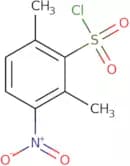
Discontinued product2,6-Dimethyl-3-nitrobenzene-1-sulfonyl chloride
CAS:<p>Versatile small molecule scaffold</p>Formula:C8H8ClNO4SPurity:Min. 95%Molecular weight:249.67 g/molRef: 3D-UCA38357
Discontinued productrac-(1R,3S)-1-{[(tert-Butoxy)carbonyl]amino}-3-methylcyclohexane-1-carboxylic acid
CAS:<p>Versatile small molecule scaffold</p>Formula:C13H23NO4Purity:Min. 95%Molecular weight:257.3 g/molRef: 3D-JND07961
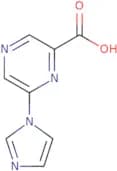
Discontinued product6-(1H-Imidazol-1-yl)pyrazine-2-carboxylic acid
CAS:<p>Versatile small molecule scaffold</p>Formula:C8H6N4O2Purity:Min. 95%Molecular weight:190.2 g/molRef: 3D-JLC89866
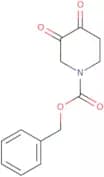
Discontinued productBenzyl 3,4-dioxopiperidine-1-carboxylate
CAS:<p>Versatile small molecule scaffold</p>Formula:C13H13NO4Purity:Min. 95%Molecular weight:247.25 g/molRef: 3D-JHD94774
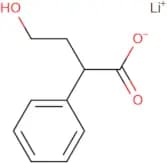
Discontinued product4-hydroxy-2-phenylbutanoate lithium
CAS:<p>Versatile small molecule scaffold</p>Formula:C10H11LiO3Purity:Min. 95%Molecular weight:186.2 g/molRef: 3D-JHD94264
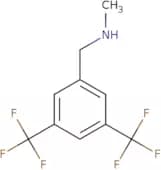
Discontinued product1-(3,5-Bis(trifluoromethyl)phenyl)-N-methylmethanamine
CAS:<p>Versatile small molecule scaffold</p>Formula:C10H9F6NPurity:Min. 95%Molecular weight:257.18 g/molRef: 3D-JGA82024
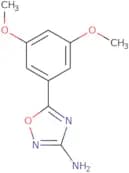
Discontinued product5-(3,5-Dimethoxyphenyl)-1,2,4-oxadiazol-3-amine
CAS:<p>Versatile small molecule scaffold</p>Formula:C10H11N3O3Purity:Min. 95%Molecular weight:221.21 g/molRef: 3D-UDC01774
Discontinued productMethyl 4-(bromomethyl)bicyclo[2.2.2]octane-1-carboxylate
CAS:<p>Versatile small molecule scaffold</p>Formula:C11H17BrO2Purity:Min. 95%Molecular weight:261.15 g/molRef: 3D-JCD96273
Discontinued product3-Bromopyridine-2-sulfonyl fluoride
CAS:<p>Versatile small molecule scaffold</p>Formula:C5H3BrFNO2SPurity:Min. 95%Molecular weight:240.05 g/molRef: 3D-JCD83495
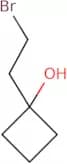
Discontinued product1-(2-Bromoethyl)cyclobutan-1-ol
CAS:<p>Versatile small molecule scaffold</p>Formula:C6H11BrOPurity:Min. 95%Molecular weight:179.05 g/molRef: 3D-JBD30961
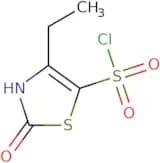
Discontinued product4-Ethyl-2-oxo-2,3-dihydro-1,3-thiazole-5-sulfonyl chloride
CAS:<p>Versatile small molecule scaffold</p>Formula:C5H6ClNO3S2Purity:Min. 95%Molecular weight:227.7 g/molRef: 3D-JBD30945
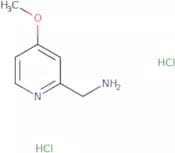
Discontinued product(4-Methoxypyridin-2-yl)methanamine dihydrochloride
CAS:<p>Versatile small molecule scaffold</p>Formula:C7H12Cl2N2OPurity:Min. 95%Molecular weight:211.09 g/molRef: 3D-UDC04606
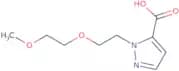
Discontinued product1-(2-(2-Methoxyethoxy)ethyl)-1H-pyrazole-5-carboxylic acid
CAS:<p>Versatile small molecule scaffold</p>Formula:C9H14N2O4Purity:Min. 95%Molecular weight:214.22 g/molRef: 3D-UDC29241
Discontinued product2-Chloro-N-[2-(3-chlorophenyl)ethyl]acetamide
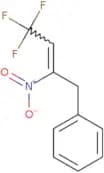
CAS:<p>Versatile small molecule scaffold</p>Formula:C10H11Cl2NOPurity:Min. 95%Molecular weight:232.1 g/mol(4,4,4-Trifluoro-2-nitrobut-2-en-1-yl)benzene
CAS:<p>Versatile small molecule scaffold</p>Formula:C10H8F3NO2Purity:Min. 95%Molecular weight:231.17 g/molRef: 3D-UDC84298
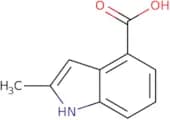
Discontinued product2-Methyl-1H-indole-4-carboxylic acid
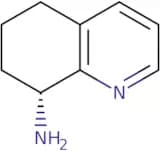
CAS:<p>2-Methyl-1H-indole-4-carboxylic acid (2MICA) is a cyclic compound that is used in the synthesis of other compounds. It is obtained by reacting 2,3-dibromo-nitrobenzoic acid with sodium ethoxide in an alkaline solution. The yield of 2MICA can be increased by using catalytic acid anhydrides such as dimethyl sulphoxide or lactam. In the presence of reductive agents, 2MICA can be synthesized from the corresponding lactam or cyclised carboxylic acid.<br>2MICA reacts with sodium ethoxide to form a lactam and reduces 2-bromo-3-nitrobenzoic acid to yield 2MICA.</p>Formula:C10H9NO2Purity:Min. 95%Molecular weight:175 g/mol(R)-5,6,7,8-Tetrahydroquinolin-8-amine
CAS:<p>Versatile small molecule scaffold</p>Formula:C9H12N2Purity:Min. 95%Molecular weight:148.2 g/molN-(4-Aminophenyl)-3,3,3-trifluoropropanamide hydrochloride
CAS:<p>Versatile small molecule scaffold</p>Formula:C9H10ClF3N2OPurity:Min. 95%Molecular weight:254.63 g/molRef: 3D-INC75282
Discontinued product2-bromo-1-(3,3-difluorocyclobutyl)ethan-1-one
CAS:<p>Versatile small molecule scaffold</p>Formula:C6H7BrF2OPurity:Min. 95%Molecular weight:213.02 g/molRef: 3D-UPC91180
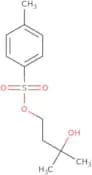
Discontinued product3-hydroxy-3-methylbutyl 4-methylbenzenesulfonate
CAS:<p>Versatile small molecule scaffold</p>Formula:C12H18O4SPurity:Min. 95%Molecular weight:258.34 g/mol3-Boc-3-azabicyclo[3.2.1]octan-8-amine
CAS:<p>Versatile small molecule scaffold</p>Formula:C12H22N2O2Purity:Min. 95%Molecular weight:226.32 g/mol2-Bromo-4-(4-fluorophenyl)-1,3-thiazole
CAS:<p>Versatile small molecule scaffold</p>Formula:C9H5NFSBrPurity:Min. 95%Molecular weight:258.11 g/mol2-Acetylbenzoic acid
CAS:<p>2-Acetylbenzoic acid is a functional molecule that contains an acetyl group. It can form hydrogen bonds with other molecules and has been shown to induce apoptosis in cells. The reaction products of 2-acetylbenzoic acid are malonic acid, acetylsalicylic acid, and 2-benzoylbenzoic acid. These three compounds are made by the addition of hydrogen or hydroxide to the molecule 2-acetylbenzoic acid. The molecule has two functional groups: a carbonyl group and an acetyl group. The chemical structure of this molecule can be seen in the figure below.<br>2-Acetylbenzoic Acid</p>Formula:C9H8O3Purity:Min. 95%Color and Shape:PowderMolecular weight:164.16 g/molRef: 3D-FA05086
Discontinued product2-Bromo-3,3,3-trifluoro-1-propene
CAS:Controlled Product<p>2-Bromo-3,3,3-trifluoro-1-propene is a chemical compound that has been synthesized in an asymmetric reaction. The reactant is bromopropane and the product is 2,2,2-trifluoropropene. The methylene group on the propene molecule is activated by the nucleophilic attack of a fluoride ion from hydrogen fluoride to form a cavity with a highly strained bond. The kinetic study of this reaction revealed that the activation energy for the reaction is 42 kJ/mol. Palladium-catalyzed coupling reactions are catalyzed by palladium and require nonpolar solvents such as toluene or dichloromethane. This type of reaction has been shown to be exothermic with an isolated yield of 1%.</p>Formula:C3H2BrF3Purity:Min. 95%Color and Shape:Colorless PowderMolecular weight:174.95 g/mol3-Methylbenzo[b]thiophene-2-carboxylic acid
CAS:<p>3-Methylbenzo[b]thiophene-2-carboxylic acid (MBTCA) is a heterocyclic compound that is an intermediate in the synthesis of 3-methylthiophene-2-carboxylic acid, a precursor to other drugs. MBTCA is an aerobic, nonpolar compound that has shown antimicrobial activity against some bacteria and fungi. It also has been shown to have practicality as a biomolecular probe for methyl groups in organic solvents. MBTCA can be synthesized by nitration of benzene in the presence of sulfur and sulfoxides. This reaction produces nitrobenzene, which can then be oxidized by potassium permanganate or hydrogen peroxide to produce MBTCA. The most common isomer of MBTCA is 2-(3,5-dimethoxybenzylidene)tetrahydrofuran, with three methyl groups on the</p>Formula:C10H8O2SPurity:Min. 95%Molecular weight:192.23 g/mol3-(Methoxycarbonyl)pyridine-4-carboxylic acid
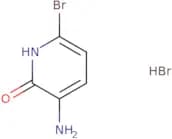
CAS:<p>Versatile small molecule scaffold</p>Formula:C8H7NO4Purity:Min. 95%Molecular weight:181.15 g/mol3-amino-6-bromopyridin-2-ol hydrobromide
CAS:<p>Versatile small molecule scaffold</p>Formula:C5H6Br2N2OPurity:Min. 95%Molecular weight:269.9 g/molGivinostat hydrochloride
CAS:<p>Givinostat hydrochloride is a research chemical that has shown potential in various fields. It is a molybdenum-based compound that has been studied for its effects on dopamine release and hydrogen evolution. Givinostat hydrochloride has also been investigated as an osteoclast inhibitor, which may be beneficial in the treatment of bone-related disorders such as osteoporosis. Additionally, it has shown promise as a retinoid and calpain inhibitor, suggesting its potential use in dermatological conditions and neurodegenerative diseases. The compound contains fluorine atoms, making it suitable for imaging studies using fluorine MRI techniques. Givinostat hydrochloride has been tested on MDA-MB-231 cells and has shown inhibitory effects on their growth, indicating its potential as an anticancer agent.</p>Formula:C24H27N3O4·HClPurity:Min. 95%Molecular weight:457.95 g/mol

![4-[2-(Trifluoromethyl)phenoxy]aniline](/_next/image/?url=https%3A%2Fstatic.cymitquimica.com%2Fproducts%2F3D%2Fthumb-webp%2FLCA94684.webp&w=3840&q=75)

![4-Methoxybicyclo[2.2.2]octan-1-amine hydrochloride](/_next/image/?url=https%3A%2Fstatic.cymitquimica.com%2Fproducts%2F3D%2Fthumb-webp%2FKFA90838.webp&w=3840&q=75)
![[3,5-Bis(aminomethyl)phenyl]methanamine trihydrochloride](/_next/image/?url=https%3A%2Fstatic.cymitquimica.com%2Fproducts%2F3D%2Fthumb-webp%2FUCA14657.webp&w=3840&q=75)
![1-[(2-Aminoethyl)sulfanyl]-4-bromobenzene](/_next/image/?url=https%3A%2Fstatic.cymitquimica.com%2Fproducts%2F3D%2Fthumb-webp%2FUCA32662.webp&w=3840&q=75)
![rac-(1R,3S)-1-{[(tert-Butoxy)carbonyl]amino}-3-methylcyclohexane-1-carboxylic acid](/_next/image/?url=https%3A%2Fstatic.cymitquimica.com%2Fproducts%2F3D%2Fthumb-webp%2FJND07961.webp&w=3840&q=75)
![Methyl 4-(bromomethyl)bicyclo[2.2.2]octane-1-carboxylate](/_next/image/?url=https%3A%2Fstatic.cymitquimica.com%2Fproducts%2F3D%2Fthumb-webp%2FJCD96273.webp&w=3840&q=75)

![2-Chloro-N-[2-(3-chlorophenyl)ethyl]acetamide](/_next/image/?url=https%3A%2Fstatic.cymitquimica.com%2Fproducts%2F3D%2Fthumb-webp%2FJBA16215.webp&w=3840&q=75)

![3-Boc-3-azabicyclo[3.2.1]octan-8-amine](/_next/image/?url=https%3A%2Fstatic.cymitquimica.com%2Fproducts%2F3D%2Fthumb-webp%2FFDC76351.webp&w=3840&q=75)


![3-Methylbenzo[b]thiophene-2-carboxylic acid](/_next/image/?url=https%3A%2Fstatic.cymitquimica.com%2Fproducts%2F3D%2Fthumb-webp%2FDAA13378.webp&w=3840&q=75)