


Building Blocks
This section contains fundamental products for the synthesis of organic and biological compounds. Building blocks are the essential starting materials used to construct complex molecules through various chemical reactions. They play a critical role in drug discovery, material science, and chemical research. At CymitQuimica, we offer a diverse range of high-quality building blocks to support your innovative research and industrial projects, ensuring you have the essential components for successful synthesis.
Subcategories of "Building Blocks"
- Boronic Acids & Boronic Acid Derivatives(5,778 products)
- Chiral Building Blocks(1,242 products)
- Hydrocarbon Building Blocks(6,098 products)
- Organic Building Blocks(61,098 products)
Found 199594 products of "Building Blocks"
Sort by
Purity (%)
0
100
|
0
|
50
|
90
|
95
|
100
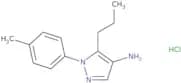
1-(4-Methylphenyl)-5-propyl-1H-pyrazol-4-amine hydrochloride
CAS:<p>Versatile small molecule scaffold</p>Formula:C13H18ClN3Purity:Min. 95%Molecular weight:251.75 g/molRef: 3D-DXC60792
Discontinued product3-[(2-Aminoethyl)(methyl)amino]-N,2-dimethylpropanamide dihydrochloride
CAS:<p>Versatile small molecule scaffold</p>Formula:C8H21Cl2N3OPurity:Min. 95%Molecular weight:246.18 g/molRef: 3D-DXC56627
Discontinued product3-(Chloromethyl)-5H,6H,8H-[1,2,4]triazolo[3,4-c][1,4]oxazine hydrochloride
CAS:<p>Versatile small molecule scaffold</p>Formula:C6H9Cl2N3OPurity:Min. 95%Molecular weight:210.06 g/molRef: 3D-DXC56271
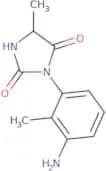
Discontinued product3-(3-Amino-2-methylphenyl)-5-methylimidazolidine-2,4-dione
CAS:<p>Versatile small molecule scaffold</p>Formula:C11H13N3O2Purity:Min. 95%Molecular weight:219.24 g/molRef: 3D-DXC56267
Discontinued product2-[5-(2-Fluorophenyl)-1,3,4-oxadiazol-2-yl]piperidine hydrochloride
CAS:<p>Versatile small molecule scaffold</p>Formula:C13H15ClFN3OPurity:Min. 95%Molecular weight:283.73 g/molRef: 3D-DXC56201
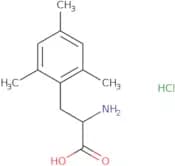
Discontinued product2-Amino-3-(2,4,6-trimethylphenyl)propanoic acid hydrochloride
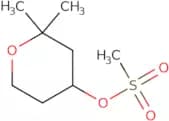
CAS:<p>Versatile small molecule scaffold</p>Formula:C12H18ClNO2Purity:Min. 95%Molecular weight:243.73 g/mol2,2-Dimethyloxan-4-yl methanesulfonate
CAS:<p>Versatile small molecule scaffold</p>Formula:C8H16O4SPurity:Min. 95%Molecular weight:208.28 g/molRef: 3D-DSA87106
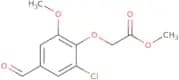
Discontinued productMethyl (2-chloro-4-formyl-6-methoxyphenoxy)acetate
CAS:<p>Versatile small molecule scaffold</p>Formula:C11H11ClO5Purity:Min. 95%Molecular weight:258.65 g/mol2-Amino-3-[3-chloro-5-(methylsulfanyl)phenyl]propanoic acid hydrochloride
CAS:<p>Versatile small molecule scaffold</p>Formula:C10H13Cl2NO2SPurity:Min. 95%Molecular weight:282.2 g/molRef: 3D-DQD63987
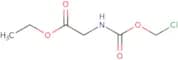
Discontinued productEthyl 2-(((chloromethoxy)carbonyl)amino)acetate
CAS:<p>Versatile small molecule scaffold</p>Formula:C6H10ClNO4Purity:Min. 95%Molecular weight:195.6 g/molRef: 3D-DFC69827
Discontinued product4-Methoxy-pyrazolo[1,5-a]pyridine-3-carboxylic acid
CAS:<p>Versatile small molecule scaffold</p>Formula:C9H8N2O3Purity:Min. 95%Molecular weight:192.17 g/mol1-Isothiocyanato-2-(2,2,2-trifluoroethoxy)benzene
CAS:<p>Versatile small molecule scaffold</p>Formula:C9H6F3NOSPurity:Min. 95%Molecular weight:233.21 g/molRef: 3D-DFC07852
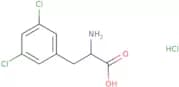
Discontinued product2-Amino-3-(3,5-dichlorophenyl)propanoic acid hydrochloride
CAS:<p>Versatile small molecule scaffold</p>Formula:C9H10Cl3NO2Purity:Min. 95%Molecular weight:270.5 g/mol1-[3-(Chloromethyl)-4-ethoxyphenyl]ethan-1-one
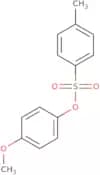
CAS:<p>Versatile small molecule scaffold</p>Formula:C11H13ClO2Purity:Min. 95%Molecular weight:212.67 g/mol4-Methoxyphenyl 4-methylbenzenesulfonate
CAS:<p>4-Methoxyphenyl 4-methylbenzenesulfonate is a tosylate that can be used in the cross-coupling reaction of iodides, chlorides, and phosphine, as well as in the synthesis of supramolecular complexes. 4-Methoxyphenyl 4-methylbenzenesulfonate has been shown to react with aryl chlorides and halides, forming reactive intermediates. The use of this compound in cross-coupling reactions allows for the synthesis of unsymmetrical products.</p>Formula:C14H14O4SPurity:Min. 95%Molecular weight:278.33 g/mol2'-Amino-[1,1'-bi(cyclopropane)]-2-carboxylic acid hydrochloride
CAS:<p>Versatile small molecule scaffold</p>Formula:C7H12ClNO2Purity:Min. 95%Molecular weight:177.6 g/molRef: 3D-CVD03476
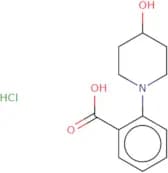
Discontinued product2-(4-Hydroxypiperidin-1-yl)benzoic acid hydrochloride
CAS:<p>Versatile small molecule scaffold</p>Formula:C12H16ClNO3Purity:Min. 95%Molecular weight:257.7 g/molRef: 3D-CVD03422
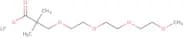
Discontinued productLithium 13,13-dimethyl-2,5,8,11-tetraoxatetradecan-14-oate
CAS:<p>Versatile small molecule scaffold</p>Formula:C12H23LiO6Purity:Min. 95%Molecular weight:270.2 g/molRef: 3D-CVD03383
Discontinued product1-[4-(1-Aminoethyl)phenyl]piperidin-2-one
CAS:<p>Versatile small molecule scaffold</p>Formula:C13H18N2OPurity:Min. 95%Molecular weight:218.29 g/molRef: 3D-CJC72691
Discontinued product4-{[1,2,4]Triazolo[4,3-a]pyridin-3-yl}piperidine
CAS:<p>Versatile small molecule scaffold</p>Formula:C11H14N4Purity:Min. 95%Molecular weight:202.26 g/molRef: 3D-CJB62778
Discontinued productEthyl 3-amino-4,6-dimethylthieno[2,3-b]pyridine-2-carboxylate
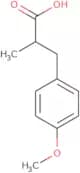
CAS:<p>Ethyl 3-amino-4,6-dimethylthieno[2,3-b]pyridine-2-carboxylate is a heterocyclic compound that is used as a reagent in organic synthesis. It is a polyfunctionalized heterocycle that contains an ethyl ester and an acid ethyl ester moiety. The compound can be prepared by the reaction of thiophene with nitromethane and ethyl iodide followed by hydrolysis.</p>Formula:C12H14N2O2SPurity:Min. 95%Molecular weight:250.32 g/mol3-(4-Methoxyphenyl)-2-methylpropanoic acid
CAS:<p>Versatile small molecule scaffold</p>Formula:C11H14O3Purity:Min. 95%Molecular weight:194.23 g/molRef: 3D-CCA42711
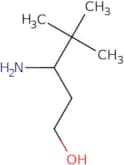
Discontinued product3-Amino-4,4-dimethylpentan-1-ol
CAS:<p>Versatile small molecule scaffold</p>Formula:C7H17NOPurity:Min. 95%Molecular weight:131.22 g/mol1-(1-Benzothiophen-2-yl)-2-methoxyethan-1-one
CAS:<p>Versatile small molecule scaffold</p>Formula:C11H10O2SPurity:Min. 95%Molecular weight:206.3 g/molRef: 3D-BPC71122
Discontinued productMethyl N-[4-(chlorosulfonyl)-2-nitrophenyl]carbamate
CAS:<p>Versatile small molecule scaffold</p>Formula:C8H7ClN2O6SPurity:Min. 95%Molecular weight:294.67 g/molRef: 3D-BPC25920
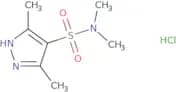
Discontinued productN,N,3,5-Tetramethyl-1H-pyrazole-4-sulfonamide hydrochloride
CAS:<p>Versatile small molecule scaffold</p>Formula:C7H14ClN3O2SPurity:Min. 95%Molecular weight:239.72 g/molRef: 3D-BKD15997
Discontinued product2-{3-Methyl-1H-pyrazolo[3,4-b]pyridin-1-yl}acetic acid hydrochloride
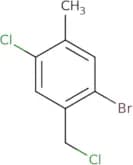
CAS:<p>Versatile small molecule scaffold</p>Formula:C9H10ClN3O2Purity:Min. 95%Molecular weight:227.65 g/mol1-Bromo-4-chloro-2-(chloromethyl)-5-methylbenzene
CAS:<p>Versatile small molecule scaffold</p>Formula:C8H7BrCl2Purity:Min. 95%Molecular weight:253.95 g/molRef: 3D-BAD58556
Discontinued product{1-Methyl-1-azaspiro[3.3]heptan-6-yl}methanamine
CAS:<p>Versatile small molecule scaffold</p>Formula:C8H16N2Purity:Min. 95%Molecular weight:140.2 g/molRef: 3D-AVD26254
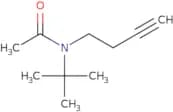
Discontinued productN-(But-3-yn-1-yl)-N-tert-butylacetamide
CAS:<p>Versatile small molecule scaffold</p>Formula:C10H17NOPurity:Min. 95%Molecular weight:167.2 g/molRef: 3D-AVD25974
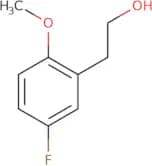
Discontinued product2-(5-Fluoro-2-methoxyphenyl)ethan-1-ol
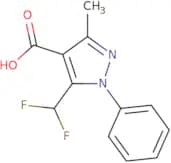
CAS:<p>Versatile small molecule scaffold</p>Formula:C9H11FO2Purity:Min. 95%Molecular weight:170.18 g/mol5-(Difluoromethyl)-3-methyl-1-phenyl-1H-pyrazole-4-carboxylic acid
CAS:<p>Versatile small molecule scaffold</p>Formula:C12H10F2N2O2Purity:Min. 95%Molecular weight:252.22 g/molRef: 3D-AFC47355
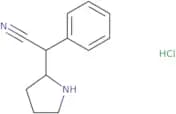
Discontinued product2-Phenyl-2-(pyrrolidin-2-yl)acetonitrile hydrochloride
CAS:<p>Versatile small molecule scaffold</p>Formula:C12H15ClN2Purity:Min. 95%Molecular weight:222.71 g/molRef: 3D-AFC47353
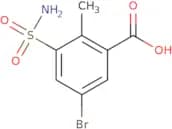
Discontinued product5-Bromo-2-methyl-3-sulfamoylbenzoic acid
CAS:<p>Versatile small molecule scaffold</p>Formula:C8H8BrNO4SPurity:Min. 95%Molecular weight:294.12 g/molRef: 3D-AFC47231
Discontinued product1a,2,3a,5b-Tetrachlorohexahydro-3,3-dimethoxy-1,2,4-ethanylylidene-1H-cyclobuta[cd]pentalene-5,7(1aH)-dione
CAS:<p>Versatile small molecule scaffold</p>Formula:C13H10Cl4O4Purity:Min. 95%Molecular weight:372 g/molN-[4-Chloro-3-(trifluoromethyl)phenyl]-2-hydroxybenzamide
CAS:<p>Versatile small molecule scaffold</p>Formula:C14H9ClF3NO2Purity:Min. 95%Molecular weight:315.67 g/molRef: 3D-AAA36974
Discontinued product3-Boc-3-azabicyclo[3.2.1]octan-8-amine
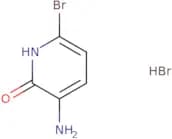
CAS:<p>Versatile small molecule scaffold</p>Formula:C12H22N2O2Purity:Min. 95%Molecular weight:226.32 g/mol3-amino-6-bromopyridin-2-ol hydrobromide
CAS:<p>Versatile small molecule scaffold</p>Formula:C5H6Br2N2OPurity:Min. 95%Molecular weight:269.9 g/mol3-(Methoxycarbonyl)pyridine-4-carboxylic acid
CAS:<p>Versatile small molecule scaffold</p>Formula:C8H7NO4Purity:Min. 95%Molecular weight:181.15 g/mol2-Acetylbenzoic acid
CAS:<p>2-Acetylbenzoic acid is a functional molecule that contains an acetyl group. It can form hydrogen bonds with other molecules and has been shown to induce apoptosis in cells. The reaction products of 2-acetylbenzoic acid are malonic acid, acetylsalicylic acid, and 2-benzoylbenzoic acid. These three compounds are made by the addition of hydrogen or hydroxide to the molecule 2-acetylbenzoic acid. The molecule has two functional groups: a carbonyl group and an acetyl group. The chemical structure of this molecule can be seen in the figure below.<br>2-Acetylbenzoic Acid</p>Formula:C9H8O3Purity:Min. 95%Color and Shape:PowderMolecular weight:164.16 g/molRef: 3D-FA05086
Discontinued product3-Methylbenzo[b]thiophene-2-carboxylic acid
CAS:<p>3-Methylbenzo[b]thiophene-2-carboxylic acid (MBTCA) is a heterocyclic compound that is an intermediate in the synthesis of 3-methylthiophene-2-carboxylic acid, a precursor to other drugs. MBTCA is an aerobic, nonpolar compound that has shown antimicrobial activity against some bacteria and fungi. It also has been shown to have practicality as a biomolecular probe for methyl groups in organic solvents. MBTCA can be synthesized by nitration of benzene in the presence of sulfur and sulfoxides. This reaction produces nitrobenzene, which can then be oxidized by potassium permanganate or hydrogen peroxide to produce MBTCA. The most common isomer of MBTCA is 2-(3,5-dimethoxybenzylidene)tetrahydrofuran, with three methyl groups on the</p>Formula:C10H8O2SPurity:Min. 95%Molecular weight:192.23 g/mol2-Bromo-3,3,3-trifluoro-1-propene
CAS:Controlled Product<p>2-Bromo-3,3,3-trifluoro-1-propene is a chemical compound that has been synthesized in an asymmetric reaction. The reactant is bromopropane and the product is 2,2,2-trifluoropropene. The methylene group on the propene molecule is activated by the nucleophilic attack of a fluoride ion from hydrogen fluoride to form a cavity with a highly strained bond. The kinetic study of this reaction revealed that the activation energy for the reaction is 42 kJ/mol. Palladium-catalyzed coupling reactions are catalyzed by palladium and require nonpolar solvents such as toluene or dichloromethane. This type of reaction has been shown to be exothermic with an isolated yield of 1%.</p>Formula:C3H2BrF3Purity:Min. 95%Color and Shape:Colorless PowderMolecular weight:174.95 g/mol2-Bromo-4-(4-fluorophenyl)-1,3-thiazole
CAS:<p>Versatile small molecule scaffold</p>Formula:C9H5NFSBrPurity:Min. 95%Molecular weight:258.11 g/molGivinostat hydrochloride
CAS:<p>Givinostat hydrochloride is a research chemical that has shown potential in various fields. It is a molybdenum-based compound that has been studied for its effects on dopamine release and hydrogen evolution. Givinostat hydrochloride has also been investigated as an osteoclast inhibitor, which may be beneficial in the treatment of bone-related disorders such as osteoporosis. Additionally, it has shown promise as a retinoid and calpain inhibitor, suggesting its potential use in dermatological conditions and neurodegenerative diseases. The compound contains fluorine atoms, making it suitable for imaging studies using fluorine MRI techniques. Givinostat hydrochloride has been tested on MDA-MB-231 cells and has shown inhibitory effects on their growth, indicating its potential as an anticancer agent.</p>Formula:C24H27N3O4·HClPurity:Min. 95%Molecular weight:457.95 g/mol

![3-[(2-Aminoethyl)(methyl)amino]-N,2-dimethylpropanamide dihydrochloride](/_next/image/?url=https%3A%2Fstatic.cymitquimica.com%2Fproducts%2F3D%2Fthumb-webp%2FDXC56627.webp&w=3840&q=75)
![3-(Chloromethyl)-5H,6H,8H-[1,2,4]triazolo[3,4-c][1,4]oxazine hydrochloride](/_next/image/?url=https%3A%2Fstatic.cymitquimica.com%2Fproducts%2F3D%2Fthumb-webp%2FDXC56271.webp&w=3840&q=75)
![2-[5-(2-Fluorophenyl)-1,3,4-oxadiazol-2-yl]piperidine hydrochloride](/_next/image/?url=https%3A%2Fstatic.cymitquimica.com%2Fproducts%2F3D%2Fthumb-webp%2FDXC56201.webp&w=3840&q=75)
![2-Amino-3-[3-chloro-5-(methylsulfanyl)phenyl]propanoic acid hydrochloride](/_next/image/?url=https%3A%2Fstatic.cymitquimica.com%2Fproducts%2F3D%2Fthumb-webp%2FDQD63987.webp&w=3840&q=75)
![4-Methoxy-pyrazolo[1,5-a]pyridine-3-carboxylic acid](/_next/image/?url=https%3A%2Fstatic.cymitquimica.com%2Fproducts%2F3D%2Fthumb-webp%2FDFC69564.webp&w=3840&q=75)

![1-[3-(Chloromethyl)-4-ethoxyphenyl]ethan-1-one](/_next/image/?url=https%3A%2Fstatic.cymitquimica.com%2Fproducts%2F3D%2Fthumb-webp%2FDDA92773.webp&w=3840&q=75)
![2'-Amino-[1,1'-bi(cyclopropane)]-2-carboxylic acid hydrochloride](/_next/image/?url=https%3A%2Fstatic.cymitquimica.com%2Fproducts%2F3D%2Fthumb-webp%2FCVD03476.webp&w=3840&q=75)
![1-[4-(1-Aminoethyl)phenyl]piperidin-2-one](/_next/image/?url=https%3A%2Fstatic.cymitquimica.com%2Fproducts%2F3D%2Fthumb-webp%2FCJC72691.webp&w=3840&q=75)
![4-{[1,2,4]Triazolo[4,3-a]pyridin-3-yl}piperidine](/_next/image/?url=https%3A%2Fstatic.cymitquimica.com%2Fproducts%2F3D%2Fthumb-webp%2FCJB62778.webp&w=3840&q=75)
![Ethyl 3-amino-4,6-dimethylthieno[2,3-b]pyridine-2-carboxylate](/_next/image/?url=https%3A%2Fstatic.cymitquimica.com%2Fproducts%2F3D%2Fthumb-webp%2FCCA50556.webp&w=3840&q=75)
![Methyl N-[4-(chlorosulfonyl)-2-nitrophenyl]carbamate](/_next/image/?url=https%3A%2Fstatic.cymitquimica.com%2Fproducts%2F3D%2Fthumb-webp%2FBPC25920.webp&w=3840&q=75)
![2-{3-Methyl-1H-pyrazolo[3,4-b]pyridin-1-yl}acetic acid hydrochloride](/_next/image/?url=https%3A%2Fstatic.cymitquimica.com%2Fproducts%2F3D%2Fthumb-webp%2FBKD15993.webp&w=3840&q=75)
![{1-Methyl-1-azaspiro[3.3]heptan-6-yl}methanamine](/_next/image/?url=https%3A%2Fstatic.cymitquimica.com%2Fproducts%2F3D%2Fthumb-webp%2FAVD26254.webp&w=3840&q=75)
![1a,2,3a,5b-Tetrachlorohexahydro-3,3-dimethoxy-1,2,4-ethanylylidene-1H-cyclobuta[cd]p…](/_next/image/?url=https%3A%2Fstatic.cymitquimica.com%2Fproducts%2F3D%2Fthumb-webp%2FACA87439.webp&w=3840&q=75)
![N-[4-Chloro-3-(trifluoromethyl)phenyl]-2-hydroxybenzamide](/_next/image/?url=https%3A%2Fstatic.cymitquimica.com%2Fproducts%2F3D%2Fthumb-webp%2FAAA36974.webp&w=3840&q=75)
![3-Boc-3-azabicyclo[3.2.1]octan-8-amine](/_next/image/?url=https%3A%2Fstatic.cymitquimica.com%2Fproducts%2F3D%2Fthumb-webp%2FFDC76351.webp&w=3840&q=75)


![3-Methylbenzo[b]thiophene-2-carboxylic acid](/_next/image/?url=https%3A%2Fstatic.cymitquimica.com%2Fproducts%2F3D%2Fthumb-webp%2FDAA13378.webp&w=3840&q=75)


