


Building Blocks
This section contains fundamental products for the synthesis of organic and biological compounds. Building blocks are the essential starting materials used to construct complex molecules through various chemical reactions. They play a critical role in drug discovery, material science, and chemical research. At CymitQuimica, we offer a diverse range of high-quality building blocks to support your innovative research and industrial projects, ensuring you have the essential components for successful synthesis.
Subcategories of "Building Blocks"
- Boronic Acids & Boronic Acid Derivatives(5,756 products)
- Chiral Building Blocks(1,242 products)
- Hydrocarbon Building Blocks(6,095 products)
- Organic Building Blocks(61,055 products)
Found 199650 products of "Building Blocks"
Sort by
Purity (%)
0
100
|
0
|
50
|
90
|
95
|
100
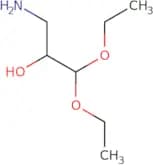
3-Amino-1,1-diethoxypropan-2-ol
CAS:<p>Versatile small molecule scaffold</p>Formula:C7H17NO3Purity:Min. 95%Molecular weight:163.21 g/molRef: 3D-QEA82718
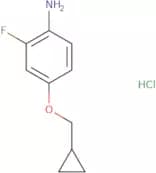
Discontinued product4-(Cyclopropylmethoxy)-2-fluoroaniline hydrochloride
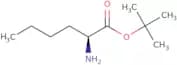
CAS:<p>Versatile small molecule scaffold</p>Formula:C10H13ClFNOPurity:Min. 95%Molecular weight:217.67 g/moltert-butyl (2S)-2-aminohexanoate
CAS:<p>Tert-butyl (2S)-2-aminohexanoate is an intermediate that is used in the synthesis of glycine by the reaction of benzyl bromide and tert-butyl amine. The stereospecifically incorporated tert-butyl group has a high degree of enantioselectivity, which makes this intermediate useful in the synthesis of glycine. Tert-butyl (2S)-2-aminohexanoate can be synthesized using lithium diisopropylamide and a tertiary amine as an alkylating agent.</p>Formula:C10H21NO2Purity:Min. 95%Molecular weight:187.3 g/mol5-Chloro-2-(1H-pyrrol-1-yl)aniline
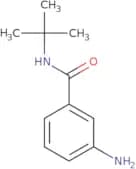
CAS:<p>Versatile small molecule scaffold</p>Formula:C10H9ClN2Purity:Min. 95%Molecular weight:192.64 g/mol3-Amino-N-(tert-butyl)benzamide
CAS:<p>Versatile small molecule scaffold</p>Formula:C11H16N2OPurity:Min. 95%Molecular weight:192.26 g/molRef: 3D-ABA90062
Discontinued product4-[(tert-Butoxy)methyl]aniline
CAS:<p>Versatile small molecule scaffold</p>Formula:C11H17NOPurity:Min. 95%Molecular weight:179.26 g/molRef: 3D-PRB31145
Discontinued product4-(1-Naphthyl)piperidine hydrochloride
CAS:<p>Versatile small molecule scaffold</p>Formula:C15H18ClNPurity:Min. 95%Molecular weight:247.76 g/mol7-Iodo-5h-Pyrrolo[2,3-B]Pyrazine
CAS:<p>Versatile small molecule scaffold</p>Formula:C6H4N3IPurity:Min. 95%Molecular weight:245.02 g/molRef: 3D-PKB45126
Discontinued product2-Chloro-1-[4-(furan-2-carbonyl)piperazin-1-yl]ethan-1-one
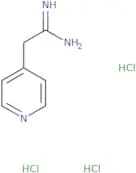
CAS:<p>Versatile small molecule scaffold</p>Formula:C11H13ClN2O3Purity:Min. 95%Molecular weight:256.68 g/mol2-(Pyridin-4-yl)ethanimidamide trihydrochloride
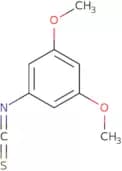
CAS:<p>Versatile small molecule scaffold</p>Formula:C7H12Cl3N3Purity:Min. 95%Molecular weight:244.5 g/mol3,5-dimethoxyphenyl isothiocyanate
CAS:<p>3,5-dimethoxyphenyl isothiocyanate (3,5-DMPIC) is a benzimidazole derivative that has been shown to be a potent and selective antagonist of the gonadotropin-releasing hormone (GnRH). 3,5-DMPIC has been shown to desensitize GnRH receptors on the pituitary gland and may have applications in the treatment of prostate cancer. It also inhibits the release of luteinizing hormone and follicle stimulating hormone from the pituitary gland.</p>Formula:C9H9NO2SPurity:Min. 95%Molecular weight:195.24 g/molRef: 3D-EEA96858
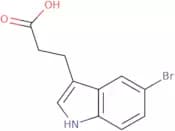
Discontinued product5-Bromo-indol-3-propionic acid
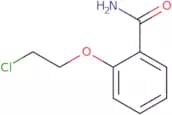
CAS:<p>Versatile small molecule scaffold</p>Formula:C11H10BrNO2Purity:Min. 95%Molecular weight:268.11 g/mol2-(2-Chloroethoxy)benzamide
CAS:<p>Versatile small molecule scaffold</p>Formula:C9H10ClNO2Purity:Min. 95%Molecular weight:199.63 g/molRef: 3D-EBA57913
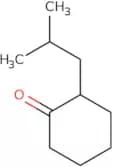
Discontinued product2-(2-Methylpropyl)cyclohexan-1-one
CAS:<p>2-(2-Methylpropyl)cyclohexan-1-one is a heterobicyclic compound with a hydroxyl group and two cyclohexane rings. It has a nitrogen atom with three substituents, one of which is a trifluoromethyl group. This molecule is used as a polymerization initiator for polyester and polycarbonate production. It also can be used in the production of liquid crystal compositions, aliphatic hydrocarbons, and organic solvents. 2-(2-Methylpropyl)cyclohexan-1-one is an organic solvent that can be used in the preparation of monomers such as carbonyl groups or cyanates.</p>Formula:C10H18OPurity:Min. 95%Molecular weight:154.25 g/molRef: 3D-EAA66864
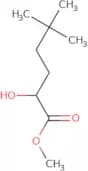
Discontinued productMethyl 2-hydroxy-5,5-dimethylhexanoate
CAS:<p>Versatile small molecule scaffold</p>Formula:C9H18O3Purity:Min. 95%Molecular weight:174.24 g/molRef: 3D-NJC68939
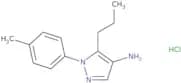
Discontinued product1-(4-Methylphenyl)-5-propyl-1H-pyrazol-4-amine hydrochloride
CAS:<p>Versatile small molecule scaffold</p>Formula:C13H18ClN3Purity:Min. 95%Molecular weight:251.75 g/molRef: 3D-DXC60792
Discontinued productOctahydro-pyrazino[2,1-c][1,4]thiazine 2,2-dioxide hydrochloride
CAS:<p>Versatile small molecule scaffold</p>Formula:C7H16Cl2N2O2SPurity:Min. 95%Molecular weight:263.18 g/mol6-Amino-1-(phenylsulfanyl)hexan-1-one hydrochloride
CAS:<p>Versatile small molecule scaffold</p>Formula:C12H18ClNOSPurity:Min. 95%Molecular weight:259.8 g/molRef: 3D-NDA31385
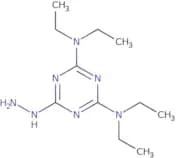
Discontinued productN2,N2,N4,N4-Tetraethyl-6-hydrazinylidene-3,6-dihydro-1,3,5-triazine-2,4-diamine
CAS:<p>Tetrodotoxin is a potent neurotoxin that blocks the transfer of nerve impulses. It is used as a pharmacological treatment for diseases of the urinary tract such as bladder and urethral spasms, bladder dysfunction, and urinary retention. Tetrodotoxin can also be used for the treatment of other conditions that affect the target tissue such as stenosis or cavity. This drug has been shown to be beneficial in autoimmune diseases, inflammatory diseases, and infections. Tetrodotoxin is implanted into the body through devices such as catheters or balloons to treat these conditions. The drug has anticholinergic properties which may cause side effects like dry mouth, blurred vision, difficulty urinating, and dizziness.</p>Formula:C11H23N7Purity:Min. 95%Molecular weight:253.35 g/molRef: 3D-NAA95736
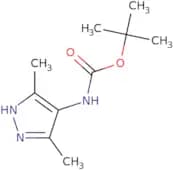
Discontinued producttert-Butyl N-(3,5-dimethyl-1H-pyrazol-4-yl)carbamate
CAS:<p>Versatile small molecule scaffold</p>Formula:C10H17N3O2Purity:Min. 95%Molecular weight:211.26 g/molRef: 3D-MXB34103
Discontinued product(5-bromo-2-methoxypyridin-3-yl)methanamine
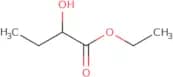
CAS:<p>Versatile small molecule scaffold</p>Formula:C7H9BrN2OPurity:Min. 95%Molecular weight:217.1 g/mol(R)-Ethyl 2-hydroxybutanoate
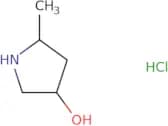
CAS:<p>Versatile small molecule scaffold</p>Formula:C6H12O3Purity:Min. 95%Molecular weight:132.16 g/mol5-Methylpyrrolidin-3-ol hydrochloride
CAS:<p>Versatile small molecule scaffold</p>Formula:C5H12ClNOPurity:Min. 95%Molecular weight:137.61 g/mol2-Amino-4H,5H-naphtho[2,1-b]thiophene-1-carbonitrile
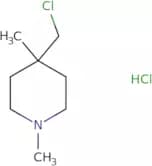
CAS:<p>2-Amino-4H,5H-naphtho[2,1-b]thiophene-1-carbonitrile is a dihydronaphthalene compound that has been shown to be active against influenza viruses. It inhibits the virus by binding to the pyrimidine ring of the virus's RNA polymerase. This inhibits viral replication and reduces plaque formation. 2-Amino-4H,5H-naphtho[2,1-b]thiophene-1-carbonitrile has antiviral activity against influenza A and is effective in inhibiting h5n1 virus replication.</p>Formula:C13H10N2SPurity:Min. 95%Molecular weight:226.3 g/mol4-(Chloromethyl)-1,4-dimethylpiperidine hydrochloride
CAS:<p>Versatile small molecule scaffold</p>Formula:C8H17Cl2NPurity:Min. 95%Molecular weight:198.13 g/molRef: 3D-DXC58362
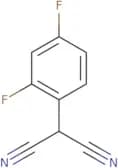
Discontinued product2-(2,4-Difluorophenyl)propanedinitrile
CAS:<p>Versatile small molecule scaffold</p>Formula:C9H4F2N2Purity:Min. 95%Molecular weight:178.14 g/molRef: 3D-DXC58290
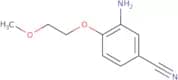
Discontinued product3-Amino-4-(2-methoxyethoxy)benzonitrile
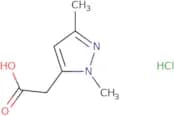
CAS:<p>Versatile small molecule scaffold</p>Formula:C10H12N2O2Purity:Min. 95%Molecular weight:192.21 g/mol2-(1,3-Dimethyl-1H-pyrazol-5-yl)acetic acid hydrochloride
CAS:<p>Versatile small molecule scaffold</p>Formula:C7H11ClN2O2Purity:Min. 95%Molecular weight:190.6 g/molrac-tert-Butyl N-[(3R,4S)-4-(4-fluorophenyl)pyrrolidin-3-yl]carbamate
CAS:<p>Versatile small molecule scaffold</p>Formula:C15H21FN2O2Purity:Min. 95%Molecular weight:280.34 g/mol4-[2-(Trifluoromethyl)phenoxy]aniline
CAS:<p>Versatile small molecule scaffold</p>Formula:C13H10F3NOPurity:Min. 95%Molecular weight:253.22 g/mol2,4-Dimethyl-5-[4-(trifluoromethyl)phenyl]pyrimidine
CAS:<p>Versatile small molecule scaffold</p>Formula:C13H11F3N2Purity:Min. 95%Molecular weight:252.23 g/molRef: 3D-LAC75867
Discontinued product3-Morpholin-4-ylmethyl-2,3-dihydro-1H-indole
CAS:<p>Versatile small molecule scaffold</p>Formula:C13H18N2OPurity:Min. 95%Molecular weight:218.29 g/molRef: 3D-DKB61741
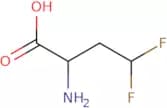
Discontinued product(2R)-2-Amino-4,4-difluorobutanoic acid
CAS:<p>Versatile small molecule scaffold</p>Formula:C4H7F2NO2Purity:Min. 95%Molecular weight:139.1 g/molRef: 3D-KHA34878
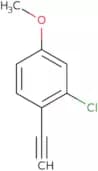
Discontinued product2-Chloro-1-ethynyl-4-methoxybenzene
CAS:<p>Versatile small molecule scaffold</p>Formula:C9H7ClOPurity:Min. 95%Molecular weight:166.6 g/molRef: 3D-DGA44068
Discontinued product4,5-Dihydroxy-2,3-dihydro-1H-isoindole-1,3-dione
CAS:4,5-Dihydroxy-2,3-dihydro-1H-isoindole-1,3-dione is a molybdenum compound with a hydroxyl group. It has been shown to inhibit the growth of bacteria that are resistant to penicillin by binding to the penicillin-binding proteins in their cell wall. 4,5-Dihydroxy-2,3-dihydro-1H-isoindole-1,3-dione has been found to be an effective inhibitor of polymer film formation when used in conjunction with 3 chloroperoxybenzoic acid. This compound also has been shown to have anti bacterial properties against Escherichia coli and Pseudomonas aeruginosa. 4,5-Dihydroxy -2,3 -dihydro -1H -isoindole -1,3 -dione may also have environmental applications due itsFormula:C8H5NO4Purity:Min. 95%Molecular weight:179.13 g/molRef: 3D-DGA35672
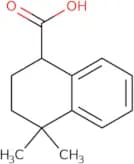
Discontinued product4,4-Dimethyl-1,2,3,4-tetrahydronaphthalene-1-carboxylic acid
CAS:<p>Versatile small molecule scaffold</p>Formula:C13H16O2Purity:Min. 95%Molecular weight:204.26 g/molRef: 3D-DDA10380
Discontinued productMethyl 2-formyl-4,5-dimethoxybenzoate
CAS:<p>Versatile small molecule scaffold</p>Formula:C11H12O5Purity:Min. 95%Molecular weight:224.21 g/molRef: 3D-DCA01284
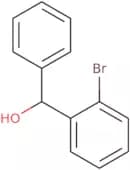
Discontinued product(2-Bromophenyl)(phenyl)methanol
CAS:<p>The synthesis of (2-bromophenyl)(phenyl)methanol is accomplished by the reaction of an aldehyde with bromine followed by an alkylation with magnesium. The product is obtained as a racemic mixture of enantiomers with a chiral center, which can be resolved by fractional crystallization or other separation methods. This method has been shown to be efficient for the synthesis of alcohols and carbinols, and stereogenic reactions.</p>Formula:C13H11OBrPurity:Min. 95%Molecular weight:263.12 g/molRef: 3D-JCA14247
Discontinued product[1-(1-Amino-2-methylpropyl)cyclopent-3-en-1-yl]methanol hydrochloride
CAS:<p>Versatile small molecule scaffold</p>Formula:C10H20ClNOPurity:Min. 95%Molecular weight:205.72 g/molRef: 3D-JBD31750
Discontinued producttert-Butyl 1',5',6',7'-tetrahydrospiro[azetidine-3,4'-imidazo[4,5-c]pyridine]-1-carboxylate
CAS:<p>Versatile small molecule scaffold</p>Formula:C13H20N4O2Purity:Min. 95%Molecular weight:264.32 g/molRef: 3D-JBD31615
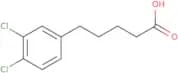
Discontinued product5-(3,4-Dichlorophenyl)pentanoic acid
CAS:<p>Versatile small molecule scaffold</p>Formula:C11H12Cl2O2Purity:Min. 95%Molecular weight:247.11 g/mol4-Chloro-2-methyl-5-nitroaniline
CAS:<p>4-Chloro-2-methyl-5-nitroaniline is an organic compound with the chemical formula C6H4ClNO2. It is a nitro derivative of aniline. 4-Chloro-2-methyl-5-nitroaniline is a white solid that is soluble in water, alcohols, and ethers. It has a melting point around 206 °C and decomposes at temperatures over 350 °C. This compound can be obtained by reacting hydroxylamine with nitrous acid and chlorinating 2,5-dimethylaniline. The sequence of reactions can be summarized as follows: hydroxy group to nitro group, nitro group to methyl group, methyl group to acetyl or acetylamino, acetyl or acetylamino to acetylation or methylation, transformation from hydroxyl group to amino group and esterification from acid hydrazide to acid group.</p>Formula:C7H7ClN2O2Purity:Min. 95%Molecular weight:186.59 g/mol7-Hydroxy-3,4-dimethyl-2,3-dihydro-1H-inden-1-one
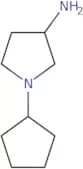
CAS:<p>Versatile small molecule scaffold</p>Formula:C11H12O2Purity:Min. 95%Molecular weight:176.21 g/mol1-cyclopentylpyrrolidin-3-amine
CAS:<p>Versatile small molecule scaffold</p>Formula:C9H18N2Purity:Min. 95%Molecular weight:154.25 g/molRef: 3D-IMB71303
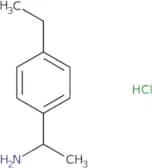
Discontinued product(1R)-1-(4-Ethylphenyl)ethan-1-amine hydrochloride
CAS:<p>Versatile small molecule scaffold</p>Formula:C10H16ClNPurity:Min. 95%Molecular weight:185.69 g/molMethyl 2-[4-(2-aminoethyl)phenoxy]acetate hydrochloride
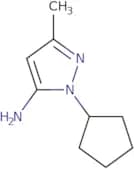
CAS:<p>Versatile small molecule scaffold</p>Formula:C11H16ClNO3Purity:Min. 95%Molecular weight:245.7 g/mol2-Cyclopentyl-5-methyl-2H-pyrazol-3-ylamine
CAS:<p>Versatile small molecule scaffold</p>Formula:C9H15N3Purity:Min. 95%Molecular weight:165.24 g/mol1-(2,4-Dimethylphenyl)-1H,4H,5H,6H-cyclopenta[C]pyrazole-3-carboxylic acid
CAS:<p>Versatile small molecule scaffold</p>Formula:C15H16N2O2Purity:Min. 95%Molecular weight:256.3 g/molRef: 3D-CWB53585
Discontinued product2-Bromo-3,3,3-trifluoro-1-propene
CAS:Controlled Product<p>2-Bromo-3,3,3-trifluoro-1-propene is a chemical compound that has been synthesized in an asymmetric reaction. The reactant is bromopropane and the product is 2,2,2-trifluoropropene. The methylene group on the propene molecule is activated by the nucleophilic attack of a fluoride ion from hydrogen fluoride to form a cavity with a highly strained bond. The kinetic study of this reaction revealed that the activation energy for the reaction is 42 kJ/mol. Palladium-catalyzed coupling reactions are catalyzed by palladium and require nonpolar solvents such as toluene or dichloromethane. This type of reaction has been shown to be exothermic with an isolated yield of 1%.</p>Formula:C3H2BrF3Purity:Min. 95%Color and Shape:Colorless PowderMolecular weight:174.95 g/mol3-Boc-3-azabicyclo[3.2.1]octan-8-amine
CAS:<p>Versatile small molecule scaffold</p>Formula:C12H22N2O2Purity:Min. 95%Molecular weight:226.32 g/mol


![4-[(tert-Butoxy)methyl]aniline](/_next/image/?url=https%3A%2Fstatic.cymitquimica.com%2Fproducts%2F3D%2Fthumb-webp%2FPRB31145.webp&w=3840&q=75)

![7-Iodo-5h-Pyrrolo[2,3-B]Pyrazine](/_next/image/?url=https%3A%2Fstatic.cymitquimica.com%2Fproducts%2F3D%2Fthumb-webp%2FPKB45126.webp&w=3840&q=75)
![2-Chloro-1-[4-(furan-2-carbonyl)piperazin-1-yl]ethan-1-one](/_next/image/?url=https%3A%2Fstatic.cymitquimica.com%2Fproducts%2F3D%2Fthumb-webp%2FEEB57887.webp&w=3840&q=75)
![Octahydro-pyrazino[2,1-c][1,4]thiazine 2,2-dioxide hydrochloride](/_next/image/?url=https%3A%2Fstatic.cymitquimica.com%2Fproducts%2F3D%2Fthumb-webp%2FDXC60335.webp&w=3840&q=75)


![2-Amino-4H,5H-naphtho[2,1-b]thiophene-1-carbonitrile](/_next/image/?url=https%3A%2Fstatic.cymitquimica.com%2Fproducts%2F3D%2Fthumb-webp%2FMBA07120.webp&w=3840&q=75)
![rac-tert-Butyl N-[(3R,4S)-4-(4-fluorophenyl)pyrrolidin-3-yl]carbamate](/_next/image/?url=https%3A%2Fstatic.cymitquimica.com%2Fproducts%2F3D%2Fthumb-webp%2FDQC54964.webp&w=3840&q=75)
![4-[2-(Trifluoromethyl)phenoxy]aniline](/_next/image/?url=https%3A%2Fstatic.cymitquimica.com%2Fproducts%2F3D%2Fthumb-webp%2FLCA94684.webp&w=3840&q=75)
![2,4-Dimethyl-5-[4-(trifluoromethyl)phenyl]pyrimidine](/_next/image/?url=https%3A%2Fstatic.cymitquimica.com%2Fproducts%2F3D%2Fthumb-webp%2FLAC75867.webp&w=3840&q=75)


![[1-(1-Amino-2-methylpropyl)cyclopent-3-en-1-yl]methanol hydrochloride](/_next/image/?url=https%3A%2Fstatic.cymitquimica.com%2Fproducts%2F3D%2Fthumb-webp%2FJBD31750.webp&w=3840&q=75)
![tert-Butyl 1',5',6',7'-tetrahydrospiro[azetidine-3,4'-imidazo[4,5-c]pyridine]-1-carboxylate](/_next/image/?url=https%3A%2Fstatic.cymitquimica.com%2Fproducts%2F3D%2Fthumb-webp%2FJBD31615.webp&w=3840&q=75)


![Methyl 2-[4-(2-aminoethyl)phenoxy]acetate hydrochloride](/_next/image/?url=https%3A%2Fstatic.cymitquimica.com%2Fproducts%2F3D%2Fthumb-webp%2FHFA22482.webp&w=3840&q=75)
![1-(2,4-Dimethylphenyl)-1H,4H,5H,6H-cyclopenta[C]pyrazole-3-carboxylic acid](/_next/image/?url=https%3A%2Fstatic.cymitquimica.com%2Fproducts%2F3D%2Fthumb-webp%2FCWB53585.webp&w=3840&q=75)

![3-Boc-3-azabicyclo[3.2.1]octan-8-amine](/_next/image/?url=https%3A%2Fstatic.cymitquimica.com%2Fproducts%2F3D%2Fthumb-webp%2FFDC76351.webp&w=3840&q=75)