Building Blocks
This section contains fundamental products for the synthesis of organic and biological compounds. Building blocks are the essential starting materials used to construct complex molecules through various chemical reactions. They play a critical role in drug discovery, material science, and chemical research. At CymitQuimica, we offer a diverse range of high-quality building blocks to support your innovative research and industrial projects, ensuring you have the essential components for successful synthesis.
Subcategories of "Building Blocks"
- Boronic Acids & Boronic Acid Derivatives(5,778 products)
- Chiral Building Blocks(1,242 products)
- Hydrocarbon Building Blocks(6,098 products)
- Organic Building Blocks(61,098 products)
Found 199594 products of "Building Blocks"
Sort by
Purity (%)
0
100
|
0
|
50
|
90
|
95
|
100
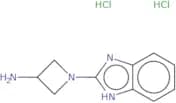
1-(1H-1,3-Benzodiazol-2-yl)azetidin-3-amine dihydrochloride
CAS:<p>Versatile small molecule scaffold</p>Formula:C10H14Cl2N4Purity:Min. 95%Molecular weight:261.2 g/molRef: 3D-DPD65007
Discontinued product2-{5H-Pyrrolo[2,3-b]pyrazin-7-yl}ethan-1-amine dihydrochloride
CAS:<p>Versatile small molecule scaffold</p>Formula:C8H12Cl2N4Purity:Min. 95%Molecular weight:235.1 g/molRef: 3D-DPD46231
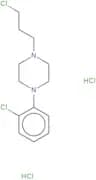
Discontinued product1-(2-Chlorophenyl)-4-(3-chloropropyl)piperazine dihydrochloride
CAS:Controlled Product<p>Versatile small molecule scaffold</p>Formula:C13H20Cl4N2Purity:Min. 95%Molecular weight:346.1 g/molRef: 3D-DPD13513
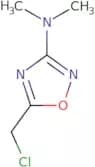
Discontinued product5-(Chloromethyl)-N,N-dimethyl-1,2,4-oxadiazol-3-amine
CAS:<p>Versatile small molecule scaffold</p>Formula:C5H8ClN3OPurity:Min. 95%Molecular weight:161.59 g/mol2-[(3-Methylphenyl)methoxy]propanoic acid
CAS:<p>Versatile small molecule scaffold</p>Formula:C11H14O3Purity:Min. 95%Molecular weight:194.23 g/molRef: 3D-DPC17494
Discontinued productBenzo[1,3]dioxol-5-ylmethyl-pyridin-4-ylmethyl-amine
CAS:<p>Versatile small molecule scaffold</p>Formula:C14H14N2O2Purity:Min. 95%Molecular weight:242.27 g/molPB-22 3-carboxyindole metabolite solution
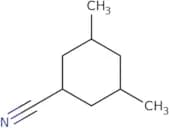
CAS:Controlled Product<p>PB-22 is a synthetic cannabinoid, which can be classified as a CB1 receptor agonist. It is one of the many cannabinoids that have been created in an attempt to circumvent drug laws by creating compounds that are similar to those found in cannabis but have different chemical structures. PB-22 has shown to increase locomotor activity and stimulate the cb1 receptor in mice. Magnetic resonance spectroscopy (MRS) and assays were used to determine the binding affinity of PB-22 for the CB1 receptor. The MRS data showed that PB-22 bound with high affinity to the CB1 receptor and had a lower affinity for CB2 receptors. This suggests that PB-22 may be more potent than other synthetic cannabinoids, such as JWH-018 and CP 55,940, which bind better with CB2 receptors than CB1 receptors.<br>PB-22 is an analog of JWH-073 and has been shown to have a stronger effect on locomotor activity than JWH</p>Formula:C14H17NO2Purity:Min. 95%Molecular weight:231.29 g/mol3,5-Dimethylcyclohexane-1-carbonitrile
CAS:<p>Versatile small molecule scaffold</p>Formula:C9H15NPurity:Min. 95%Molecular weight:137.22 g/molRef: 3D-CEA94274
Discontinued product3-[(4-Methoxyphenyl)sulfanyl]propanenitrile
CAS:<p>Versatile small molecule scaffold</p>Formula:C10H11NOSPurity:Min. 95%Molecular weight:193.27 g/molRef: 3D-CEA23672
Discontinued productBenzyl 1-oxa-6-azaspiro[2.5]octane-6-carboxylate
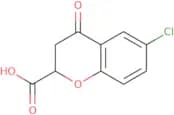
CAS:<p>Versatile small molecule scaffold</p>Formula:C14H17NO3Purity:Min. 95%Molecular weight:247.3 g/mol6-Chloro-4-oxo-3,4-dihydro-2H-1-benzopyran-2-carboxylic acid
CAS:<p>Versatile small molecule scaffold</p>Formula:C10H7ClO4Purity:Min. 95%Molecular weight:226.61 g/molRef: 3D-CCA01176
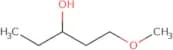
Discontinued product1-Methoxypentan-3-ol
CAS:<p>Versatile small molecule scaffold</p>Formula:C6H14O2Purity:Min. 95%Molecular weight:118.17 g/molRef: 3D-CBA99999
Discontinued product7-Bromo-5-phenyl-2,3-dihydro-1H-1,4-benzodiazepin-2-one
CAS:Controlled Product<p>Versatile small molecule scaffold</p>Formula:C15H11BrN2OPurity:Min. 95%Molecular weight:315.16 g/molRef: 3D-CAA89461
Discontinued product2-[Ethyl(propan-2-yl)amino]ethan-1-ol
CAS:Controlled Product<p>Versatile small molecule scaffold</p>Formula:C7H17NOPurity:Min. 95%Molecular weight:131.22 g/mol4-{2-[1-(4-Bromophenyl)ethylidene]hydrazin-1-yl}benzoic acid
CAS:<p>Versatile small molecule scaffold</p>Formula:C15H13BrN2O2Purity:Min. 95%Molecular weight:333.18 g/molRef: 3D-CAA77237
Discontinued product4-Isothiocyanatophenol
CAS:<p>4-Isothiocyanatophenol (4ITCP) is an anticancer agent that has been shown to inhibit the growth of cancer cells in vivo. It is a metabolite of etoposide, which is used to treat certain types of cancer. 4ITCP inhibits the growth of cancer cells by enhancing mitochondrial membrane potential and inhibiting cell proliferation. This compound also inhibits cell growth by binding to phenyl groups on proteins, including enzymes and structural proteins. 4ITCP has been shown to act as a prodrug in vivo, where it is converted into 4-nitrophenol before being activated. 4ITCP also has optical properties that can be detected using spectroscopy and fluorescence.</p>Formula:C7H5NOSPurity:Min. 95%Molecular weight:151.19 g/mol4-(2-Hydroxyethoxy)oxane-4-carbonitrile
CAS:<p>Versatile small molecule scaffold</p>Formula:C8H13NO3Purity:Min. 95%Molecular weight:171.19 g/molRef: 3D-BTC84537
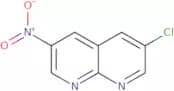
Discontinued product3-Chloro-6-nitro-1,8-naphthyridine
CAS:<p>Versatile small molecule scaffold</p>Formula:C8H4ClN3O2Purity:Min. 95%Molecular weight:209.59 g/molRef: 3D-BSB37261
Discontinued producttert-Butyl 4-methyl-4-(prop-2-en-1-yloxy)piperidine-1-carboxylate
CAS:<p>Versatile small molecule scaffold</p>Formula:C14H25NO3Purity:Min. 95%Molecular weight:255.4 g/molRef: 3D-BMC89648
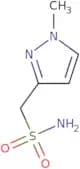
Discontinued product(1-Methyl-1H-pyrazol-3-yl)methanesulfonamide
CAS:<p>Versatile small molecule scaffold</p>Formula:C5H9N3O2SPurity:Min. 95%Molecular weight:175.21 g/molRef: 3D-BMC82830
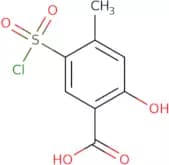
Discontinued product5-(Chlorosulfonyl)-2-hydroxy-4-methylbenzoic acid
CAS:<p>Versatile small molecule scaffold</p>Formula:C8H7ClO5SPurity:Min. 95%Molecular weight:250.66 g/molRef: 3D-BMB27090
Discontinued product6-Bromo-2-[2-(pyridin-3-yl)ethenyl]quinoline-4-carboxylic acid
CAS:<p>Versatile small molecule scaffold</p>Formula:C17H11BrN2O2Purity:Min. 95%Molecular weight:355.2 g/molRef: 3D-BMB26032
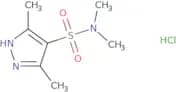
Discontinued productN,N,3,5-Tetramethyl-1H-pyrazole-4-sulfonamide hydrochloride
CAS:<p>Versatile small molecule scaffold</p>Formula:C7H14ClN3O2SPurity:Min. 95%Molecular weight:239.72 g/molRef: 3D-BKD15997
Discontinued product2-{3-Methyl-1H-pyrazolo[3,4-b]pyridin-1-yl}acetic acid hydrochloride
CAS:<p>Versatile small molecule scaffold</p>Formula:C9H10ClN3O2Purity:Min. 95%Molecular weight:227.65 g/mol2-({5,6-Dimethylthieno[2,3-d]pyrimidin-4-yl}sulfanyl)benzoic acid
CAS:Controlled Product<p>2-({5,6-Dimethylthieno[2,3-d]pyrimidin-4-yl}sulfanyl)benzoic acid is a synthetic nonpeptide compound that belongs to the group of ligands. This inhibitor binds to nicotinic acetylcholine receptors and inhibits their activity. 2-({5,6-Dimethylthieno[2,3-d]pyrimidin-4-yl}sulfanyl)benzoic acid has been shown to be a potent activator of these receptors. This compound also inhibits voltage dependent potassium channels and calcium channels.</p>Formula:C15H12N2O2S2Purity:Min. 95%Molecular weight:316.4 g/molRef: 3D-BEB15117
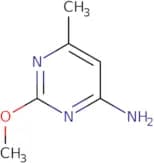
Discontinued product2-Methoxy-6-methylpyrimidine-4-yl-amine
CAS:<p>Versatile small molecule scaffold</p>Formula:C6H9N3OPurity:Min. 95%Molecular weight:139.15 g/mol4-Chloro-3-methyl-[1,2]oxazolo[5,4-d]pyrimidine
CAS:<p>Versatile small molecule scaffold</p>Formula:C6H4ClN3OPurity:Min. 95%Molecular weight:169.57 g/molRef: 3D-BCA85060
Discontinued productEthyl 1,4-dioxaspiro[4.5]dec-8-ylideneacetate
CAS:<p>Versatile small molecule scaffold</p>Formula:C12H18O4Purity:Min. 95%Molecular weight:226.27 g/mol(2,3-Dihydro-1,4-benzodioxin-5-ylmethyl)(ethyl)amine hydrochloride
CAS:<p>Versatile small molecule scaffold</p>Formula:C11H16ClNO2Purity:Min. 95%Molecular weight:229.7 g/molRef: 3D-BAC92453
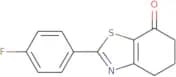
Discontinued product2-(4-Fluorophenyl)-4,5,6,7-tetrahydro-1,3-benzothiazol-7-one
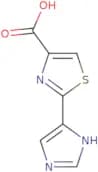
CAS:<p>Versatile small molecule scaffold</p>Formula:C13H10FNOSPurity:Min. 95%Molecular weight:247.29 g/mol2-(1H-Imidazol-5-yl)-1,3-thiazole-4-carboxylic acid
CAS:<p>Versatile small molecule scaffold</p>Formula:C7H5N3O2SPurity:Min. 95%Molecular weight:195.2 g/molRef: 3D-BAC92332
Discontinued product1-{[2-(4-Fluorophenyl)-1,3-thiazol-4-yl]methyl}piperazine hydrochloride
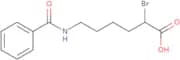
CAS:<p>Versatile small molecule scaffold</p>Formula:C14H17ClFN3SPurity:Min. 95%Molecular weight:313.8 g/mol2-Bromo-6-(phenylformamido)hexanoic acid
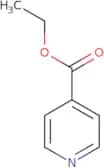
CAS:<p>Versatile small molecule scaffold</p>Formula:C13H16BrNO3Purity:Min. 95%Molecular weight:314.17 g/mol4-Pyridinecarboxylic Acid Ethyl Ester
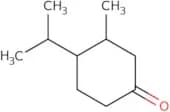
CAS:<p>4-Pyridinecarboxylic Acid Ethyl Ester is a compound that belongs to the group of pyridinecarboxylic acids. It is a metabolite of nicotinamide, which is converted to 4-pyridinecarboxylic acid ethyl ester by esterases in the intestine. Nicotinamide is an important component of the vitamin B3 and has been shown to be effective for treating autoimmune diseases such as rheumatoid arthritis. 4-Pyridinecarboxylic Acid Ethyl Ester may have similar effects on inflammatory bowel disease and alopecia areata. The reaction mechanism of this compound has not been elucidated, but it has been shown to inhibit amyloid protein production in rat intestines. Hydroxyl groups on the side chain likely play a role in hydrogen bonding interactions with receptors in inflammatory bowel disease and alopecia areata.</p>Formula:C8H9NO2Purity:Min. 95%Molecular weight:151.16 g/mol3-Methyl-4-(propan-2-yl)cyclohexan-1-one
CAS:<p>Versatile small molecule scaffold</p>Formula:C10H18OPurity:Min. 95%Molecular weight:154.25 g/molRef: 3D-BAA53819
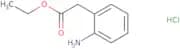
Discontinued productethyl 2-(2-aminophenyl)acetate hydrochloride
CAS:<p>Versatile small molecule scaffold</p>Formula:C10H13NO2·HClPurity:Min. 95%Molecular weight:215.67 g/molRef: 3D-AAA06188
Discontinued product2-Bromo-3,3,3-trifluoro-1-propene
CAS:Controlled Product<p>2-Bromo-3,3,3-trifluoro-1-propene is a chemical compound that has been synthesized in an asymmetric reaction. The reactant is bromopropane and the product is 2,2,2-trifluoropropene. The methylene group on the propene molecule is activated by the nucleophilic attack of a fluoride ion from hydrogen fluoride to form a cavity with a highly strained bond. The kinetic study of this reaction revealed that the activation energy for the reaction is 42 kJ/mol. Palladium-catalyzed coupling reactions are catalyzed by palladium and require nonpolar solvents such as toluene or dichloromethane. This type of reaction has been shown to be exothermic with an isolated yield of 1%.</p>Formula:C3H2BrF3Purity:Min. 95%Color and Shape:Colorless PowderMolecular weight:174.95 g/mol3-(Methoxycarbonyl)pyridine-4-carboxylic acid
CAS:<p>Versatile small molecule scaffold</p>Formula:C8H7NO4Purity:Min. 95%Molecular weight:181.15 g/mol3-Methylbenzo[b]thiophene-2-carboxylic acid
CAS:<p>3-Methylbenzo[b]thiophene-2-carboxylic acid (MBTCA) is a heterocyclic compound that is an intermediate in the synthesis of 3-methylthiophene-2-carboxylic acid, a precursor to other drugs. MBTCA is an aerobic, nonpolar compound that has shown antimicrobial activity against some bacteria and fungi. It also has been shown to have practicality as a biomolecular probe for methyl groups in organic solvents. MBTCA can be synthesized by nitration of benzene in the presence of sulfur and sulfoxides. This reaction produces nitrobenzene, which can then be oxidized by potassium permanganate or hydrogen peroxide to produce MBTCA. The most common isomer of MBTCA is 2-(3,5-dimethoxybenzylidene)tetrahydrofuran, with three methyl groups on the</p>Formula:C10H8O2SPurity:Min. 95%Molecular weight:192.23 g/mol2-Acetylbenzoic acid
CAS:<p>2-Acetylbenzoic acid is a functional molecule that contains an acetyl group. It can form hydrogen bonds with other molecules and has been shown to induce apoptosis in cells. The reaction products of 2-acetylbenzoic acid are malonic acid, acetylsalicylic acid, and 2-benzoylbenzoic acid. These three compounds are made by the addition of hydrogen or hydroxide to the molecule 2-acetylbenzoic acid. The molecule has two functional groups: a carbonyl group and an acetyl group. The chemical structure of this molecule can be seen in the figure below.<br>2-Acetylbenzoic Acid</p>Formula:C9H8O3Purity:Min. 95%Color and Shape:PowderMolecular weight:164.16 g/molRef: 3D-FA05086
Discontinued product2-Bromo-4-(4-fluorophenyl)-1,3-thiazole
CAS:<p>Versatile small molecule scaffold</p>Formula:C9H5NFSBrPurity:Min. 95%Molecular weight:258.11 g/mol3-Boc-3-azabicyclo[3.2.1]octan-8-amine
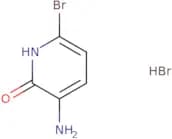
CAS:<p>Versatile small molecule scaffold</p>Formula:C12H22N2O2Purity:Min. 95%Molecular weight:226.32 g/mol3-amino-6-bromopyridin-2-ol hydrobromide
CAS:<p>Versatile small molecule scaffold</p>Formula:C5H6Br2N2OPurity:Min. 95%Molecular weight:269.9 g/molGivinostat hydrochloride
CAS:<p>Givinostat hydrochloride is a research chemical that has shown potential in various fields. It is a molybdenum-based compound that has been studied for its effects on dopamine release and hydrogen evolution. Givinostat hydrochloride has also been investigated as an osteoclast inhibitor, which may be beneficial in the treatment of bone-related disorders such as osteoporosis. Additionally, it has shown promise as a retinoid and calpain inhibitor, suggesting its potential use in dermatological conditions and neurodegenerative diseases. The compound contains fluorine atoms, making it suitable for imaging studies using fluorine MRI techniques. Givinostat hydrochloride has been tested on MDA-MB-231 cells and has shown inhibitory effects on their growth, indicating its potential as an anticancer agent.</p>Formula:C24H27N3O4·HClPurity:Min. 95%Molecular weight:457.95 g/mol

![2-{5H-Pyrrolo[2,3-b]pyrazin-7-yl}ethan-1-amine dihydrochloride](/_next/image/?url=https%3A%2Fstatic.cymitquimica.com%2Fproducts%2F3D%2Fthumb-webp%2FDPD46231.webp&w=3840&q=75)
![2-[(3-Methylphenyl)methoxy]propanoic acid](/_next/image/?url=https%3A%2Fstatic.cymitquimica.com%2Fproducts%2F3D%2Fthumb-webp%2FDPC17494.webp&w=3840&q=75)
![Benzo[1,3]dioxol-5-ylmethyl-pyridin-4-ylmethyl-amine](/_next/image/?url=https%3A%2Fstatic.cymitquimica.com%2Fproducts%2F3D%2Fthumb-webp%2FDPA77952.webp&w=3840&q=75)

![3-[(4-Methoxyphenyl)sulfanyl]propanenitrile](/_next/image/?url=https%3A%2Fstatic.cymitquimica.com%2Fproducts%2F3D%2Fthumb-webp%2FCEA23672.webp&w=3840&q=75)
![Benzyl 1-oxa-6-azaspiro[2.5]octane-6-carboxylate](/_next/image/?url=https%3A%2Fstatic.cymitquimica.com%2Fproducts%2F3D%2Fthumb-webp%2FCDA21175.webp&w=3840&q=75)

![2-[Ethyl(propan-2-yl)amino]ethan-1-ol](/_next/image/?url=https%3A%2Fstatic.cymitquimica.com%2Fproducts%2F3D%2Fthumb-webp%2FCAA89361.webp&w=3840&q=75)
![4-{2-[1-(4-Bromophenyl)ethylidene]hydrazin-1-yl}benzoic acid](/_next/image/?url=https%3A%2Fstatic.cymitquimica.com%2Fproducts%2F3D%2Fthumb-webp%2FCAA77237.webp&w=3840&q=75)


![6-Bromo-2-[2-(pyridin-3-yl)ethenyl]quinoline-4-carboxylic acid](/_next/image/?url=https%3A%2Fstatic.cymitquimica.com%2Fproducts%2F3D%2Fthumb-webp%2FBMB26032.webp&w=3840&q=75)
![2-{3-Methyl-1H-pyrazolo[3,4-b]pyridin-1-yl}acetic acid hydrochloride](/_next/image/?url=https%3A%2Fstatic.cymitquimica.com%2Fproducts%2F3D%2Fthumb-webp%2FBKD15993.webp&w=3840&q=75)
![2-({5,6-Dimethylthieno[2,3-d]pyrimidin-4-yl}sulfanyl)benzoic acid](/_next/image/?url=https%3A%2Fstatic.cymitquimica.com%2Fproducts%2F3D%2Fthumb-webp%2FBEB15117.webp&w=3840&q=75)
![4-Chloro-3-methyl-[1,2]oxazolo[5,4-d]pyrimidine](/_next/image/?url=https%3A%2Fstatic.cymitquimica.com%2Fproducts%2F3D%2Fthumb-webp%2FBCA85060.webp&w=3840&q=75)
![Ethyl 1,4-dioxaspiro[4.5]dec-8-ylideneacetate](/_next/image/?url=https%3A%2Fstatic.cymitquimica.com%2Fproducts%2F3D%2Fthumb-webp%2FBCA65691.webp&w=3840&q=75)

![1-{[2-(4-Fluorophenyl)-1,3-thiazol-4-yl]methyl}piperazine hydrochloride](/_next/image/?url=https%3A%2Fstatic.cymitquimica.com%2Fproducts%2F3D%2Fthumb-webp%2FBAC92326.webp&w=3840&q=75)


![3-Methylbenzo[b]thiophene-2-carboxylic acid](/_next/image/?url=https%3A%2Fstatic.cymitquimica.com%2Fproducts%2F3D%2Fthumb-webp%2FDAA13378.webp&w=3840&q=75)


![3-Boc-3-azabicyclo[3.2.1]octan-8-amine](/_next/image/?url=https%3A%2Fstatic.cymitquimica.com%2Fproducts%2F3D%2Fthumb-webp%2FFDC76351.webp&w=3840&q=75)