Building Blocks
Subcategories of "Building Blocks"
- Boronic Acids & Boronic Acid Derivatives(5,781 products)
- Chiral Building Blocks(1,242 products)
- Hydrocarbon Building Blocks(6,101 products)
- Organic Building Blocks(61,033 products)
Found 205320 products of "Building Blocks"
1,7,7-Trimethylspiro[bicyclo[2.2.1]heptane-2,4'-imidazolidine]-2',5'-dione
CAS:Versatile small molecule scaffold
Formula:C12H18N2O2Purity:Min. 95%Molecular weight:222.28 g/molRef: 3D-GAA92930
Discontinued product(2-Azidoethyl)benzene
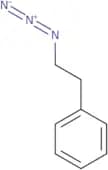
CAS:2-Azidoethylbenzene is a coumarin derivative that has been identified as an important bioactive molecule. It is synthesized by the reaction of azides and benzene using a reaction solution. The compound reacts with hydroxyl groups to form a C-N bond, which may be responsible for its biological activity. 2-Azidoethylbenzene has been shown to have anti-leukemia effects in radiation-sensitive leukemia cells. It also has vasodilatory properties that may be related to the increase in blood pressure induced by the compound. 2-Azidoethylbenzene has also been shown to be effective against hypoxia inducible factors such as HIF1α, which are proteins involved in cell growth and proliferation.
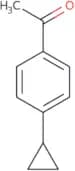
Formula:C8H9N3Purity:Min. 95%Molecular weight:147.18 g/mol1-(4-Cyclopropylphenyl)ethanone
CAS:Versatile small molecule scaffold
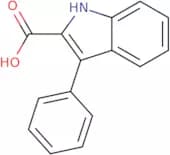
Formula:C11H12OPurity:Min. 95%Molecular weight:160.22 g/mol3-Phenyl-1H-indole-2-carboxylic Acid
CAS:3-Phenyl-1H-indole-2-carboxylic acid is a chemical compound that has an acidic property. It is used in the analysis of hormones, such as testosterone and estradiol. 3-Phenyl-1H-indole-2-carboxylic acid is used to analyze the biotic and abiotic properties of a sample by liquid chromatography. It can be used for the profiling of steroids, such as cortisol and cortisone, and sex hormones. This chemical is also used to highlight the presence of acetonitrile in a sample.
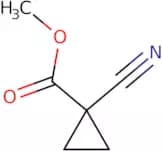
Formula:C15H11NO2Purity:Min. 95%Molecular weight:237.25 g/molMethyl 1-cyanocyclopropanecarboxylate
CAS:Versatile small molecule scaffoldFormula:C6H7NO2Purity:Min. 95%Molecular weight:125.13 g/molRef: 3D-GAA91473
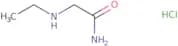
Discontinued product2-(Ethylamino)acetamide hydrochloride
CAS:Versatile small molecule scaffold
Formula:C4H11ClN2OPurity:Min. 95%Molecular weight:138.59 g/molRef: 3D-GAA91324
Discontinued product{[3-(Trifluoromethyl)phenyl]carbamoyl}formic acid
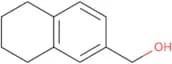
CAS:Versatile small molecule scaffoldFormula:C9H6F3NO3Purity:Min. 95%Molecular weight:233.14 g/mol(5,6,7,8-Tetrahydronaphthalen-2-yl)methanol
CAS:(5,6,7,8-Tetrahydronaphthalen-2-yl)methanol is a hexacyclic molecule that is used as an intermediate in the production of drugs. It can also be used as a precursor for the synthesis of various nitrogen compounds. This compound has potent inducers of cytochrome P450 and hydroxylase enzymes. This product is also considered to be carcinogenic and has been shown to cause tumors in rats when given orally.
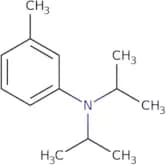
Formula:C11H14OPurity:Min. 95%Molecular weight:162.23 g/mol3-Methyl-N,N-bis(propan-2-yl)aniline
CAS:Versatile small molecule scaffold
Formula:C13H21NPurity:Min. 95%Molecular weight:191.31 g/molRef: 3D-GAA86396
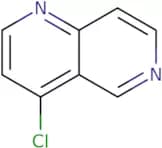
Discontinued product4-Chloro-1,6-naphthyridine
CAS:4-Chloro-1,6-naphthyridine is a chlorinated derivative of 1,6-naphthyridine. It is synthesized by catalytic hydrogenation. Catalytic hydrogenation of 4-chloro-1,6-naphthyridine yields two isomeric products: 4-chloronicotinamide and 4-chlorobenzamide. The industrial process for the synthesis of 4-chloro-1,6-naphthyridine involves condensation with ethyl acetate to form the N-(4'-chlorophenyl)ethane sulfonate salt followed by reaction with potassium chloride in alcoholic solution.
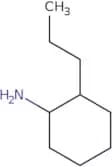
Formula:C8H5ClN2Purity:Min. 95%Molecular weight:164.6 g/mol2-Propylcyclohexan-1-amine
CAS:2-Propylcyclohexan-1-amine is a hydrogenation reaction intermediate that is produced by the thermodynamic equilibrium of cyclohexanone. It is a colorless liquid that has an amine odor. 2-Propylcyclohexan-1-amine can be used as a solvent and as a reactant in industrial processes. The phosphide ion, P, in this compound can be oxidized to form phosphoric acid with heat or light. This reaction has an activation energy (Ea) of 78 kJ/mol and produces hydrogen gas and the corresponding acid from 2-propyclohexanone. The bond cleavage reaction between phosphine and cyclohexane has an Ea of 54 kJ/mol and produces hydrogen gas, phosphate ions, and the corresponding alcohol.
Formula:C9H19NPurity:Min. 95%Molecular weight:141.25 g/molRef: 3D-GAA85040
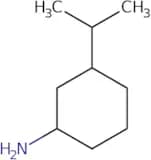
Discontinued product3-(Propan-2-yl)cyclohexan-1-amine
CAS:Versatile small molecule scaffold
Formula:C9H19NPurity:Min. 95%Molecular weight:141.25 g/molRef: 3D-GAA85037
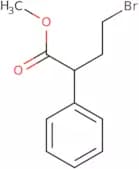
Discontinued productMethyl 4-bromo-2-phenylbutanoate
CAS:Versatile small molecule scaffold
Formula:C11H13BrO2Purity:Min. 95%Molecular weight:257.12 g/molRef: 3D-GAA83700
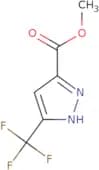
Discontinued productMethyl 5-(trifluoromethyl)pyrazole-3-carboxylate
CAS:Versatile small molecule scaffold
Formula:C6H5F3N2O2Purity:Min. 95%Molecular weight:194.11 g/molRef: 3D-GAA83382
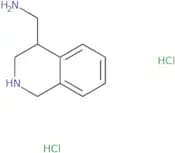
Discontinued product(1,2,3,4-Tetrahydroisoquinolin-4-yl)methanamine dihydrochloride
CAS:Versatile small molecule scaffold
Formula:C10H16Cl2N2Purity:Min. 95%Molecular weight:235.15 g/molRef: 3D-GAA82818
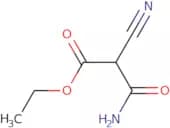
Discontinued productEthyl 2-carbamoyl-2-cyanoacetate
CAS:Versatile small molecule scaffold
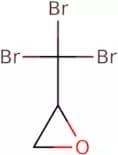
Formula:C6H8N2O3Purity:Min. 95%Molecular weight:156.14 g/mol2-(Tribromomethyl)oxirane
CAS:Versatile small molecule scaffold
Formula:C3H3Br3OPurity:Min. 95%Molecular weight:294.77 g/molRef: 3D-GAA82497
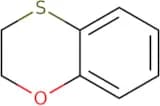
Discontinued product2,3-Dihydro-1,4-benzoxathiine
CAS:2,3-Dihydro-1,4-benzoxathiine is a chemical compound that blocks the action of ethylene. It is an antimycotic and has been used to treat fungal infections. The structure of 2,3-dihydro-1,4-benzoxathiine is similar to that of the estrogen molecule and it binds to the estrogen receptor with high affinity. This drug also acts as a selective serotonin receptor ligand and binds selectively to serotonin receptors. In addition, this drug has been shown to act on the nucleus by inhibiting melatonin synthesis in rats.
Formula:C8H8OSPurity:Min. 95%Molecular weight:152.22 g/molRef: 3D-GAA81248
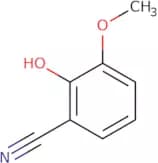
Discontinued product2-Hydroxy-3-methoxybenzenecarbonitrile
CAS:2-Hydroxy-3-methoxybenzenecarbonitrile (2HMB) is a reagent that is used in the synthesis of benzofurans. It is an analog of 2,2'-dichlorodiethyl carbonate. The reaction mechanism involves the conversion of 2HMB to 2-chloro-3-methoxybenzenecarbonitrile, followed by the elimination of chloride to yield 3-hydroxybenzofuran. This reagent also has the ability to catalyze reactions such as demethylation and alkylations.
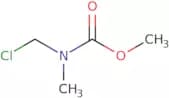
Formula:C8H7NO2Purity:Min. 95%Molecular weight:149.15 g/molMethyl N-(chloromethyl)-N-methylcarbamate
CAS:Versatile small molecule scaffold
Formula:C4H8ClNO2Purity:Min. 95%Molecular weight:137.56 g/mol
![1,7,7-Trimethylspiro[bicyclo[2.2.1]heptane-2,4'-imidazolidine]-2',5'-dione](/_next/image/?url=https%3A%2Fstatic.cymitquimica.com%2Fproducts%2F3D%2Fthumb-webp%2FGAA92930.webp&w=3840&q=75)

![{[3-(Trifluoromethyl)phenyl]carbamoyl}formic acid](/_next/image/?url=https%3A%2Fstatic.cymitquimica.com%2Fproducts%2F3D%2Fthumb-webp%2FGAA89083.webp&w=3840&q=75)