Building Blocks
Subcategories of "Building Blocks"
- Boronic Acids & Boronic Acid Derivatives(5,780 products)
- Chiral Building Blocks(1,241 products)
- Hydrocarbon Building Blocks(6,100 products)
- Organic Building Blocks(61,024 products)
Found 205297 products of "Building Blocks"
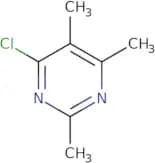
4-Chloro-2,5,6-trimethylpyrimidine
CAS:Versatile small molecule scaffold
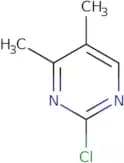
Formula:C7H9ClN2Purity:Min. 95%Molecular weight:156.61 g/mol2-chloro-4,5-dimethylpyrimidine
CAS:Versatile small molecule scaffold
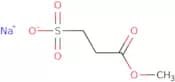
Formula:C6H7ClN2Purity:Min. 95%Molecular weight:142.59 g/molSodium 3-methoxy-3-oxopropane-1-sulfonate
CAS:Versatile small molecule scaffold
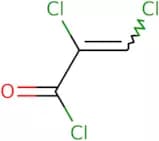
Formula:C4H7NaO5SPurity:Min. 95%Molecular weight:190.15 g/mol(2Z)-2,3-Dichloroprop-2-enoyl chloride
CAS:Versatile small molecule scaffold
Formula:C3HCl3OPurity:Min. 95%Molecular weight:159.39 g/molRef: 3D-JBA90781
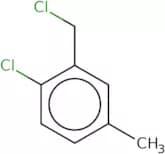
Discontinued product1-Chloro-2-(chloromethyl)-4-methylbenzene
CAS:Versatile small molecule scaffoldFormula:C8H8Cl2Purity:Min. 95%Molecular weight:175.06 g/molRef: 3D-JBA89668
Discontinued product4-Methylcyclohexanemethanol
CAS:4-Methylcyclohexanemethanol (4MCHM) is a glycol ether that has been found to be an active compound for the treatment of tuberculosis. It is activated by light, which causes it to emit light and break down into formaldehyde. In vitro assays have shown that 4MCHM inhibits bacterial growth and enzyme activities. The hydrogenated form of 4MCHM has a similar effect in vitro but does not break down into formaldehyde, meaning it can be used as a safer alternative for the treatment of tuberculosis. 4-Methylcyclohexanemethanol has also been shown to have significant interactions with the enzymes CYP2E1, CYP3A4, CYP2C9, and CYP2D6 in vitro and in vivo. The toxicological profile of 4-methylcyclohexanemethanol has been investigated using in vitro assays on bacterial strains and solid phase microextraction experiments on cell
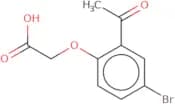
Formula:C8H16OPurity:Min. 95%Molecular weight:128.21 g/mol2-(2-acetyl-4-bromophenoxy)acetic acid
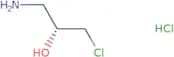
CAS:Versatile small molecule scaffoldFormula:C10H9BrO4Purity:Min. 95%Molecular weight:273.1 g/mol(R)-1-Amino-3-chloropropan-2-ol hydrochloride ee
CAS:Versatile small molecule scaffold
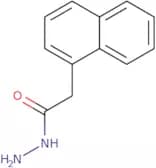
Formula:C3H9Cl2NOPurity:Min. 95%Molecular weight:146.02 g/mol1-Naphthaleneacethydrazide
CAS:1-Naphthaleneacethydrazide is a hydrazone compound that can be synthesized by reacting 1-naphthol with ethylhydrazine. It has been shown to be a very powerful and selective oxidant, with a high conversion yield. The compound is used in the synthesis of transition metal complexes, including octahedral, square planar and tetrahedral complexes. Transition metals such as chromium, nickel and iron are used in the catalytic production of polymers. Hydrazides can be used as reducing agents or as precursors for other compounds. The hydrazones are also used in the preparation of magnetic materials.
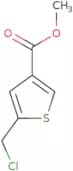
1-Naphthaleneacethydrazide has been shown to have a strong affinity for elemental nitrogen and has been proposed as an oxidizing agent for nitrogen gas (N2) reduction.Formula:C12H12N2OPurity:Min. 95%Molecular weight:200.24 g/molMethyl 5-(chloromethyl)thiophene-3-carboxylate
CAS:Versatile small molecule scaffold
Formula:C7H7ClO2SPurity:Min. 95%Molecular weight:190.65 g/molRef: 3D-JBA76777
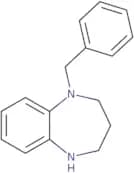
Discontinued product1-Benzyl-2,3,4,5-tetrahydro-1H-1,5-benzodiazepine
CAS:Versatile small molecule scaffold
Formula:C16H18N2Purity:Min. 95%Molecular weight:238.33 g/mol2-(2-Bromophenoxy)ethanol
CAS:2-(2-Bromophenoxy)ethanol is a primary alcohol that can be used as a probe in enzymatic reactions, such as the ring-opening of pyridinium salts. It reacts with nucleophilic compounds to form lactams, which are macrocyclic molecules. 2-(2-Bromophenoxy)ethanol can also be used to synthesize epoxides and alcohols.
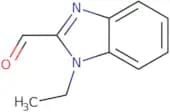
Formula:C8H9BrO2Purity:Min. 95%Molecular weight:217.06 g/mol1-Ethyl-1H-benzoimidazole-2-carbaldehyde
CAS:1-Ethyl-1H-benzoimidazole-2-carbaldehyde is a nonspecific heteroaromatic compound that has been shown to be sensitive to solvation. The conformers of this molecule have been determined by intramolecular sensitivity and regression analysis. This molecule is an intramolecular heteroaromatic compound with an electronic transition. The conformers are determined by the polarizability and electronic transitions of the molecule. This molecule has solvatochromism, which is a change in color due to changes in solvent polarity. 1-Ethyl-1H-benzoimidazole-2-carbaldehyde has been shown to exhibit conformational changes in response to changes in temperature, pressure, or solvent conditions, which can lead to changes in its physical properties such as color and melting point.Formula:C10H10N2OPurity:Min. 95%Molecular weight:174.2 g/molRef: 3D-JBA73420
Discontinued product2-{[(3-Methylphenyl)methyl]sulfanyl}acetic acid
CAS:Versatile small molecule scaffoldFormula:C10H12O2SPurity:Min. 95%Molecular weight:196.27 g/molPentamethylphenylacetonitrile
CAS:Pentamethylphenylacetonitrile (PMP) is an aldehyde that is used as a reagent in the synthesis of other chemical compounds. It is also used in the preparation of phase transfer catalysts. PMP is typically available as a white powder and can be dissolved in organic solvents such as acetone or benzene. The chemical properties of PMP are similar to those of other aldehydes, including its susceptibility to oxidation, which can lead to the formation of carboxylic acids.
Formula:C13H17NPurity:Min. 95%Molecular weight:187.28 g/molRef: 3D-JBA68870
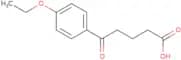
Discontinued product5-(4-Ethoxyphenyl)-5-oxopentanoic acid
CAS:Versatile small molecule scaffold
Formula:C13H16O4Purity:Min. 95%Molecular weight:236.26 g/molRef: 3D-JBA67010
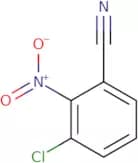
Discontinued product3-Chloro-2-nitrobenzonitrile
CAS:3-Chloro-2-nitrobenzonitrile is a postulated intermediate in the synthesis of benzoic acid and isomers. It can be obtained by reacting phosphorus pentachloride with an aromatic compound containing a benzene ring with substituents that contain nitrile groups. The reaction of 3-chloro-2-nitrobenzonitrile with water produces benzoic acid. This transformation is attributed to the formation of an unstable intermediate, which then decomposes to form a more stable product.
Formula:C7H3ClN2O2Purity:Min. 95%Molecular weight:182.56 g/molRef: 3D-JBA66228
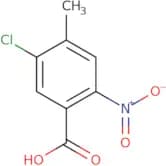
Discontinued product5-Chloro-4-methyl-2-nitrobenzoic acid
CAS:Versatile small molecule scaffold
Formula:C8H6ClNO4Purity:Min. 95%Molecular weight:215.59 g/molRef: 3D-JBA63367
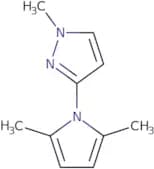
Discontinued product3-(2,5-Dimethyl-1H-pyrrol-1-yl)-1-methyl-1H-pyrazole
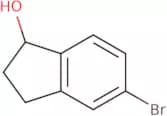
CAS:Versatile small molecule scaffoldFormula:C10H13N3Purity:Min. 95%Molecular weight:175.24 g/mol5-Bromoindan-1-ol
CAS:Versatile small molecule scaffold
Formula:C9H9BrOPurity:Min. 95%Molecular weight:213.07 g/molRef: 3D-JBA59850
Discontinued product



![2-{[(3-Methylphenyl)methyl]sulfanyl}acetic acid](/_next/image/?url=https%3A%2Fstatic.cymitquimica.com%2Fproducts%2F3D%2Fthumb-webp%2FJBA72235.webp&w=3840&q=75)