


Building Blocks
Subcategories of "Building Blocks"
- Boronic Acids & Boronic Acid Derivatives(5,778 products)
- Chiral Building Blocks(1,243 products)
- Hydrocarbon Building Blocks(6,099 products)
- Organic Building Blocks(61,038 products)
Found 205375 products of "Building Blocks"
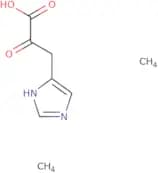
Imidazolepyruvic acid hydrobromide hydrate
CAS:Please enquire for more information about Imidazolepyruvic acid hydrobromide hydrate including the price, delivery time and more detailed product information at the technical inquiry form on this pageFormula:C6H6N2O3•(HBr)x•(H2O)xPurity:Min. 95%Color and Shape:Powder1-Azaspiro[3.3]heptane hydrochloride
CAS:Versatile small molecule scaffold
Formula:C6H12ClNPurity:Min. 95%Molecular weight:133.62 g/molInosine 5'-monophosphate disodium hydrate
CAS:Please enquire for more information about Inosine 5'-monophosphate disodium hydrate including the price, delivery time and more detailed product information at the technical inquiry form on this page
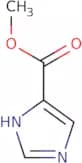
Formula:C10H13N4O8P•Na2•(H2O)xPurity:Min. 95%4-Imidazole methyl carboxylate
CAS:4-Imidazole methyl carboxylate is a drug that inhibits the activity of dehydrogenases and other enzymes. It has been shown to be an inhibitor of the enzyme catalase in vitro and in vivo, which may be due to its ability to bind bidentately with the active site. 4-Imidazole methyl carboxylate is effective when administered orally, and it has been shown to improve symptoms of neurodegenerative diseases such as Alzheimer's disease. This drug also has a trifunctional chemical structure that contains a macrocyclic ring system with an imidazole group and a carboxylic acid group. The redox potential of this molecule makes it suitable for use as an antioxidant.
Formula:C5H6N2O2Purity:Min. 95%Color and Shape:White PowderMolecular weight:126.11 g/mol6-Hydroxy-1-naphthoic acid
CAS:6-Hydroxy-1-naphthoic acid is a synthetic carboxylate compound with an analog structure that has been shown to be cytotoxic to cancer cells. It inhibits the activity of protein kinases by binding to ATP, which blocks the phosphorylation of tyrosine residues on proteins. 6-Hydroxy-1-naphthoic acid has been shown to inhibit growth factor receptors and induce apoptosis in tumor cells. The mechanism of action for this drug is believed to be through ring opening and hydrolysis of the naphthalene ring, followed by reaction with p-hydroxybenzoic acid. This results in inhibition of histone deacetylase activity, leading to decreased expression of genes involved in cell proliferation.Formula:C11H8O3Purity:Min. 95%Color and Shape:PowderMolecular weight:188.18 g/mol3-Amino-2,2-difluoropropan-1-ol
CAS:Versatile small molecule scaffoldFormula:C3H7F2NOPurity:Min. 95%Molecular weight:111.09 g/mol2-Bromo-6-fluoro-3-methylpyridine
CAS:Versatile small molecule scaffoldFormula:C6H5BrFNPurity:Min. 95%Molecular weight:190.02 g/mol3-(Methoxycarbonyl)pyridine-4-carboxylic acid
CAS:Versatile small molecule scaffold
Formula:C8H7NO4Purity:Min. 95%Molecular weight:181.15 g/mol2,2-Difluorobenzo[d][1,3]dioxol-5-ol
CAS:Versatile small molecule scaffoldFormula:C7H4F2O3Purity:Min. 95%Molecular weight:174.1 g/mol7-Chloroisoquinolin-1-ol
CAS:Versatile small molecule scaffoldFormula:C9H6ClNOPurity:Min. 95%Molecular weight:179.6 g/mol2-chloro-5-(trifluoromethyl)pyrimidin-4-amine
CAS:Versatile small molecule scaffoldFormula:C5H3ClF3N3Purity:Min. 95%Molecular weight:197.55 g/mol2-(4-Amino-1h-pyrazol-1-yl)ethanol
CAS:Versatile small molecule scaffold
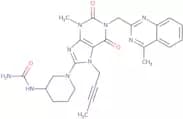
Formula:C5H9N3OPurity:Min. 95%Molecular weight:127.15 g/molN-Carbamoyl linagliptin
CAS:N-Carbamoyl linagliptin is a synthetic drug that is a selective, reversible inhibitor of dipeptidyl peptidase-4 (DPP-4), an enzyme that breaks down the incretin hormones GLP-1 and GIP. This drug has been shown to help control blood glucose levels in patients with type 2 diabetes. It binds to the active site of DPP-4 and prevents it from breaking down GLP-1 and GIP, which leads to increased levels of these hormones in the body. N-Carbamoyl linagliptin has a long half life, making it suitable for once daily administration. It also lacks any significant interactions with other drugs or foods.Formula:C26H29N9O3Purity:Min. 95%Molecular weight:515.6 g/moltert-Butyl 6-(4,4,5,5-tetramethyl-1,3,2-dioxaborolan-2-yl)-3,4-dihydroquinoline-1(2H)-carboxylate 97
CAS:Versatile small molecule scaffoldFormula:C20H30BNO4Purity:Min. 95%Molecular weight:359.27 g/molN-(4-Aminophenyl)-N-methyl-2-(4-methylpiperazin-1-yl)acetamide
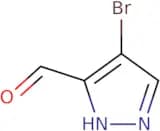
CAS:N-(4-Aminophenyl)-N-methyl-2-(4-methylpiperazin-1-yl)acetamide is an environmental and industrial chemical that is used as a formate, benzoate, and methyl benzoate intermediate. It reacts with nitric acid to form N-(4-aminophenyl)-N-methyl-2-(4-nitrophenoxy)acetamide (NPA). NPA has been shown to have antiangiogenic properties. NPA inhibits the proliferation of endothelial cells by interfering with the cell cycle and inducing apoptosis.Formula:C14H22N4OPurity:Min. 95%Molecular weight:262.35 g/mol4-bromo-1H-pyrazole-5-carbaldehyde
CAS:Versatile small molecule scaffoldFormula:C4H3BrN2OPurity:Min. 95%Molecular weight:175 g/mol2-(2-Chloro-4-nitrophenyl)acetic acid
CAS:Versatile small molecule scaffold
Formula:C8H6ClNO4Purity:Min. 95%Molecular weight:215.59 g/moltert-Butyl 4-hydroxy-1-oxa-7-azaspiro[4.4]nonane-7-carboxylate
CAS:Versatile small molecule scaffold
Formula:C12H21NO4Purity:Min. 95%Molecular weight:243.3 g/moltrans-1,2-Dichloroethylene
CAS:Trans-1,2-Dichloroethylene is a chlorinated hydrocarbon that is used in the production of polyvinyl chloride plastics. When ingested at dietary concentrations, trans-1,2-Dichloroethylene may cause liver damage and death in CD-1 mice. Trans-1,2-Dichloroethylene has been shown to react with nucleophilic substitutions and produce toxic reaction products. This chemical also causes polymerase chain reactions that can lead to cell death. The effective dose for this chemical is unknown because it has not been tested in clinical trials.
Formula:C2H2Cl2Purity:Min. 95%Molecular weight:96.94 g/mol1,1-Dibromo-2,2-bis(chloromethyl)cyclopropane
CAS:1,1-Dibromo-2,2-bis(chloromethyl)cyclopropane is a synthetic chemical that can be used to synthesize lactams. It is a member of the class of enolates and has two isomers: sulfoxide and sulfone. The synthesis process begins with an amination reaction between 1,1-dibromo-2,2-bis(chloromethyl)cyclopropane and an amine in the presence of magnesium chloride. This reaction produces a sulfide intermediate that reacts with an aldehyde or ketone to form the desired lactam. The reaction time varies depending on the reactivity of the reactants, but it typically takes less than one hour at room temperature. Magnesium metal is needed as a catalyst for this reaction because it will not take place without it. 1,1-Dibromo-2,2-bis(chloromethyl)cyclopropane also reacts easily
Formula:C5H6Br2Cl2Purity:Min. 95%Molecular weight:296.81 g/mol

![1-Azaspiro[3.3]heptane hydrochloride](/_next/image/?url=https%3A%2Fstatic.cymitquimica.com%2Fproducts%2F3D%2Fthumb-webp%2FLED33729.webp&w=3840&q=75)


![2,2-Difluorobenzo[d][1,3]dioxol-5-ol](/_next/image/?url=https%3A%2Fstatic.cymitquimica.com%2Fproducts%2F3D%2Fthumb-webp%2FLYB53982.webp&w=3840&q=75)




![tert-Butyl 4-hydroxy-1-oxa-7-azaspiro[4.4]nonane-7-carboxylate](/_next/image/?url=https%3A%2Fstatic.cymitquimica.com%2Fproducts%2F3D%2Fthumb-webp%2FXXC50503.webp&w=3840&q=75)

