Building Blocks
Subcategories of "Building Blocks"
- Boronic Acids & Boronic Acid Derivatives(5,780 products)
- Chiral Building Blocks(1,241 products)
- Hydrocarbon Building Blocks(6,100 products)
- Organic Building Blocks(61,010 products)
Found 205258 products of "Building Blocks"
Dasatinib-d8
CAS:Controlled ProductPlease enquire for more information about Dasatinib-d8 including the price, delivery time and more detailed product information at the technical inquiry form on this page
Formula:C22H18D8ClN7O2SPurity:Min. 95%Molecular weight:496.05 g/molRef: 3D-FD183325
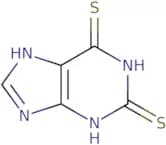
Discontinued product2,6-Dimercaptopurine
CAS:2,6-Dimercaptopurine (2,6-DMP) is an immunosuppressive drug that is used to prevent organ transplants from being rejected. It blocks the synthesis of DNA and RNA in cells by inhibiting the enzyme thymidylate synthase. The reaction mechanism involves a nucleophilic attack on the phosphorus atom of 2,6-DMP by a proton from water or another nucleophile such as urea or ammonia. 2,6-DMP is metabolized through a number of tautomeric forms, which are neutral and acidic in pH. One example of this is when 2,6-DMP reacts with hydrochloric acid to form a conjugate base that can be excreted in urine.
Formula:C5H4N4S2Purity:Min. 95%Color and Shape:Yellow PowderMolecular weight:184.24 g/molRef: 3D-FD08201
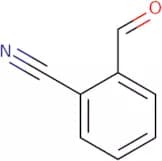
Discontinued product2-Cyanobenzaldehyde
CAS:2-Cyanobenzaldehyde is an aldehyde that reacts with nucleophiles such as trifluoromethanesulfonic acid to form a molecule. 2-Cyanobenzaldehyde has potent inhibitory activity against the kinase glycogen synthase kinase 3 (GSK3) and can be used to treat autoimmune diseases. It also reacts with hydrochloric acid in solution to form an intermediate, which is then reacted with glycine and ATP to produce a chiral compound. The product of this reaction has been shown to be active methylene, which was synthesized by asymmetric synthesis.
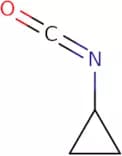
Formula:C8H5NOPurity:Min. 95%Color and Shape:PowderMolecular weight:131.13 g/molCyclopropyl isocyanate
CAS:Cyclopropyl isocyanate (CPC) is an aliphatic hydrocarbon that is structurally similar to butane. Cyclopropyl isocyanate has a variety of functional groups including a hydroxy group, a serine protease, and an amino group. CPC has been shown to be a potent activator of the enzyme histone h3 lysine 4 trimethyltranferase, which is involved in the regulation of inflammatory diseases. The synthesis of cyclopropyl isocyanate can be done through the reaction with diazomethane and zinc chloride or by treating 1-chlorocyclohexene with nitrous acid.
Formula:C4H5NOPurity:Min. 95%Color and Shape:Clear LiquidMolecular weight:83.09 g/molRef: 3D-FC166324
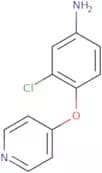
Discontinued product3-Chloro-4-(pyridin-4-yloxy)aniline
CAS:Versatile small molecule scaffold
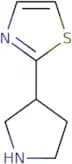
Formula:C11H9ClN2OPurity:Min. 95%Molecular weight:220.65 g/mol2-(Pyrrolidin-3-yl)-1,3-thiazole
CAS:Versatile small molecule scaffold
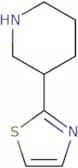
Formula:C7H10N2SPurity:Min. 95%Molecular weight:154.24 g/mol2-(Piperidin-3-yl)thiazole
CAS:Versatile small molecule scaffold
Formula:C8H12N2SPurity:Min. 95%Molecular weight:168.26 g/mol2-{[2-(Trifluoromethyl)phenyl]formamido}acetic acid
CAS:Versatile small molecule scaffold
Formula:C10H8F3NO3Purity:Min. 95%Molecular weight:247.17 g/molRef: 3D-FAB11794
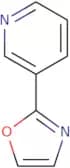
Discontinued product3-(1,3-Oxazol-2-yl)pyridine
CAS:Versatile small molecule scaffold
Formula:C8H6N2OPurity:Min. 95%Molecular weight:146.15 g/molRef: 3D-FAA99885
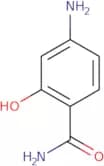
Discontinued product4-Amino-2-hydroxybenzamide
CAS:4-Amino-2-hydroxybenzamide is an aminoaryl amide that is produced by the thermal decomposition of 4-amino-2,6-dihydroxyphenylacetamide. It has been shown to be a potent inhibitor of the growth of bacteria and yeast, including Mycobacterium tuberculosis. The inhibitory effect was found to be due to inhibition of RNA synthesis as well as protein synthesis. This compound has also been shown to be effective against other types of microorganisms such as Pseudomonas aeruginosa and Staphylococcus aureus.
Formula:C7H8N2O2Purity:Min. 95%Molecular weight:152.15 g/molRef: 3D-FAA98589
Discontinued product2,2-Dichloroethan-1-amine hydrochloride
CAS:Versatile small molecule scaffoldFormula:C2H6Cl3NPurity:Min. 95%Molecular weight:150.4 g/mol3-[3-(Trifluoromethyl)phenyl]pyridine
CAS:Versatile small molecule scaffold
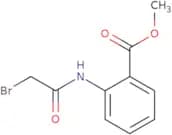
Formula:C12H8F3NPurity:Min. 95%Molecular weight:223.19 g/molMethyl 2-(2-bromoacetamido)benzoate
CAS:Versatile small molecule scaffold
Formula:C10H10BrNO3Purity:Min. 95%Molecular weight:272.09 g/molRef: 3D-FAA94643
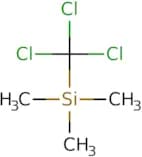
Discontinued productTrimethyl(trichloromethyl)silane
CAS:Trimethyl(trichloromethyl)silane is a chlorinating agent that reacts with hydrocarbons to form quinones. It is synthesized in the liquid phase and reacts with aldehydes, amines, and sodium formate to produce the trichloromethylated product. Trimethyl(trichloromethyl)silane is activated by electron deficiency and can be used to circumvent functional groups such as hydroxyl or carbonyl. This chemical also has properties that are not shared by other chlorinating agents, such as its ability to react with hydrogen fluoride without forming hydrochloric acid.
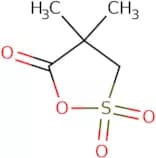
Formula:C4H9Cl3SiPurity:Min. 95%Molecular weight:191.55 g/mol4,4-Dimethyl-1,2λ⁶-oxathiolane-2,2,5-trione
CAS:Versatile small molecule scaffold
Formula:C5H8O4SPurity:Min. 95%Molecular weight:164.18 g/molRef: 3D-FAA92770
Discontinued product4,6-Dichloro-1H,2H,3H-pyrrolo[2,3-b]pyridine
CAS:Versatile small molecule scaffold
Formula:C7H6Cl2N2Purity:Min. 95%Molecular weight:189.04 g/molPiperazine-1-sulfonamide
CAS:Piperazine-1-sulfonamide is a protein inhibitor that belongs to the group of regulatory agents. It is used to regulate the growth of various types of cells, including immune cells and smooth muscle cells. Piperazine-1-sulfonamide has been shown to inhibit chemokine receptor activity in inflammatory bowel disease, which may be due to its ability to inhibit CXCR4 and CCR5 receptors. This drug also inhibits dpp-iv, an enzyme involved in protein degradation. The pharmacokinetic properties of this agent are not well studied, but it does show toxicity studies in rats at higher doses. Piperazine-1-sulfonamide can cause congestive heart failure and liver damage at high doses, so it should not be used for prolonged periods of time.
Formula:C4H11N3O2SPurity:Min. 95%Molecular weight:165.21 g/molRef: 3D-FAA90630
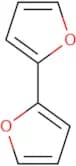
Discontinued product2,2'-Bifuran
CAS:2,2'-Bifuran is a synthetic compound with a carbonyl group and fluoro substituents. The carbonyl group of 2,2'-bifuran participates in reversible oxidation reactions with the cationic polymerization initiator, which leads to the formation of polymers. The presence of fluoro substituents on the bifuran ring is important for these reactions because they allow for steric interactions with neighboring groups during polymerization. This reaction is highly scalable due to the simple synthesis and inexpensive reagents needed to produce it. 2,2'-Bifuran has been used as an initiator in diagnostic tests and as a structural formula for other compounds.
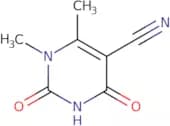
Formula:C8H6O2Purity:Min. 95%Molecular weight:134.13 g/mol1,6-Dimethyl-2,4-dioxo-1,2,3,4-tetrahydropyrimidine-5-carbonitrile
CAS:Versatile small molecule scaffoldFormula:C7H7N3O2Purity:Min. 95%Molecular weight:165.15 g/molRef: 3D-FAA90041
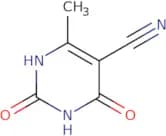
Discontinued product6-Methyl-5-cyanouracil
CAS:Versatile small molecule scaffold
Formula:C6H5N3O2Purity:Min. 95%Molecular weight:151.12 g/molRef: 3D-FAA90040
Discontinued product

![2-{[2-(Trifluoromethyl)phenyl]formamido}acetic acid](/_next/image/?url=https%3A%2Fstatic.cymitquimica.com%2Fproducts%2F3D%2Fthumb-webp%2FFAB11794.webp&w=3840&q=75)
![3-[3-(Trifluoromethyl)phenyl]pyridine](/_next/image/?url=https%3A%2Fstatic.cymitquimica.com%2Fproducts%2F3D%2Fthumb-webp%2FFAA95799.webp&w=3840&q=75)
![4,6-Dichloro-1H,2H,3H-pyrrolo[2,3-b]pyridine](/_next/image/?url=https%3A%2Fstatic.cymitquimica.com%2Fproducts%2F3D%2Fthumb-webp%2FFAA91215.webp&w=3840&q=75)