Building Blocks
This section contains fundamental products for the synthesis of organic and biological compounds. Building blocks are the essential starting materials used to construct complex molecules through various chemical reactions. They play a critical role in drug discovery, material science, and chemical research. At CymitQuimica, we offer a diverse range of high-quality building blocks to support your innovative research and industrial projects, ensuring you have the essential components for successful synthesis.
Subcategories of "Building Blocks"
- Boronic Acids & Boronic Acid Derivatives(5,805 products)
- Chiral Building Blocks(1,248 products)
- Hydrocarbon Building Blocks(6,122 products)
- Organic Building Blocks(61,463 products)
Found 208442 products of "Building Blocks"
Sort by
Purity (%)
0
100
|
0
|
50
|
90
|
95
|
100
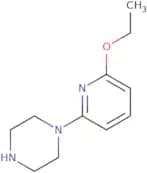
1-(6-ethoxypyridin-2-yl)piperazine
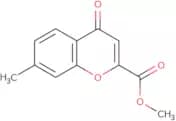
CAS:Versatile small molecule scaffoldFormula:C11H17N3OPurity:Min. 95%Molecular weight:207.28 g/molMethyl 7-methyl-4-oxo-4-chromene-2-carboxylate
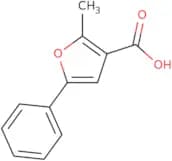
CAS:Versatile small molecule scaffoldFormula:C12H10O4Purity:Min. 95%Molecular weight:218.2 g/mol2-Methyl-5-phenylfuran-3-carboxylic acid
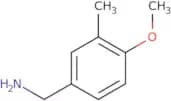
CAS:2-Methyl-5-phenylfuran-3-carboxylic acid (2MPFC) is a ligand that binds to the agonist binding site of the 5HT1A receptor. It has been shown to have potent effects on red blood cells, cell function and Alzheimer’s disease. 2MPFC has been shown to activate microglial cells and increase blood pressure in some models. The compound activates the receptor by binding it in an allosteric manner, which is a different mechanism than other ligands that bind at the orthosteric site. This compound also has been shown to be able to reduce dehydration and increase water intake in mice.Formula:C12H10O3Purity:Min. 95%Molecular weight:202.21 g/mol(4-Methoxy-3-methylphenyl)methanamine
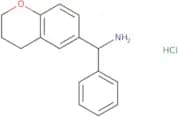
CAS:Versatile small molecule scaffoldFormula:C9H13NOPurity:Min. 95%Molecular weight:151.21 g/mol3,4-Dihydro-2H-1-benzopyran-6-yl(phenyl)methanamine hydrochloride
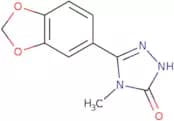
CAS:Versatile small molecule scaffoldFormula:C16H18ClNOPurity:Min. 95%Molecular weight:275.77 g/mol3-(1,3-Dioxaindan-5-yl)-4-methyl-4,5-dihydro-1H-1,2,4-triazol-5-one
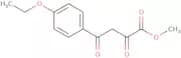
CAS:Versatile small molecule scaffoldFormula:C10H9N3O3Purity:Min. 95%Molecular weight:219.2 g/molMethyl 4-(4-ethoxyphenyl)-2,4-dioxobutanoate
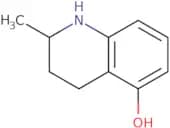
CAS:Versatile small molecule scaffoldFormula:C13H14O5Purity:Min. 95%Molecular weight:250.25 g/mol2-Methyl-1,2,3,4-tetrahydroquinolin-5-ol
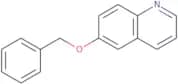
CAS:Versatile small molecule scaffoldFormula:C10H13NOPurity:Min. 95%Molecular weight:163.22 g/mol6-(Benzyloxy)quinoline
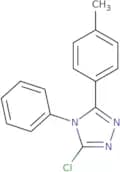
CAS:6-(Benzyloxy)quinoline is a quinoline derivative that is structurally related to trehalose and covalently binds to anilines. It has been shown to selectively inhibit kinases, such as protein kinase A and protein kinase C, with pyridinium and quinolinium as the major metabolites. The compound has been isolated in good yield from betaine and carbodiimides. 6-(Benzyloxy)quinoline has also been found to be amine-labeling reagent for amines, which can be used in bromoacetic acid labeling of proteins.Formula:C16H13NOPurity:Min. 95%Molecular weight:235.28 g/mol3-Chloro-5-(4-methylphenyl)-4-phenyl-4H-1,2,4-triazole
CAS:Versatile small molecule scaffoldFormula:C15H12ClN3Purity:Min. 95%Molecular weight:269.73 g/mol[4-(4-Nitrophenoxy)phenyl]methanamine hydrochloride
CAS:Versatile small molecule scaffoldFormula:C13H13ClN2O3Purity:Min. 95%Molecular weight:280.7 g/mol2-{5H,6H,7H,8H,9H-[1,2,4]Triazolo[4,3-a]azepin-3-yl}phenol
CAS:Versatile small molecule scaffold
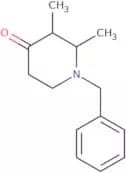
Formula:C13H15N3OPurity:Min. 95%Molecular weight:229.28 g/mol1-Benzyl-2,3-dimethylpiperidin-4-one
CAS:Versatile small molecule scaffold
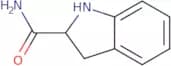
Formula:C14H19NOPurity:Min. 95%Molecular weight:217.31 g/mol2,3-Dihydro-1H-indole-2-carboxamide
CAS:2,3-Dihydro-1H-indole-2-carboxamide is a synthetic peptidomimetic that inhibits NS3 protease, which is involved in the viral life cycle. 2,3-Dihydro-1H-indole-2-carboxamide has been shown to have potent inhibitory activity against the hepatitis C virus (HCV) and HIV. It also inhibits the replication of HCV in mammalian cells. This drug has pharmacokinetic properties that are similar to glibenclamide and penetrates the blood brain barrier. Clinical studies have been conducted on patients with chronic hepatitis B and C infection.
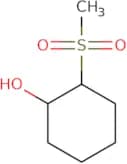
Formula:C9H10N2OPurity:Min. 95%Molecular weight:162.19 g/molrac-(1R,2R)-2-Methanesulfonylcyclohexan-1-ol
CAS:Versatile small molecule scaffold
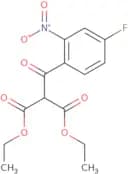
Formula:C7H14O3SPurity:Min. 95%Molecular weight:178.25 g/mol1,3-Diethyl 2-(4-fluoro-2-nitrobenzoyl)propanedioate
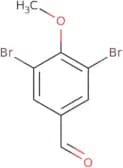
CAS:Versatile small molecule scaffoldFormula:C14H14FNO7Purity:Min. 95%Molecular weight:327.26 g/mol3,5-Dibromo-4-methoxybenzaldehyde
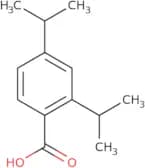
CAS:3,5-Dibromo-4-methoxybenzaldehyde is an aromatic compound with a hydroxy group. It has antibacterial activity against the ascidian and Staphylococcus aureus. The nanoribbons of 3,5-Dibromo-4-methoxybenzaldehyde are synthesized from the hydroxyl group of 3,5-Dibromo-4-methoxybenzaldehyde. The kinetic and fluorescent properties of this compound have been studied and found to be similar to those of other quinones.Formula:C8H6Br2O2Purity:Min. 95%Molecular weight:293.94 g/mol2,4-Bis(propan-2-yl)benzoic acid
CAS:Versatile small molecule scaffoldFormula:C13H18O2Purity:Min. 95%Molecular weight:206.28 g/molBenzyl[1-(2-methoxyphenyl)propan-2-yl]amine
CAS:Controlled ProductVersatile small molecule scaffold
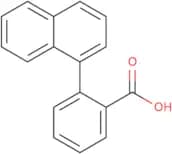
Formula:C17H21NOPurity:Min. 95%Molecular weight:255.35 g/mol2-(Naphthalen-1-yl)benzoic acid
CAS:2-(Naphthalen-1-yl)benzoic acid is an experimental compound that has shown supercooling properties. It is a nonplanar molecule, which may account for its high heat capacity. This compound also has the ability to entrap other molecules in its crystal lattice and can be used for the removal of impurities from organic solvents. 2-(Naphthalen-1-yl)benzoic acid has been used as a kinetic probe to study transport mechanisms, analytical methods, and kinetics of chemical reactions. It has also been studied in relation to the mathematical analysis of molecular motion and molecular interactions in solution.Formula:C17H12O2Purity:Min. 95%Molecular weight:248.27 g/mol

![[4-(4-Nitrophenoxy)phenyl]methanamine hydrochloride](/_next/image/?url=https%3A%2Fstatic.cymitquimica.com%2Fproducts%2F3D%2Fthumb-webp%2FIEA87434.webp&w=3840&q=75)
![2-{5H,6H,7H,8H,9H-[1,2,4]Triazolo[4,3-a]azepin-3-yl}phenol](/_next/image/?url=https%3A%2Fstatic.cymitquimica.com%2Fproducts%2F3D%2Fthumb-webp%2FIEA87744.webp&w=3840&q=75)
![Benzyl[1-(2-methoxyphenyl)propan-2-yl]amine](/_next/image/?url=https%3A%2Fstatic.cymitquimica.com%2Fproducts%2F3D%2Fthumb-webp%2FIEA97151.webp&w=3840&q=75)