Building Blocks
Subcategories of "Building Blocks"
- Boronic Acids & Boronic Acid Derivatives(5,805 products)
- Chiral Building Blocks(1,248 products)
- Hydrocarbon Building Blocks(6,118 products)
- Organic Building Blocks(61,447 products)
Found 208423 products of "Building Blocks"
10-Hydroxydecanoic acid
CAS:10-Hydroxydecanoic acid is a nonsteroidal anti-inflammatory drug that has the ability to inhibit prostaglandin synthesis. 10-Hydroxydecanoic acid has been shown to be effective in treating inflammatory diseases such as arthritis and psoriasis. It is also used to treat lacrimal gland inflammation, and caco-2 cells have been shown to have a maximal response to this drug. 10-Hydroxydecanoic acid is synthesized from trans-10-hydroxy-2-decenoic acid by an acylation reaction with silver ions in a nonpolar solvent, followed by heating. This compound can be separated from other fatty acids using an analytical technique called thin layer chromatography (TLC).
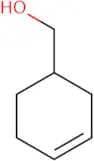
Formula:C10H20O3Purity:Min. 95%Molecular weight:188.26 g/mol3-Cyclohexene-1-methanol
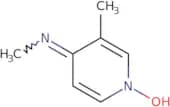
CAS:3-Cyclohexene-1-methanol is a fatty acid that is used as a precursor in the synthesis of pharmaceuticals and other chemicals. It has been shown to have antifungal activity against Trichophyton mentagrophytes and Xylomyces sp. It also has been shown to be effective against Staphylococcus aureus, but not against Escherichia coli. 3-Cyclohexene-1-methanol has been shown to reduce the size of tumors in mice by inhibiting cell proliferation through cationic polymerization with DNA. This chemical also inhibits the growth of MCF-7 cells in vitro and can cause cell death by apoptosis. 3-Cyclohexene-1-methanol is soluble in water and insoluble in organic solvents such as chloroform or ether. 3CEMM shows x ray absorption at 807 nm, which corresponds to theFormula:C7H12OPurity:Min. 95%Molecular weight:112.17 g/mol3-Methyl-4-(methylamino)pyridin-1-ium-1-olate
CAS:Versatile small molecule scaffold
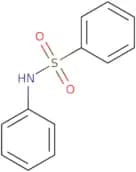
Formula:C7H10N2OPurity:Min. 95%Molecular weight:138.17 g/molBenzenesulfonanilide
CAS:Benzenesulfonanilide is a compound that is soluble in water. It has potent antagonists against the chemokine receptor CXCR2 and the chemokine CCL5. The molecular weight of benzenesulfonanilide is 212.2 g/mol, and it has a fluorine atom at the 2-position on the benzene ring, a carbonyl group (-C=O) at the 2-position on the benzene ring, and a nitro group (-NO2) at the 3-position on the benzene ring. The structural formula for benzenesulfonanilide is shown below:
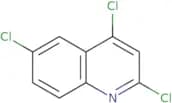
Formula:C12H11NO2SPurity:Min. 95%Molecular weight:233.29 g/mol2,4,6-Trichloroquinoline
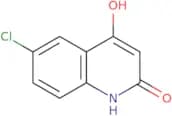
CAS:Versatile small molecule scaffoldFormula:C9H4Cl3NPurity:Min. 95%Molecular weight:232.5 g/mol6-Chloro-4-hydroxy-1,2-dihydroquinolin-2-one
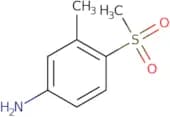
CAS:6-Chloro-4-hydroxy-1,2-dihydroquinolin-2-one is a diazotized aromatic amine. This compound has absorption spectra and acidic properties. It can be used as a precursor to other compounds, including hydrazones and substituted quinolines. 6-Chloro-4-hydroxy-1,2-dihydroquinolin-2-one can also act as an amine or an aromatic amine in the presence of acids or bases. When treated with acid, this compound forms an ionic salt that has a systematic name of 6-(chlorocarbonyl)-4H-[1,2]diazaquinoline 2,4(1H,3H)-dione. This compound also has two tautomers: the keto form and the enol form.Formula:C9H6ClNO2Purity:Min. 95%Molecular weight:195.6 g/mol4-Methanesulfonyl-3-methylaniline
CAS:Versatile small molecule scaffoldFormula:C8H11NO2SPurity:Min. 95%Molecular weight:185.25 g/mol1H-Indole-6-carboxamide
CAS:1H-Indole-6-carboxamide is a pharmaceutical compound that has been shown to bind to serotonin receptors. It has been studied for its potential use in the treatment of cancer, bowel disease, depression, and inflammatory bowel disease. 1H-Indole-6-carboxamide is a polymorphic chemical compound that exists as an equilibrium mixture of two isomers. The bound form of the drug is more potent than the free form and it binds with high affinity to serotonin receptors. 1H-Indole-6-carboxamide hydrochloride salts are more soluble in water than the free form, making them more efficient for use in humans.
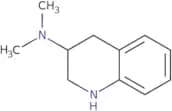
Formula:C9H8N2OPurity:Min. 95%Molecular weight:160.17 g/molN,N-Dimethyl-1,2,3,4-tetrahydroquinolin-3-amine
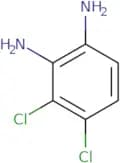
CAS:Versatile small molecule scaffoldFormula:C11H16N2Purity:Min. 95%Molecular weight:176.26 g/mol3,4-dichlorobenzene-1,2-diamine
CAS:3,4-dichlorobenzene-1,2-diamine is a high salt compound that binds to sulfatide and has a molecular weight of 3.2 kilodaltons. It is an agonist for the galactose receptor in muscle cells, which causes stimulation of biochemical properties in the cell. The compound has been shown to be synthetic and expressed in E. coli. 3,4-Dichlorobenzene-1,2-diamine is also used as an immunofluorescent probe for studying the function of galactose receptors in muscle cells. This compound can also be immobilized on polyacrylamide gels to study its interactions with sulfatide.
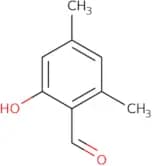
Formula:C6H6Cl2N2Purity:Min. 95%Molecular weight:177.03 g/mol2-Hydroxy-4,6-dimethyl-benzaldehyde
CAS:Versatile small molecule scaffoldFormula:C9H10O2Purity:Min. 95%Molecular weight:150.18 g/mol4-[2-(Diethylamino)ethyl]aniline
CAS:Versatile small molecule scaffold
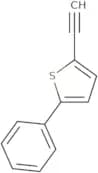
Formula:C12H20N2Purity:Min. 95%Molecular weight:192.3 g/mol2-Ethynyl-5-phenylthiophene
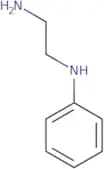
CAS:Versatile small molecule scaffoldFormula:C12H8SPurity:Min. 95%Molecular weight:184.26 g/molN-Phenylethylenediamine
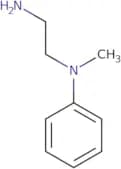
CAS:N-Phenylethylenediamine is a molecule that contains hydrogen bonds. Hydrogen bonds are the covalent interactions between hydrogen atoms and electronegative atoms, like oxygen or nitrogen, in molecules. N-phenylethylenediamine has been shown to have antiinflammatory activity, which may be due to its ability to inhibit prostaglandin synthesis. Hydrogen bonding interactions are also present between carbonyl groups and protonated amines in this molecule. This allows for stereoselective reactions with amines that have a hydrogen atom on an asymmetric carbon atom at the alpha position. It has been isolated as a yield of 34%.Formula:C8H12N2Purity:Min. 95%Molecular weight:136.2 g/molN1-Methyl-N1-phenyl-ethane-1,2-diamine
CAS:Versatile small molecule scaffoldFormula:C9H14N2Purity:Min. 95%Molecular weight:150.23 g/mol6,9-diazaspiro[4.5]decan-10-one
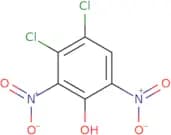
CAS:Versatile small molecule scaffoldFormula:C8H14N2OPurity:Min. 95%Molecular weight:154.21 g/mol3,4-Dichloro-2,6-dinitrophenol
CAS:Versatile small molecule scaffoldFormula:C6H2Cl2N2O5Purity:Min. 95%Molecular weight:252.99 g/mol1-(1-Adamantyl)propan-1-one
CAS:Versatile small molecule scaffoldFormula:C13H20OPurity:Min. 95%Molecular weight:192.3 g/mol6,7,8,9-Tetrahydro-5H-benzo[7]annulen-2-ol
CAS:Versatile small molecule scaffold
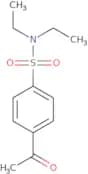
Formula:C11H14OPurity:Min. 95%Molecular weight:162.23 g/mol4-Acetyl-N,N-diethylbenzene-1-sulfonamide
CAS:Versatile small molecule scaffoldFormula:C12H17NO3SPurity:Min. 95%Molecular weight:255.34 g/mol



![4-[2-(Diethylamino)ethyl]aniline](/_next/image/?url=https%3A%2Fstatic.cymitquimica.com%2Fproducts%2F3D%2Fthumb-webp%2FBAA66560.webp&w=3840&q=75)
![6,9-diazaspiro[4.5]decan-10-one](/_next/image/?url=https%3A%2Fstatic.cymitquimica.com%2Fproducts%2F3D%2Fthumb-webp%2FBAA66433.webp&w=3840&q=75)

![6,7,8,9-Tetrahydro-5H-benzo[7]annulen-2-ol](/_next/image/?url=https%3A%2Fstatic.cymitquimica.com%2Fproducts%2F3D%2Fthumb-webp%2FBAA65993.webp&w=3840&q=75)