Building Blocks
Subcategories of "Building Blocks"
- Boronic Acids & Boronic Acid Derivatives(5,805 products)
- Chiral Building Blocks(1,248 products)
- Hydrocarbon Building Blocks(6,118 products)
- Organic Building Blocks(61,447 products)
Found 208423 products of "Building Blocks"
N-[1-(1H-1,3-Benzodiazol-2-yl)ethyl]benzamide
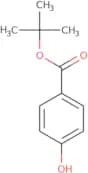
CAS:Versatile small molecule scaffoldFormula:C16H15N3OPurity:Min. 95%Molecular weight:265.31 g/moltert-Butyl 4-hydroxybenzoate
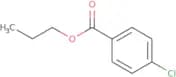
CAS:Tert-butyl 4-hydroxybenzoate is a tyrosine kinase inhibitor. It inhibits the activity of tyrosine kinases, which play a role in cell proliferation and differentiation. The compound has been evaluated for its ability to inhibit vascular endothelial growth factor receptor 2 (VEGFR-2) and Azd2932, two proteins that are involved in tumor angiogenesis. Tert-butyl 4-hydroxybenzoate also has an affinity for reductive cleavage of esters and reductive arylsulfonates.Formula:C11H14O3Purity:Min. 95%Molecular weight:194.23 g/molPropyl 4-chlorobenzoate
CAS:Versatile small molecule scaffold
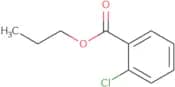
Formula:C10H11ClO2Purity:Min. 95%Molecular weight:198.64 g/molPropyl 2-chlorobenzoate
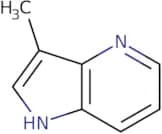
CAS:Versatile small molecule scaffoldFormula:C10H11ClO2Purity:Min. 95%Molecular weight:198.64 g/mol3-Methyl-4-azaindole
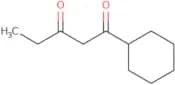
CAS:Versatile small molecule scaffoldFormula:C8H8N2Purity:Min. 95%Molecular weight:132.16 g/mol1-Cyclohexylpentane-1,3-dione
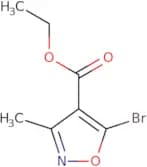
CAS:Versatile small molecule scaffoldFormula:C11H18O2Purity:Min. 95%Molecular weight:182.26 g/molEthyl 5-Bromo-3-methyl-1,2-oxazole-4-carboxylate
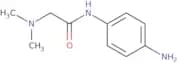
CAS:Versatile small molecule scaffoldFormula:C7H8NO3BrPurity:Min. 95%Molecular weight:234.05 g/molN-(4-Aminophenyl)-2-(dimethylamino)acetamide
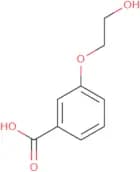
CAS:Versatile small molecule scaffoldFormula:C10H15N3OPurity:Min. 95%Molecular weight:193.25 g/mol3-(2-Hydroxy-ethoxy)-benzoic acid
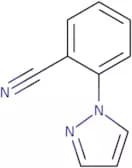
CAS:3-(2-Hydroxy-ethoxy)-benzoic acid (3HBA) is a deprotonating agent that reacts with organolithiums, organomercurials, and mercuric halides to form their corresponding Grignard reagents. 3HBA also reacts with benzophenone to form benzonitrile. 3HBA can be used for the synthesis of various organic compounds, such as chlorides, yields, and methylcyclohexane. 3HBA has been shown to have a crystallographic structure of C20H22O4Cl. The chloride anion in the crystal lattice is coordinated by two magnesium ions. Mercuric chloride can be prepared from 3HBA by treatment with chlorine gas at elevated temperatures.Formula:C9H10O4Purity:Min. 95%Molecular weight:182.17 g/mol2-(1H-Pyrazol-1-yl)benzonitrile
CAS:2-(1H-Pyrazol-1-yl)benzonitrile is used as a catalyst for the synthesis of pharmaceuticals. It can be prepared by reacting pyrrolidine with aniline in chloroform. Pyrrolidine is then reacted with 2-chlorobenzonitrile and the resulting product, 2-(1H-pyrazol-1-yl)benzonitrile, is isolated from the reaction mixture by extraction with diethyl ether. The compound has a ligand that binds to metal ions and is also used as a chelating agent. This property allows it to catalyse reactions involving nucleophiles and halides. It can also be used in amino acid coupling reactions, yielding amides or imines, respectively.
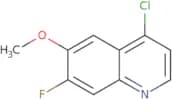
Formula:C10H7N3Purity:Min. 95%Molecular weight:169.18 g/mol4-chloro-7-fluoro-6-methoxyquinoline
CAS:4-chloro-7-fluoro-6-methoxyquinoline is a nitronium salt that has been shown to be directive. The nitration of 4-chloro-7-fluoro-6-methoxyquinoline with nitric acid and sulfuric acid produces the corresponding quinolines.Formula:C10H7ClFNOPurity:Min. 95%Molecular weight:211.62 g/mol2-[(2-Methoxyethyl)sulfanyl]ethan-1-ol
CAS:Versatile small molecule scaffold
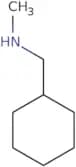
Formula:C5H12O2SPurity:Min. 95%Molecular weight:136.22 g/mol(Cyclohexylmethyl)(methyl)amine
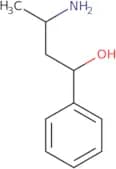
CAS:Versatile small molecule scaffoldFormula:C8H17NPurity:Min. 95%Molecular weight:127.23 g/mol3-Amino-1-phenylbutan-1-ol
CAS:3-Amino-1-phenylbutan-1-ol is a stereoselective reducing agent that can be used for the reduction of aldehydes and ketones. This reagent is produced by the reaction of lithium metal with borohydride. It can also be synthesized from chlorobenzene and sodium borohydride in a two step process. 3-Amino-1-phenylbutan-1-ol has been shown to selectively reduce aldehydes over ketones, as well as reducing Alder–Ethers, Acetals, and Nitriles. 3-Amino-1-phenylbutan-1-ol has been shown to reduce lithium in the presence of chloride or cerium. The selectivity of this reagent has been attributed to its ability to form strong hydrogen bonds with lithium metal.Formula:C10H15NOPurity:Min. 95%Molecular weight:165.23 g/mol6-Phenylimidazo[2,1-b][1,3,4]thiadiazole
CAS:Versatile small molecule scaffold
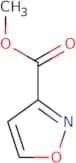
Formula:C10H7N3SPurity:Min. 95%Molecular weight:201.25 g/molMethyl 1,2-oxazole-3-carboxylate
CAS:Methyl 1,2-oxazole-3-carboxylate is a pharmacological agent that belongs to the group of amino acid derivatives. It has been shown to inhibit Hsp70 and Hsp90, which are proteins involved in the folding and stabilization of other proteins. Methyl 1,2-oxazole-3-carboxylate also inhibits cancer cell growth by interacting with valine residues in proteins. Methyl 1,2-oxazole-3-carboxylate has been shown to be effective against human lung cancer cells as well as breast cancer cells. This drug has also been found to be an inhibitor for the interaction between isoxazole and phenylalanine residues in protein structures.Formula:C5H5NO3Purity:Min. 95%Molecular weight:127.1 g/mol2-Oxo-2-phenylacetyl chloride
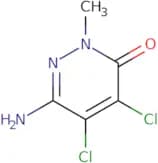
CAS:2-Oxo-2-phenylacetyl chloride is a stable complex that has been used in the asymmetric synthesis of amines. It has been shown to have potential as a drug for autoimmune diseases and inflammatory diseases. 2-Oxo-2-phenylacetyl chloride is a substrate molecule for nitro, propylphosphonic acid, and solid catalyst reactions with carbonyl groups. It also has photochemical properties that allow it to be used as a fluorine or hydroxyl group donor in organic syntheses.Formula:C8H5ClO2Purity:Min. 95%Molecular weight:168.57 g/mol6-Amino-4,5-dichloro-2-methyl-2,3-dihydropyridazin-3-one
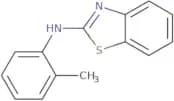
CAS:Versatile small molecule scaffoldFormula:C5H5Cl2N3OPurity:Min. 95%Molecular weight:194.02 g/molN-(2-Methylphenyl)-1,3-benzothiazol-2-amine
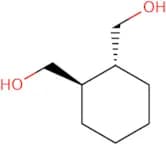
CAS:Versatile small molecule scaffoldFormula:C14H12N2SPurity:Min. 95%Molecular weight:240.33 g/moltrans-1,2-Cyclohexanedimethanol
CAS:Trans-1,2-cyclohexanedimethanol is a synthetic compound that can be used for analytical chemistry. It has a variety of impurities and can form enantiomers and diastereomers when treated with an acid catalyst. Trans-1,2-cyclohexanedimethanol is also hydrophobic and can form chlorides, isomers, and epoxides by reacting with other compounds. Trans-1,2-cyclohexanedimethanol has been shown to have photocatalytic activity in the oxidation of organic substances.
Formula:C8H16O2Purity:Min. 95%Molecular weight:144.21 g/mol
![N-[1-(1H-1,3-Benzodiazol-2-yl)ethyl]benzamide](/_next/image/?url=https%3A%2Fstatic.cymitquimica.com%2Fproducts%2F3D%2Fthumb-webp%2FABA81058.webp&w=3840&q=75)

![2-[(2-Methoxyethyl)sulfanyl]ethan-1-ol](/_next/image/?url=https%3A%2Fstatic.cymitquimica.com%2Fproducts%2F3D%2Fthumb-webp%2FABA75633.webp&w=3840&q=75)
![6-Phenylimidazo[2,1-b][1,3,4]thiadiazole](/_next/image/?url=https%3A%2Fstatic.cymitquimica.com%2Fproducts%2F3D%2Fthumb-webp%2FABA75218.webp&w=3840&q=75)