


Building Blocks
Subcategories of "Building Blocks"
- Boronic Acids & Boronic Acid Derivatives(5,784 products)
- Chiral Building Blocks(1,243 products)
- Hydrocarbon Building Blocks(6,105 products)
- Organic Building Blocks(61,066 products)
Found 205426 products of "Building Blocks"
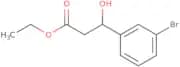
Ethyl 3-(3-bromophenyl)-3-hydroxypropanoate
CAS:Versatile small molecule scaffold
Formula:C11H13BrO3Purity:Min. 95%Molecular weight:273.12 g/molRef: 3D-BCA69941
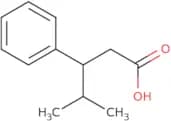
Discontinued product4-Methyl-3-phenylpentanoic acid
CAS:4-Methyl-3-phenylpentanoic acid is a chiral, enantioselective catalyst. It is catalyzed by rhodium and used in the asymmetric synthesis of β-unsaturated amides. This reaction is an example of an esterification that is catalyzed by a chiral, enantioselective reagent. 4-Methyl-3-phenylpentanoic acid has also been shown to be effective for the synthesis of chiral esters.
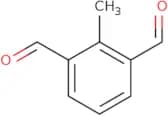
Formula:C12H16O2Purity:Min. 95%Molecular weight:192.25 g/mol2-Methylbenzene-1,3-dicarbaldehyde
CAS:2-Methylbenzene-1,3-dicarbaldehyde is a divalent hydrocarbon that has an oxidation catalyst. This compound is used as an intermediate in the production of drugs and pharmaceuticals. It has been shown to have cardiovascular disorders, such as vasodilatation and hypotension. The mechanism of action is not fully understood but may be related to its ability to act as a nitrovasodilator by increasing nitric oxide (NO) release. 2-Methylbenzene-1,3-dicarbaldehyde also produces psychotic disorders when long term exposure occurs. This compound has been shown to have neurotoxic effects in animal models with long term exposure.
Formula:C9H8O2Purity:Min. 95%Molecular weight:148.16 g/molRef: 3D-BCA68950
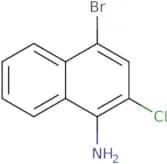
Discontinued product4-Bromo-2-chloronaphthalen-1-amine
CAS:4-Bromo-2-chloronaphthalen-1-amine is a chemical compound that can be synthesized from acetone and chlorides. The reaction proceeds via a nucleophilic substitution reaction in which one of the chlorine atoms is replaced by an electron pair from acetone. This process occurs when the substituent on the naphthalene ring is not sterically hindered, and it is therefore necessary to use substituents that are electron donors, such as methyl or ethyl groups. 4-Bromo-2-chloronaphthalen-1-amine has been synthesized in Japan by reacting acetone with sodium chloride and bromine at high temperature and pressure. The solvent used was benzene, which was removed after the reaction was complete.
Formula:C10H7BrClNPurity:Min. 95%Molecular weight:256.52 g/molRef: 3D-BCA67071
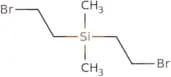
Discontinued productBis(2-bromoethyl)dimethylsilane
CAS:Versatile small molecule scaffold
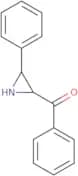
Formula:C6H14Br2SiPurity:Min. 95%Molecular weight:274.07 g/mol2-Benzoyl-3-phenylaziridine
CAS:2-Benzoyl-3-phenylaziridine is a heterocyclic compound that is obtained by the condensation of benzoyl chloride and phenylamine. It is used in the synthesis of azomethine dyes, which are mainly used as textile dyes. The ammonium salt of 2-benzoyl-3-phenylaziridine can be obtained on refluxing the hydrate with thiocyanate and acetonitrile. This transformation has been shown to be dependent on pH with an optimum at pH 8.5.
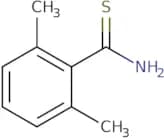
Formula:C15H13NOPurity:Min. 95%Molecular weight:223.27 g/mol2,6-Dimethyl-thiobenzamide
CAS:Versatile small molecule scaffold
Formula:C9H11NSPurity:Min. 95%Molecular weight:165.26 g/molRef: 3D-BCA64331
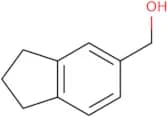
Discontinued product5-Hydroxymethylindane
CAS:Versatile small molecule scaffold
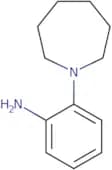
Formula:C10H12OPurity:Min. 95%Molecular weight:148.2 g/mol2-Azepan-1-yl-phenylamine
CAS:Versatile small molecule scaffold
Formula:C12H18N2Purity:Min. 95%Molecular weight:190.28 g/molRef: 3D-BCA62746
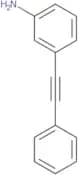
Discontinued product3-(phenylethynyl)aniline
CAS:3-(Phenylethynyl)aniline is a chemical compound that is insoluble in water and has a reactive crosslink. It is reactive with long-term exposure and has a gel permeation chromatography isolated yield. 3-(Phenylethynyl)aniline can be thermally decomposed to phenylethanethiol, which is an exothermic reaction. The technique of nmr spectroscopy can be used to study the reactivity of this compound. 3-(Phenylethynyl)aniline exhibits specific spectral features that can be used to identify it by nmr spectroscopy.
Formula:C14H11NPurity:Min. 95%Molecular weight:193.24 g/molRef: 3D-BCA62444
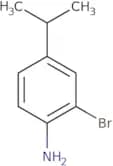
Discontinued product2-Bromo-4-isopropylaniline
CAS:2-Bromo-4-isopropylaniline is a spiroindoline that was synthesized by modification of the natural product, bryostatin. The compound has shown experimental activity against encephalomyelitis in mice. However, the mechanism of action is not known. 2-Bromo-4-isopropylaniline has been found to be an activator for ethylene and can catalyze reactions involving diphosphines and ligands. It binds to phenyl substituents on the molecule and forms x-ray crystallographic structures with high resolution. Optimization of the structure may lead to more potent analogs.
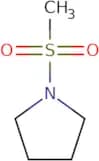
Formula:C9H12BrNPurity:Min. 95%Molecular weight:214.11 g/mol1-Methanesulfonylpyrrolidine
CAS:Versatile small molecule scaffold
Formula:C5H11NO2SPurity:Min. 95%Molecular weight:149.21 g/molRef: 3D-BCA59968
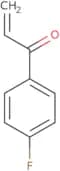
Discontinued product1-(4-Fluorophenyl)prop-2-en-1-one
CAS:1-(4-Fluorophenyl)prop-2-en-1-one is a chalcone that has been shown to have anticancer activity. It has been shown to stabilize the response elements of the transcriptional regulatory protein NF-κB and induce apoptosis in colorectal adenocarcinoma cells. This compound is also able to inhibit cancer growth by inhibiting tumor angiogenesis and metastasis. 1-(4-Fluorophenyl)prop-2-en-1-one binds to DNA, preventing transcription and replication, which leads to cell death. 1-(4-Fluorophenyl)prop-2-en-1-one has also been found to bind withaferin A, a molecule that has been shown to have anticancer activity.
Formula:C9H7FOPurity:Min. 95%Molecular weight:150.15 g/molRef: 3D-BCA59459
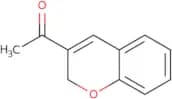
Discontinued product1-(2H-chromen-3-yl)ethanone
CAS:Versatile small molecule scaffold
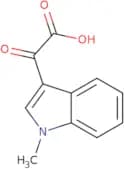
Formula:C11H10O2Purity:Min. 95%Molecular weight:174.19 g/molN-Methyl-3-indoleglyoxylic acid 97
CAS:Controlled ProductN-Methyl-3-indoleglyoxylic acid 97 is a potent and selective inhibitor of protein kinases, including the mitogen activated protein kinase (MAPK) family. It has been shown to inhibit proliferation of cells in vitro. In addition, N-Methyl-3-indoleglyoxylic acid 97 inhibits the activation of MAPK in response to stress or cytokine stimulation. This agent has been shown to be selective for different isotypes of protein kinases and displays good selectivity for inhibition of the enzyme activity.
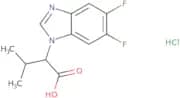
Formula:C11H9NO3Purity:Min. 95%Molecular weight:203.19 g/mol2-(5,6-Difluoro-1H-1,3-benzodiazol-1-yl)-3-methylbutanoic acid hydrochloride
CAS:Versatile small molecule scaffoldFormula:C12H13ClF2N2O2Purity:Min. 95%Molecular weight:290.69 g/molRef: 3D-BAC92262
Discontinued product4-Methoxypyrazolo[1,5-a]pyridine
CAS:Versatile small molecule scaffold
Formula:C8H8N2OPurity:Min. 95%Molecular weight:148.16 g/molRef: 3D-BAC71547
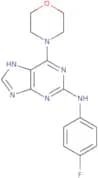
Discontinued productN-(4-Fluorophenyl)-6-(morpholin-4-yl)-9H-purin-2-amine
CAS:Versatile small molecule scaffold
Formula:C15H15FN6OPurity:Min. 95%Molecular weight:314.32 g/molRef: 3D-BAC57867
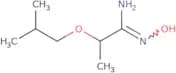
Discontinued productN'-Hydroxy-2-(2-methylpropoxy)propanimidamide
CAS:Versatile small molecule scaffold
Formula:C7H16N2O2Purity:Min. 95%Molecular weight:160.21 g/molRef: 3D-BAC50604
Discontinued product2-[3-(But-2-en-1-yloxy)phenyl]acetic acid
CAS:Versatile small molecule scaffold
Formula:C12H14O3Purity:Min. 95%Molecular weight:206.24 g/molRef: 3D-BAC40562
Discontinued product

![4-Methoxypyrazolo[1,5-a]pyridine](/_next/image/?url=https%3A%2Fstatic.cymitquimica.com%2Fproducts%2F3D%2Fthumb-webp%2FBAC71547.webp&w=3840&q=75)
![2-[3-(But-2-en-1-yloxy)phenyl]acetic acid](/_next/image/?url=https%3A%2Fstatic.cymitquimica.com%2Fproducts%2F3D%2Fthumb-webp%2FBAC40562.webp&w=3840&q=75)