Building Blocks
This section contains fundamental products for the synthesis of organic and biological compounds. Building blocks are the essential starting materials used to construct complex molecules through various chemical reactions. They play a critical role in drug discovery, material science, and chemical research. At CymitQuimica, we offer a diverse range of high-quality building blocks to support your innovative research and industrial projects, ensuring you have the essential components for successful synthesis.
Subcategories of "Building Blocks"
- Boronic Acids & Boronic Acid Derivatives(5,805 products)
- Chiral Building Blocks(1,248 products)
- Hydrocarbon Building Blocks(6,118 products)
- Organic Building Blocks(61,447 products)
Found 208423 products of "Building Blocks"
Sort by
Purity (%)
0
100
|
0
|
50
|
90
|
95
|
100
Methyl 2-(chloromethyl)nicotinate
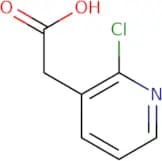
CAS:Methyl 2-(chloromethyl)nicotinate is an organic compound that belongs to the class of esters. It is a reaction product of methyl 3-hydroxybenzoate and nitrous acid. This compound has antimicrobial activity and can be used to treat bacterial infections. Methyl 2-(chloromethyl)nicotinate has been shown to inhibit the growth of various bacteria, including methicillin-resistant Staphylococcus aureus (MRSA), Escherichia coli, Klebsiella pneumoniae, Pseudomonas aeruginosa, Salmonella typhi, and Salmonella typhimurium. The cyano group in this molecule may be responsible for its antibacterial activity. The efficiency of methyl 2-(chloromethyl)nicotinate varies with different types of bacteria. For example, it was more effective against MRSA than against Escherichia coli or Klebsiella pneumoniaeFormula:C8H8ClNO2Purity:Min. 95%Molecular weight:185.61 g/mol(2-Chloropyridin-3-yl)acetic acid
CAS:Versatile small molecule scaffoldFormula:C7H6ClNO2Purity:Min. 95%Molecular weight:171.6 g/mol[2'-(Amino-ºN)[1,1'-biphenyl]-2-yl-C][[3,6-dimethoxy-2',4',6'-tris(1-methylethyl)[1,1'-biphenyl]-2-yl]bis(1,1-dimethylethyl)phosphin e-ºP](methanesulfonato-ºO)palladium (tBuBrettPhos Pd G3)
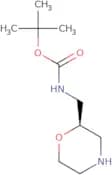
CAS:The chemical is a palladium-based complex that inhibits the activity of α4β7 integrin. It has been shown to be effective in prophylaxis and treatment of inflammatory diseases, such as autoimmune diseases, and other conditions, such as congenital disorders. The compound has been shown to inhibit the growth of plants by causing phytotoxic effects.Formula:C44H62NO5PPdSPurity:Min. 95%Molecular weight:854.43 g/mol(R)-2-(N-Boc-aminomethyl)morpholine
CAS:Versatile small molecule scaffoldFormula:C10H20N2O3Purity:Min. 95%Molecular weight:216.28 g/mol2-Amino-5-bromo-3-fluorobenzoic acid
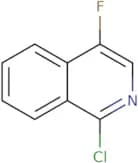
CAS:Versatile small molecule scaffoldFormula:C7H5BrFNO2Purity:Min. 95%Molecular weight:234.03 g/mol1-chloro-4-fluoroisoquinoline
CAS:1-chloro-4-fluoroisoquinoline is a chlorinating agent that has been used as a synthetic method for the synthesis of oxychloride. It is typically used in the presence of palladium catalyst, in the presence of phosphorus and under reductive conditions. The chlorination reaction is initiated by addition of hydrochloric acid or phosphorous oxychloride. The 1-hydroxyisoquinoline reacts with phosphorus to form a chloroformate, which reacts with fluorine gas to produce an intermediate chlorofluorinate. This intermediate then reacts with chlorine gas in the presence of palladium catalyst to generate the desired product, 1-chloro-4-fluoroisoquinoline.Formula:C9H5ClFNPurity:Min. 95%Molecular weight:181.59 g/molMethyl 3,3-bis(methylthio)-2-cyanoacrylate
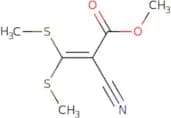
CAS:Methyl 3,3-bis(methylthio)-2-cyanoacrylate is a diphenyl ether that is used as a bactericide. It has been shown to be effective against both Gram-positive and Gram-negative bacteria. Methyl 3,3-bis(methylthio)-2-cyanoacrylate is synthesized by the reaction of malonate with dimethylamine chloride in the presence of hydrochloric acid salt in order to produce chloride ions. The reaction is then heated, which causes the methyl 3,3-bis(methylthio)-2-cyanoacrylate to form. This compound is soluble in organic solvents such as formic acid and can be purified by recrystallization or by distillation.Formula:C7H9NO2S2Purity:Min. 95%Molecular weight:203.28 g/mol(1H-Indazol-4-yl)acetic acid
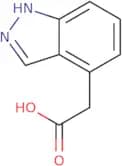
CAS:(1H-Indazol-4-yl)acetic acid is a cation that has been shown to have pharmacological activity. It is hydrolyzable and is used as an anti-inflammatory agent. This compound also decarboxylates and hydrolyzes, which are processes that produce carboxyl and fluoro groups. (1H-Indazol-4-yl)acetic acid has been shown to be an anti-inflammatory agent, with effects against inflammation in the central nervous system. This drug also inhibits the production of inflammatory cytokines, including tumor necrosis factor alpha (TNFα), interleukin 1β (IL1β), and IL6.Formula:C9H8N2O2Purity:Min. 95%Molecular weight:176.17 g/mol4-(3-Aminopropyl)aniline
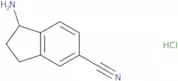
CAS:Versatile small molecule scaffoldFormula:C9H14N2Purity:Min. 95%Molecular weight:150.22 g/mol1-Amino-2,3-dihydro-1H-indene-5-carbonitrile hydrochloride
CAS:Versatile small molecule scaffoldFormula:C10H11ClN2Purity:Min. 95%Molecular weight:194.66 g/mol2,2-Difluorobenzo[d][1,3]dioxol-5-ol
CAS:Versatile small molecule scaffoldFormula:C7H4F2O3Purity:Min. 95%Molecular weight:174.1 g/mol1-Bromo-4-isobutylbenzene
CAS:1-Bromo-4-isobutylbenzene is a ketone that can be synthesized by the reaction of benzene with acetonitrile in the presence of a catalytic amount of oxone. The synthesis is an example of an arylation, which is the addition of an aromatic group to another molecule. It has been shown experimentally that 1-bromo-4-isobutylbenzene undergoes a transition from the x-ray structure analysis to the crystal x-ray structure when dissolved in acetonitrile and heated to 100°C. The final product is then purified by recrystallization with ethylene as a solvent.Formula:C10H13BrPurity:Min. 95%Molecular weight:213.11 g/molSpiro[3.3]heptane-2,6-dicarboxylic acid, 2,6-dimethyl ester
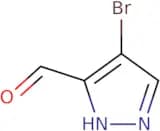
CAS:Versatile small molecule scaffoldFormula:C11H16O4Purity:Min. 95%Molecular weight:212.25 g/mol4-bromo-1H-pyrazole-5-carbaldehyde
CAS:Versatile small molecule scaffoldFormula:C4H3BrN2OPurity:Min. 95%Molecular weight:175 g/molOctacalcium phosphate
CAS:Octacalcium phosphate is a calcium salt with a molecular formula of Ca8(PO4)6. It is used as a supplement in animal feed, as an emulsifier, and as an ingredient in the production of toothpaste and other dental hygiene products. Octacalcium phosphate has been shown to have biological properties that are due to its carotenoid content. This compound has been shown to be stable in vitro and in vivo, even after exposure to plasma mass spectrometry or tissue culture. Octacalcium phosphate also has strong chemical stability under acidic conditions, which makes it suitable for use as a reaction solution for polymerase chain reactions (PCRs). The crystal structure of octacalcium phosphate was determined by X-ray crystallography and the structural analysis revealed that octacalcium phosphate has an orthorhombic unit cell with a lattice spacing of 12.7 Å. The crystal structure consists of two different types of calcium ions: Ca2Formula:Ca4•(H3PO4)3Purity:Min. 95%Color and Shape:PowderMolecular weight:454.3 g/molp-Isobutylstyrene-d7
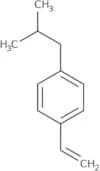
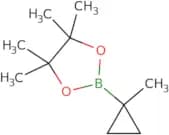
CAS:p-Isobutylstyrene-d7 is a solid catalyst that can be used in the synthesis of organic compounds. It has been shown to have good activity for the transfer of acid chloride groups to aromatic ring systems and for the synthesis of thiadiazoles. p-Isobutylstyrene-d7 has been shown to be an excellent catalyst for the conversion of hydrochloric acid into hydrogen chloride, which can then be recycled. The toxicity studies on this compound have shown that it is not toxic to bacterial strains, which may make it a good candidate for use as a catalyst in bioremediation or a growth substrate. This catalyst has also been shown to have photocatalytic activity and may be used in the purification of water contaminated with heavy metals.Formula:C12H9D7Purity:Min. 95%Molecular weight:167.3 g/mol4,4,5,5-Tetramethyl-2-(1-methylcyclopropyl)-1,3,2-dioxaborolane
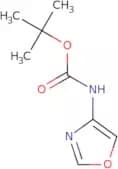
CAS:Versatile small molecule scaffoldFormula:C10H19BO2Purity:Min. 95%Molecular weight:182.07 g/moltert-Butyl oxazol-4-ylcarbamate
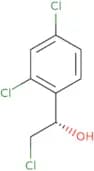
CAS:Versatile small molecule scaffoldFormula:C8H12N2O3Purity:Min. 95%Molecular weight:184.19 g/mol(S)-2,4-Dichloro-±-(chloromethyl)benzyl Alcohol
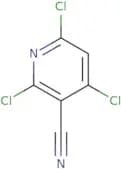
CAS:Versatile small molecule scaffoldFormula:C8H7Cl3OPurity:Min. 95%Molecular weight:225.49 g/mol2,4,6-trichloropyridine-3-carbonitrile
CAS:Versatile small molecule scaffoldFormula:C6HCl3N2Purity:Min. 95%Molecular weight:207.4 g/mol


![[2'-(Amino-ºN)[1,1'-biphenyl]-2-yl-C][[3,6-dimethoxy-2',4',6'-tris(1-methylethyl)[1,1'-biphenyl]-2…](/_next/image/?url=https%3A%2Fstatic.cymitquimica.com%2Fproducts%2F3D%2Fthumb-webp%2FLLC47372.webp&w=3840&q=75)


![2,2-Difluorobenzo[d][1,3]dioxol-5-ol](/_next/image/?url=https%3A%2Fstatic.cymitquimica.com%2Fproducts%2F3D%2Fthumb-webp%2FLYB53982.webp&w=3840&q=75)

![Spiro[3.3]heptane-2,6-dicarboxylic acid, 2,6-dimethyl ester](/_next/image/?url=https%3A%2Fstatic.cymitquimica.com%2Fproducts%2F3D%2Fthumb-webp%2FMBA94279.webp&w=3840&q=75)