Building Blocks
This section contains fundamental products for the synthesis of organic and biological compounds. Building blocks are the essential starting materials used to construct complex molecules through various chemical reactions. They play a critical role in drug discovery, material science, and chemical research. At CymitQuimica, we offer a diverse range of high-quality building blocks to support your innovative research and industrial projects, ensuring you have the essential components for successful synthesis.
Subcategories of "Building Blocks"
- Boronic Acids & Boronic Acid Derivatives(5,778 products)
- Chiral Building Blocks(1,242 products)
- Hydrocarbon Building Blocks(6,098 products)
- Organic Building Blocks(61,092 products)
Found 199296 products of "Building Blocks"
Sort by
Purity (%)
0
100
|
0
|
50
|
90
|
95
|
100
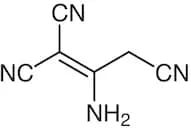
2-Amino-1,1,3-tricyano-1-propene
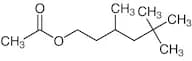
CAS:Formula:C6H4N4Purity:>98.0%(T)Color and Shape:White to Gray to Brown powder to crystalMolecular weight:132.133,5,5-Trimethylhexyl Acetate
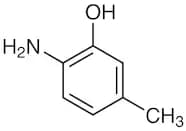
CAS:Formula:C11H22O2Purity:>93.0%(GC)Color and Shape:Colorless to Almost colorless clear liquidMolecular weight:186.306-Amino-m-cresol
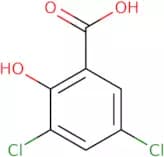
CAS:Formula:C7H9NOPurity:>98.0%(GC)(T)Color and Shape:White to Brown powder to crystallineMolecular weight:123.163,5-Dichlorosalicylic acid
CAS:<p>3,5-Dichlorosalicylic acid is a proton donor that is used to inhibit the 5-nitrosalicylic acid chain reaction. It has a high binding constant with the chlorine atom and can be used as a competitive inhibitor for the binding of 5-nitrosalicylic acid to its target enzyme. 3,5-Dichlorosalicylic acid inhibits the polymerase chain reaction by binding to DNA. This chemical also has biological properties that are similar to those of salicylic acid, including anti-inflammatory activities. 3,5-Dichlorosalicylic acid is not an effective anti-cancer agent because it does not form intramolecular hydrogen bonds or hydrogen bond interactions with DNA bases.</p>Formula:C7H4Cl2O3Purity:Min. 95%Color and Shape:White PowderMolecular weight:207.01 g/mol2,4-Dihydroxybenzoic acid
CAS:<p>2,4-Dihydroxybenzoic acid (2,4-DB) is a metabolite of salicylic acid. It is used as an intermediate in the production of various drugs and dyes. 2,4-DB has been shown to be effective against hepatic steatosis induced by hydrogen fluoride in mice. This drug also inhibits mitochondrial membrane potential and DNA binding activity in human serum. 2,4-DB can bind to the α subunit of mitochondrial ATPase and act as a competitive inhibitor for p-hydroxybenzoic acid which is essential for the activation of this enzyme. The x-ray diffraction data from crystalline 2,4-DB shows that this compound binds to dna with coordination geometry that resembles that of salicylic acid. The kinetic studies have shown that 2,4-DB reacts noncompetitively with nonsteroidal anti-inflammatory drugs (NSAIDs).</p>Formula:C7H6O4Purity:Min 98%Color and Shape:PowderMolecular weight:154.12 g/mol1,3-Diisopropenylbenzene - stabilized with TBC
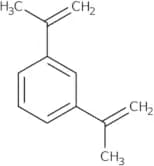
CAS:1,3-Diisopropenylbenzene is a hydrocarbon solvent with thermal expansion properties. It has been shown to be an effective cross-linking agent for cationic polymerization and is used as a surfactant for the production of polyurethanes. 1,3-Diisopropenylbenzene is also used as a chemical intermediate in the production of higher molecular weight polymers and plastics. The ester linkages in 1,3-diisopropenylbenzene are susceptible to hydrolysis and oxidation, which can lead to degradation. 1,3-diisopropenylbenzene is stabilized with TBC by forming an ether linkage with the terminal hydroxyl group on TBC.Formula:C12H14Purity:Min. 95%Color and Shape:Colorless PowderMolecular weight:158.24 g/mol4-Bromo-2-nitrobenzoic acid
CAS:<p>4-Bromo-2-nitrobenzoic acid is an anthranilic acid derivative that can be used as a radiolabel for the diagnosis of bladder cancer. The uptake of 4-Bromo-2-nitrobenzoic acid in the bladder is proportional to the number of cells, which are then detected by positron emission tomography (PET) scanning. The affinity of 4-Bromo-2-nitrobenzoic acid to human bladder tissue was determined by measuring its uptake in humans and rats. 4-Bromo-2-nitrobenzoic acid has been shown to be effective against cancer cells in vitro. Radiolabeling with this compound allows for more accurate diagnostic imaging than using other radiopharmaceuticals.</p>Formula:C7H4BrNO4Purity:Min. 95%Color and Shape:PowderMolecular weight:246.02 g/mol(S)-3-(Benzoylthio)-2-methylpropionic Acid
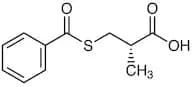
CAS:Formula:C11H12O3SPurity:>98.0%(GC)(T)Color and Shape:White to Almost white powder to crystalMolecular weight:224.273-Mercapto-2-pentanone
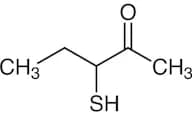
CAS:Formula:C5H10OSPurity:>97.0%(GC)(T)Color and Shape:Colorless to Almost colorless clear liquidMolecular weight:118.194-Nitrobenzoic anhydride
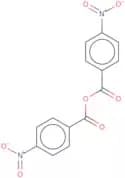
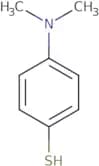
CAS:<p>4-Nitrobenzoic anhydride is a chemical compound that is used as a reagent in organic synthesis. It can be prepared by reacting magnesium with 4-nitrobenzoyl chloride in tetrahydrofuran. This reaction produces the salt of the acid, which can then be reacted with ethyl acetate to form the diethyl ester. The product can also be prepared by reacting propionyl chloride and peroxide in tetrahydrofuran or by reaction of 1-naphthaldehyde and chloride in acetic acid. 4-Nitrobenzoic anhydride is a salt that has been used as a corrosion inhibitor for metals and as a reducing agent for epoxides. It has also been used to produce other substances, such as methylamines, amines, and nitro compounds. 4-Nitrobenzoic anhydride reacts with nucleophiles such as water or alkalis to produce perox</p>Formula:C14H8N2O7Purity:Min. 95%Color and Shape:Off-White PowderMolecular weight:316.22 g/mol4-(Dimethylamino)benzenethiol
CAS:<p>4-(Dimethylamino)benzenethiol (DMAT) is a thiol that has coordination chemistry with metal ions. DMAT exhibits transport properties, such as solubility in water and chloride, which may be due to its electrochemical properties. DMAT can be photooxidized by ultraviolet light to form the reactive species, 4-dimethylaminobenzoquinone. This reactive species can then react with hydrogen peroxide to produce the intermediate radical cation, which can react with other molecules to produce singlet oxygen and superoxide radicals. These reactions are responsible for the photooxidation of organic materials.<br>The enhanced Raman spectra of DMAT have been studied using surface-enhanced Raman spectroscopy (SERS). The SERS technique enhances the intensity of scattered laser light by orders of magnitude by tapping into a phenomenon known as surface plasmon resonance. The nmr spectra of DMAT have been studied and show that it is</p>Formula:C8H11NSPurity:Min. 95%Color and Shape:PowderMolecular weight:153.25 g/molMethyl 3-Methyl-15-phenylpentadecanoate
CAS:Formula:C23H38O2Purity:>95.0%(GC)Color and Shape:White to Yellow to Green clear liquidMolecular weight:346.562,6-Dimethylbenzaldehyde
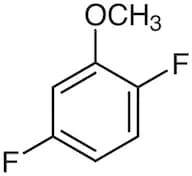
CAS:<p>2,6-Dimethylbenzaldehyde is a colorless liquid with a sweet odor. It is used in the synthesis of fatty acids and as an intermediate for other compounds. This chemical has significant cytotoxicity against leukemia cells, and is used in the production of acrylonitrile. 2,6-Dimethylbenzaldehyde can be synthesized by reacting an amine with an acyl chloride, followed by hydrolysis of the resulting ester. A contactor is usually added to facilitate the reaction. The reaction can also be carried out in the presence of a phosphorane or organic solvent.<br>2,6-Dimethylbenzaldehyde can be hydrogenated to produce 2,4-dimethylaniline and 2,4,6-trimethylaniline.</p>Formula:C9H10OPurity:Min. 95%Color and Shape:Clear White Solid Or Liquid (May Vary)Molecular weight:134.18 g/mol2,5-Difluoroanisole
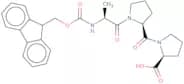
CAS:Formula:C7H6F2OPurity:>98.0%(GC)Color and Shape:Colorless to Almost colorless clear liquidMolecular weight:144.12Fmoc-Ala-Pro-Pro-OH
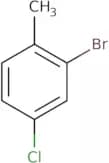
CAS:<p>Fmoc-Ala-Pro-Pro-OH is an amino acid that belongs to the class of speciality chemicals. It is a versatile building block for organic synthesis, with applications in pharmaceuticals, agrochemicals, and other chemical industries. The CAS number for Fmoc-Ala-Pro-Pro-OH is 386768-25-8.</p>Formula:C28H31N3O6Purity:Min. 95%Color and Shape:PowderMolecular weight:505.56 g/mol2-Bromo-4-chlorotoluene
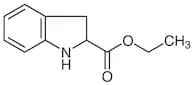
CAS:<p>2-Bromo-4-chlorotoluene is a chemical compound with the molecular formula C6H4BrClO. It is an aromatic peroxide that has a chlorine atom attached to one of the benzene rings. 2-Bromo-4-chlorotoluene is produced by the reaction of bromine with chlorotoluene in the presence of hydrogen peroxide and sodium periodate. The reaction takes place at room temperature, producing a colourless liquid with a pungent odour. This chemical can be identified by its infrared frequencies, which are observed as vibrations between 1650 and 1700 cm−1. The molecule has a dipole moment of 0.5 D, which means it can transfer electrons to other molecules or atoms in order to form bonds. 2-Bromo-4-chlorotoluene is used as an intermediate for organic compounds such as glycol dimethyl ethers.<br>2-Bromo</p>Formula:C7H6BrClPurity:Min. 95%Color and Shape:PowderMolecular weight:205.48 g/molEthyl Indoline-2-carboxylate
CAS:Formula:C11H13NO2Purity:>95.0%(GC)Color and Shape:White to Orange to Green powder to crystalMolecular weight:191.23trans-4-Propyl-L-proline
CAS:Please enquire for more information about trans-4-Propyl-L-proline including the price, delivery time and more detailed product information at the technical inquiry form on this pageFormula:C8H15NO2Purity:Min. 95%Molecular weight:157.21 g/mol4-(1,2,4-Triazol-1-yl)benzaldehyde
CAS:Formula:C9H7N3OPurity:>98.0%(GC)(T)Color and Shape:Light orange to Yellow to Green powder to crystalMolecular weight:173.184-Nitro-2-(trifluoromethyl)benzonitrile
CAS:Formula:C8H3F3N2O2Purity:>98.0%(GC)Color and Shape:White to Yellow to Green powder to crystalMolecular weight:216.12