Building Blocks
This section contains fundamental products for the synthesis of organic and biological compounds. Building blocks are the essential starting materials used to construct complex molecules through various chemical reactions. They play a critical role in drug discovery, material science, and chemical research. At CymitQuimica, we offer a diverse range of high-quality building blocks to support your innovative research and industrial projects, ensuring you have the essential components for successful synthesis.
Subcategories of "Building Blocks"
- Boronic Acids & Boronic Acid Derivatives(5,778 products)
- Chiral Building Blocks(1,243 products)
- Hydrocarbon Building Blocks(6,098 products)
- Organic Building Blocks(61,057 products)
Found 200710 products of "Building Blocks"
Sort by
Purity (%)
0
100
|
0
|
50
|
90
|
95
|
100
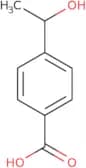
4-(1-Hydroxy-ethyl)-benzoic acid
CAS:<p>4-(1-Hydroxy-ethyl)-benzoic acid (4-HBA) is a hydrophobic compound that is an inhibitor of cytochrome P450, which is an enzyme system in the liver and other organs. The inhibitory activity of 4-HBA is due to its binding to the active site of cytochrome P450. This molecule has been shown to be effective against ferredoxin and putidaredoxin, which are enzymes that play a role in electron transfer reactions. 4-(1-Hydroxy-ethyl)-benzoic acid binds to the residue on these enzymes without any effect on their function.</p>Formula:C9H10O3Purity:Min. 95%Molecular weight:166.17 g/mol5-Fluoro-N1,N1-dimethylbenzene-1,3-diamine
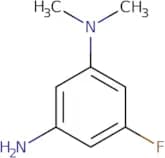
CAS:<p>5-Fluoro-N1,N1-dimethylbenzene-1,3-diamine is a reaction component that can be used in the synthesis of compounds with a wide range of applications. It can be used as a reagent and has been shown to exhibit high quality in research. 5-Fluoro-N1,N1-dimethylbenzene-1,3-diamine is also known to be useful for the synthesis of pharmaceuticals, agrochemicals and other chemicals. The compound can be used as an intermediate or building block in the synthesis of more complex compounds. 5-Fluoro-N1,N1-dimethylbenzene-1,3-diamine is also versatile due to its ability to react with various types of functional groups including amines and thiols. This product is a fine chemical that exhibits a high degree of purity when synthesized.</p>Formula:C8H11FN2Purity:Min. 95%Color and Shape:Clear LiquidMolecular weight:154.18 g/mol(3-Aminopropyl)trimethylazanium chloride
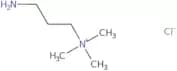
CAS:(3-Aminopropyl)trimethylazanium chloride is a fine chemical that is used as a building block and reagent in the synthesis of various organic compounds. It has been shown to be useful for reactions involving nucleophilic aromatic substitution, radical addition, and cycloaddition reactions. (3-Aminopropyl)trimethylazanium chloride has also been shown to be an effective intermediate in the synthesis of various pharmaceuticals. The CAS number is 19223-69-9.Formula:C6H17ClN2Purity:Min. 95%Color and Shape:PowderMolecular weight:152.66 g/mol4-(Methylamino)cyclohexane-1-sulfonamide hydrochloride
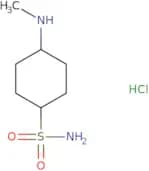
CAS:Versatile small molecule scaffoldFormula:C7H16N2O2S•HClPurity:Min. 95%Color and Shape:PowderMolecular weight:228.7 g/molHexahydropyrrolo[1,2-a]pyrazine-1,4-dione
CAS:<p>Hexahydropyrrolo[1,2-a]pyrazine-1,4-dione is a neuroprotective compound that is structurally related to the well-known anti-inflammatory drug ketoprofen. It has been shown to inhibit the production of pro-inflammatory cytokines and reactive oxygen species in vitro by a mechanism involving inhibition of mitochondrial membrane permeability. Hexahydropyrrolo[1,2-a]pyrazine-1,4-dione also inhibits bacterial growth and urea nitrogen excretion in mice. This compound has been found in cyanobacteria and some etoac extracts, as well as in bacteria from the genera Pseudomonas and Staphylococcus.</p>Formula:C7H10N2O2Purity:Min. 95%Molecular weight:154.17 g/molEthyl 2-formyl-1H-pyrrole-3-carboxylate
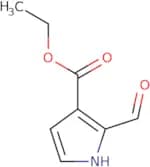
CAS:Ethyl 2-formyl-1H-pyrrole-3-carboxylate is a fine chemical that can be used as a building block in the synthesis of drugs, pesticides, and other organic compounds. It is also a reagent for the synthesis of other compounds. The compound can be easily synthesized by reacting ethyl formate with pyrrole. This process occurs spontaneously at room temperature and does not require any catalysts or solvents. Ethyl 2-formyl-1H-pyrrole-3-carboxylate has been used to synthesize antihistamines, antihypertensives, and anticancer agents. As it is a versatile building block, it can be used as an intermediate for the synthesis of many other compounds. It has also been shown to have useful scaffolding properties in drug design.Formula:C8H9NO3Purity:Min. 95%Color and Shape:PowderMolecular weight:167.16 g/mol2-Bromo-1-(3-methanesulfonylphenyl)ethan-1-one
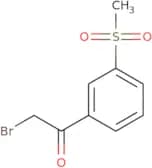
CAS:2-Bromo-1-(3-methanesulfonylphenyl)ethan-1-one is a fine chemical that has been used as a building block for research chemicals, reagents, and speciality chemicals. It is a versatile building block that can be used in multi-step reactions to form complex compounds. This compound is also an intermediate in the synthesis of many pharmaceuticals and agrochemicals.Formula:C9H9BrO3SPurity:Min. 95%Color and Shape:PowderMolecular weight:277.14 g/molLithium bis(trifluoromethanesulfonimide)
CAS:<p>Lithium bis(trifluoromethanesulfonimide) is a salt that is used in analytical chemistry as a reagent for the preparation of lithium salts. The sample should be dissolved in an organic solution and then reacted with lithium bis(trifluoromethanesulfonimide). Lithium bis(trifluoromethanesulfonimide) has been shown to have good transport properties, but the reaction mechanism is not well-understood. It has an activation energy of approximately 18 kcal/mol and can decompose at high temperatures. Lithium bis(trifluoromethanesulfonimide) can also react with strong acids or bases, so it is necessary to use an electrolyte when preparing the solution.</p>Formula:C2F6LiNO4S2Purity:Min 98%Color and Shape:White Off-White PowderMolecular weight:287.09 g/molLys(Boc)-OtBu,HCl
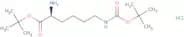
CAS:Lys(Boc)-OtBu,HCl is a versatile building block and research chemical that can be used for the synthesis of complex compounds. This compound is a useful intermediate and reaction component in organic chemistry. It is also a reagent that can be used to synthesize high-quality chemical products.Formula:C15H30N2O4·HClPurity:Min. 95%Color and Shape:White PowderMolecular weight:338.87 g/molLinoleic acid - liquid
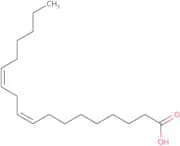
CAS:<p>Linoleic acid is a type of essential fatty acid that is found in vegetable oils. It is the most predominant polyunsaturated fatty acid and can be classified as either a cis- or trans-isomer. Linoleic acid has been shown to have inhibitory properties against bowel disease, polymerase chain reaction (PCR) analysis, and disease activity. Linoleic acid may also be used as an analytical method for determining levels of linoleate, linoleic acid, or p-hydroxybenzoic acid in body proteins. The inhibition of cancer cell proliferation by linoleic acid may be due to its ability to inhibit the production of signal peptide or 3t3-l1 preadipocytes.</p>Formula:C18H32O2Purity:94 To 96%Color and Shape:Colorless Clear LiquidMolecular weight:280.45 g/molLevoglucosenone
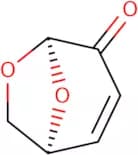
CAS:<p>Levoglucosenone is a molecule that inhibits the reaction mechanism of glycosidic bond formation. It is used in biochemical research to study reactions that involve surface methodology, such as hydroxyl group formation and zirconium oxide deposition. Levoglucosenone can be used to inhibit the acid formation that occurs during the reaction between nitrite ion and a chiral compound. The reactant solution can be activated by adding levoglucosenone to it, which will then inhibit the reaction. Sample preparation for these types of experiments involves dissolving the reactant solution in water and adding ammonium hydroxide to it, followed by adding a small amount of levoglucosenone.</p>Formula:C6H6O3Purity:Min. 95%Color and Shape:Clear LiquidMolecular weight:126.11 g/mol3-Methoxythiophene-2-boronic acid pinacol ester
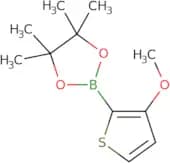
CAS:3-Methoxythiophene-2-boronic acid pinacol ester is a ligand that can be used in the synthesis of organic molecules. It undergoes nucleophilic substitution reactions and has been shown to be an excellent substrate for Suzuki coupling reactions. This reactant can also be used as a backbone in the synthesis of optical materials, such as semiconductors. 3-Methoxythiophene-2-boronic acid pinacol ester is capable of forming a variety of substitutions and transfers with benzothiadiazole derivatives, which have been shown to have an acceptor effect on organic molecules.Formula:C11H17BO3SPurity:Min. 95%Color and Shape:PowderMolecular weight:240.13 g/mol4-Methoxycyclohexane-1-sulfonyl chloride
CAS:Versatile small molecule scaffoldFormula:C7H13ClO3SPurity:Min. 95%Color and Shape:Clear LiquidMolecular weight:212.7 g/moltert-Butyl 3-(4-(4,4,5,5-tetramethyl-1,3,2-dioxaborolan-2-yl)phenoxy)azetidine-1-carboxylate
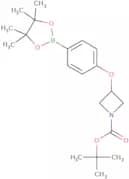
CAS:<p>Tert-Butyl 3-(4-(4,4,5,5-tetramethyl-1,3,2-dioxaborolan-2-yl)phenoxy)azetidine-1-carboxylate is a high quality reagent that can be used as an intermediate in the synthesis of complex compounds. It has been shown to have various uses as a fine chemical or speciality chemical. Tert-butyl 3-(4-(4,4,5,5-tetramethyl-1,3,2-dioxaborolan-2-yl)phenoxy)azetidine 1 carboxylate is also a versatile building block and can serve as a reaction component.</p>Formula:C20H30BNO5Purity:Min. 95%Color and Shape:PowderMolecular weight:375.3 g/mol2-Iodoethanol - stabilised with copper
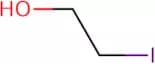
CAS:2-Iodoethanol is a chemical compound that has the chemical formula CH2CHIO2. It is used as a reagent in analytical chemistry, as well as in pharmaceutical preparations and polymerase chain reactions. The hydroxyl group on the ethoxy side of this molecule is important for its reactivity, with 2-iodoethanol having an electron affinity of 5.4 eV. This reactivity can also be seen when it is reacted with sodium carbonate to form sodium ethoxide, which has been shown to have anti-hyperproliferative properties. 2-Iodoethanol has been shown to be particularly effective against plant metabolites, such as 5-membered heteroaryl compounds.Formula:C2H5IOPurity:Min. 98.5 Area-%Color and Shape:PowderMolecular weight:171.96 g/mol7H-Imidazo[4,5-d]pyrimidine
CAS:<p>7H-imidazo[4,5-d]pyrimidine is a small molecule that exhibits receptor activity against toll-like receptors. It has been shown to inhibit the production of proinflammatory cytokines and chemokines in HL60 cells. 7H-imidazo[4,5-d]pyrimidine also inhibits the activities of enzymes involved in purine metabolism and cellular metabolic processes, as well as intracellular targets including protein kinases, phosphatases and transcription factors. 7H-imidazo[4,5-d]pyrimidine has been shown to be effective against solid tumours such as murine sarcoma virus and plant tumors. This drug also inhibits the enzymatic activity of p2y receptors that are involved in inflammation and platelet aggregation.</p>Formula:C5H4N4Purity:Min. 95%Color and Shape:PowderMolecular weight:120.11 g/mol2-Isocyanatopyridine
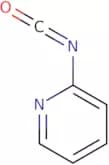
CAS:<p>2-Isocyanatopyridine is a synthetic chemical that has been shown to be an effective anti-cancer agent. It is a hemibasic, heterocyclic compound with two isomers, cis and trans. The cis form exhibits more potent antitumor activity than the trans form. 2-Isocyanatopyridine has been synthesized using mesoporous silica, which provides the molecule with a high surface area and good adsorption properties. Hydrogen bonding between the isocyanate group and hydrogen atoms in the naphthyridine ring are responsible for its functionalizing effects. 2-Isocyanatopyridine binds to receptors on cancer cells and inhibits cell proliferation by interfering with cell signaling pathways.<br>2-Isocyanatopyridine has been shown to inhibit tumor growth in mice bearing human colon carcinoma xenografts.</p>Formula:C6H4N2OPurity:Min. 95%Color and Shape:Brown PowderMolecular weight:120.11 g/mol1-(2,3-Difluorophenyl)ethan-1-amine hydrochloride
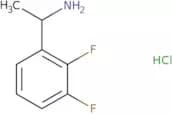
CAS:1-(2,3-Difluorophenyl)ethan-1-amine hydrochloride is a high quality chemical. It is a reagent that can be used as an intermediate in the synthesis of complex compounds and fine chemicals. This compound is also a useful scaffold for the development of new drugs and novel materials. 1-(2,3-Difluorophenyl)ethan-1-amine hydrochloride is also a versatile building block for reactions in organic chemistry. It is a speciality chemical that can be used as a research chemical or reaction component for synthetic organic chemistry.Formula:C8H10ClF2NPurity:Min. 95%Color and Shape:PowderMolecular weight:193.62 g/mol4-Bromo-3,5-dihydroxybenzoic acid methyl ester
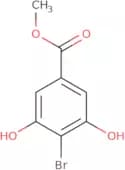
CAS:The compound 4-Bromo-3,5-dihydroxybenzoic acid methyl ester is an ether that is a natural product. It has been shown to have diastereoselective coupling with phenolic groups and unsymmetrically with lactones. This compound also undergoes epoxidation and farnesylation reactions. The intramolecular chain of the ether is methylated by formylation and reductive elimination.Formula:C8H7BrO4Purity:Min. 95%Color and Shape:PowderMolecular weight:247.04 g/mol3-(1-Methyl-1H-pyrazol-3-yl)benzoic acid
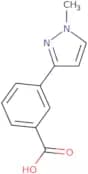
CAS:<p>3-(1-Methyl-1H-pyrazol-3-yl)benzoic acid is a chemical compound with the molecular formula C5H5NO2. It is a research chemical that has not yet been fully characterized and its potential uses have not yet been determined. 3-(1-Methyl-1H-pyrazol-3-yl)benzoic acid is used as an intermediate in the synthesis of other compounds, including pharmaceuticals and pesticides. This compound has the potential to be used as a building block for complex compounds, or as a reagent in various reactions.</p>Formula:C11H10N2O2Purity:Min. 95%Color and Shape:PowderMolecular weight:202.21 g/mol

![Hexahydropyrrolo[1,2-a]pyrazine-1,4-dione](/_next/image/?url=https%3A%2Fstatic.cymitquimica.com%2Fproducts%2F3D%2Fthumb-webp%2FUAA17912.webp&w=3840&q=75)


![7H-Imidazo[4,5-d]pyrimidine](/_next/image/?url=https%3A%2Fstatic.cymitquimica.com%2Fproducts%2F3D%2Fthumb-webp%2FFI34476.webp&w=3840&q=75)