Building Blocks
Subcategories of "Building Blocks"
- Boronic Acids & Boronic Acid Derivatives(5,774 products)
- Chiral Building Blocks(1,237 products)
- Hydrocarbon Building Blocks(6,098 products)
- Organic Building Blocks(60,970 products)
Found 205134 products of "Building Blocks"
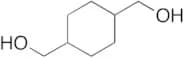
1,4-Cyclohexanedimethanol
CAS:Controlled ProductApplications 1,4-Cyclohexanedimethanol is extensively used as cross-linking reagent in polymer industry. It has been used in the synthesis of polyketal copolymers. It was used as diol comonomer during the synthesis of polyester-carbonates based on 1,3-propylene-co-1,4-cyclohexanedimethylene succinate.
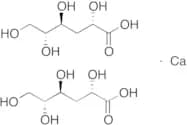
References Yang, S., et al.: Bioconjugate Chem., 19, 1164 (2008); Liu, Y., et al.: J. Polym. Sci. A Polym. Chem., 39, 2508 (2011); Hungria, A., et al.: Angewandte Chemie, 45, 4782 (2006)Formula:C24H30O3SiColor and Shape:NeatMolecular weight:394.5793-Deoxy-D-arabino-hexonic Acid Calcium Salt
CAS:Controlled ProductStability Hygroscopic
Applications 3-Deoxy-D-arabino-hexonic Acid Calcium Salt has been shown to not play a major role in the initial hydrothermal decarboxylation of biomass.
References Luijkx, G.C.A., et. al.: Carbohyd. Res., 272, 191 (1995)Formula:C12H24CaO12Color and Shape:NeatMolecular weight:400.394-Methylvaleric Acid Ethyl Ester
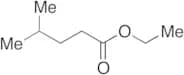
CAS:Controlled ProductFormula:C8H16O2Color and Shape:NeatMolecular weight:144.211,3-Diphenylurea
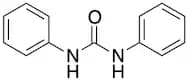
CAS:Applications 1,3-Diphenylurea (cas# 102-07-8) is a useful research chemical.
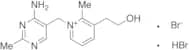
Formula:C13H12N2OColor and Shape:NeatMolecular weight:212.25Pyrithiamine
CAS:Controlled ProductApplications Thiamine (T344185) antagonist. Thiamine (T344185) analog.
References Cooper, J., et al.: J. Neurochem., 19, 1809 (1972), Patrini, C., et al.: Brain Res., 628, 179 (1993), Nauti, A., et al.: Metab. Brain Dis., 12, 145 (1997),Formula:C14H19N4O·HBr·BrColor and Shape:Light Yellow To Light BeigeMolecular weight:420.15(2E,6E)-3,7,11-Trimethyldodeca-2,6,10-trien-1-yl Acetate
CAS:Controlled ProductApplications (2E,6E)-3,7,11-Trimethyldodeca-2,6,10-trien-1-yl Acetate is an intermediate in the synthesis of JHSB3 (J211030). JHSB3 is an acyclic sesquiterpenoid that regulates many aspects of insect physiology. Juvenile Hormone regulate development, reproduction, diapause, and polyphenisms.
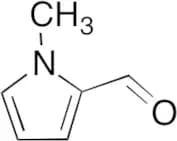
References Kotaki, T., et al.: Org. Let., 11, 5234 (2009); Riddiford, L.: Adv. Insect Physiol., 24, 213 (1994); Wyatt, G., Davey, K.: Adv. Insect Physiol., 26, 1 (1996); Nijhout, H.: Insect Hormones (Princeton Univ. Press, Princeton) (1994)Formula:C17H28O2Color and Shape:NeatMolecular weight:264.41-Methyl-1H-pyrrole-2-carbaldehyde
CAS:Controlled ProductApplications 1-Methyl-1H-pyrrole-2-carbaldehyde is a substance for the toxicological evaluation of aerosols of a tobacco extract formulation and nicotine formulations in acute and short-term inhalation studies. A substance for ligand-based screening of chemical constituents of Glycyrrhiza glabra in search of inhibitors of xanthine oxidase.
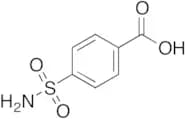
References Werley, M. S., et al.: Inhalation Toxicology, 26, 207 (2014); Naeem, S., et al.: Int. J. Biol. Biotechnol., 9, 257 (2012)Formula:C6H7NOColor and Shape:Clear Dark RedMolecular weight:109.134-Sulfamoylbenzoic Acid
CAS:Controlled ProductApplications 4-Sulfamoylbenzoic Acid is used as a reagent in the synthesis of carbonic anhydrase inhibitors anticonvulsant agents.
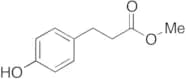
References Singh, S. et al.: J. Enz. Inhib. Med. Chem., 31, 417 (2016);Formula:C7H7NO4SColor and Shape:NeatMolecular weight:201.23-(4-Hydroxyphenyl)propionic Acid Methyl Ester
CAS:Controlled ProductApplications 3-(4-Hydroxyphenyl)propionic Acid Methyl Ester is a useful synthetic intermediate. It can be used to prepare potent and orally available G protein-coupled receptor 40 agonists as potential antidiabetic agents.
References Sasaki, S., et al.: J. Med. Chem., 54, 1365 (2011); Christiansen, E., et al.: ACS Med. Chem. Lett., 1, 345 (2010)Formula:C10H12O3Color and Shape:NeatMolecular weight:180.2alpha,2,4-Trichloroacetophenone
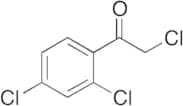
CAS:Controlled ProductApplications α,2,4-Trichloroacetophenone is a reagent used in the synthesis of isoconazole, a potent antifungal agent.
References Dulcevscaia, G. et al.: Polyhed., 52, 106 (2013); Wang, Y. et al.: Bioorg. Med. Chem. Lett., 22, 5363 (2012);Formula:C8H5Cl3OColor and Shape:NeatMolecular weight:223.48Tris(2-aminoethyl)amine
CAS:Controlled ProductApplications Tris(2-aminoethyl)amine is a tetradentate chelating ligand and forms stable complexes with transition metals.
Not a dangerous good if item is equal to or less than 1g/ml and there is less than 100g/ml in the package
References Xu, C., et al.: J. Mater. Chem. A, 3, 16229-16234 (2015); Sietzen, M., et al.: Organometallics, 34, 1118-1128 (2015);Formula:C6H18N4Color and Shape:NeatMolecular weight:146.2349-cis-Retinyl Stearate-d5
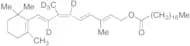
CAS:Controlled ProductApplications 9-cis-Retinyl Stearate-d5, is the labeled analogue of 9-cis-Retinyl Stearate (R275600), a fatty acid ester of Retinol isomer, found mainly in the retina.
References Bridges, C.D.B., et al.: Methods Enzymol., 81, 463 (1982),Formula:C38D5H59O2Color and Shape:NeatMolecular weight:557.9441-Cyanoimidazole
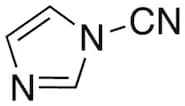
CAS:Controlled ProductStability Light Sensitive, Decomposes Rapidly in Air, Temperature Sensitive
Applications It has been examined as a ligand and as a pseudo-cyanide.Formula:C4H3N3Color and Shape:NeatMolecular weight:93.09a-Chloro-p-methyltoluene
CAS:Controlled ProductApplications α-Chloro-p-methyltoluene is a building block that has been used as a reactant for the preparation of 6-aminoquinolone derivatives as submicromolar hepatitis C virus NS5B inhibitors
Not a dangerous good if item is equal to or less than 1g/ml and there is less than 100g/ml in the package
References Manfroni, G., et. al.: J. Med. Chem., Ahead of Print (2013)Formula:C8H9ClColor and Shape:NeatMolecular weight:140.614-(1-Methylethyl)benzoic Acid
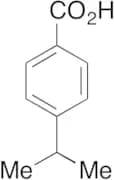
CAS:Applications 4-(1-Methylethyl)benzoic Acid is used in the synthesis of quinuclidine benzamides as agonists for nicotinic acetylcholine receptors. Also used in the synthesis of nifuroxazide analogues showing antimicrobial activity against methicillin-resistant Staphylococcus.
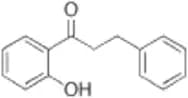
References Bodnar, A. et al.: J. Med. Chem., 48, 905 (2005); Masunari, A. et al.: Bioorg. Med. Chem. Lett., 15, 4229 (2007);Formula:C10H12O2Color and Shape:NeatMolecular weight:164.22'-Hydroxy-3-phenylpropiophenone
CAS:Controlled ProductImpurity Propafenone EP Impurity A; Propafenone BP Impurity A; Propafenone USP Impurity A
Applications 2’-Hydroxy-3-phenylpropiophenone (Propafenone EP Impurity A; Propafenone BP Impurity A; Propafenone USP Impurity A) is a metabolite of Propafenone (P757500).
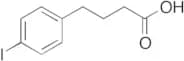
References Hege, H.G. et al.: Arzneim.-Forsch., 34, 972 (1984);Formula:C15H14O2Color and Shape:NeatMolecular weight:226.274-(p-Iodophenyl)butyric Acid
CAS:Applications 4-(p-Iodophenyl)butyric Acid is a reactant involved in the synthesis of meta- and paracyclophanes containing unsaturated amino acids and intramolecular Friedel-Crafts reactions for synthesis of 1-tetralones.
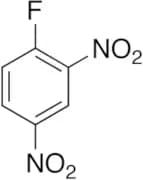
References Gibson, S., et al.: Tetrahedron, 60, 6945 (2004); Cui, D., et al.: Tetrahedron Lett., 44, 4007 (2003)Formula:C10H11IO2Color and Shape:NeatMolecular weight:290.12,4-Dinitrofluorobenzene
CAS:Controlled ProductApplications A substituted benzene use in polypeptide sequencing (also referred to as Sanger’s reagent). Used in the derivitization of primary amines. Shown to inhibit the reductase activity of mitochondrial b-c1 complex isolated from beef heart mitochondria.
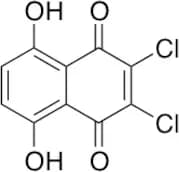
References Sanger, F. et al.: Biochem. J., 39, 507 (1945); Fariss, M.W. et al.: Methods Enzymol., 143, 101 (1987); Lorusso, M. et al.: FEBS Lett., 195, 298 (1986);Formula:C6H3FN2O4Color and Shape:NeatMolecular weight:186.12,3-Dichloro-5,8-dihydroxy-1,4-naphthoquinone
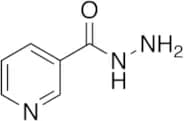
CAS:Controlled ProductFormula:C10H4Cl2O4Color and Shape:NeatMolecular weight:259.0423-Isoniazid
CAS:Controlled ProductApplications An impurity of Isoniazid (I821450), potent antitubercular agent against M. tuberculosis.
References Brewer, G.A., et al.: Anal. Profiles. Drug. Subs., 6, 183 (1977), Andrade, C., et al.: Lett. Drug. Des. Discov., 5, 377 (2008)Formula:C6H7N3OColor and Shape:Off White PowderMolecular weight:137.14