


Building Blocks
This section contains fundamental products for the synthesis of organic and biological compounds. Building blocks are the essential starting materials used to construct complex molecules through various chemical reactions. They play a critical role in drug discovery, material science, and chemical research. At CymitQuimica, we offer a diverse range of high-quality building blocks to support your innovative research and industrial projects, ensuring you have the essential components for successful synthesis.
Subcategories of "Building Blocks"
- Boronic Acids & Boronic Acid Derivatives(5,756 products)
- Chiral Building Blocks(1,242 products)
- Hydrocarbon Building Blocks(6,093 products)
- Organic Building Blocks(60,522 products)
Found 195533 products of "Building Blocks"
Sort by
Purity (%)
0
100
|
0
|
50
|
90
|
95
|
100
Potassium trifluoro[(methylsulfanyl)methyl]boranuide
CAS:<p>Versatile small molecule scaffold</p>Formula:C2H5BF3KSPurity:Min. 95%Molecular weight:168.04 g/molBut-3-yn-1-yl (2S)-2-amino-3-methylbutanoate
CAS:<p>Versatile small molecule scaffold</p>Formula:C9H15NO2Purity:Min. 95%Molecular weight:169.2 g/mol2,6-Dimethylimidazo[2,1-b][1,3,4]thiadiazole-5-carbaldehyde
CAS:<p>Versatile small molecule scaffold</p>Formula:C7H7N3OSPurity:Min. 95%Molecular weight:181.22 g/mol{Dimethylimidazo[2,1-b][1,3,4]thiadiazol-5-yl}methanol
CAS:<p>Dimethylimidazo[2,1-b][1,3,4]thiadiazol-5-yl}methanol (DMTMT) is a chemical compound that has been shown to have antiulcer properties. It also has antisecretory effects on the glands of the stomach and intestines. DMTMT may be used in the treatment of various diseases such as acute and chronic gastritis, peptic ulcers, and inflammation of the lining of the stomach.</p>Formula:C7H9N3OSPurity:Min. 95%Molecular weight:183.23 g/molMethyl 3-(4-aminopiperidin-1-yl)propanoate dihydrochloride
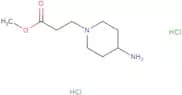
CAS:<p>Versatile small molecule scaffold</p>Formula:C9H18N2O2•(HCl)2Purity:Min. 95%Molecular weight:259.17 g/molMethyl 3-(4-{[(tert-butoxy)carbonyl]amino}piperidin-1-yl)propanoate
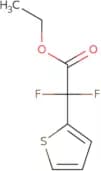
CAS:<p>Versatile small molecule scaffold</p>Formula:C14H26N2O4Purity:Min. 95%Molecular weight:286.37 g/molEthyl 2,2-difluoro-2-(thiophen-2-yl)acetate
CAS:<p>Versatile small molecule scaffold</p>Formula:C8H8F2O2SPurity:Min. 95%Molecular weight:206.21 g/mol6-Bromo-1H-1,3-benzodiazole-5-carbonitrile
CAS:<p>Versatile small molecule scaffold</p>Formula:C8H4BrN3Purity:Min. 95%Molecular weight:222.04 g/mol3-{2-[(1H-Indol-3-yl)methylidene]hydrazin-1-yl}-8-thia-4,6-diazatricyclo[7.4.0.0,2,7]trideca-1(9),2,4,6-tetraene
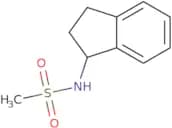
CAS:<p>Versatile small molecule scaffold</p>Formula:C19H17N5SPurity:Min. 95%Molecular weight:347.4 g/molN-2,3-Dihydro-1H-inden-1-ylmethanesulfonamide
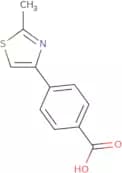
CAS:<p>Versatile small molecule scaffold</p>Formula:C10H13NO2SPurity:Min. 95%Molecular weight:211.28 g/mol4-(2-Methyl-1,3-thiazol-4-yl)benzoic acid
CAS:<p>4-(2-Methyl-1,3-thiazol-4-yl)benzoic acid (4MTBA) is a benzoic acid. It is used in the synthesis of other compounds such as an antiviral agent, an antifungal agent, and a herbicide. 4MTBA has been shown to be effective against herpes viruses and Candida albicans. The compound also has herbicidal properties that are similar to those of 2,4-dichlorophenoxyacetic acid (2,4-D).</p>Formula:C11H9NO2SPurity:Min. 95%Molecular weight:219.26 g/moltert-Butyl 4-(carbamothioylmethyl)piperazine-1-carboxylate
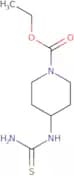
CAS:<p>Versatile small molecule scaffold</p>Formula:C11H21N3O2SPurity:Min. 95%Molecular weight:259.37 g/molEthyl 4-(carbamothioylamino)piperidine-1-carboxylate
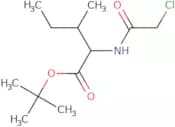
CAS:<p>Versatile small molecule scaffold</p>Formula:C9H17N3O2SPurity:Min. 95%Molecular weight:231.32 g/moltert-Butyl (2S,3S)-2-(2-chloroacetamido)-3-methylpentanoate
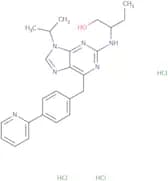
CAS:<p>Versatile small molecule scaffold</p>Formula:C12H22ClNO3Purity:Min. 95%Molecular weight:263.76 g/molCR8, (R)-Isomer
CAS:<p>CR8, (R)-isomer is a metabolite of sodium carbonate that has been shown to have neutralizing effects. It binds to the form bound to the polymerase chain and inhibits metabolic disorders by regulating the pH balance. CR8, (R)-isomer has been shown to be safe and effective in the treatment of neurological disorders that are caused by neuronal death. The antimicrobial property of this compound is due to its ability to inhibit bacterial growth through membrane interactions. This drug also has been shown to block PD-L1, which may help treat malignant tumors.<br>CR8, (R)-isomer is a member of the class of compounds called pyrazolyloxyphenylboronic acid derivatives, which are used as antimicrobial agents. These compounds contain a hydroxyl group that allows them to bind with membranes in bacteria and disrupt cellular function. They also possess an aromatic ring that is able to react with amino groups on proteins at the lipid-water interface</p>Formula:C24H29N7OPurity:Min. 95%Molecular weight:431.53 g/mol[4-(Pyridin-3-yl)phenyl]methanamine
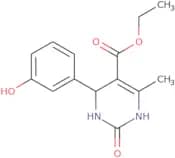
CAS:<p>Versatile small molecule scaffold</p>Formula:C12H12N2Purity:Min. 95%Molecular weight:184.24 g/molethyl 4-(3-hydroxyphenyl)-6-methyl-2-oxo-1,2,3,4-tetrahydropyrimidine-5-carboxylate
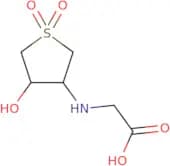
CAS:<p>Ethyl 4-(3-hydroxyphenyl)-6-methyl-2-oxo-1,2,3,4-tetrahydropyrimidine-5-carboxylate is an antibiotic that belongs to the group of beta lactams. It has been shown to have antibacterial activity against gram negative bacteria such as Escherichia coli and Aeruginosa. Ethyl 4-(3-hydroxyphenyl)-6-methyl-2-oxo-1,2,3,4-tetrahydropyrimidine-5 carboxylate has also shown to be active against Staphylococcus aureus and Enterobacteriaceae (a group of bacteria that includes E. coli). This drug's antibacterial activity is due to its ability to inhibit bacterial DNA gyrase and topoisomerase IV.</p>Formula:C14H16N2O4Purity:Min. 95%Molecular weight:276.29 g/mol(4-Hydroxy-1,1-dioxo-tetrahydro-1λ*6*-thiophen-3-ylamino)-acetic acid
CAS:<p>Versatile small molecule scaffold</p>Formula:C6H11NO5SPurity:Min. 95%Molecular weight:209.22 g/mol5-Chloro-7-[(4-methylpiperidin-1-yl)methyl]quinolin-8-ol
CAS:<p>Versatile small molecule scaffold</p>Formula:C16H19ClN2OPurity:Min. 95%Molecular weight:290.79 g/molMethyl 3-[3-(trifluoromethyl)phenyl]propanoate
CAS:<p>Versatile small molecule scaffold</p>Formula:C11H11F3O2Purity:Min. 95%Molecular weight:232.2 g/mol
![Potassium trifluoro[(methylsulfanyl)methyl]boranuide](/_next/image/?url=https%3A%2Fstatic.cymitquimica.com%2Fproducts%2F3D%2Fthumb-webp%2FUKD76301.webp&w=3840&q=75)

![2,6-Dimethylimidazo[2,1-b][1,3,4]thiadiazole-5-carbaldehyde](/_next/image/?url=https%3A%2Fstatic.cymitquimica.com%2Fproducts%2F3D%2Fthumb-webp%2FULA17925.webp&w=3840&q=75)
![{Dimethylimidazo[2,1-b][1,3,4]thiadiazol-5-yl}methanol](/_next/image/?url=https%3A%2Fstatic.cymitquimica.com%2Fproducts%2F3D%2Fthumb-webp%2FULA17926.webp&w=3840&q=75)
![Methyl 3-(4-{[(tert-butoxy)carbonyl]amino}piperidin-1-yl)propanoate](/_next/image/?url=https%3A%2Fstatic.cymitquimica.com%2Fproducts%2F3D%2Fthumb-webp%2FULA18026.webp&w=3840&q=75)

![3-{2-[(1H-Indol-3-yl)methylidene]hydrazin-1-yl}-8-thia-4,6-diazatricyclo[7.4.0.0,2,7]trideca-1(9),…](/_next/image/?url=https%3A%2Fstatic.cymitquimica.com%2Fproducts%2F3D%2Fthumb-webp%2FULA19386.webp&w=3840&q=75)

![[4-(Pyridin-3-yl)phenyl]methanamine](/_next/image/?url=https%3A%2Fstatic.cymitquimica.com%2Fproducts%2F3D%2Fthumb-webp%2FULA64805.webp&w=3840&q=75)
![5-Chloro-7-[(4-methylpiperidin-1-yl)methyl]quinolin-8-ol](/_next/image/?url=https%3A%2Fstatic.cymitquimica.com%2Fproducts%2F3D%2Fthumb-webp%2FULA67578.webp&w=3840&q=75)
![Methyl 3-[3-(trifluoromethyl)phenyl]propanoate](/_next/image/?url=https%3A%2Fstatic.cymitquimica.com%2Fproducts%2F3D%2Fthumb-webp%2FULA85602.webp&w=3840&q=75)